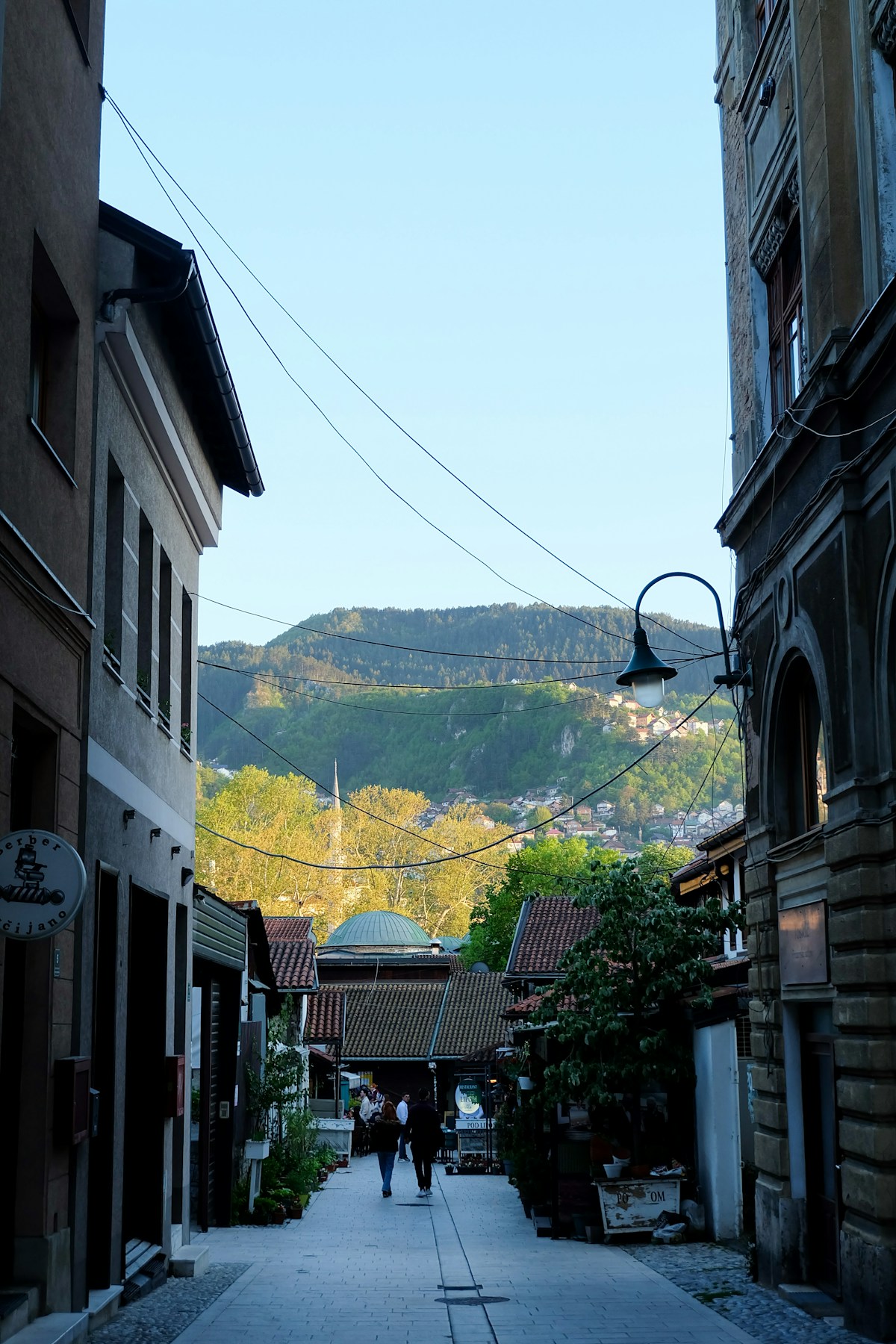
Serbia and Bosnia-Herzegovina sit at the geographic and historical heart of the Balkans, separated by a straightforward bus journey and a passport check. This 7-day route covers Belgrade’s riverside energy, Novi Sad’s Austro-Hungarian elegance, Sarajevo’s Ottoman and 20th-century layering, and Mostar’s single extraordinary bridge. Two countries, four cities, seven days. All prices approximate as of 2026.
Overview
| Day | Location | Highlights |
|---|---|---|
| 1 | Belgrade | Kalemegdan Fortress, Skadarlija, Knez Mihajlova |
| 2 | Belgrade | Republic Square, Sveti Sava Temple, nightlife |
| 3 | Novi Sad | Petrovaradin Fortress, old town, Danube waterfront |
| 4 | Belgrade → Sarajevo | Travel day (bus or fly) |
| 5 | Sarajevo | Baščaršija, Latin Bridge, War Tunnel Museum |
| 6 | Mostar | Stari Most, Old Bazaar, Kravice Waterfalls |
| 7 | Sarajevo | Yellow Fortress, Trebević, departure |
Day 1 - Arrive Belgrade
Fly into Belgrade Nikola Tesla Airport (BEG), 18 km west of the city centre. Bus A1 (Lasta, approximately RSD 300 / €2.55, 30–40 minutes) runs to Slavija Square. Taxis from the official airport rank cost approximately RSD 2,500–3,500 / €21–30; rideshare apps (Bolt, CarGo) are cheaper at approximately RSD 1,200–1,800 / €10–15.
Belgrade is one of the Balkans’ most underrated capitals - a large, confident city of 1.7 million with a layered history of Roman, Ottoman, Austro-Hungarian and Yugoslav occupation visible in its architecture. The famous nightlife is the draw for many visitors, but the daytime city is equally rewarding.
Kalemegdan Fortress (free, open dawn to dusk): a strategic hilltop above the confluence of the Sava and Danube rivers, continuously fortified from the 1st century CE through to the 20th. The ramparts, the Military Museum (approximately RSD 600 / €5 entry, comprehensive), and the views from the upper fortress make this the best free afternoon in Belgrade. The park surrounding the fortress is one of the finest in the Balkans.
Knez Mihajlova (Prince Mihailo Street, pedestrianised): Belgrade’s main shopping street runs south from Kalemegdan through the city’s 19th-century Austro-Hungarian commercial core. Cafés, bookshops, and the famous Delikatese food shops selling domestic cured meats, ajvar and rakija line the street.
Evening: Skadarlija (the Bohemian quarter, a 10-minute walk from Republic Square) is a cobblestone alley of old kafanas - traditional Serbian restaurants with live musicians playing narodna muzika (folk music). Dinner at Tri Šešira (Three Hats, approximately RSD 2,500–4,000 / €21–34 per person; the oldest kafana in Belgrade, established 1864, live music from 19:00) or Ima Dana (approximately RSD 2,000–3,500 / €17–30 per person; excellent roast suckling pig, slightly more modern).
Browse guided tours and experiences in Belgrade →
Where to stay in Belgrade:
- Budget: Hedonist Hostel - dorm from approximately RSD 1,500 / €13/night; central, highly rated, great social scene
- Mid-range: Hotel Royal - from approximately RSD 7,000 / €60/night; Republic Square location, well-maintained
- Comfort: Square Nine Hotel - from approximately RSD 18,000 / €154/night; design hotel, the best address in central Belgrade
Day 2 - Belgrade: Temple and the Riverfront
Temple of Saint Sava (Hram Svetog Save, free; open 08:00–20:00 approximately): the largest Orthodox church in the Balkans and one of the largest in the world - built on the hill where the Ottomans reportedly burned the remains of St Sava in 1594. Construction began in 1935, was interrupted by WWII and the Communist period, and continues today. The crypt, completed recently, is decorated with gold-ground Byzantine mosaics; the main hall is a cavernous space of marble and mosaic on a scale rarely seen. Walk (25 minutes from Republic Square) or taxi (approximately RSD 600 / €5).
Savamala (along the Sava River, 15-minute walk south from Kalemegdan): the former industrial riverside district has become Belgrade’s arts and nightlife hub - old warehouses converted to galleries, design studios, and the famous clubs. The Museum of Yugoslavia (Muzej Jugoslavije, approximately RSD 600 / €5, Bulevar Mira 5; Tito’s mausoleum is here: the *House of Flowers contains the tomb, visited by approximately 200,000 people annually) is technically in nearby Dedinje but accessible by taxi (approximately RSD 800 / €7) and worth the 90 minutes it takes.
Belgrade nightlife is the region’s best: the floating clubs (splavovi) on the Sava and Danube rivers operate from May to October. The most established are Freestyler and Lava on the Sava. The Savamala district clubs operate year-round.
See: things to do in Belgrade and best restaurants in Belgrade.
Day 3 - Day Trip to Novi Sad
Train Belgrade → Novi Sad: Serbian Railways, approximately RSD 700 / €6, 45 minutes, runs approximately hourly. Or bus (BAS terminal, approximately RSD 900 / €7.70, 1.5 hours). Novi Sad is 90 km north of Belgrade.
Novi Sad is Serbia’s second city and the 2022 European Capital of Culture - a university city with a compact old town, good café culture, and the unmissable Petrovaradin above the Danube.
Petrovaradin Fortress (free entry to the fortress grounds; museum entry approximately RSD 400 / €3.50): built between 1692 and 1780 by Austrian engineers on a 40-metre cliff above the Danube - called “Gibraltar of the Danube” by contemporaries. The fortress is enormous; the network of tunnels beneath (guided tours, approximately RSD 800 / €7) is interesting. The rampart views over Novi Sad’s rooftops and the Danube are among the best in Serbia. This is also where the Exit Festival takes place every July - one of Europe’s largest music festivals (July 10–13, 2026; approximately €80–180 for 4-day passes as of 2026 pricing).
Novi Sad old town (Dunavska Street, the town hall, the Cathedral of the Name of Mary): a handsome Austro-Hungarian grid of 18th and 19th century buildings around the main square (Trg Slobode). Less dramatic than Belgrade but elegant and walkable in 2 hours.
Lunch at Restaurant Fontana (Pozorišni Trg 2, approximately RSD 1,500–2,500 / €13–21 per person, traditional Serbian cuisine in a fine dining setting) or grab a burek from one of the bakeries near the market for approximately RSD 120–200 / €1–1.70.
Return to Belgrade for the evening.
See: things to do in Novi Sad.
Day 4 - Belgrade to Sarajevo
By bus: multiple operators including Flixbus, Lasta, and East West company run Belgrade–Sarajevo direct (approximately 7–8 hours, approximately €20–28). Departures at various times including overnight; check current timetables at the BAS bus terminal (Železnička bb). The route passes through eastern Bosnia on scenic mountain roads.
By plane: Air Serbia, WizzAir and Fly Bosnia operate this route (approximately 1 hour, from approximately €40–90 one-way). Sarajevo Airport (SJJ) is 6 km from the old town; taxi approximately BAM 20 / €10, no regular airport bus.
Arrive Sarajevo and check in. The Baščaršija (the Ottoman old bazaar, free to enter) begins immediately at the bottom of the old town - a warren of coppersmith workshops, jewellery shops, sweet shops, and ćevapi restaurants (Bosnia’s national dish: grilled minced meat in a flatbread, approximately BAM 5–8 / €2.50–4). Walk the Sebilj (the wooden fountain at the centre of Baščaršija, the symbol of Sarajevo) in the evening when the streets are lit and the copper workshops still glow.
See: things to do in Sarajevo.
Where to stay in Sarajevo:
- Budget: Franz Ferdinand Youth Hostel - dorm from approximately BAM 35 / €18/night; excellent central location
- Mid-range: Hotel Old Town - from approximately BAM 100 / €51/night; inside the old bazaar area
- Comfort: Hotel Europe Sarajevo - from approximately BAM 250 / €128/night; Austro-Hungarian landmark hotel on Ferhadija Street
Day 5 - Sarajevo: History Layers
Sarajevo is a city where four centuries of Ottoman, Austro-Hungarian, Yugoslav, and post-war history are legible at a walking pace. The Baščaršija to Ferhadija Street corridor is less than 1 km long and passes from the Ottoman quarter through the Austro-Hungarian administrative core to the Yugoslav-era pedestrian zone.
Latin Bridge (Latinska Ćuprija, free): the 16th-century Ottoman bridge over the Miljacka River, beside which Archduke Franz Ferdinand was assassinated on 28 June 1914 - the event that triggered World War One. The Museum of Sarajevo 1878–1918 (approximately BAM 5 / €2.55, on the bridge corner) covers the assassination and the complex political background in good English.
Gazi Husrev-beg Mosque (free, check prayer times; appropriate dress required): the most important Ottoman mosque in the Balkans, built 1531, with a covered bazaar (bezistan) adjacent that has operated continuously since the 16th century. The interior is decorated with 16th-century Iznik tiles and calligraphy.
War Tunnel Museum (Tunel spasa, approximately BAM 15 / €7.65; taxi from the old town approximately BAM 20 / €10 each way or arrange through your accommodation): a section of the 800-metre tunnel dug in 1993 beneath the Sarajevo airport runway - the only supply route into the besieged city during the 1992–1995 Siege of Sarajevo. The tunnel was 1.6 m high and carried approximately 4,000 people per day. The museum, run by the family who owned the house at the tunnel’s entrance, is honest and moving.
Find guided tours and day trips in Sarajevo →
See: Sarajevo war history guide and food tours in Sarajevo.
For dinner: Morića Han (a restored 16th-century Ottoman caravanserai in Baščaršija, approximately BAM 20–35 / €10–18 per person, good ćevapi and traditional Bosnian coffee) or Dveri (contemporary Bosnian cuisine, approximately BAM 35–60 / €18–31 per person, just off Ferhadija Street).
Day 6 - Mostar Day Trip
Bus Sarajevo → Mostar: multiple daily departures (companies include FedEx Tours, Eurolines Bosnia), approximately BAM 18–22 / €9–11, 2.5–3 hours. Return buses depart Mostar through the afternoon. First bus approximately 07:30; last return approximately 18:00.
Mostar is built around the Stari Most (Old Bridge): a 16th-century single-arch Ottoman bridge 21 metres above the Neretva River, destroyed by artillery in 1993 and rebuilt in 2004 using the original limestone from the same quarry. The bridge has a gentle arch of 29 metres span and is 4 metres wide - in the 16th century, it was the longest single-span stone arch in the world. Entry to stand on the bridge: free. The surrounding old bazaar (Kujundžiluk) is a well-preserved cobblestone street of jewellery, copperwork and carpet shops.
Bridge jumping (traditional competition held annually in July, approximately BAM 25–35 / €13–18 for jump training with a local club): young men have jumped from the bridge since it was built. Commercial jumping experiences are available through the local dive clubs at the river.
See: Mostar bridge jumping guide.
Kravice Waterfalls (approximately 40 km south-west of Mostar; taxi from Mostar approximately BAM 80–120 / €41–61 return including 1-hour wait, or a day trip from Sarajevo that includes both Mostar and Kravice, approximately BAM 50–70 / €26–36 per person): a series of travertine waterfalls approximately 25 metres high and 120 metres wide, flowing into a green-blue swimming basin. Swimming permitted April–October. Particularly beautiful in spring when water volumes are high.
Lunch in Mostar at Restaurant Labirint (approximately BAM 30–50 / €15–26 per person, terrace directly above the Neretva, views of Stari Most) or Tima-Irma (approximately BAM 15–28 / €8–14 per person, excellent grilled meats and burek near the old bazaar).
Book a day tour to Mostar from Sarajevo →
Return to Sarajevo for the evening.
Day 7 - Sarajevo: Yellow Fortress and Trebević
Yellow Fortress (Žuta Tabija, free; 15-minute walk uphill from Baščaršija): a small Ottoman watchtower above the old town with the best panoramic view over Sarajevo - the city spread across the valley, minarets visible in every direction. Come at sunset for the most atmospheric experience. The walk up passes through the residential old town neighbourhood of Kovači (the Ottoman cemetery with views is passed en route).
Trebević Cable Car (approximately BAM 15 / €7.65 return; lower station accessible by taxi from old town, approximately BAM 10 / €5): Trebević Mountain (1,163 m) above Sarajevo was the site of the 1984 Winter Olympics bobsled track - now overgrown but accessible on foot as an urban exploration/hiking attraction. The cable car reopened in 2018 after being destroyed in the 1990s siege and runs up through forest to the restaurant terrace at the top.
For a final breakfast: Inat Kuća (the “Spite House” - a 17th-century house relocated stone by stone to its current position across the river in 1895, when the Austro-Hungarian city hall required the original plot; the café on the ground floor serves excellent Bosnian coffee and burek from approximately BAM 4 / €2).
Sarajevo Airport departure: taxi from the old town approximately BAM 20–25 / €10–13; 15–20 minutes.
See: day trips from Sarajevo for Kravice, Mostar, and Blagaj (the Buna River source beneath a cliff-face Dervish monastery, highly recommended for a half-day addition).
Transport Summary
| Leg | Method | Approx cost | Approx time |
|---|---|---|---|
| Belgrade Airport → city | Bolt rideshare | €10–15 | 30 min |
| Belgrade → Novi Sad | Train | €6 | 45 min |
| Belgrade → Sarajevo | Bus (direct) | €20–28 | 7–8 hrs |
| Sarajevo old town → War Tunnel | Taxi (return) | €10–12 | 15 min |
| Sarajevo → Mostar | Bus | €9–11 | 2.5–3 hrs |
| Mostar → Kravice Waterfalls | Taxi (return, with wait) | €41–61 | 45 min each |
| Sarajevo → Airport | Taxi | €10–13 | 15–20 min |
All costs approximate as of 2026.
Budget Overview
| Category | Budget/day | Mid-range/day |
|---|---|---|
| Accommodation | €13–20 | €51–100 |
| Food | €10–18 | €25–45 |
| Transport | €3–8 | €8–18 |
| Sights/activities | €5–12 | €12–25 |
| Total | approx. €31–58 | approx. €96–188 |
Serbia is slightly cheaper than Bosnia overall. The War Tunnel Museum taxi and entry combined is the highest single activity cost on the trip (approximately €20 total). Budget for at least one ćevapi lunch and one kafana dinner - both are under €15 per person.
Related Guides
- Belgrade travel guide
- Things to do in Belgrade
- Belgrade nightlife guide
- Best restaurants in Belgrade
- Food tours in Belgrade
- Day trips from Belgrade
- Novi Sad travel guide
- Things to do in Novi Sad
- Sarajevo travel guide
- Things to do in Sarajevo
- Sarajevo war history guide
- Food tours in Sarajevo
- Day trips from Sarajevo
- Mostar travel guide
- Mostar bridge jumping
- Serbia travel guide
- Bosnia and Herzegovina travel guide
- Serbia 7-day itinerary
- Bosnia 7-day itinerary
- Best food in Serbia
- Best food in Bosnia
Book Your Trip
Flights — search and compare on Aviasales eSIM — stay connected with Airalo Travel insurance — get covered with EKTA Airport transfers — book with Kiwitaxi Car rental — compare with GetRentaCar Hotels — compare and book accommodation on Booking.com Tours and activities — browse GetYourGuide