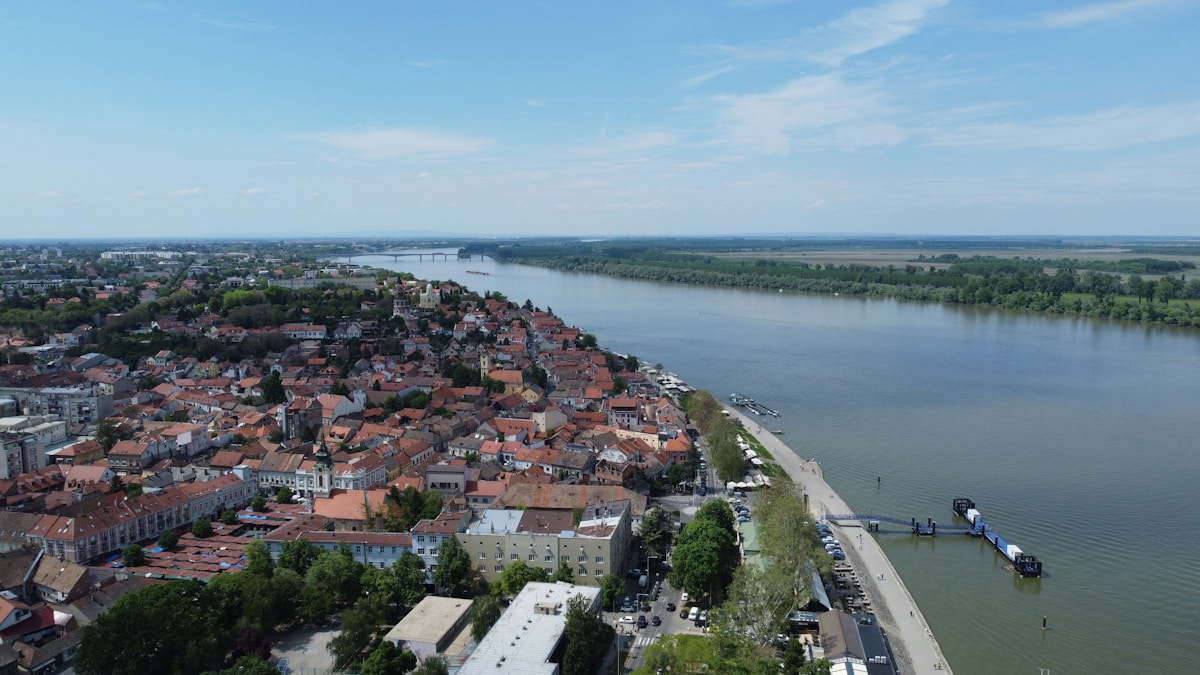
Belgrade sits at the confluence of the Sava and Danube rivers, at the geographical heart of the Balkans. It is a city of sharp contrasts: Roman-era fortifications on the cliff above the river, a socialist-era urban grid behind them, and a nightlife economy that runs later and harder than almost anywhere in Europe. It is also one of the most affordable city-break destinations on the continent.
Accommodation prices have risen noticeably since 2020 but remain competitive. The Serbian dinar (RSD) is the local currency; most hotels quote in euros for international bookings.
The Main Areas
Savamala
The neighbourhood directly below Kalemegdan fortress along the Sava riverbank was a derelict warehouse district a decade ago. It has been converted into Belgrade’s creative and nightlife quarter - galleries, concert spaces, riverside clubs, and a density of bars and restaurants that makes it one of the more energetically interesting neighbourhoods in the Balkans.
Staying in Savamala puts you inside Belgrade’s social scene, which is either an advantage or a disadvantage depending on your tolerance for late-night noise. The main clubs - Kptain Miša’s Residence, Mikser House, and Beton Hala - are concentrated here. Kalemegdan is a 15-minute walk uphill; the city centre on Knez Mihailova is 20 minutes on foot.
Stari Grad
The “old town” of Belgrade covers the area between Kalemegdan fortress to the west and Studentski Trg to the east, including the main pedestrian street (Knez Mihailova) and the commercial Terazije square. Most of the city’s three and four-star hotels are here, and it is the most central base for sightseeing.
Stari Grad is not an atmospheric old town in the Dubrovnik or Kotor sense - Belgrade has been rebuilt repeatedly after destruction, and the architecture is a functional mix of Habsburg-era buildings, Brutalist towers, and modern construction. The neighbourhood is genuinely lively during the day and quieter at night than Savamala.
Vračar
South of the city centre, Vračar is a residential neighbourhood with a strong local character. The St. Sava Cathedral - one of the largest Orthodox churches in the world by floor area, its copper dome visible from much of the city - anchors the district. Skadarlija, Belgrade’s preserved 19th-century Bohemian quarter with cobblestones and kafanas, borders Stari Grad and is walkable from both areas.
Vračar suits visitors who prefer a quieter base with local restaurant and café culture over tourist-facing infrastructure. Slightly further from main sights but no more than 20 minutes’ walk to Kalemegdan.
Zemun
Across the Sava River, Zemun was historically a separate town under Austro-Hungarian administration - its architecture and scale reflect that, with a riverfront promenade and a more compact, village-like centre than Belgrade proper. A distinct atmosphere, but requires a bridge crossing (tram or taxi) to reach the city centre. Best for longer stays when you have already seen the main areas and want a different pace.
Budget Options (Under €60/night)
Hedonist Hostel (Stari Grad, from approximately €15–22 per dorm bed): One of Belgrade’s most consistently rated hostels, in a central apartment building near Trg Republike. Private rooms from approximately €45–60. Social atmosphere, regular events, helpful staff. Good for solo travellers and those travelling on a tight budget.
Generator Hostel Belgrade (Savamala, from approximately €18–28 per dorm): Part of the international Generator group, with the predictably clean, well-designed facilities that chain brings. Good location in Savamala. Private rooms available from approximately €60–80.
Private apartment rentals in Vračar: Vračar apartments through Booking.com or Airbnb often come in at €40–70 for a studio, particularly outside July–August. Quieter neighbourhood, good value, 20 minutes’ walk to the fortress.
Mid-Range Options (€60–160/night)
Hotel Balkan (Terazije, from approximately €70–120): A mid-century building in the commercial heart of the city, recently modernised with comfortable rooms and good central location. One of the better value options in the Stari Grad area for travellers who prioritise location and reliability over design.
Hotel Moskva (Terazije, from approximately €90–160): Belgrade’s most iconic mid-range hotel - a 1906 Secession-style building on Terazije square, recognisable by its blue tiled facade. The rooms are not large by modern standards, but the building’s character and central position justify the price. The ground-floor café is a Belgrade institution; the pastries are excellent.
Hotel Prag (Stari Grad, from approximately €75–130): A three-star hotel on Narodnog fronta, well-positioned between Stari Grad and Savamala. Comfortable rooms, free parking - rare for a central Belgrade hotel - and consistent reviews.
Splurge Options (€160/night and above)
Square Nine (Studentski Trg, from approximately €200–350): Belgrade’s most critically regarded boutique luxury hotel, in a converted building on a quiet square adjacent to the university. Twenty-five rooms designed to a high standard, rooftop pool, and a restaurant that is considered one of the city’s better dining options. The scale keeps it personal. Book ahead; it operates near capacity.
Metropol Palace (Bulevar Kralja Aleksandra, from approximately €180–300): A larger five-star property from the same 1950s-era socialist luxury tradition as Hotel Moskva, renovated significantly in recent years. Pool, spa, and a location that bridges Stari Grad and Vračar. Good for business travellers and those who want full hotel services.
St. Ten Boutique Hotel (Dorćol, from approximately €170–260): A small hotel in Dorćol, a neighbourhood along the Danube riverbank undergoing similar gentrification to Savamala. Contemporary design, rooftop terrace with river views, and a more local atmosphere than the Terazije hotels.
Practical Booking Advice
Belgrade has no peak season in the same sense as coastal Croatia - there is no fixed summer spike that fills accommodation months in advance. July and August are busier than other months, but a week’s advance booking is usually sufficient for mid-range properties. The main exception is the Exit Music Festival in Novi Sad (late July), which affects Belgrade hotel prices significantly as visitors use the capital as a base.
Prices are quoted in both dinars and euros. Many hotels prefer payment in euros. ATMs are widespread; cards are accepted at all hotels and most restaurants.
Taxis: Belgrade has an ongoing problem with unlicensed taxi operators at the airport and main transport hubs who overcharge significantly. Use CarGo or Naxis (Serbian ride-hailing apps), or Bolt - all show prices before booking.
For a fixed-price transfer from Belgrade Nikola Tesla Airport booked before you travel, Kiwitaxi and Welcome Pickups both serve the airport with transparent upfront pricing - useful if you prefer not to deal with the ride-hailing apps on arrival.
Best Area for First-Timers
Stari Grad for access and logic; Savamala for atmosphere and nightlife. On a first visit, the combination of Hotel Moskva’s location and the walkability to Kalemegdan makes the Terazije area the practical choice. On a return visit, a Savamala apartment makes more sense once you understand the city’s layout.
Once you have your neighbourhood sorted, Belgrade tours and activities are the easiest way to fill your days - from Kalemegdan fortress walks to Danube dinner cruises.
Compare prices and availability across all Belgrade hotels - Search hotels in Belgrade.
Plan Your Trip
Flights: Search flights to Belgrade - Aviasales compares across airlines and OTAs to find the best available price for your dates.
Airport transfer: Book a fixed-price transfer from Belgrade Nikola Tesla Airport - Kiwitaxi shows the total cost upfront before you book.
Travel insurance: Get travel insurance for Serbia - covers medical, cancellation, and trip interruption.
eSIM: Buy an eSIM for the Balkans - Airalo data plans work in Serbia and across the region, activated before you land.
See also: Belgrade city guide | Best hotels in Belgrade | Serbia travel guide