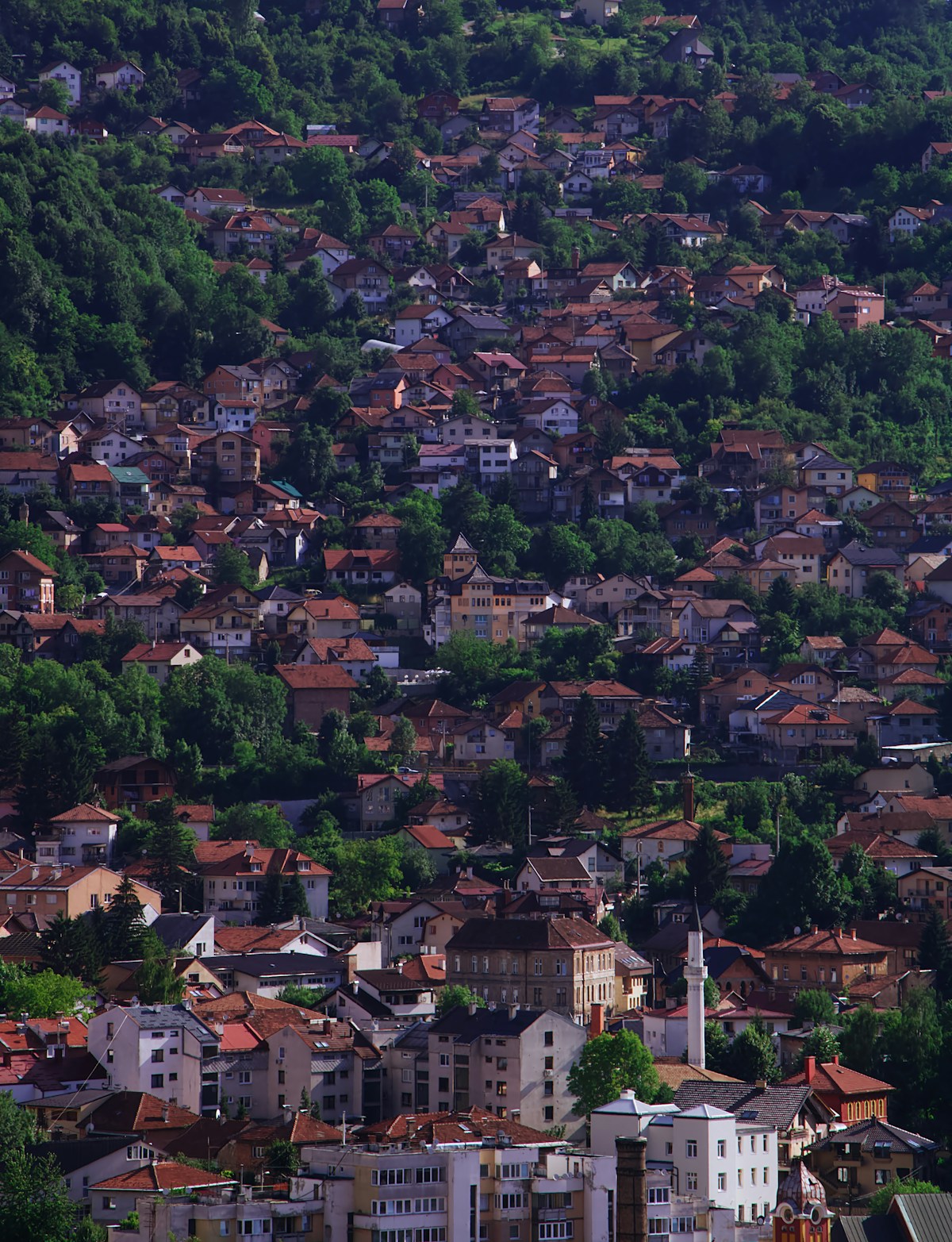
Sarajevo is one of the most historically dense cities in Europe — a place where the 15th-century Ottoman old town, 19th-century Austro-Hungarian boulevard, and the physical scars of a 1990s siege exist within walking distance of each other. Guided tours are not just convenient here; they are the most efficient way to decode a city where every building and street corner carries layered context.
Here is a breakdown of the best tours in 2026 by traveller type and interest.
Top Sarajevo Tours at a Glance
| Tour | Duration | From (approx) | Best For |
|---|---|---|---|
| Sarajevo Old Town Walking Tour | 2 hrs | €20 | First-timers, history lovers |
| Tunnel of Hope Tour | 3–4 hrs | €30 | War history, siege stories |
| Bosnian War Tour with Tunnel Museum | 4 hrs | €35 | In-depth siege history |
| Tunnel of Hope and Cable Car Tour | 4 hrs | €40 | Panoramic views, war history |
| Old Town Food and Coffee Walking Tour | 2.5 hrs | €35 | Food lovers, cultural visitors |
| Under Siege Small-Group Tour | 3 hrs | €30 | Intimate groups, deep history |
| Day Trip to Mostar and Herzegovina | Full day | €50 | Mostar, Blagaj, Kravica Waterfall |
Browse all Sarajevo tours on GetYourGuide
For First-Time Visitors: The Old Town and Baščaršija
Sarajevo’s Baščaršija — the Ottoman old bazaar — was founded in the 15th century by Gazi Husrev-Beg and remains the commercial and cultural heart of the city. The district’s layout follows the original Ottoman çarşı model: coppersmith street (Kazandžiluk), cobbler street, and the Gazi Husrev-Beg Mosque (1531), the largest Ottoman mosque in Bosnia, positioned at the bazaar’s centre. The Sebilj fountain in Pigeon Square is the conventional starting point for most walking tours.
A guided Old Town walking tour (approximately €20–25, 2 hours) covers the Ottoman quarter, the Austrian-era Ferhadija pedestrian street, the Latin Bridge where Archduke Franz Ferdinand was assassinated on 28 June 1914, and the Eternal Flame memorial — a single circuit that spans 500 years of history in under 2 kilometres.
Book directly: Sarajevo Old Town Walking Tour — approximately €20 per person as of 2026, covers Baščaršija, Gazi Husrev-Beg Mosque, Latin Bridge, and Austrian Quarter.
The Vijećnica (City Hall, completed 1896) at the eastern end of the Austrian quarter is one of the finest examples of Moorish Revival architecture in the Balkans — and one of the most symbolically significant buildings in Bosnia, burned in the 1992 shelling with the deliberate destruction of 1.5 million books and documents in its library. Restored and reopened in 2014, it is worth visiting independently (approximately €3 entry as of 2026) or as part of a guided circuit.
For History Seekers: The Tunnel of Hope and Siege Tours
The 1,425-day Siege of Sarajevo (April 1992 – February 1996) was the longest siege of a capital city in the history of modern warfare. The city was surrounded by Yugoslav People’s Army and Republika Srpska forces positioned on the hills above, cutting off food, water, gas, and electricity. The Tunnel of Hope — an 800-metre hand-dug tunnel beneath the airport runway — connected the besieged city to Bosnian-held territory and provided the only supply route in and out.
The Tunnel of Hope Museum in Butmir, approximately 6km from the city centre, preserves approximately 25 metres of the original tunnel with original rail tracks, a wartime documentary, and exhibits covering the tunnel’s construction and operation. A guided tour (approximately €30, 3–4 hours) includes return transport from the city centre, the museum walkthrough, and commentary from a guide who typically includes personal or family connection to the siege.
Book directly: Tunnel of Hope Tour — approximately €30 per person as of 2026, includes transport, museum entry, and guided siege history.
For a more comprehensive siege overview, the Bosnian War and Yugoslav Wars Tour (approximately €35, 4 hours) combines the Tunnel of Hope with Sniper Alley (the Boulevard of the Revolution, the main road targeted by snipers throughout the siege), the Trebević hillside (former Bosnian Serb Army front line positions and the 1984 Olympic bobsled track), and the Yellow Fortress (city overlook). It is the most complete single tour for understanding the military geography of the siege.
Book directly: Bosnian War Tour with Tunnel Museum — approximately €35 per person as of 2026, covers Tunnel Museum, Sniper Alley, Trebević, and Yellow Fortress.
The Under Siege Small-Group Tour (maximum 7 people, approximately €30, 3 hours) is the most intimate option — small enough for the guide to take a conversational, question-led approach rather than a fixed script. This format works particularly well for visitors with prior knowledge of the Balkan wars who want to discuss specific events and locations in depth.
Book directly: Under Siege Small-Group Tour — approximately €30 per person as of 2026, maximum 7 participants.
For Food Lovers: Old Town Food Walks and Coffee Ceremonies
Sarajevo’s cuisine is one of the most distinct in the Balkans — shaped by 400 years of Ottoman rule, the Sephardic Jewish community expelled from Spain in 1492 (who settled here and remained until the 1940s), and the Austro-Hungarian period that brought central European café culture. The result is a city where ćevapi (minced meat in lepinja flatbread) sits alongside Bosnian coffee prepared in a džezva and served with a Turkish delight alongside — a preparation ritual distinct from both Turkish and Greek coffee.
The Old Town Bosnian Food and Coffee Walking Tour (approximately €35–45, 2.5 hours) is the most comprehensive culinary tour, covering Baščaršija market stalls, a traditional burek and pita bakery (the best pita in Sarajevo is made fresh on a circular sač griddle), the Markale open market, and a final tasting session with Bosnian coffee and baklava. The guide provides the cultural and historical framing for each food type — essential context given the Ottoman, Sephardic, and Central European layers in a single meal.
Book directly: Old Town Food and Coffee Walking Tour — approximately €35–45 per person as of 2026, includes multiple food stops and traditional coffee tasting.
For Panoramic Views: Trebević Cable Car and Yellow Fortress
The Trebević Cable Car (restored and reopened in 2018, approximately €6 return as of 2026) ascends from the suburb of Bistrik to the 1,629-metre Trebević summit in approximately 10 minutes. At the top: the ruins of the 1984 Winter Olympics bobsled track (used by Bosnian Serb Army snipers during the siege and now a graffiti-covered ruin), forest walking trails, and a panoramic view over the entire Sarajevo basin. This is the best single vantage point in the city.
The combined Tunnel of Hope and Cable Car Tour (approximately €40, 4 hours) pairs the siege history of the tunnel with the Trebević panorama — a logical combination that connects the underground survival route with the hilltop positions that made it necessary.
Book directly: Tunnel of Hope and Cable Car Tour — approximately €40 per person as of 2026, includes tunnel, cable car, and Trebević summit.
The Yellow Fortress (Žuta Tabija) above Baščaršija is a free overlook point accessible on foot in approximately 20 minutes from the old town. At sunset it fills with locals — it is the most atmospheric free viewpoint in Sarajevo and a reliable addition to any afternoon walking itinerary.
Best Day Trips from Sarajevo
Mostar and Herzegovina (full day, approximately €50–65 per person): the 16th-century Stari Most bridge in Mostar, Blagaj Tekke (a Dervish monastery built into a cliff above the source of the Buna River), the medieval Ottoman town of Počitelj, and Kravica Waterfall (a 25-metre horseshoe cascade into an emerald pool) are the four highlights of Herzegovina, all reachable in a single long day from Sarajevo. Guided tours cover all four in 10–12 hours, with return transport included.
Book directly: Day Trip to Mostar and Herzegovina — approximately €50 per person as of 2026, includes return transport, Mostar, Blagaj, Počitelj, and Kravica Waterfall.
Practical Tips for Booking Sarajevo Tours
- Book 2–3 days ahead in summer. Siege and tunnel tours sell out fastest — small-group formats cap at 7–12 participants. Food walks have higher daily capacity.
- Start times: morning departures (8–10am) are best for the Tunnel of Hope and Trebević in summer before midday heat. Evening walking tours (5–7pm) are ideal for Baščaršija when market activity peaks.
- Guides with lived experience: Sarajevo has a large pool of licensed guides who were children or young adults during the siege. Tours led by someone with direct family experience of the events are distinctly different from academic-style tours — worth asking when booking.
- Currency: Bosnia uses the Convertible Mark (BAM), pegged to the euro (1 EUR = 1.955 BAM). Most tour operators accept both; bring cash for market stops.
- Respect: siege tour sites include active cemeteries and memorial grounds. Follow guide directions on photography at sensitive locations.
Browse all Sarajevo tours and activities
For a full stay plan, our Sarajevo city guide covers neighbourhoods, transport, and the best months to visit. If you’re planning a week in Bosnia, the 7-day Bosnia itinerary routes from Sarajevo through Mostar, Blagaj, and the Herzegovina coast. For accommodation, see where to stay in Sarajevo.