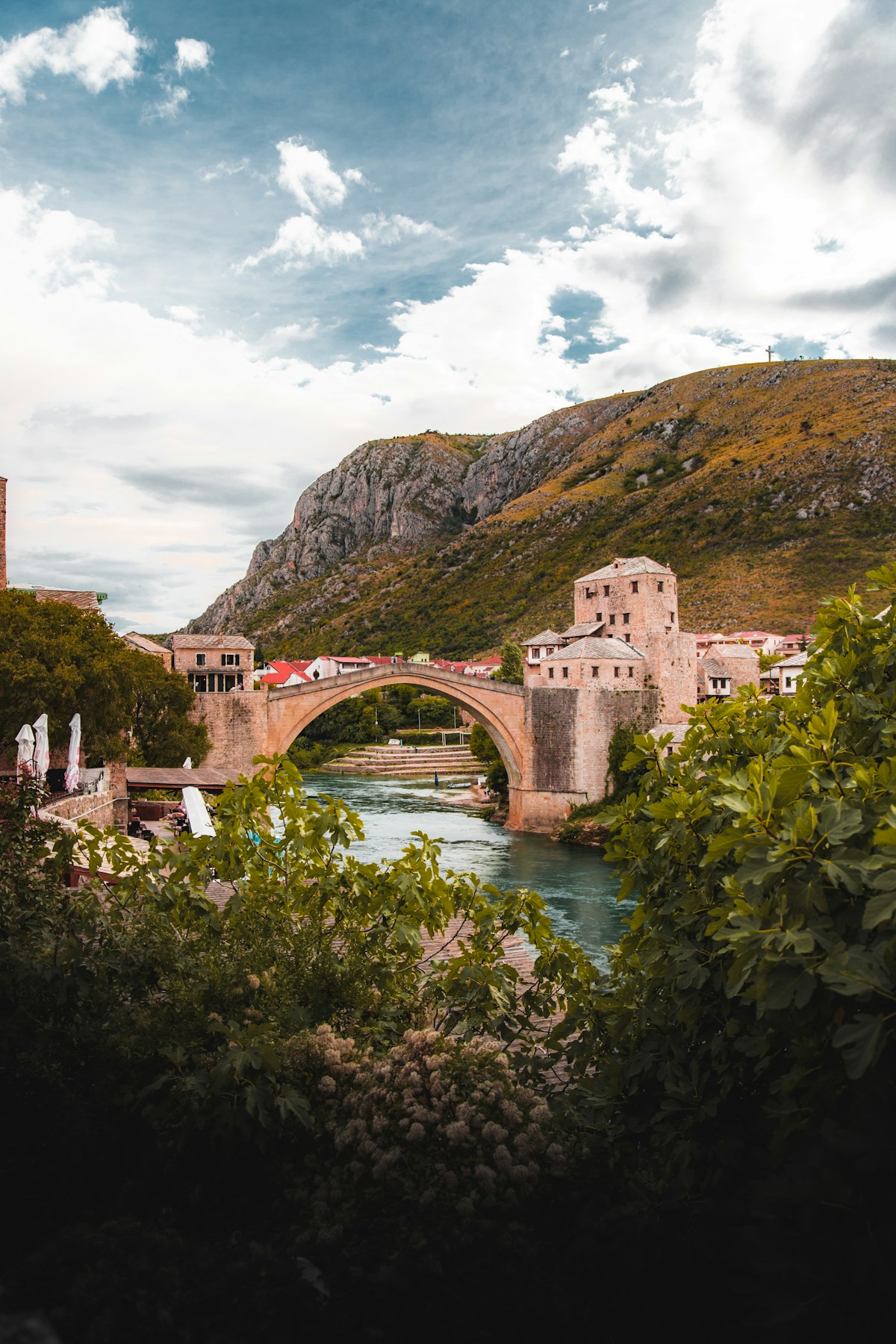
Mostar is the most visited city in Bosnia and Herzegovina outside Sarajevo — and with reason. The 16th-century Stari Most bridge arching over the turquoise Neretva River is one of the genuinely great sights of the Balkans: a single-arch Ottoman bridge rebuilt after its deliberate destruction in 1993, declared a UNESCO World Heritage Site in 2005, and still used daily by the bridge divers of the Ikari diving club. The surrounding Old Town is compact enough to walk in 90 minutes and rich enough to reward a full day.
Here is a breakdown of the best tours and day trips from Mostar in 2026.
Top Mostar Tours at a Glance
| Tour | Duration | From (approx) | Best For |
|---|---|---|---|
| Old Town Walking Tour with Stari Most | 1.5 hrs | €18 | First-timers, history lovers |
| Private City Tour of Mostar and Old Bridge | 2 hrs | €50 per group | Families, private groups |
| Half-Day Kravica Waterfall Trip | 4 hrs | €25 | Nature lovers, swimmers |
| Authentic Mostar, Medjugorje and Kravica Tour | Full day | €55 | Cultural seekers, pilgrims |
Browse all Mostar tours on GetYourGuide
For First-Time Visitors: Old Town and Stari Most
The Stari Most bridge was commissioned by Suleiman the Magnificent in 1557 and completed in 1566 under the direction of the Ottoman architect Mimar Hayruddin. It stood for 427 years before being deliberately destroyed by Croat Defence Council artillery on 9 November 1993. Rebuilt using original stone quarried from the same Tenelija limestone source on the hill above Mostar and reopened in 2004, it is now a functioning bridge and the defining symbol of post-war reconstruction in Bosnia.
The Old Town Walking Tour with Stari Most and Koski Mosque (approximately €18–25, 1.5 hours) is the most efficient introduction to Mostar. The circuit covers: the Stari Most bridge with its two flanking Ottoman towers (Tara and Helebija), the Koski Mehmed Pasha Mosque (1617) with its accessible minaret — at the top, the view over the bridge and Neretva is the best angle in the city — the Kujundžiluk bazaar street with copper workshops dating to the Ottoman period, and the Crooked Bridge (Kriva Ćuprija, 1558), a smaller single-arch Ottoman bridge built as a testing structure for the Stari Most nine years earlier.
Book directly: Old Town Walking Tour with Stari Most — approximately €18 per person as of 2026, covers the bridge, mosque, and bazaar with licensed local guide.
Bridge diving by the Ikari club is the other spectacle that draws visitors to Stari Most: trained divers jump from the bridge into the 21-metre drop into the Neretva (water temperature approximately 10–15°C year-round at the surface). Dives happen when sufficient tips have been raised by waiting — typically €20–30 pooled from onlookers. The best viewing position is from the banks of the Neretva below the bridge, not on the bridge itself.
For private groups, the Private City Tour (approximately €50 per group, 2 hours) covers the same circuit at a pace suited to family groups or visitors who want to spend more time at each location.
Book directly: Private City Tour of Mostar and Old Bridge — approximately €50 per group as of 2026, flexible pace for private parties.
For History Seekers: War Reconstruction and Ottoman Heritage
Mostar’s war damage is still visible in the east bank of the Old Town if you walk more than two streets from the bridge. The Šehidi Mosque (destroyed 1993) has been rebuilt; the Musala Square area retains visible scarring on apartment facades. The guide commentary on the walking tour typically includes the sequence of events — the bridge’s destruction, the 1994 Washington Agreement that ended the Croat-Bosniak conflict within Bosnia, and the international reconstruction effort — without which the physical evidence is difficult to contextualise.
The Heliodrom (Mostar War Prison), approximately 5km from the Old Town, operated as a detention camp from 1992–1994 and is now partly accessible as a memorial site. Independent visits are possible; guided access with fuller context is more rewarding. Ask operators about combined Old Town and Heliodrom tours — not all agencies offer it, but those that do provide the most complete picture of Mostar’s war history.
The Museum of Herzegovina (Bajatova 4, approximately €2 entry as of 2026) covers the city’s history from prehistoric settlement through the Ottoman, Austro-Hungarian, Yugoslav, and post-war periods in four compact rooms. It is the best place to see the original Ottoman construction drawings for the Stari Most bridge.
For Nature Lovers: Kravica Waterfall and the Trebižat River
Kravica Waterfall sits on the Trebižat River approximately 40km southwest of Mostar in the flat karst plain of western Herzegovina. A 25-metre horseshoe curtain of water drops into a circular pool with limestone sides, and from May through September the pool is warm enough for swimming (approximately 18–20°C in peak summer). The surrounding poplar trees and tufa formations make it one of the most photogenic natural sites in the Balkans.
A half-day trip from Mostar (approximately €20–30, 4 hours) includes return transport and approximately 2 hours at the waterfall. Swimming is permitted from the surrounding stone platforms; there are changing facilities and a café on site. The site is busiest from 11am–3pm in July and August — arrive before 10am or after 4pm for comfortable conditions.
Book directly: Half-Day Kravica Waterfall Trip from Mostar — approximately €25 per person as of 2026, includes return transport and 2 hours at the waterfall.
For Cultural Depth: Blagaj Tekke, Počitelj, and Medjugorje
Blagaj Tekke is a 16th-century Dervish monastery built directly into a cliff face above the source of the Buna River, where approximately 43 cubic metres of water per second emerge from a cave at the base of a 200-metre vertical cliff. The combination of the tekke structure, the cliff wall, and the crystal-clear turquoise water source is one of the most dramatic architectural settings in Bosnia. It is 15km southeast of Mostar and easily combined with a Mostar visit.
Počitelj is a medieval Ottoman fortified village built into a hillside above the Neretva River, approximately 27km south of Mostar. The Gavrankapetanović tower, Šišman Ibrahim Paša Mosque (1564), and the Sahat Kula clock tower form a compact skyline above the river bend. The village was substantially damaged in 1993 and partially restored; walking the stepped streets takes approximately 45 minutes.
Medjugorje is a Roman Catholic pilgrimage town 25km west of Mostar where six locals claimed Marian apparitions beginning in 1981. It draws approximately one million pilgrims annually and is the largest pilgrimage site in the former Yugoslavia. Non-religious visitors generally find the site less compelling than Blagaj or Počitelj, but it is commonly included in full-day Herzegovina tour itineraries from Mostar.
The Authentic Mostar, Medjugorje, and Kravica Tour (approximately €55, full day) combines the Old Town with Medjugorje and Kravica Waterfall in a single structured day, with a farm-to-table meal in the itinerary.
Book directly: Authentic Mostar, Medjugorje and Kravica Tour — approximately €55 per person as of 2026, includes Old Town, Medjugorje, and Kravica with a traditional meal.
Practical Tips for Booking Mostar Tours
- Peak season: July and August bring significant visitor numbers to the bridge area from 10am–4pm. The bridge photographs best in early morning light (before 9am) or golden hour (6–7pm in summer) when the stone takes on a warm tone and crowds thin.
- Footwear: the Stari Most bridge and the Old Town streets are paved with polished limestone cobblestones — genuinely slippery when wet. Wear shoes with grip. Sandals are comfortable in dry conditions; avoid smooth soles.
- Bridge timing: the Ikari divers jump when sufficient donations are collected, typically between 11am and 3pm in summer. There is no fixed schedule.
- Day trip logistics: Kravica Waterfall and Blagaj are best combined in a half-day (3–4 hours total); Počitelj adds another hour and fits naturally on the return route from Kravica. Self-driving is straightforward, but the half-day organised tour handles parking and timing efficiently.
- Currency: Bosnia uses the Convertible Mark (BAM); Mostar’s Old Town also accepts euros informally at approximately 1:2 rate. Card payment is widely accepted in restaurants and larger souvenir shops.
Browse all Mostar tours and activities
For accommodation, see where to stay in Mostar. If you’re planning a week in Bosnia, the 7-day Bosnia itinerary routes from Sarajevo through Mostar and the Herzegovina coast. For our full Mostar city guide, see Mostar on The Balkan Guide.