Three weeks is the magic number for a proper Balkans circuit. This route loops through eight countries - from Ljubljana’s riverside cafes to Sofia’s golden-domed churches - covering the full range of what the region offers. Every transfer is by bus, and the longest single journey is under 8 hours.
Route: Ljubljana (2) → Zagreb (2) → Plitvice (1) → Split (2) → Dubrovnik (2) → Kotor/Budva (2) → Tirana (2) → Ohrid (2) → Skopje (1) → Sofia (2) → Belgrade (2) → Sarajevo (2).
Typical costs (per person, excluding flights): budget approx. EUR 1,000–1,600; mid-range approx. EUR 1,800–3,000 as of 2026. Get a Balkans eSIM before you fly — it works across all eight countries on this route — and arrange travel insurance before departure.
Days 1–2 - Ljubljana, Slovenia
Fly into Ljubljana Jože Pučnik Airport (LJU). The GoOpti shuttle runs to the city centre (approximately EUR 9, 45 minutes). Taxis cost approximately EUR 40.
Day 1: Old Town and Castle
Walk the Old Town along the Ljubljanica River - the Triple Bridge, Prešeren Square, and the Central Market (open mornings, closed Sunday). Take the funicular (approximately EUR 4 return) up to Ljubljana Castle for the panoramic tower and exhibition (approximately EUR 13 combined entry as of 2026). Browse Ljubljana tours and activities →
Evening: Gostilna na Gradu inside the castle (Slovenian mains approximately EUR 12–20) or Gostilna As (mains approximately EUR 14–22) near the river.
Day 2: Tivoli Park and Metelkova
Morning: walk through Tivoli Park - Ljubljana’s largest green space, 5 minutes from the centre. Visit the National Gallery (approximately EUR 10) or Museum of Contemporary Art Metelkova (approximately EUR 5).
Afternoon: explore Metelkova - a former military barracks turned alternative culture centre with street art and galleries.
Where to Stay
Budget: Celica Hostel - dorms from approximately EUR 22, privates from EUR 60 (in a converted military prison, genuinely interesting). Mid-range: Hotel Nox - doubles from approximately EUR 90. Slovenia uses the euro. Prices as of 2026. Search all Ljubljana hotels → Full accommodation guide: Where to stay in Ljubljana
Days 3–4 - Zagreb, Croatia
Getting There
Bus from Ljubljana to Zagreb, approximately 2.5 hours, from EUR 12. Frequent departures. The border crossing at Obrežje is usually quick (10–15 minutes). Croatia uses the euro.
Day 3: Upper and Lower Town
Upper Town: St Mark’s Church, Stone Gate, Lotrščak Tower (approximately EUR 4). Lower Town: Ban Jelačić Square, Dolac Market, the Museum of Broken Relationships (approximately EUR 7 - one of Zagreb’s most original museums). Browse Zagreb tours and activities →
Evening: Vinodol (mains approximately EUR 10–18) or Le Bistro Esplanade (mains approximately EUR 16–28).
Day 4: Maksimir and Free Time
Morning: Maksimir Park - Zagreb’s oldest park with walking paths and a small zoo (approximately EUR 5). Afternoon: explore Tkalčićeva Street for cafes and bars, or visit the Zagreb City Museum (approximately EUR 5).
Where to Stay
Budget: Swanky Mint Hostel - dorms from approximately EUR 18. Mid-range: Hotel Jägerhorn - doubles from approximately EUR 85. Prices as of 2026. Search all Zagreb hotels → Full accommodation guide: Where to stay in Zagreb
Day 5 - Plitvice Lakes
Bus from Zagreb, approximately 2–2.5 hours, from EUR 12. Plitvice Lakes National Park entry approximately EUR 20–30 depending on season. Full circuit 4–6 hours. Stay overnight near the park.
Accommodation near Plitvice ranges from approximately EUR 40–90/night (guesthouses along the main road). Search Plitvice Lakes hotels on Booking.com and book early.
Days 6–7 - Split
Bus from Plitvice, approximately 4.5–5 hours, from EUR 18. Diocletian’s Palace (cellars approximately EUR 8, cathedral approximately EUR 6), Marjan Hill hike, beaches. Evening: Konoba Varoš (mains approximately EUR 10–16). Browse Split tours and activities →
Where to Stay
Budget: Tchaikovsky Hostel - dorms from approximately EUR 16. Mid-range: Heritage Hotel Antique Split - doubles from approximately EUR 100. Prices as of 2026. Search all Split hotels → Full accommodation guide: Where to stay in Split
Days 8–9 - Dubrovnik
Bus from Split, approximately 4–4.5 hours, from EUR 15. City Walls (approximately EUR 35), Rector’s Palace (approximately EUR 15), Lokrum Island ferry (approximately EUR 20), cable car to Mt Srd (approximately EUR 27). Browse Dubrovnik tours and activities →
Where to Stay
Budget: Hostel Angelina - dorms from approximately EUR 25. Mid-range: Hotel Stari Grad - doubles from approximately EUR 130. Prices as of 2026. Search all Dubrovnik hotels → Full accommodation guide: Where to stay in Dubrovnik
Days 10–11 - Kotor and Budva, Montenegro
Bus from Dubrovnik to Kotor, approximately 2–2.5 hours, from EUR 15. Border crossing at Karasovići.
Day 10: Kotor
Fortress of San Giovanni (approximately EUR 8), Cathedral of Saint Tryphon (approximately EUR 4), Perast and Our Lady of the Rocks (approximately EUR 5 boat return). Evening: Galion (seafood from EUR 14). Browse Kotor tours and activities →
Day 11: Budva
Bus to Budva (approximately EUR 3, 25 minutes). Old Town walls (free), Mogren Beach. Optional: visit the viewpoint overlooking Sveti Stefan (the island hotel is private; nearby beach approximately EUR 3).
Where to Stay in Kotor
Budget: Old Town Hostel - dorms from approximately EUR 18. Mid-range: Hotel Vardar - doubles from approximately EUR 90. Prices as of 2026. Search all Kotor hotels → Full accommodation guide: Where to stay in Kotor | Search Budva hotels →
Days 12–13 - Tirana, Albania
Getting There
Bus from Budva/Podgorica to Tirana. The most practical route: bus Budva → Podgorica (approximately 1.5 hours, EUR 8) then Podgorica → Tirana (approximately 3.5 hours, from EUR 15). The Montenegro-Albania border crossing at Hani i Hotit or Muriqan is straightforward for most passport holders. Albania uses the Albanian lek (ALL), approximately ALL 105 = EUR 1 as of 2026.
Day 12: Blloku and National Museum
Walk the Blloku neighbourhood - once reserved for Communist Party officials, now Tirana’s cafe and nightlife district. Visit the National History Museum (approximately EUR 3 entry) on Skanderbeg Square and the Et’hem Bey Mosque (free, donations welcome). Browse Tirana tours and activities →
Afternoon: BunkArt 2 (approximately EUR 4 entry) - a Cold War bunker turned art gallery and history museum documenting the secret police era.
Evening: dinner at Oda (traditional Albanian, mains approximately EUR 5–9) in a restored Ottoman house, or Mullixhiu (modern Albanian, tasting menu approximately EUR 25) - one of the best restaurants in the Balkans.
Day 13: Dajti Mountain
Take the Dajti Ekspres cable car (approximately EUR 6 return, 15 minutes) up to Mount Dajti (1,613 m). Walk the ridge trail for views over Tirana and the Albanian plain. Allow 2–3 hours on the mountain.
Afternoon: Pazari i Ri (New Bazaar) - Tirana’s refurbished market district with produce stalls, cafes, and restaurants.
Where to Stay
Budget: Trip’n Hostel - dorms from approximately EUR 8, privates from approximately EUR 25. Mid-range: Hotel Boutique Kotoni - doubles from approximately EUR 55. Prices as of 2026. Search all Tirana hotels → Full accommodation guide: Where to stay in Tirana
Days 14–15 - Ohrid, North Macedonia
Getting There
Bus from Tirana to Ohrid, approximately 3–3.5 hours, from EUR 10. The border crossing at Qafë Thanë usually takes 10–20 minutes. North Macedonia uses the Macedonian denar (MKD), approximately MKD 61 = EUR 1.
Day 14: Old Town and Lake
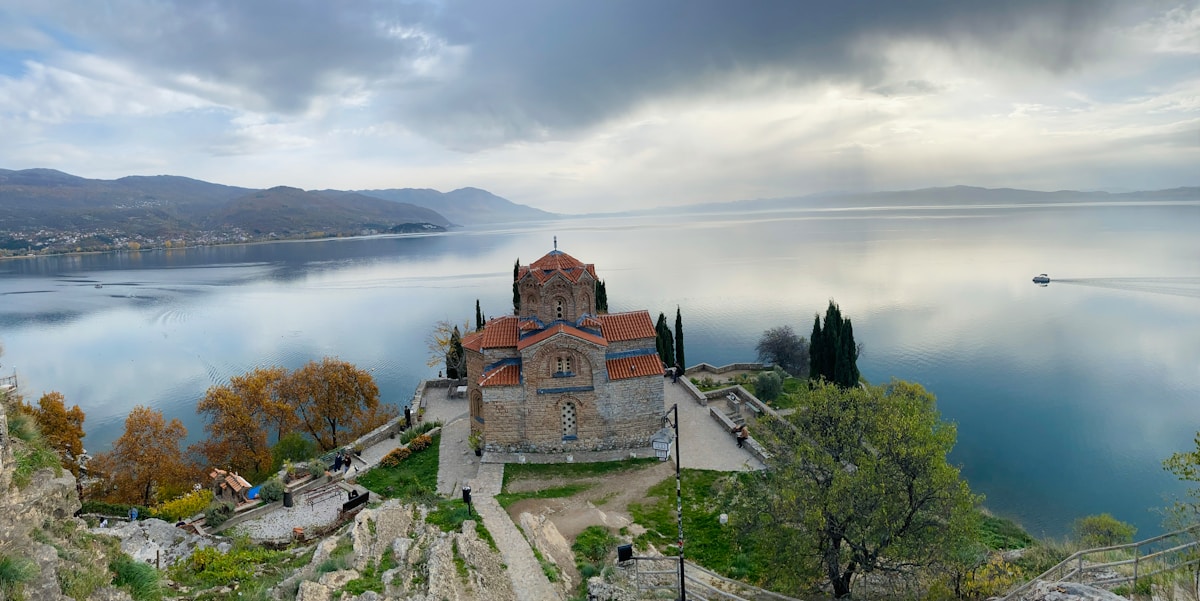
Walk the Ohrid Old Town - the Church of St. Sophia (approximately EUR 2), the Ancient Theatre (free), and the Samuel’s Fortress (approximately EUR 2) with views over Lake Ohrid. Swim at Kaneo Beach below the Church of St. John at Kaneo - the most photographed spot in North Macedonia. Browse Ohrid tours and activities →
Evening: Restaurant Antiko (fish and Macedonian mains approximately EUR 5–10) in a traditional Old Town house.
Day 15: Bay of Bones and Monastery
Morning: visit the Bay of Bones - a reconstructed prehistoric stilt village on the lakeshore (approximately EUR 3 entry, 30 minutes south by bus or taxi approximately EUR 5). Return via the Monastery of St. Naum (approximately EUR 2 entry), a 10th-century monastery on the Albanian border with peacocks roaming the grounds.
Afternoon: swim in the lake or take a boat tour from the Ohrid harbour (approximately EUR 5–10 for a 1-hour trip).
Where to Stay
Budget: Sunny Lake Hostel - dorms from approximately EUR 8. Mid-range: Hotel Villa Germanoff - doubles from approximately EUR 40. Prices as of 2026. Search all Ohrid hotels → Full accommodation guide: Where to stay in Ohrid
Day 16 - Skopje, North Macedonia
Getting There
Bus from Ohrid to Skopje, approximately 3 hours, from EUR 8.
Skopje in One Day
Walk the Old Bazaar - one of the largest Ottoman bazaars in Europe. Cross the Stone Bridge to the modern centre with its controversial Skopje 2014 statues and buildings. Visit the Memorial House of Mother Teresa (free, donations welcome) and the Museum of the Macedonian Struggle (approximately EUR 3). Browse Skopje tours and activities →
Afternoon: Kale Fortress (free entry) overlooking the city, then the Matka Canyon area if time permits (approximately EUR 5 for a boat trip into the canyon, 30 minutes from the centre by bus).
Evening: Destan (Ottoman-Macedonian, mains approximately EUR 4–8) in the Old Bazaar.
Where to Stay
Budget: Hi Skopje Hostel - dorms from approximately EUR 8. Mid-range: Hotel Solun - doubles from approximately EUR 45. Prices as of 2026. Search all Skopje hotels → Full accommodation guide: Where to stay in Skopje
Days 17–18 - Sofia, Bulgaria
Getting There
Bus from Skopje to Sofia, approximately 4–5 hours, from EUR 12. The border crossing at Deve Bair/Gyueshevo takes 15–30 minutes. Bulgaria uses the Bulgarian lev (BGN), approximately BGN 1.96 = EUR 1 (Bulgaria is expected to adopt the euro, but check before travel).
Day 17: Centre and Cathedrals
Walk the city centre loop: Alexander Nevski Cathedral (free entry, crypt museum approximately EUR 3), the Rotunda of St George (4th-century Roman, free), the National Palace of Culture park, and Vitosha Boulevard for cafes and shopping. Browse Sofia tours and activities →
Afternoon: National Archaeological Museum (approximately EUR 5) or the Sofia History Museum in the old mineral baths building (approximately EUR 6).
Evening: Hadjidraganov’s Houses (Bulgarian, mains approximately EUR 6–12) or Skaptoburger (gourmet burgers approximately EUR 5–8).
Day 18: Boyana Church and Vitosha
Morning: taxi or bus to Boyana Church (approximately EUR 10 entry, UNESCO World Heritage, 13th-century frescoes - book time slot in advance). Afternoon: take bus 66 to the base of Vitosha Mountain and hike to Aleko hut or walk the lower trails (1–3 hours depending on route).
Where to Stay
Budget: Hostel Mostel - dorms from approximately EUR 10 (includes free breakfast). Mid-range: Hotel Niky - doubles from approximately EUR 55. Prices as of 2026. Search all Sofia hotels → Full accommodation guide: Where to stay in Sofia
Days 19–20 - Belgrade, Serbia
Getting There
Bus or night bus from Sofia to Belgrade, approximately 6–7 hours, from EUR 18. The border crossing at Kalotina/Gradina takes 15–30 minutes. Serbia uses the Serbian dinar (RSD), approximately RSD 117 = EUR 1.
Day 19: Kalemegdan and Knez Mihailova
Kalemegdan Fortress (free, Military Museum approximately EUR 3), Knez Mihailova pedestrian street, Republic Square. Afternoon: Nikola Tesla Museum (approximately EUR 5). Browse Belgrade tours and activities →
Evening: dinner at Question Mark (kafana mains approximately EUR 7–12) or kebabs at Walter (from approximately EUR 4).
Day 20: Skadarlija, Zemun, and Nightlife
Skadarlija bohemian street, cross to Zemun and Gardoš Tower (approximately EUR 2). Belgrade’s nightlife is some of the best in Europe - the splavovi (river barges) on the Sava are the signature experience.
Where to Stay
Budget: Hostel Bongo - dorms from approximately EUR 10. Mid-range: Hotel Moskva - doubles from approximately EUR 75. Prices as of 2026. Search all Belgrade hotels → Full accommodation guide: Where to stay in Belgrade
Days 21–22 - Sarajevo, Bosnia and Herzegovina
Getting There
Bus from Belgrade to Sarajevo, approximately 7–8 hours, from EUR 22. The Serbia-Bosnia border crossing is straightforward. Bosnia uses the convertible mark (BAM), approximately BAM 1.96 = EUR 1.
Day 21: Baščaršija and Siege History
Baščaršija, Gazi Husrev-beg Mosque (approximately EUR 2), Latin Bridge. Afternoon: Tunnel of Hope Museum (approximately EUR 10, taxi approximately EUR 8 each way). Browse Sarajevo tours and activities →
Evening: Ćevabdžinica Željo (ćevapi from approximately EUR 4) or Dveri (mains approximately EUR 8–14).
Day 22: Vijećnica and Departure
Vijećnica (approximately EUR 5), the Austro-Hungarian quarter. Optional: cable car to Trebević (approximately EUR 10). Depart from Sarajevo Airport (SJJ).
Where to Stay
Budget: Hostel Franz Ferdinand - dorms from approximately EUR 10. Mid-range: Hotel Europe - doubles from approximately EUR 120. Prices as of 2026. Search all Sarajevo hotels → Full accommodation guide: Where to stay in Sarajevo
Transport Summary
| Leg | Duration | Cost (approx.) |
|---|---|---|
| Ljubljana → Zagreb | 2.5 hrs | from EUR 12 |
| Zagreb → Plitvice | 2–2.5 hrs | from EUR 12 |
| Plitvice → Split | 4.5–5 hrs | from EUR 18 |
| Split → Dubrovnik | 4–4.5 hrs | from EUR 15 |
| Dubrovnik → Kotor | 2–2.5 hrs | from EUR 15 |
| Budva → Tirana (via Podgorica) | 5 hrs | from EUR 23 |
| Tirana → Ohrid | 3–3.5 hrs | from EUR 10 |
| Ohrid → Skopje | 3 hrs | from EUR 8 |
| Skopje → Sofia | 4–5 hrs | from EUR 12 |
| Sofia → Belgrade | 6–7 hrs | from EUR 18 |
| Belgrade → Sarajevo | 7–8 hrs | from EUR 22 |
| Total transport | from EUR 165 |
All prices one way, as of 2026.
Currencies
| Country | Currency | Approx. Rate (as of 2026) |
|---|---|---|
| Slovenia | EUR | - |
| Croatia | EUR | - |
| Montenegro | EUR | - |
| Albania | ALL (lek) | ALL 105 = EUR 1 |
| North Macedonia | MKD (denar) | MKD 61 = EUR 1 |
| Bulgaria | BGN (lev) | BGN 1.96 = EUR 1 |
| Serbia | RSD (dinar) | RSD 117 = EUR 1 |
| Bosnia | BAM (mark) | BAM 1.96 = EUR 1 |
ATMs are widely available in all cities on this route. Inform your bank before departure to avoid card blocks.
Budget Summary
| Category | Budget (22 days) | Mid-Range (22 days) |
|---|---|---|
| Accommodation | EUR 220–440 | EUR 900–1,600 |
| Food | EUR 200–350 | EUR 450–700 |
| Transport | EUR 165–220 | EUR 180–250 |
| Attractions | EUR 120–180 | EUR 140–200 |
| Total | EUR 705–1,190 | EUR 1,670–2,750 |
Albania, North Macedonia, Bulgaria, Serbia, and Bosnia are all significantly cheaper than Croatia and Slovenia. Expect your daily spend to drop by 40–60% once you leave the Croatian coast.
Where to Stay
- Ljubljana — Where to stay in Ljubljana
- Zagreb — Where to stay in Zagreb
- Split — Where to stay in Split
- Dubrovnik — Where to stay in Dubrovnik
- Kotor — Where to stay in Kotor
- Budva — Where to stay in Budva
- Tirana — Where to stay in Tirana
- Ohrid — Where to stay in Ohrid
- Skopje — Where to stay in Skopje
- Sofia — Where to stay in Sofia
- Belgrade — Where to stay in Belgrade
- Sarajevo — Where to stay in Sarajevo
Things to do at each stop:
See also
- 2 weeks in the Balkans
- 10 days in the Balkans
- Albania 7-day itinerary
- Bulgaria 7-day itinerary
- 5-day North Macedonia itinerary
- Montenegro itinerary
- Kosovo 5-day itinerary
- Ljubljana city guide
- Tirana city guide
- Sofia city guide
- Sarajevo city guide
- Hiking in the Balkans
- Best beaches in the Balkans
- Getting around the Balkans
- Border crossings guide
- Balkans visa guide
- Balkans travel costs
- Backpacking the Balkans on a budget
- Luxury Balkans travel
- Balkans honeymoon guide
Book Your Trip
Flights — search and compare on Aviasales eSIM — stay connected with Airalo Travel insurance — get covered with EKTA Airport transfers — book with Kiwitaxi Car rental — compare with GetRentaCar Hotels — compare and book accommodation on Booking.com Tours and activities — browse GetYourGuide