Seven days gives you enough time to see Serbia’s four most rewarding regions: two days to settle into Belgrade, a day across the Danube to Petrovaradin, a night train south to Niš, and two nights on the Zlatibor plateau before the bus back north. This itinerary uses public transport throughout. All prices are in Serbian Dinar (RSD) and approximate euros (€); estimates are as of 2026.
Overview
| Day | Area | Key activity |
|---|---|---|
| 1 | Belgrade | Kalemegdan, Republic Square, Skadarlija first evening |
| 2 | Belgrade | Bohemian Quarter in depth, National Museum, Zemun |
| 3 | Novi Sad | Petrovaradin Fortress, Dunavska Street |
| 4 | Belgrade → Niš | Overnight train, afternoon arrival |
| 5 | Niš | Skull Tower, Niš Fortress, Tinkers’ Alley |
| 6 | Zlatibor | Mountain plateau, Gostilje Waterfall |
| 7 | Zlatibor → Belgrade | Morning walk, afternoon return |
Day 1 - Arrive Belgrade: Kalemegdan and Skadarlija
Arrive at Belgrade Nikola Tesla Airport. Bus A1 connects the airport to Slavija Square (approximately RSD 400, 40–55 min). Taxis from the official desk cost approximately RSD 1,800–2,500 to the city centre; use the Naxis or CarGo app to avoid overcharging.
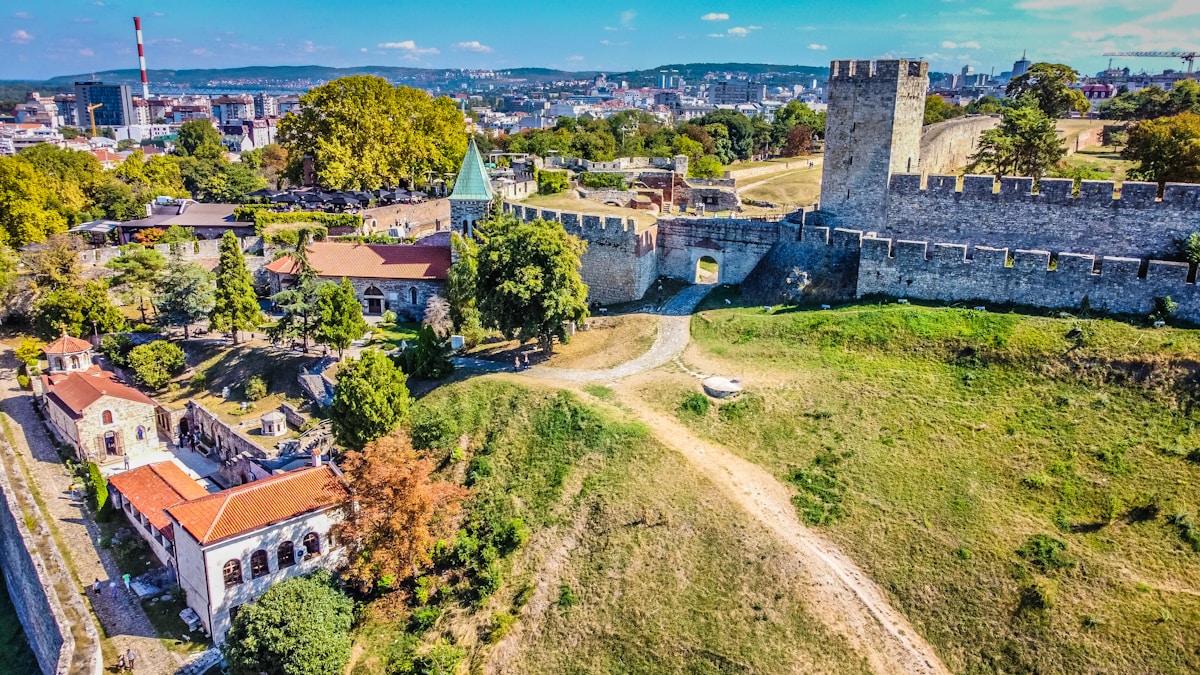
Walk to Kalemegdan Fortress (free entry, grounds open daily) - a medieval citadel above the confluence of the Sava and Danube rivers. The walls give the best sunset view in Belgrade. Inside the park: the Military Museum (approximately RSD 350 entry, closed Mondays), Roman Well, and the Victor Monument, a bronze nude warrior cast in 1928 that scandalised the city for decades.
Evening: head 10 minutes east to Skadarlija - Belgrade’s cobblestoned Bohemian Quarter. A single street lined with kafana taverns where Serbian folk musicians have played since the 19th century. Tri Šešira (Three Hats, from approximately RSD 1,200–1,800/person) and Dva Jelena (Two Deer, similar prices) are the most atmospheric. Expect accordion music and mezeluk sharing platters.
Browse guided tours and experiences in Belgrade →
Where to stay in Belgrade:
- Budget: Hostel Bongo - dorm from approximately RSD 1,500–2,000/night (€13–17); central location near Skadarlija
- Mid-range: Hotel Moskva - from approximately RSD 7,500–10,000/night (€64–85); landmark 1906 Art Nouveau building on Terazije, with the famous Moskva cake in the ground-floor café
- Upper: Mama Shelter Belgrade - from approximately RSD 11,000–16,000/night (€94–137); rooftop pool with city views
Day 2 - Belgrade: Bohemian Quarter in depth, National Museum, Zemun
Morning: the National Museum of Serbia (Republic Square, approximately RSD 500 entry, closed Mondays) holds the Miroslav Gospel - a 12th-century illuminated manuscript and Serbia’s most treasured cultural artefact - alongside a strong collection of ancient coins and medieval Serbian art. Allow 1.5–2 hours.
Cross to the National Theatre on the same square. The building has stood since 1869; the programme runs September to June. If you’re here on a weekday check same-day tickets at the box office (approximately RSD 600–1,500).
Afternoon: take Bus 15 or 84 (approximately RSD 90) 20 minutes to Zemun - a former Habsburg town absorbed by Belgrade, with a distinct Central European feel. Walk up to Gardoš Tower (Millennium Tower, free) for views across the Danube. The Zemun waterfront (kej) is lined with river fish restaurants: Šaran (carp, catfish, pike perch; approximately RSD 1,500–2,500/person) is the classic choice.
Evening: return to Belgrade and explore the Savamala arts district on the Sava riverbank - shipping containers repurposed into bars, galleries and clubs. KC Grad (free entry most nights) hosts live gigs from Wednesday to Saturday. The floating club barges (splavovi) on the river come alive after midnight.
Day 3 - Day trip: Novi Sad and Petrovaradin Fortress
Minibuses to Novi Sad depart Lasta bus station roughly every 30 minutes (approximately RSD 800–1,000, 1.5 hours). Trains also run but are slower. The bus drops at Novi Sad bus station, 15 minutes’ walk from the centre.
Petrovaradin Fortress dominates the right bank of the Danube on a 40-metre limestone cliff. Construction started in 1692 and took 88 years; Napoleon called it the Gibraltar of the Danube. The tunnels beneath the fortress (approximately RSD 400, guided tour approximately RSD 600) stretch 16 km and were dug by Austrian prisoners. The fortress hosts the EXIT Music Festival every July - if you’re here in early July, book tickets and accommodation months in advance. The fortress also has a small art colony of studios and cafés at street level.
Cross the Liberty Bridge (Sloboda) back to the left bank and walk along Dunavska Street - the main pedestrian strip lined with pastel Habsburg architecture. The Petrovaradin Clock Tower on the fortress hill has its hour and minute hands reversed to help river traffic read the time from the water.
Eat in Novi Sad: Restoran Fontana (traditional Serbian; approximately RSD 1,000–1,800/person) near the Bishop’s Palace, or Lipa (traditional fish dishes from approximately RSD 1,200/person) on the Danube bank.
Book tours and activities in Novi Sad →
Return to Belgrade by early evening. Tonight is a good night to explore Belgrade’s nightlife - the city’s reputation as a clubbing capital is well-earned, with the Savamala barge clubs, Drugstore venue and Barutana open-air amphitheatre all drawing serious DJs.
Day 4 - Belgrade → Niš: overnight or daytime train
By train: the Belgrade–Niš express takes approximately 3.5–4 hours (RSD 900–1,200, book at the station or online). Evening departures and early morning arrivals are common. By bus: Lasta, Niš-Ekspres and other operators run frequently (approximately RSD 900–1,300, 2.5–3 hours). The bus is faster and more convenient.
Niš is Serbia’s third city, founded by the Romans who called it Naissus. Constantine the Great - the emperor who legalised Christianity - was born here in 272 CE. Arriving mid-afternoon gives enough time to walk Niš Fortress (free, grounds always open) - a large, largely intact 18th-century Ottoman fortification on the Nišava River with good views from the walls.
Evening: explore the cobblestoned Tinkers’ Alley (Kazandžijsko Sokače) - a short bazaar street lined with artisan metalworkers, now mostly cafés and jewellery shops. Dinner at Nirske Ručice (traditional Niš cuisine including pljeskavica and Niška pastrmka river trout; approximately RSD 900–1,600/person).
Where to stay in Niš:
- Mid-range: Hotel My Place - from approximately RSD 4,500–6,000/night (€38–51)
- Upper: Mercure Niš - from approximately RSD 7,500–10,000/night (€64–85); central location
Day 5 - Niš: Skull Tower, Mediana and city exploration
Skull Tower (Ćele Kula, entry approximately RSD 300, open daily) is the most singular memorial in the Balkans: a 4.5-metre stone tower built in 1809 by the Ottoman commander Hurshid Pasha using the skulls of Serbian rebels killed at the Battle of Čegar. The tower originally displayed 952 skulls; 58 remain embedded in the stone today. The site is approximately 4 km east of the centre - take Bus 25 or a taxi (approximately RSD 250).
Mediana Roman Villa (approximately RSD 300, 3 km east of centre) is the partially excavated remains of Constantine’s imperial residence: mosaic floors, granaries and a triclinium (banquet hall). Less visited than the Skull Tower but worth an hour.
Back in the city: visit the National Museum of Niš inside the Niš Fortress (approximately RSD 300, closed Mondays) for Roman-era artefacts from Naissus. Walk along the Nišava River promenade toward the Tinkers’ Alley for afternoon coffee.
Evening: Niš has an active café culture around Kopitareva Street. Try Tvrđava restaurant inside the fortress walls for grilled meats and local rakija (approximately RSD 1,200–2,000/person).
Day 6 - Niš → Zlatibor: mountain plateau
Bus from Niš to Zlatibor (approximately RSD 1,400–1,800, 3.5–4 hours, change at Užice or direct seasonal service). Alternatively, take the bus to Užice (RSD 900, 2 hours) and a local minibus up to the plateau (RSD 400, 40 min).
Zlatibor is a high plateau at 1,000–1,500 metres elevation, popular with Serbian families year-round. In summer it’s cool, green and excellent for walking; in winter it’s a ski resort. The village of Zlatibor itself is a resort town with hotels and restaurants around a small lake.
Gostilje Waterfall (approximately RSD 200 entry) is 12 km from Zlatibor village - taxi approximately RSD 800 each way. A 17-metre cascade in forested terrain, best in spring and early summer. The nearby Stopića Cave (approximately RSD 400 entry) has impressive travertine formations over 1.5 km of passages - allow 1 hour.
For those with an extra day: Tara National Park is 40 km southwest of Zlatibor. The Đurđevića Tara Bridge, a 365-metre single-arch concrete span over a 150-metre canyon, is among the most dramatic road bridges in Europe. Day-trip possible by taxi from Zlatibor (approximately RSD 3,000–4,000 return).
Where to stay in Zlatibor:
- Mid-range: Hotel Palisad - from approximately RSD 7,000–10,000/night (€60–85); lake views
- Upper: Mona Hotel Zlatibor - from approximately RSD 11,000–16,000/night (€94–137); indoor pool and spa
Eat in Zlatibor: Stara Planinska Kuća for mountain food - kajmak (clotted cream), proja (cornbread), roast lamb, and Zlatibor smoked prosciutto (approximately RSD 1,200–2,000/person).
Day 7 - Zlatibor to Belgrade
Morning walk on the plateau - the trail around the Zlatibor Lake is approximately 3.5 km and takes an hour. The viewpoint above the lake gives clear views southwest toward Tara’s forests on a clear day.
Bus back to Belgrade (direct from Zlatibor, approximately RSD 1,400–1,800, 3 hours). Arrive in time for a final evening on Terazije - Belgrade’s central square - or a last meal in Skadarlija before your departure flight from Nikola Tesla Airport.
Transport summary
| Leg | Method | Approx. cost | Approx. time |
|---|---|---|---|
| Airport → Belgrade centre | Bus A1 | RSD 400 (€3.50) | 45 min |
| Belgrade → Novi Sad | Minibus | RSD 800–1,000 (€7–9) | 1.5 hrs |
| Belgrade → Niš | Bus/train | RSD 900–1,300 (€8–11) | 2.5–4 hrs |
| Niš → Zlatibor | Bus (+ change) | RSD 1,400–1,800 (€12–15) | 3.5–4 hrs |
| Zlatibor → Belgrade | Bus | RSD 1,400–1,800 (€12–15) | 3 hrs |
All costs are as of 2026 and may vary by operator and season.
Budget overview
| Category | Budget/day | Mid-range/day |
|---|---|---|
| Accommodation | RSD 1,500–3,000 (€13–26) | RSD 7,000–10,000 (€60–85) |
| Food | RSD 1,200–1,800 (€10–15) | RSD 2,500–4,000 (€21–34) |
| Transport | RSD 400–800 (€3–7) | RSD 600–1,200 (€5–10) |
| Sights/activities | RSD 300–700 (€3–6) | RSD 600–1,200 (€5–10) |
| Total | approx. €29–54 | approx. €91–139 |
Related Serbia and Balkans guides
- Belgrade travel guide
- Belgrade nightlife
- Novi Sad travel guide
- Niš travel guide
- Zlatibor travel guide
- Serbia travel guide
- Day trips from Belgrade
- Food tours in Belgrade
- 1 week in the Balkans
- 2 weeks in the Balkans
- Balkans travel costs
Book Your Trip
Flights — search and compare on Aviasales eSIM — stay connected with Airalo Travel insurance — get covered with EKTA Airport transfers — book with Kiwitaxi Car rental — compare with GetRentaCar Hotels — compare and book accommodation on Booking.com Tours and activities — browse GetYourGuide