Two weeks opens up the full western Balkans arc - from Belgrade’s energy and Novi Sad’s Habsburg charm, down through Croatia’s coast, across to Montenegro, and deep into Bosnia. This route crosses four countries, passes through five border crossings, and covers everything from Roman ruins to Ottoman bazaars to Adriatic beaches.
Route: Belgrade (2) → Novi Sad (1) → Zagreb (1) → Plitvice (1) → Split (2) → Dubrovnik (2) → Kotor/Budva (2) → Mostar (1) → Sarajevo (2).
Typical costs (per person, excluding flights): budget approx. EUR 700–1,100; mid-range approx. EUR 1,200–2,000 as of 2026. Grab a Balkans eSIM before you leave — it covers all five border crossings — and sort travel insurance ahead of departure.
Days 1–2 - Belgrade, Serbia
Day 1: Kalemegdan and Old Town
Arrive at Belgrade Nikola Tesla Airport (BEG). The A1 bus runs to Slavija Square (approximately EUR 4, 40 minutes). Taxis cost approximately EUR 20–25.
Afternoon: walk Kalemegdan Fortress - the Roman-Ottoman-Austrian citadel overlooking the confluence of the Sava and Danube rivers. Entry to the park is free; the Military Museum inside is approximately EUR 3. Walk down Knez Mihailova, Belgrade’s main pedestrian street, to Republic Square. Browse Belgrade tours and activities →
Evening: dinner at Question Mark (mains approximately EUR 7–12, Belgrade’s oldest kafana, opened 1823) or Manufaktura (Serbian mains approximately EUR 8–14) on Kralja Petra.
Day 2: Skadarlija and Zemun
Morning: walk Skadarlija - Belgrade’s bohemian quarter, a cobbled street of traditional restaurants and live music. Visit the Nikola Tesla Museum (approximately EUR 5 entry, guided tours with working Tesla coil demonstrations).
Afternoon: cross the river to Zemun - the former Austro-Hungarian border town now absorbed into Belgrade. Climb the Gardoš Tower (approximately EUR 2) for views over the Danube, then walk the Zemun quay.
Evening: dinner on one of Belgrade’s river barges (splavovi). Iguana on the Sava serves grilled meats and Serbian salads (mains approximately EUR 8–14).
Where to Stay in Belgrade
Budget: Hostel Bongo - dorms from approximately EUR 10, privates from EUR 30. Mid-range: Hotel Moskva - doubles from approximately EUR 75, Art Nouveau landmark on Terazije. Upscale: Square Nine Hotel - doubles from approximately EUR 160. Serbia uses the Serbian dinar (RSD), approximately RSD 117 = EUR 1 as of 2026. All prices as of 2026. Search all Belgrade hotels → Full accommodation guide: Where to stay in Belgrade
Day 3 - Novi Sad
Getting There
Train or bus from Belgrade, both approximately 1.5 hours. Trains from approximately EUR 5, buses from approximately EUR 6. Departures every 30–60 minutes.
Novi Sad in One Day
Walk the Petrovaradin Fortress on the Danube - the “Gibraltar of the Danube.” Entry to the grounds is free; the underground tunnels tour costs approximately EUR 4. The fortress also hosts the EXIT Festival each July. Browse Novi Sad tours and activities →
In the city centre: Dunavska Street for cafes, the Synagogue (one of the largest in Europe, exterior only), and the Serbian National Theatre on Trg Slobode.
Afternoon: walk the Danube quay or visit the Museum of Vojvodina (approximately EUR 2).
Evening: dinner at Fish i Zeleniš (mains approximately EUR 7–12) or Projekt 72 (modern Serbian, mains approximately EUR 8–14).
Where to Stay
Budget: Varad Inn - dorms from approximately EUR 12. Mid-range: Hotel Centar Novi Sad - doubles from approximately EUR 50. Prices as of 2026. Search all Novi Sad hotels → Full accommodation guide: Where to stay in Novi Sad
Day 4 - Zagreb, Croatia
Getting There
Bus from Novi Sad to Zagreb. Journey time approximately 4.5–5 hours. Tickets from approximately EUR 20 one way. The border crossing at Bajakovo usually takes 15–30 minutes. Croatia uses the euro.
Zagreb in One Day
Afternoon: Upper Town - St Mark’s Church, Stone Gate, Lotrščak Tower (approximately EUR 4). Take the funicular (approximately EUR 1, 55 seconds) between Upper and Lower Town. Walk Ban Jelačić Square and Dolac Market. Browse Zagreb tours and activities →
Evening: Vinodol (mains approximately EUR 10–18) or craft beer at Pivnica Medvedgrad (mains approximately EUR 8–14) on Tkalčićeva.
Where to Stay
Budget: Swanky Mint Hostel - dorms from approximately EUR 18. Mid-range: Hotel Jägerhorn - doubles from approximately EUR 85. Prices as of 2026. Search all Zagreb hotels → Full accommodation guide: Where to stay in Zagreb
Day 5 - Plitvice Lakes
Getting There
Morning bus from Zagreb, approximately 2–2.5 hours, from EUR 12.
The Park
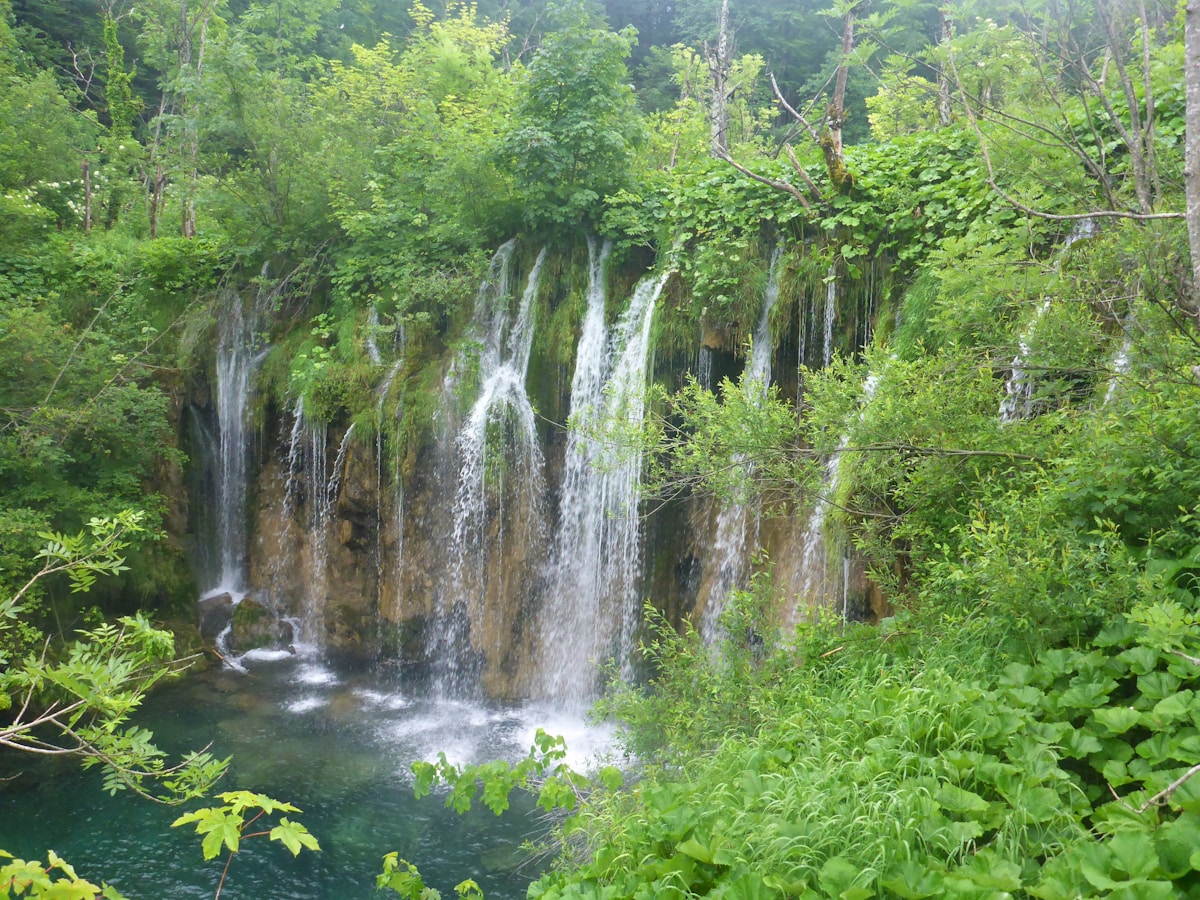
Plitvice Lakes National Park entry costs approximately EUR 20–30 depending on season as of 2026. Walk the Lower Lakes first (Entrance 1) for the Veliki Slap waterfall, then boat to the Upper Lakes. Allow 4–6 hours for the full circuit.
Where to Stay
Accommodation near Plitvice is scattered guesthouses along the main road (from approximately EUR 40–90/night). Search Plitvice Lakes hotels on Booking.com and book early — options fill fast in summer. Book dinner where you sleep, as restaurant options are limited.
Days 6–7 - Split
Getting There
Morning bus from Plitvice to Split, approximately 4.5–5 hours, from EUR 18.
Day 6: Diocletian’s Palace
Diocletian’s Palace underground cellars (approximately EUR 8), Cathedral of Saint Domnius with bell tower (approximately EUR 6), the Peristyle courtyard, and the Riva promenade. Evening: Konoba Varoš (mains approximately EUR 10–16). Browse Split tours and activities →
Day 7: Marjan Hill and Beach
Morning hike up Marjan Hill (30–40 minutes to summit). Afternoon: swim at Kašjuni Beach or Bačvice Beach. Evening: Uje Oil Bar (mains approximately EUR 12–18).
Where to Stay in Split
Budget: Tchaikovsky Hostel - dorms from approximately EUR 16. Mid-range: Heritage Hotel Antique Split - doubles from approximately EUR 100. Upscale: Hotel Vestibul Palace - doubles from approximately EUR 220. Prices as of 2026. Search all Split hotels → Full accommodation guide: Where to stay in Split
Days 8–9 - Dubrovnik
Getting There
Morning bus from Split, approximately 4–4.5 hours, from EUR 15. Passes through the Neum corridor (two quick border checks).
Day 8: City Walls
City Walls walk (approximately EUR 35), Rector’s Palace (approximately EUR 15), Sponza Palace (free). Evening: Proto Fish Restaurant (mains approximately EUR 25–40) or Taj Mahal (Bosnian, mains approximately EUR 10–16). Browse Dubrovnik tours and activities →
Day 9: Lokrum and Mt Srd
Morning: ferry to Lokrum Island (approximately EUR 20 return). Afternoon: cable car to Mt Srd (approximately EUR 27 return), Fort Imperial (approximately EUR 6). Sunset from the top.
Where to Stay in Dubrovnik
Budget: Hostel Angelina Old Town - dorms from approximately EUR 25. Mid-range: Hotel Stari Grad - doubles from approximately EUR 130. Prices as of 2026. Search all Dubrovnik hotels → Full accommodation guide: Where to stay in Dubrovnik
Days 10–11 - Kotor and Budva, Montenegro
Getting There
Morning bus from Dubrovnik to Kotor, approximately 2–2.5 hours, from EUR 15. Border crossing at Karasovići. Montenegro uses the euro.
Day 10: Kotor
Old Town walk, Cathedral of Saint Tryphon (approximately EUR 4), climb to Fortress of San Giovanni (approximately EUR 8). Afternoon: taxi to Perast (approximately EUR 5) and boat to Our Lady of the Rocks (approximately EUR 5 return). Evening: Galion (seafood mains from EUR 14). Browse Kotor tours and activities →
Day 11: Budva
Bus or taxi to Budva (approximately EUR 3–5, 25 minutes). Walk the Budva Old Town walls (free) and the Citadel (approximately EUR 4). Swim at Mogren Beach (a 10-minute walk from the Old Town through a tunnel). Afternoon: optional boat trip to Sveti Stefan viewpoint (the island hotel is private but the nearby beach is public; entrance approximately EUR 3 in season).
Return to Kotor for the night or stay in Budva.
Where to Stay
Kotor Budget: Old Town Hostel - dorms from approximately EUR 18. Kotor Mid-range: Hotel Vardar - doubles from approximately EUR 90. Prices as of 2026. Search all Kotor hotels → Full accommodation guide: Where to stay in Kotor | Search Budva hotels →
Day 12 - Mostar, Bosnia and Herzegovina
Getting There
Route back through Dubrovnik: Kotor → Dubrovnik (2 hrs, approximately EUR 15) then Dubrovnik → Mostar (3 hrs, approximately EUR 12). Total approximately 5–6 hours. Bosnia uses the convertible mark (BAM 1.96 ≈ EUR 1).
Mostar in One Day
Stari Most (Old Bridge), Koski Mehmed Pasha Mosque (approximately EUR 4, includes minaret), Kujundžiluk bazaar. Afternoon: taxi to Blagaj Tekke (approximately EUR 3 each way, entry approximately EUR 3). Evening: Šadrvan (mains approximately EUR 5–9). Browse Mostar tours and activities →
Where to Stay
Budget: Hostel Majdas - dorms from approximately EUR 12. Mid-range: Muslibegovića House - doubles from approximately EUR 95. Prices as of 2026. Search all Mostar hotels → Full accommodation guide: Where to stay in Mostar
Days 13–14 - Sarajevo
Getting There
Morning bus from Mostar, approximately 2.5 hours, from EUR 10.
Day 13: Old Town and Siege History
Baščaršija, Gazi Husrev-beg Mosque (approximately EUR 2), Latin Bridge. Afternoon: Tunnel of Hope Museum (approximately EUR 10). Evening: Ćevabdžinica Željo (ćevapi from approximately EUR 4) or Dveri (mains approximately EUR 8–14). Book a Tunnel of Hope guided tour →
Day 14: Vijećnica and Departure
Vijećnica (approximately EUR 5), Ferhadija pedestrian street. Optional: cable car to Trebević (approximately EUR 10 return). Depart from Sarajevo Airport (SJJ), taxi approximately EUR 10–15.
Where to Stay
Budget: Hostel Franz Ferdinand - dorms from approximately EUR 10. Mid-range: Hotel Old Town - doubles from approximately EUR 55. Upscale: Hotel Europe - doubles from approximately EUR 120. Prices as of 2026. Search all Sarajevo hotels → Full accommodation guide: Where to stay in Sarajevo
Transport Summary
| Leg | Duration | Cost (approx.) |
|---|---|---|
| Belgrade → Novi Sad | 1.5 hrs | from EUR 5 |
| Novi Sad → Zagreb | 4.5–5 hrs | from EUR 20 |
| Zagreb → Plitvice | 2–2.5 hrs | from EUR 12 |
| Plitvice → Split | 4.5–5 hrs | from EUR 18 |
| Split → Dubrovnik | 4–4.5 hrs | from EUR 15 |
| Dubrovnik → Kotor | 2–2.5 hrs | from EUR 15 |
| Kotor → Mostar (via Dubrovnik) | 5–6 hrs | from EUR 27 |
| Mostar → Sarajevo | 2.5 hrs | from EUR 10 |
| Total transport | from EUR 122 |
All prices one way, as of 2026.
Border Crossings
This route crosses five international borders:
- Serbia → Croatia (Bajakovo): Non-EU to EU. Passport check, typically 15–30 minutes.
- Croatia → Bosnia (Neum corridor): Two quick checks when the Split–Dubrovnik bus passes through Neum. Usually under 10 minutes each.
- Croatia → Montenegro (Karasovići): EU to non-EU. Typically 10–20 minutes.
- Montenegro → Croatia → Bosnia: When routing Kotor → Dubrovnik → Mostar, you briefly re-enter Croatia then cross into Bosnia.
Keep your passport accessible on every bus journey.
Budget Summary
| Category | Budget (14 days) | Mid-Range (14 days) |
|---|---|---|
| Accommodation | EUR 200–400 | EUR 700–1,200 |
| Food | EUR 150–250 | EUR 350–550 |
| Transport | EUR 125–160 | EUR 135–175 |
| Attractions | EUR 100–150 | EUR 110–160 |
| Total | EUR 575–960 | EUR 1,295–2,085 |
Serbia and Bosnia are the budget-friendly bookends - expect to spend EUR 30–50 per day. Croatia’s Dubrovnik and Split are the most expensive at EUR 80–150 per day mid-range.
Where to Stay
- Belgrade — Where to stay in Belgrade
- Novi Sad — Where to stay in Novi Sad
- Zagreb — Where to stay in Zagreb
- Split — Where to stay in Split
- Dubrovnik — Where to stay in Dubrovnik
- Kotor — Where to stay in Kotor
- Budva — Where to stay in Budva
- Mostar — Where to stay in Mostar
- Sarajevo — Where to stay in Sarajevo
Things to do at each stop:
See also
- 1 week in the Balkans
- 3 weeks in the Balkans
- 10 days in the Balkans
- Belgrade city guide
- Novi Sad city guide
- Split city guide
- Best tours in Split
- Dubrovnik city guide
- Best tours in Dubrovnik
- Kotor city guide
- Best tours in Kotor
- Budva city guide
- Sarajevo city guide
- Best tours in Sarajevo
- Best tours in Mostar
- Belgrade vs Zagreb
- Mostar vs Sarajevo
- Balkans without a car
- Getting around the Balkans
- Border crossings guide
- Balkans travel costs
- Trip cost calculator — personalised budget estimate
- First time in the Balkans
Book Your Trip
Flights — search and compare on Aviasales eSIM — stay connected with Airalo Travel insurance — get covered with EKTA Airport transfers — book with Kiwitaxi Car rental — compare with GetRentaCar Hotels — compare and book accommodation on Booking.com Tours and activities — browse GetYourGuide