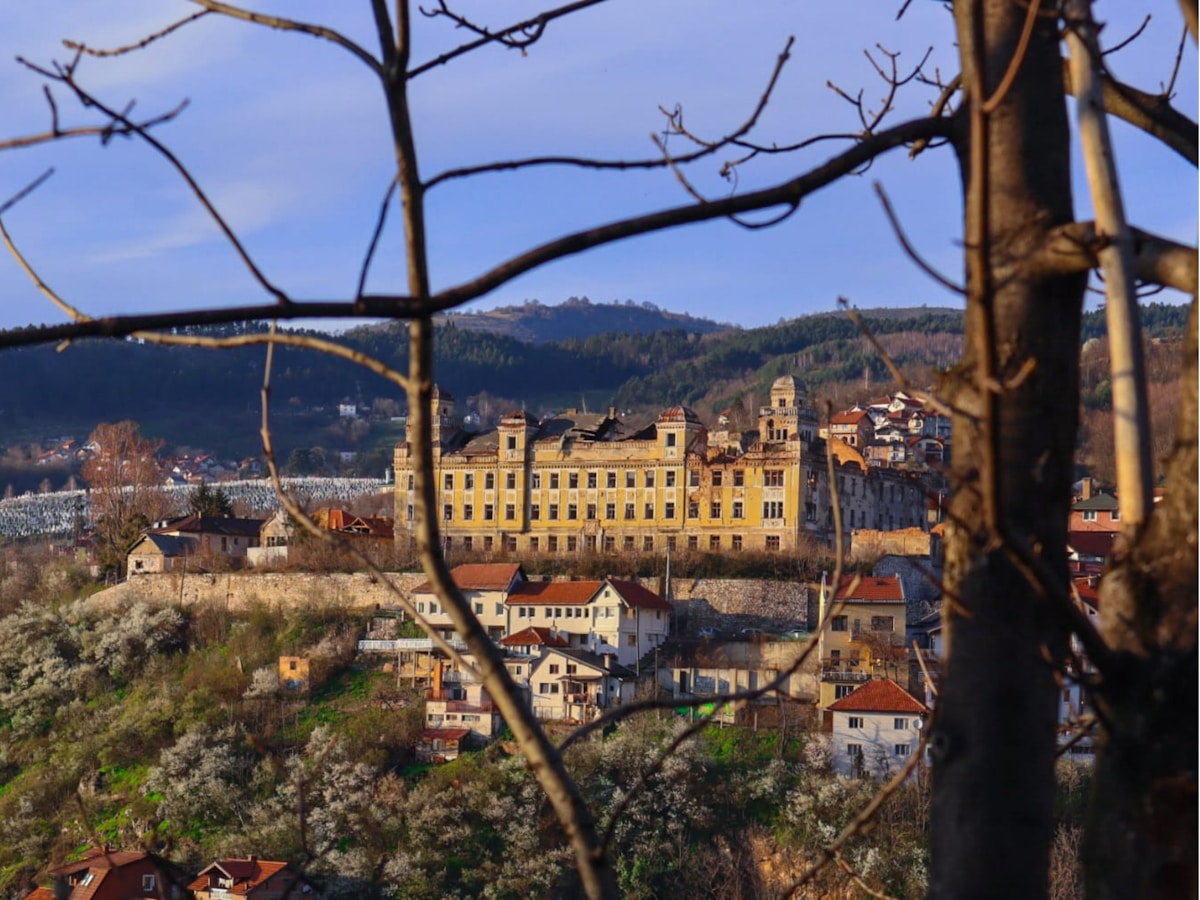
Bosnia and Herzegovina packs more history and landscape variety into a small country than almost anywhere else in the Balkans. This 7-day itinerary focuses on the cultural and Ottoman heritage corridor: three days in Sarajevo, two days in and around Mostar, and two days through the medieval market towns of Travnik and Jajce. All prices are in Convertible Marks (BAM/KM) with approximate euros (€); estimates are.
Overview
| Day | Area | Key activities |
|---|---|---|
| 1 | Sarajevo | Baščaršija, Gazi Husrev-beg Mosque, Latin Bridge |
| 2 | Sarajevo | Tunnel of Hope Museum, Yellow Fortress, war history |
| 3 | Sarajevo | Vrelo Bosne, Sarajevo War Childhood Museum |
| 4 | Mostar + Blagaj | Stari Most, Blagaj Tekke, Kravice Waterfalls option |
| 5 | Mostar exploration | Koski Mehmed Pasha Mosque, Crooked Bridge |
| 6 | Travnik | Travnik Fortress, coloured mosque |
| 7 | Jajce | Pliva Waterfall, Jajce Fortress, return to Sarajevo |
Day 1 - Arrive Sarajevo: Baščaršija and the old town
Arrive at Sarajevo International Airport (SJJ). Taxi to the centre costs approximately BAM 20–30 (€10–15, 20–30 min). There is no airport bus; rideshare apps are limited so a taxi from the official rank is standard.
Baščaršija is the Ottoman bazaar quarter at the heart of the old city - a compact grid of copper-smith lanes, hans (caravanserais), and mosques built in the 16th century when Sarajevo was the Ottomans’ largest city in the Balkans outside Istanbul. The centrepiece is Sebilj Fountain - a wooden Ottoman fountain rebuilt in 1891 now surrounded by pigeons and tourists. The surrounding lanes hold workshops selling copper coffee sets, kilims, and traditional Bosnian handicrafts.
Gazi Husrev-beg Mosque (entry approximately BAM 4, open to non-Muslim visitors outside prayer times) was built in 1531 and is the largest Ottoman mosque in the Balkans still used for regular prayer. The adjacent Bezistand covered bazaar and Kursumli Han (the Lead Caravanserai, free, partially excavated) complete the 16th-century complex.
Walk 10 minutes west to the Latin Bridge - a modest four-arch Ottoman bridge over the Miljacka River, unremarkable in itself but famous as the spot where Archduke Franz Ferdinand was assassinated on 28 June 1914, triggering World War One. The Franz Ferdinand Museum (approximately BAM 5 entry) on the northeast corner of the bridge tells the story clearly.
Eat in Baščaršija: Ćevabdžinica Petica Asimoviča (traditional ćevapi in somun flatbread, approximately BAM 5–8/person) is the most respected ćevabdžinica in the city. For a sit-down meal: Inat Kuća (the Spite House, relocated brick by brick across the river in 1896; traditional Bosnian dishes approximately BAM 12–22/person) or Restoran Dveri (same price range, courtyard setting).
Book walking tours and guided experiences in Sarajevo →
Where to stay in Sarajevo:
- Budget: Hostel Balkan Han - dorm from approximately BAM 18–25/night (€9–13); courtyard in the old town
- Mid-range: Hotel Astra Garni - from approximately BAM 90–130/night (€46–66); near Baščaršija
- Upper: Hotel Europe - from approximately BAM 200–280/night (€102–143); historic Habsburg-era building, best address in the old town
Search all Sarajevo hotels → Full guide: where to stay in Sarajevo
Day 2 - Sarajevo: Tunnel of Hope and war history
The Tunnel of Hope Museum (Tunel spasa, entry approximately BAM 10, open daily) is the most important site of the Siege of Sarajevo (1992–1996). The tunnel - 800 metres long, 1.6 metres high - was dug by hand under the airport runway and ran beneath the UN exclusion zone, becoming the city’s only supply line during 44 months of siege. The museum preserves approximately 25 metres of the original tunnel and a short documentary film. Take taxi from the centre (approximately BAM 15 each way, 25 min) or Bus 32 from Ilidža tram stop. Book a Tunnel of Hope guided tour →
Return to the centre and walk up to Yellow Fortress (Žuta Tabija, free, 15–20 min uphill from Baščaršija) - a 16th-century Ottoman watchtower with the best panoramic view of Sarajevo’s minarets and red-tiled rooftops spreading into the surrounding hills. This is the spot locals come to watch the sunset.
Afternoon: the Sarajevo War Childhood Museum (BAM 5 entry, closed Mondays) is a deeply personal exhibit based on the testimonies of people who were children during the siege - each exhibit a single object with a story. Not for those wanting to rush. Allow 1–1.5 hours.
Walk the Sniper Alley stretch (now Zmaja od Bosne street) to see the Holiday Inn - the yellow hotel where foreign journalists stayed during the siege, directly opposite the Bosnian Parliament building that bore the heaviest sniper fire. Free to view from outside.
For a deeper dive into the Sarajevo war history, the History Museum of Bosnia and Herzegovina (BAM 6 entry, ul. Zmaja od Bosne 5) runs an excellent permanent Siege of Sarajevo exhibition with original artefacts, press photographs and survivor testimonies.
Evening: dinner in the Austro-Hungarian quarter west of the old town along Ferhadija Street - a pedestrianised street of 19th-century buildings nicknamed “Sarajevo is little Vienna” by Habsburg administrators.
Day 3 - Sarajevo: Vrelo Bosne and War Childhood
Morning: take Tram 3 to the end of the line at Ilidža (approximately BAM 1.80, 35 min) and walk or take a horse-drawn carriage (approximately BAM 25–35 per carriage) through a long avenue of plane trees to Vrelo Bosne (Spring of Bosnia) - where the Bosna River emerges from a karst spring in a nature park. The park is free; boat rides on the channels cost approximately BAM 8–10. The walk from Ilidža tram terminus through the avenue is approximately 2.5 km each way.
Afternoon: return to the old town and visit the National Museum of Bosnia and Herzegovina (BAM 5 entry, closed Mondays) - home to the Sarajevo Haggadah, a 14th-century Spanish Jewish manuscript considered one of the most valuable books in the world. It is displayed on request at specific times; confirm at the front desk.
The Vijećnica (City Hall) reopened in 2014 after 22 years of restoration following the catastrophic fire set by Serbian forces in August 1992, which destroyed approximately 2 million books in the National and University Library. The rebuilt hall (approximately BAM 5 entry) has a stunning Neo-Moorish interior.
Food tours in Sarajevo are an excellent way to cover the old town’s eating culture in one morning - most run 3 hours and visit the covered market, ćevabdžinicas, Bosnian sweet shops and traditional bakeries (approximately BAM 70–100/person).
Evening: last dinner in Sarajevo. To Be or Not to Be (burgers and Bosnian fusion in the old town, approximately BAM 12–20/person) for a lighter option, or return to Dveri for a final traditional meal.
Day 4 - Mostar and Blagaj
Bus from Sarajevo to Mostar (Autoprevoz company, departures approximately every 2 hours, approximately BAM 16–20, 2.5 hours). The route descends through the Neretva Valley with increasingly dramatic canyon scenery.
Mostar is the Balkans’ most photographed old town: a compact Ottoman quarter on both banks of the Neretva River, connected by the Stari Most (Old Bridge). The original 16th-century bridge, designed by Ottoman architect Mimar Hayruddin, stood for 427 years before being deliberately destroyed by Croatian forces on 9 November 1993. The current bridge - rebuilt stone by stone and reopened in 2004 - is a UNESCO World Heritage Site. Entry to the bridge is free; the bridge diving by local divers (an annual competition every July) draws crowds.
Climb the Koski Mehmed Pasha Mosque minaret (approximately BAM 6 including mosque entry) for the classic view down over the bridge and the turquoise Neretva. The mosque dates from 1618.
Afternoon: take a taxi to Blagaj (approximately BAM 20 each way, 15 min from Mostar). The Blagaj Tekke (dervish monastery, approximately BAM 5 entry) sits at the base of a 200-metre limestone cliff where the Buna River emerges fully formed from a cave - one of the largest karst springs in Europe. The white-and-dark-wood tekke was built in the 16th century for a Sufi tariqa order and is still used for religious purposes.
Book a guided Blagaj & Kravice Waterfalls day tour →
Eat in Mostar: Tima-Irma (traditional grilled meats with river views, approximately BAM 12–18/person) under the bridge on the Neretva bank, or Šadrvan (large terrace on the old bazaar, similar prices).
Where to stay in Mostar:
- Budget: Hostel Miran - dorm from approximately BAM 20–28/night (€10–14); near Stari Most
- Upper: Hotel Kriva Cuprija - from approximately BAM 180–250/night (€92–128); stone courtyard directly beside the old bridge
Search all Mostar hotels → Full guide: where to stay in Mostar
Day 5 - Mostar and optional Kravice Waterfalls
Morning: walk the Kujundžiluk bazaar street below the bridge - coppersmiths, Turkish ceramics, kilims and hand-painted photographs. The best copperwork is genuine; the Turkish-themed souvenirs are largely imported from Türkiye. Gallery Ars Aevi (free, near the bridge) shows a permanent collection of contemporary art donated by international artists during the siege.
Mostar bridge diving with the Stari Most Divers’ Club has run since 1968 (the annual competition is in late July). Practice dives happen most summer mornings - visitors can watch from the bridge or from the rocky bank. To jump the Mostar bridge yourself, contact the Divers’ Club directly; a supervised jump requires attending a brief training session (approximately BAM 50).
Afternoon: if the weather is good, hire a taxi for the day to Kravice Waterfalls (approximately BAM 50 return from Mostar, 40 km south; entry approximately BAM 10). A 25-metre curtain of cascades dropping into a turquoise pool surrounded by travertine banks - swimmable in summer. The access path is steep; water shoes recommended. Return to Mostar by evening.
Alternative afternoon: walk along the Neretva to Crooked Bridge (Kriva Ćuprija), a small Ottoman bridge predating Stari Most by four years and less visited. The alley above it holds a small open-air ethnographic museum (approximately BAM 3).
Day 6 - Travnik: fortress and the viziers’ capital
Bus from Mostar to Travnik (approximately BAM 24–28, 2.5 hours, change at Jablanica or direct). Alternatively, bus back to Sarajevo (BAM 16–20, 2.5 hours) and a connecting bus to Travnik (BAM 11–14, 1.5 hours).
Travnik served as the seat of the Ottoman viziers for Bosnia from 1699 to 1850 - the town where Ivo Andrić, Nobel laureate and author of The Bridge on the Drina, was born in 1892. The Travnik Fortress (entry approximately BAM 4, good views over the town and minarets) sits on the hill above the cobblestoned old town.
The Coloured Mosque (Šarena džamija, 1816) is the most distinctive building in town - a mosque with an unusually ornate painted exterior facade of floral panels in blue, red and green, dating from 1816. Free to view from outside; entry BAM 2 for non-Muslim visitors.
Travnik sirnica (local fresh cheese) and Travnik ćevapi (a different preparation than Sarajevo’s, using a mix of beef and lamb) are the local specialities. Lutvina Kahva near the fortress is the classic stop for Bosnian coffee and cheese pita.
Where to stay in Travnik:
- Mid-range: Hotel Lipa - from approximately BAM 90–130/night (€46–66)
- Upper: Stay in Sarajevo or push on to Jajce (45 min by bus) for better accommodation options
Day 7 - Jajce: Pliva Waterfall and medieval capital, then return
Bus from Travnik to Jajce (approximately BAM 6–8, 45 min).
Jajce was the last royal capital of medieval Bosnia before the Ottoman conquest in 1463. The town is dramatic: a walled hilltop fortress above the confluence of the Pliva and Vrbas rivers, with the waterfall dropping directly into the lower town.
Pliva Waterfall (Pliva Vodopad, free to view, approximately BAM 3 for waterfall platform access) is a 21-metre cascade where the Pliva River meets the Vrbas - one of the few waterfalls in the world that falls directly into an inhabited town centre. Best in spring when the snowmelt swells the Pliva. The waterfall is visible from the bridge below or from above on the fortress approach.
Jajce Fortress (entry approximately BAM 3) tops the hill above town with walls dating from the 14th century. The Catacombs beneath the fortress church (small donation) contain a 15th-century Bogomil-influenced burial chamber - one of the only intact medieval Bosnian catacombs. AVNOJ (the second session of the Anti-Fascist Council, which laid the foundations of Yugoslavia) met in Jajce in November 1943; the AVNOJ Museum (approximately BAM 3 entry) commemorates this with original documents and photographs.
Walk the Pliva Mill Cluster - a row of 17 traditional wooden watermills on the narrow channel between the two Pliva lakes, 3 km from the centre (taxi approximately BAM 10 each way). The mills ground grain until the 1950s; most are restored exteriors but the setting is photographically striking.
Eat in Jajce: Restaurant Stari Grad (trout, grilled meat, Bosnian specialities; approximately BAM 12–18/person) near the fortress entrance.
Return bus to Sarajevo (approximately BAM 14–18, 2 hours) for your departure.
Browse tours and activities across Bosnia & Herzegovina →
Transport summary
| Leg | Method | Approx. cost | Approx. time |
|---|---|---|---|
| Airport → Sarajevo centre | Taxi | BAM 20–30 (€10–15) | 25 min |
| Sarajevo → Mostar | Bus | BAM 16–20 (€8–10) | 2.5 hrs |
| Mostar → Blagaj | Taxi return | BAM 40 (€20) | 30 min total |
| Mostar → Travnik | Bus (direct or via Jablanica) | BAM 24–28 (€12–14) | 2.5 hrs |
| Travnik → Jajce | Bus | BAM 6–8 (€3–4) | 45 min |
| Jajce → Sarajevo | Bus | BAM 14–18 (€7–9) | 2 hrs |
All costs are and may vary by operator and season. Search and compare bus tickets across Bosnia on Omio.
Budget overview
| Category | Budget/day | Mid-range/day |
|---|---|---|
| Accommodation | BAM 18–30 (€9–15) | BAM 100–160 (€51–82) |
| Food | BAM 18–28 (€9–14) | BAM 30–55 (€15–28) |
| Transport | BAM 5–12 (€3–6) | BAM 10–20 (€5–10) |
| Sights/activities | BAM 8–15 (€4–8) | BAM 12–22 (€6–11) |
| Total | approx. €25–43 | approx. €77–131 |
Related Bosnia and Balkans guides
- Sarajevo travel guide
- Sarajevo war history guide
- Best tours in Sarajevo
- Mostar travel guide
- Best tours in Mostar
- Jajce travel guide
- Bosnia and Herzegovina travel guide
- Food tours in Sarajevo
- Mostar bridge jumping
- Neretva River rafting
- Day trips from Sarajevo
- 2 weeks in the Balkans
- Balkans without a car
- Balkans travel costs
Where to Stay
- Sarajevo - Where to stay in Sarajevo
- Mostar - Where to stay in Mostar
Things to do at each stop:
Book Your Trip
Flights - search and compare on Aviasales · flights guide eSIM - stay connected with Airalo · eSIM guide Travel insurance - get covered with EKTA · insurance guide Airport transfers - book with Kiwitaxi Car rental - compare with GetRentaCar · car hire guide Hotels - compare and book accommodation on Booking.com Tours and activities - browse GetYourGuide