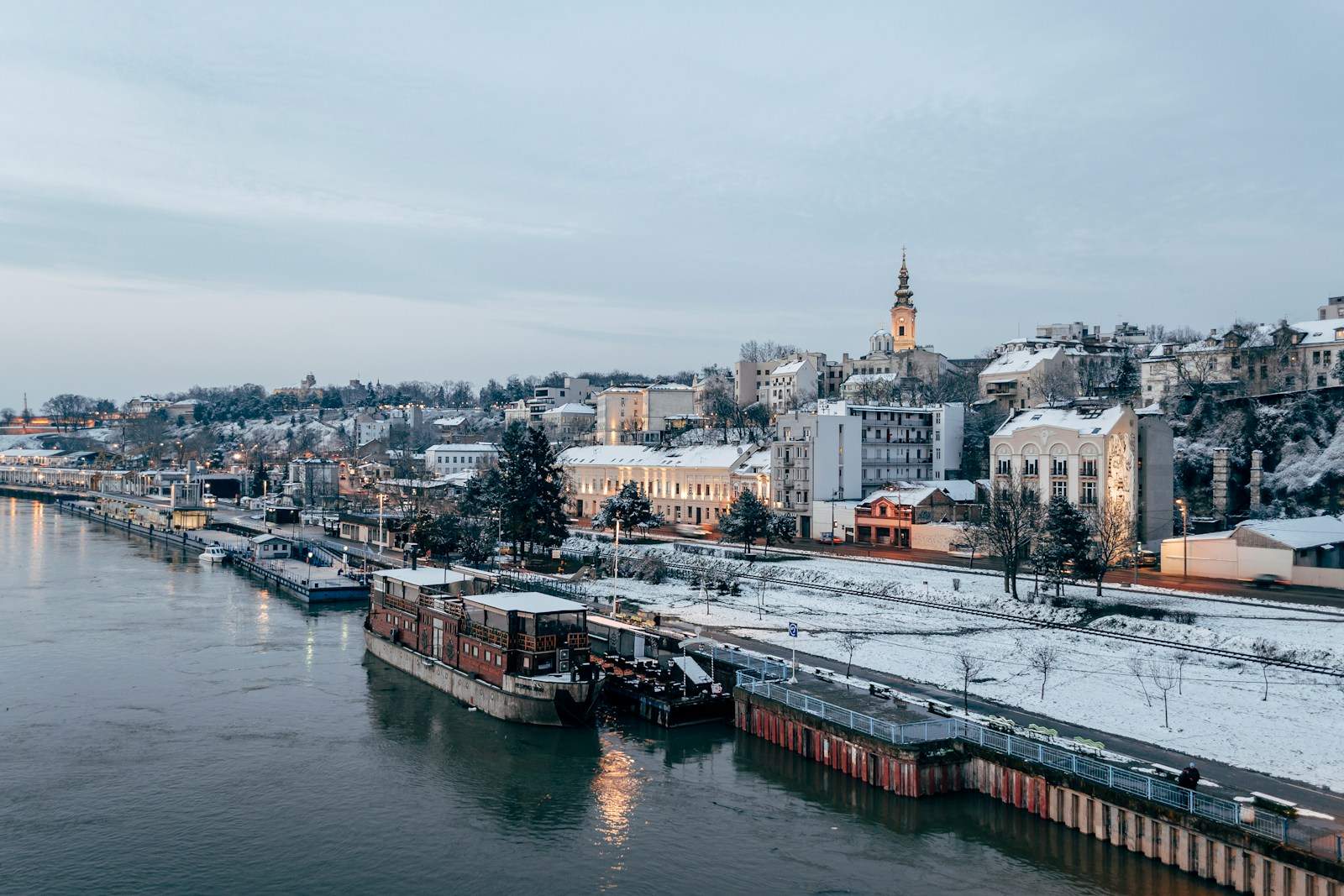
Belgrade’s two rivers - the Sava and the Danube - frame a city that’s straightforward to leave for the day. The motorway north reaches Novi Sad in 45 minutes; the road east follows the Danube through some of the most dramatic gorge scenery in Serbia; and the countryside south of the capital holds royal estates and medieval fortresses almost entirely absent from international tourist circuits. Below are five day trips that make the most of Belgrade’s central position.
Novi Sad (45 minutes each way)
Novi Sad is Serbia’s second city and the capital of Vojvodina, a province with a strong Central European character - Habsburg architecture, wide boulevards, and a wine culture rooted in the Fruška Gora hills directly behind the city. The main sight is Petrovaradin Fortress, whose baroque ramparts sit on a riverside bluff above the Danube and give views across the city’s pastel rooftops. The fortress tunnels (approximately 800 km of underground galleries, not all open) can be explored on guided tours for approximately 400 RSD (€3.50 as of 2026).
Bus: Regular BAS and Arriva departures from Belgrade’s Lasta Bus Station (BAS) to Novi Sad Bus Station; journey approximately 1 hour to 1 hour 20 minutes, fare approximately 700–900 RSD (€6–8) each way. Buses run throughout the day.
Train: Novi Sad is on the Belgrade–Budapest high-speed rail line; journey from Beograd Centar station in approximately 35–40 minutes, fare approximately 900–1,200 RSD (€8–10). Trains run several times daily. This is the fastest and most comfortable option.
Organised tour: Full-day Novi Sad day tours from Belgrade typically combine the fortress, the old town, and a winery visit for approximately €45–65 per person.
Best season: May–September. The Exit Music Festival in July fills the fortress; book accommodation and transport early if visiting that week. The Danube is photogenic in autumn.
Fruška Gora Monastery Tour (1.5–2 hours each way)
Fruška Gora is a low ridge running east–west through Vojvodina, rising to just 539 metres, but its soft limestone hills hide more than a dozen Serbian Orthodox monasteries dating from the 15th to 17th centuries. The most visited are Krušedol (frescoes dating from 1512, including portraits of Serbian despots), Novo Hopovo (18th-century bell tower), and Grgeteg (perched above the Danube plain). The ridge is also home to the Bermet and Graševina wine appellations.
Organised tour: The most practical approach. Belgrade tour operators run Fruška Gora monastery tours for approximately €40–65 per person, typically covering 3–4 monasteries and a wine tasting. City Expert and multiple GetYourGuide operators run this route.
Self-drive: From Belgrade, cross the Danube bridge at Novi Sad and head west along the southern slopes of Fruška Gora. Most monasteries are signposted, free to enter, and welcoming to visitors - modest dress required. Winery Kovačević near Sremski Karlovci offers tastings from approximately 1,500 RSD (€13) per person with advance booking. The town of Sremski Karlovci itself - a well-preserved Habsburg ecclesiastical town - is worth 90 minutes on the way back.
Best season: April–October. Monasteries are open year-round but vineyard visits work best in September–October harvest season.
Topola - Oplenac Mausoleum & Royal Estate (1.5 hours each way)
Topola is a small town 80 km south of Belgrade, significant as the birthplace of Karađorđe (Black George), the leader of the First Serbian Uprising against the Ottomans in 1804. The main attraction is the Church of St George on Oplenac Hill - a white marble building covered inside with approximately 40 million mosaic tesserae reproducing the most important medieval Serbian frescoes from Mileševa, Sopoćani, and Gračanica. The effect is overwhelming: every centimetre of the interior is covered. The karađorđević royal family mausoleum is in the crypt below.
Bus: Buses from Belgrade to Topola depart from BAS (Lasta Bus Station); journey approximately 1 hour 45 minutes to 2 hours, fare approximately 800–1,100 RSD (€7–10). Frequency is moderate - check timetable before travelling.
Organised tour: Several Belgrade operators combine Topola with the Župa wine region south toward Aleksandrovac for a wine-and-history day tour, approximately €50–75 per person.
Church of St George: admission approximately 400 RSD (€3.50), open 9am–5pm (reduced hours November–March). The adjacent Karađorđe’s town (Varo) is free to walk.
Best season: April–October. Spring when the fruit trees around Oplenac are in bloom is particularly good.
Smederevo Fortress (1 hour each way)
Smederevo’s 15th-century fortress is the largest medieval fortified complex on the Danube and one of the most impressive in the Balkans, yet it receives a fraction of the visitors of comparable European castles. Built by Serbian Despot Đurađ Branković in 1428–30 as a last-ditch capital before the Ottoman advance, the triangular fortification encompasses the small town itself - you walk between residential houses inside 9-metre-high walls.
Bus: Frequent buses from Belgrade’s BAS station to Smederevo; journey approximately 1 hour, fare approximately 450–600 RSD (€4–5). Buses depart roughly every 30–45 minutes.
Self-drive: 70 km on the A1 motorway then local road along the Danube. The drive adds context - the Danube widens significantly here and the fortress is visible from several kilometres away on approach.
Fortress admission: approximately 400 RSD (€3.50), open 8am–7pm in summer. Allow 2–3 hours to walk the full perimeter walls.
Best season: April–October. The fortress is photogenic in winter light, and October sees a wine festival in the town.
Golubac Fortress and Iron Gate (2 hours each way)
Golubac sits 120 km east of Belgrade where the Danube narrows into the Iron Gate gorge - the deepest river gorge in Europe, shared with Romania. The medieval fortress (11 towers, 14th–15th century, completely restored and reopened in 2019) stands directly at the water’s edge where the cliffs close in. A few kilometres further is Lepenski Vir, an 8,000-year-old Mesolithic settlement that produced some of the earliest known monumental sculptures in Europe.
Organised tour: The most practical option from Belgrade. Iron Gate and Golubac tours run approximately €50–80 per person, often including a Danube boat section and Lepenski Vir. City Expert and regional operators run this in summer.
Self-drive: 120 km on the E75 and then the scenic Danube road. Allow 2 hours each way plus 3–4 hours at the sites. Golubac Fortress admission: approximately 600 RSD (€5), open 9am–7pm in season. Lepenski Vir museum: approximately 400 RSD (€3.50).
Best season: May–September. The gorge road (E771) is dramatic year-round but services at Golubac are reduced outside summer.
Book guided day trips from Belgrade - Novi Sad, Golubac, and private Danube tours - on GetYourGuide.
For a wider picture of Serbia’s highlights, our Balkans national parks guide covers the Uvac canyon and Tara mountain range, both reachable from Belgrade.