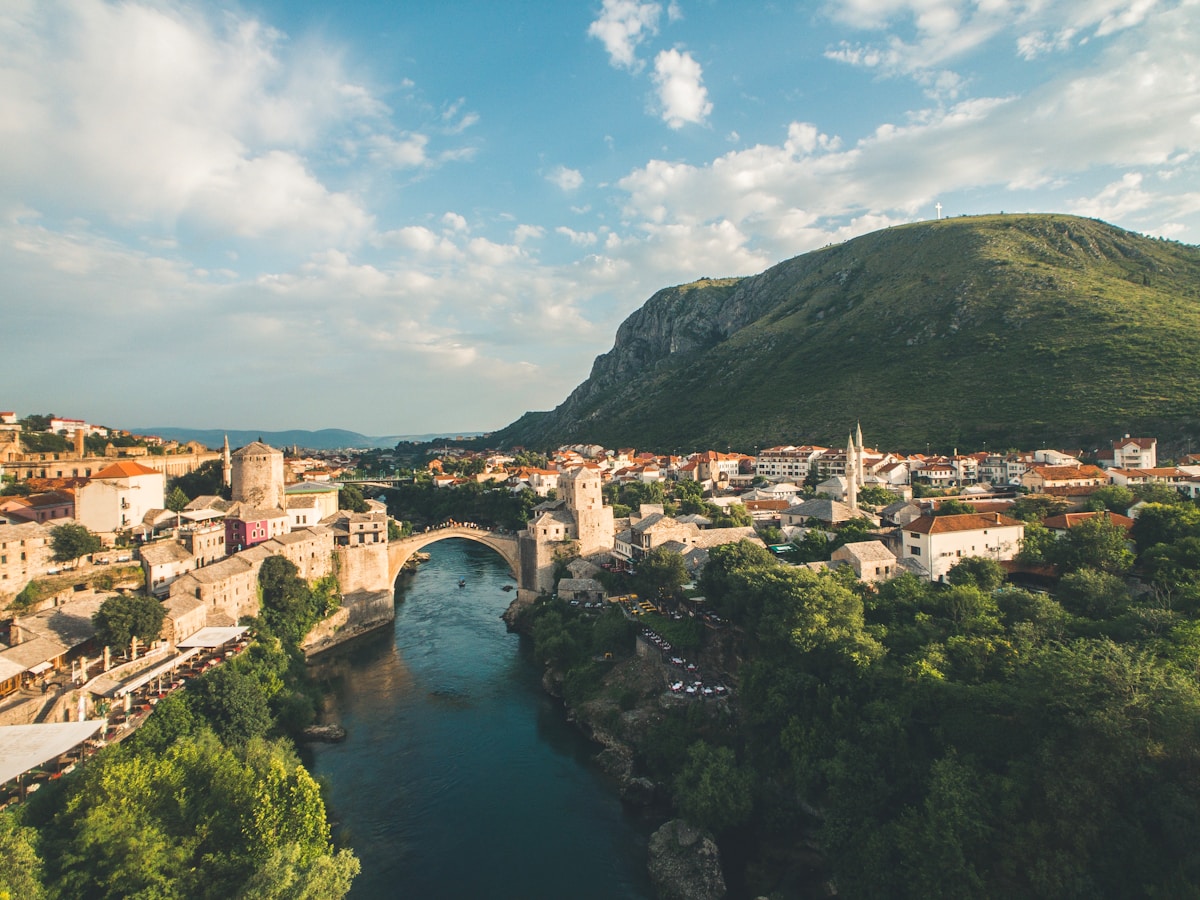
One week is enough to cover three countries and four cities in the western Balkans without feeling rushed. This route runs Dubrovnik → Kotor → Mostar → Sarajevo, moving from the Croatian coast through Montenegro’s Bay of Kotor, into Bosnia’s historic heartland. Every transfer is by bus, and no leg takes more than 4 hours.
You don’t need to book every tour in advance - last-minute Balkans tour deals are common, particularly for guided walks and boat trips booked locally on arrival.
Typical costs (per person, excluding flights): budget approx. EUR 350–500; mid-range approx. EUR 600–900 as of 2026.
Days 1–2 - Dubrovnik, Croatia
Day 1: Old Town
Arrive at Dubrovnik Airport (DBV). The Atlas shuttle to Pile Gate costs approximately EUR 10 (30 minutes). Taxis run approximately EUR 35–40.
Afternoon: walk the Stradun, explore the old port, and visit the Rector’s Palace (approximately EUR 15 entry). Evening: dinner at Nishta on Prijeko (vegetarian, mains approximately EUR 12–16) or Barba on Boškovićeva (seafood wraps from approximately EUR 8).
Day 2: Walls and Cable Car
Morning: walk the City Walls (approximately EUR 35, open from 8:00). The 2 km circuit takes 60–90 minutes. Afternoon: cable car to Mt Srd (approximately EUR 27 return) for the panoramic view and the Fort Imperial siege museum (approximately EUR 6). Sunset from the summit is worth the timing.
Evening: Kopun (mains approximately EUR 18–28) for traditional Dalmatian roast dishes.
Where to Stay in Dubrovnik
Budget: Hostel Angelina Old Town - dorms from approximately EUR 25, privates from EUR 70. Mid-range: Hotel Stari Grad - doubles from approximately EUR 130. Upscale: Hotel Excelsior - doubles from approximately EUR 280, waterfront location east of Old Town. All prices as of 2026. Full guide: where to stay in Dubrovnik
Days 3–4 - Kotor, Montenegro
Getting There
Morning bus from Dubrovnik to Kotor with FlixBus or Globtour. Journey time approximately 2–2.5 hours including the border crossing at Karasovići. Tickets from approximately EUR 15 one way. The border queue is usually 10–20 minutes outside peak summer. Montenegro uses the euro.
Day 3: Kotor Old Town and Fortress
Drop bags at your hotel and walk the Kotor Old Town - the Cathedral of Saint Tryphon (approximately EUR 4 entry), the Maritime Museum (approximately EUR 5), and the maze of stone alleys behind the main square. Afternoon: climb to the Fortress of San Giovanni (approximately EUR 8, 1,350 steps, allow 45–60 minutes up). The view over the bay from the top is one of the most photographed in the Balkans.
Evening: Galion (seafood mains from EUR 14) on the waterfront, or Konoba Scala Santa (mains approximately EUR 10–16) inside the walls for traditional Montenegrin food.
Day 4: Perast and Our Lady of the Rocks
Take a local bus or taxi (approximately EUR 5) to Perast, a Venetian-era town 12 km up the bay. From Perast harbour, a boat shuttle (approximately EUR 5 return, 5 minutes) runs to Our Lady of the Rocks, an artificial island with a small church and museum (approximately EUR 2 entry).
Afternoon: swim at the rocky beach in Perast or return to Kotor for a second look. The Old Town is compact and rewards a slower second visit.
Where to Stay in Kotor
Budget: Old Town Hostel Kotor - dorms from approximately EUR 18, privates from EUR 55. Mid-range: Hotel Vardar - doubles from approximately EUR 90, on the main square. Upscale: Palazzo Radomiri - doubles from approximately EUR 170, a restored 18th-century palazzo. All prices as of 2026. Full guide: where to stay in Kotor
Day 5 - Mostar, Bosnia and Herzegovina
Getting There
Morning bus from Kotor to Mostar. There is no direct bus - the standard route goes Kotor → Dubrovnik (2 hours) then Dubrovnik → Mostar (3 hours). Total travel time approximately 5–6 hours with a connection in Dubrovnik. Alternatively, take an early bus to Dubrovnik and catch the 11:00 or 12:00 departure to Mostar. Combined tickets from approximately EUR 25–30. Bosnia uses the convertible mark (BAM), pegged at approximately BAM 1.96 = EUR 1.
Mostar in One Day
The Stari Most (Old Bridge) is the centre of everything. Cross it, photograph it from the riverbanks below, and watch the bridge divers if you are visiting in summer. The bridge area is free.
Visit the Koski Mehmed Pasha Mosque (approximately EUR 4 entry, includes minaret climb for the best bridge photo angle). Walk through the Kujundžiluk bazaar street - copper workshops, Turkish coffee sets, and leather goods.
Afternoon: take a taxi or short bus (approximately EUR 3) to Blagaj Tekke, a Dervish monastery built into a cliff face at the source of the Buna River (approximately EUR 3 entry). This side trip takes 1–2 hours.
Evening: dinner at Šadrvan (mains approximately EUR 5–9) right by the bridge - ćevapi, begova čorba (chicken soup), and burek are the standards.
Where to Stay in Mostar
Budget: Hostel Majdas - dorms from approximately EUR 12, privates from EUR 35. Mid-range: Hotel Mepas - doubles from approximately EUR 60. Upscale: Muslibegovića House - doubles from approximately EUR 95, a 17th-century Ottoman house turned boutique hotel. All prices as of 2026. Full guide: where to stay in Mostar
Days 6–7 - Sarajevo, Bosnia and Herzegovina
Getting There
Morning bus from Mostar to Sarajevo. Direct services run 8–10 times daily with several operators. Journey time approximately 2.5 hours via the Neretva Valley road. Tickets from approximately EUR 10 one way.
Day 6: Old Town and War History
Morning: explore Baščaršija - the Ottoman-era bazaar quarter. See the Sebilj fountain, the Gazi Husrev-beg Mosque (approximately EUR 2 entry), and the Latin Bridge where Archduke Franz Ferdinand was assassinated in 1914.
Afternoon: Tunnel of Hope Museum (approximately EUR 10 entry), the supply tunnel used during the 1992–96 siege. It is located near the airport - a taxi costs approximately EUR 8 each way or take tram 3 to Ilidža and walk 15 minutes.
Evening: ćevapi at Ćevabdžinica Željo (a plate of 10 with bread from approximately EUR 4) or a sit-down dinner at Dveri (Bosnian-European mains approximately EUR 8–14) on Prote Bakovića.
Day 7: City Hall, Panorama, and Departure
Morning: visit the Vijećnica (City Hall, approximately EUR 5 entry) - the restored Austro-Hungarian building that was shelled during the siege and now houses exhibitions. Walk through the Ferhadija pedestrian street into the Austro-Hungarian quarter.
If time allows, take the cable car to Trebević Mountain (approximately EUR 10 return) for a short hike along the old bobsled track from the 1984 Winter Olympics.
Afternoon: depart from Sarajevo International Airport (SJJ), approximately EUR 10–15 by taxi from the centre, or take an evening bus to your next destination.
Where to Stay in Sarajevo
Budget: Hostel Franz Ferdinand - dorms from approximately EUR 10, privates from EUR 30. Mid-range: Hotel Old Town - doubles from approximately EUR 55, steps from Baščaršija. Upscale: Hotel Europe - doubles from approximately EUR 120, Sarajevo’s grande dame, originally opened in 1882. All prices as of 2026. Full guide: where to stay in Sarajevo
Transport Summary
| Leg | Mode | Duration | Cost (approx.) |
|---|---|---|---|
| Dubrovnik → Kotor | Bus | 2–2.5 hrs | from EUR 15 |
| Kotor → Mostar (via Dubrovnik) | Bus | 5–6 hrs | from EUR 25 |
| Mostar → Sarajevo | Bus | 2.5 hrs | from EUR 10 |
All prices one way, as of 2026.
See also
- 10 days in the Balkans
- 2 weeks in the Balkans
- Dubrovnik city guide
- Best tours in Dubrovnik
- Kotor city guide
- Best tours in Kotor
- Bay of Kotor guide
- Sarajevo city guide
- Best tours in Sarajevo
- Mostar city guide
- Best tours in Mostar
- Croatia travel guide
- Montenegro travel guide
- Bosnia travel guide
- Kotor vs Dubrovnik
- Mostar vs Sarajevo
- Balkans without a car
- Border crossings guide
- Balkans travel costs
- Trip cost calculator — estimate your total spend
Border Crossings
This route crosses two international borders:
- Croatia → Montenegro (Karasovići/Debeli Brijeg): EU to non-EU. Passport required. Queue times 10–30 minutes in summer. Montenegro uses the euro.
- Montenegro → Bosnia (various crossings via Dubrovnik): If routing through Dubrovnik, you re-enter Croatia briefly then cross into Bosnia at Metković or Klek. The Neum corridor crossing is quick. Bosnia uses the convertible mark (BAM).
Budget Summary
| Category | Budget (7 days) | Mid-Range (7 days) |
|---|---|---|
| Accommodation | EUR 110–180 | EUR 350–550 |
| Food | EUR 70–120 | EUR 180–280 |
| Transport | EUR 50–75 | EUR 60–85 |
| Attractions | EUR 50–80 | EUR 60–90 |
| Total | EUR 280–455 | EUR 650–1,005 |
Bosnia brings the average down significantly - accommodation and food cost roughly half what they do in Dubrovnik. Expect to spend more on your Dubrovnik days and considerably less in Mostar and Sarajevo.
Where to Stay
- Dubrovnik — Where to stay in Dubrovnik
- Kotor — Where to stay in Kotor
- Mostar — Where to stay in Mostar
- Sarajevo — Where to stay in Sarajevo
Things to do at each stop:
Book Your Trip
Flights — search and compare on Aviasales eSIM — stay connected with Airalo Travel insurance — get covered with EKTA Airport transfers — book with Kiwitaxi Car rental — compare with GetRentaCar Hotels — compare and book accommodation on Booking.com Tours and activities — browse GetYourGuide
Plan your trip: Search flights to the Balkans and lock in dates early - prices jump in June and July. Hire a car for rural stretches between cities. Travel insurance is worth sorting before you fly.