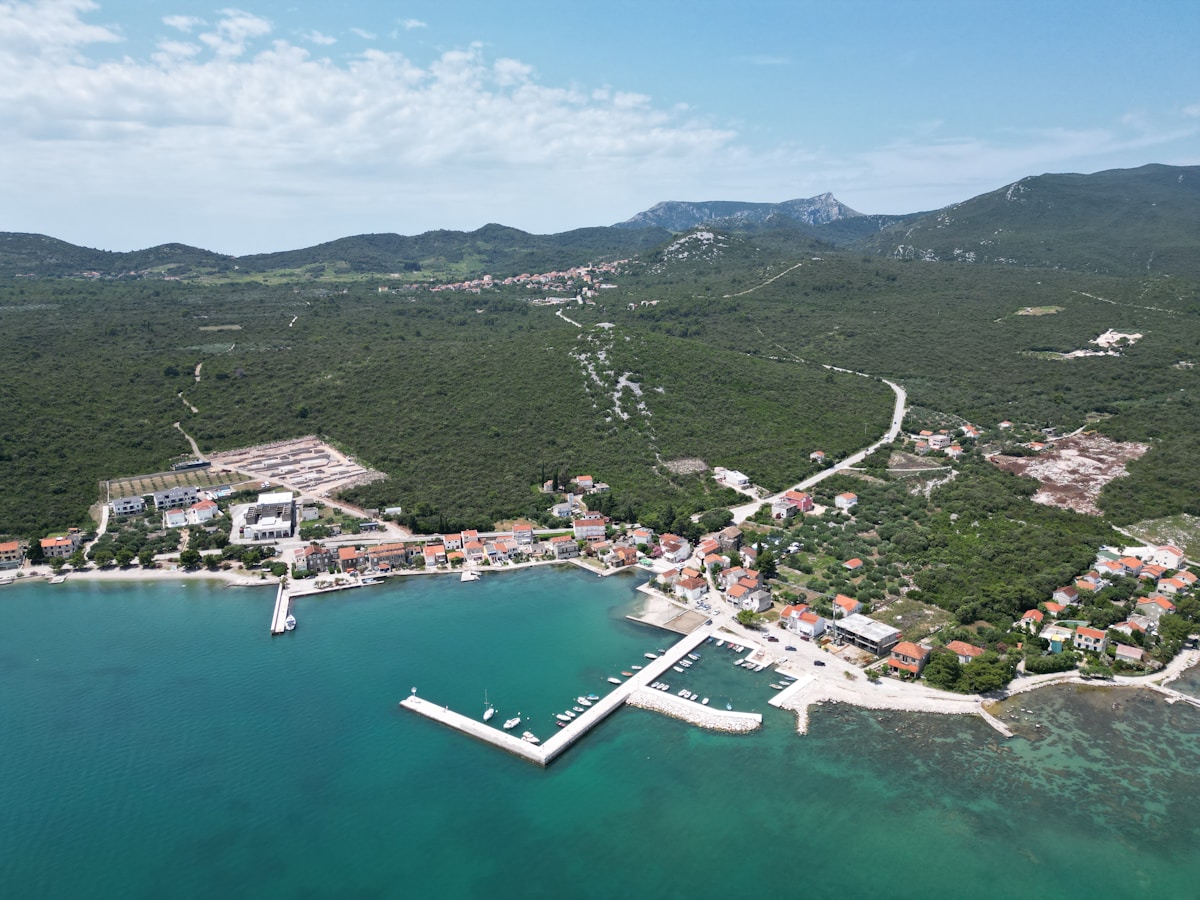
The Balkans has more coastline and more variety of beach experience than most travellers realise. Croatia’s Dalmatian coast has been a serious beach destination since the 1970s, but the Albanian Riviera — with clear water and cheaper prices than anywhere else on the Adriatic — only began attracting international visitors in earnest after 2015. Montenegro sits between the two, with a bay that functions almost as an inland sea. This guide covers the main beach corridors, what they each offer, and how to combine them.
The Main Beach Corridors
Croatia: Dalmatian Coast and Islands
The Croatian Adriatic is the most developed and most visited beach destination in the Balkans. The water is exceptionally clear — visibility of 15–20 metres is common in June — and the coast alternates between white and grey pebble coves, rocky platforms with ladders into the sea, and a handful of sandy beaches (rare on the Adriatic, but Zlatni Rat on Brač and Saharun on Dugi Otok are genuine sandy beaches).
Best beaches:
- Zlatni Rat, Brač island — the most photographed beach in Croatia. A spit of pale shingle that extends into the sea and shifts direction with the current. Crowded July–August; manageable in June and September.
- Stiniva Cove, Hvar/Vis — a narrow cleft between high cliffs, accessible by boat or a steep path. One of the most striking coves in the Adriatic.
- Sakarun, Dugi Otok — white sand, shallow turquoise water, almost Caribbean in character. Accessible only by car or boat; far less crowded than the Split-area beaches.
- Punta Rata, Brela — a popular but beautiful pebble beach with a clear sweep of coast and pine trees.
- Dubrovnik beaches — the closest beaches to the old town are rocky and crowded, but Sv. Jakob beach (a 20-minute walk east) is quieter. The islands of Koločep and Lopud, reachable by ferry, have the best sand beaches near Dubrovnik.
Costs (high season, July–August): Sun lounger hire approximately €10–15/day on mainstream beaches; free at less-developed coves. A seaside lunch at a mid-range konoba: €15–25 per person. Accommodation near Split or Dubrovnik: €80–180/night for a double room.
Full Split guide | Full Dubrovnik guide | Dalmatian islands
Albania: The Riviera
The Albanian Riviera — roughly the stretch of coast from Sazan Island south to the Greek border, with the key resorts at Dhermi, Himarë, Palasa, and Ksamil — is the fastest-growing beach destination in the Balkans. Water quality is outstanding: the coast faces the Ionian Sea, not the more trafficked northern Adriatic, and it is notably clearer than most of Croatia. Prices are significantly lower than Montenegro or Croatia.
Best beaches:
- Ksamil — small island-studded lagoon near Butrint, with four beach areas within walking distance of the village. The most popular Albanian beach destination, accessible and well-serviced but busy July–August. Full Ksamil guide.
- Gjipe Beach — a canyon-backed pebble beach accessible only on foot (approximately 30 minutes) or by boat. One of the most dramatic settings on the coast.
- Palasa Beach — a long pebble beach below the coastal road, quieter than Dhermi and Himara, with very clear water.
- Drymades — small cove near Dhermi, good snorkelling, less developed than Dhermi beach itself.
- Borsh — the longest sandy beach in Albania (7 km), south of Himarë. Very quiet by Adriatic standards.
Costs (high season): Sun lounger hire approximately €5–8/day. A seafood lunch at a beach restaurant: €8–15 per person. Accommodation: €35–80/night for a double room at a beach guesthouse. Significantly cheaper than Croatia or Montenegro for equivalent quality.
Full Himarë guide | Full Dhermi guide | Albanian Riviera
Montenegro: Bay of Kotor and the Southern Coast
Montenegro’s coast is compact — approximately 290 km — but varies considerably. The Bay of Kotor (Boka Bay) is a near-enclosed arm of the Adriatic flanked by steep mountains; it functions more like a Norwegian fjord than a beach coast, and the villages within it (Perast, Kotor, Herceg Novi) are more attractive for their architecture than for swimming. The beaches are on the open Adriatic south of the bay: Budva riviera, the Sveti Stefan peninsula, and Ulcinj.
Best beaches:
- Sveti Stefan — a tiny island town connected to the mainland by a causeway, now an Aman resort. The beach on the south side of the causeway is free; the north side is for resort guests. The setting — red-roofed stone buildings on a peninsula ringed by sea — is the most photographed in Montenegro.
- Jaz Beach, near Budva — a long grey pebble beach 3 km from Budva, with good water and less crowding than Budva town. Known for open-air concerts in summer.
- Ulcinj Great Beach (Velika Plaža) — Albania’s influence is visible in Ulcinj: the town has a significant Albanian Muslim population. The Great Beach is 12 km of sand — the longest sandy beach in Montenegro, and noticeably sandier and quieter than the Budva coast.
- Ada Bojana — a river-mouth island near Ulcinj; textile-optional beach with a naturist tradition and a quieter, less developed atmosphere.
Costs: Sun lounger hire approximately €10–15/day at Budva riviera. Sveti Stefan area beach access approximately €15–20/day for sun lounger. Accommodation: €70–150/night in Budva for a standard double. Full Budva guide | Full Kotor guide
Northern Greece: Halkidiki
For travellers extending into Thessaloniki, the Halkidiki peninsula is the logical beach addition. The three peninsulas (Kassandra, Sithonia, Athos) have excellent clear Aegean water and pine forest running down to the coast. Sithonia is less developed than Kassandra and has the best beaches: Kavourotrypes (orange rock coves with turquoise water, small and crowded but spectacular), Portokali, and Sarti beach. All are within 90–120 minutes of Thessaloniki by car. Not accessible by public transport with convenience — a hire car is necessary.
Croatia vs Albania Riviera: Which to Choose
The two options suit different travellers:
Choose Croatia if: You want well-developed infrastructure (good roads, reliable restaurants, consistent English-speaking services), island-hopping by ferry, and a wider range of accommodation quality including proper hotels and resorts. Prices are Western European.
Choose Albanian Riviera if: You want comparable water quality at lower prices, less crowding outside Ksamil, and a more authentic experience with less tourist infrastructure. Road conditions outside the main highway are variable. English is less widely spoken. The dramatic mountain-meets-coast scenery along the SH8 coastal road is the best in the region.
For the best of both: The Croatia → Montenegro → Albania route is a classic three-country coastal circuit. Our 10-day Croatia–Montenegro itinerary covers the logistics.
When to Visit
June is the best month overall. Water temperature has risen from winter (18–21°C, comfortable for swimming), crowds are manageable, and accommodation prices are at shoulder-season levels. Croatia’s main beaches are accessible; Albania Riviera is fully open.
July–August is peak season. Crowds, heat, and prices peak simultaneously. Beaches near Dubrovnik and Split are genuinely unpleasant at midday in August. The Albanian Riviera gets busy but not at Croatian levels outside Ksamil. Nights are warm and the nightlife is at its best — if that is your priority, high season is right.
September is excellent. Water temperature peaks in late August–early September (24–26°C). Crowds thin sharply after the first week of September. Accommodation prices drop 20–40%. The best swimming weather of the year.
May is viable. Water is cooler (16–19°C) but weather is reliable and beaches are quiet. Not ideal for serious swimming but good for combining beaches with historical sites.
See Also
- Best beaches in the Balkans
- Croatia sailing holiday
- Bay of Kotor cruise
- Balkans island hopping
- Montenegro vs Croatia comparison
- Albania vs Greece comparison
- Albanian Riviera guide
Plan your trip: Browse Adriatic sailing tours and island-hopping activities for Croatia’s coast, or explore Albania’s Riviera tours and snorkelling trips. Cover your trip with Balkans travel insurance.