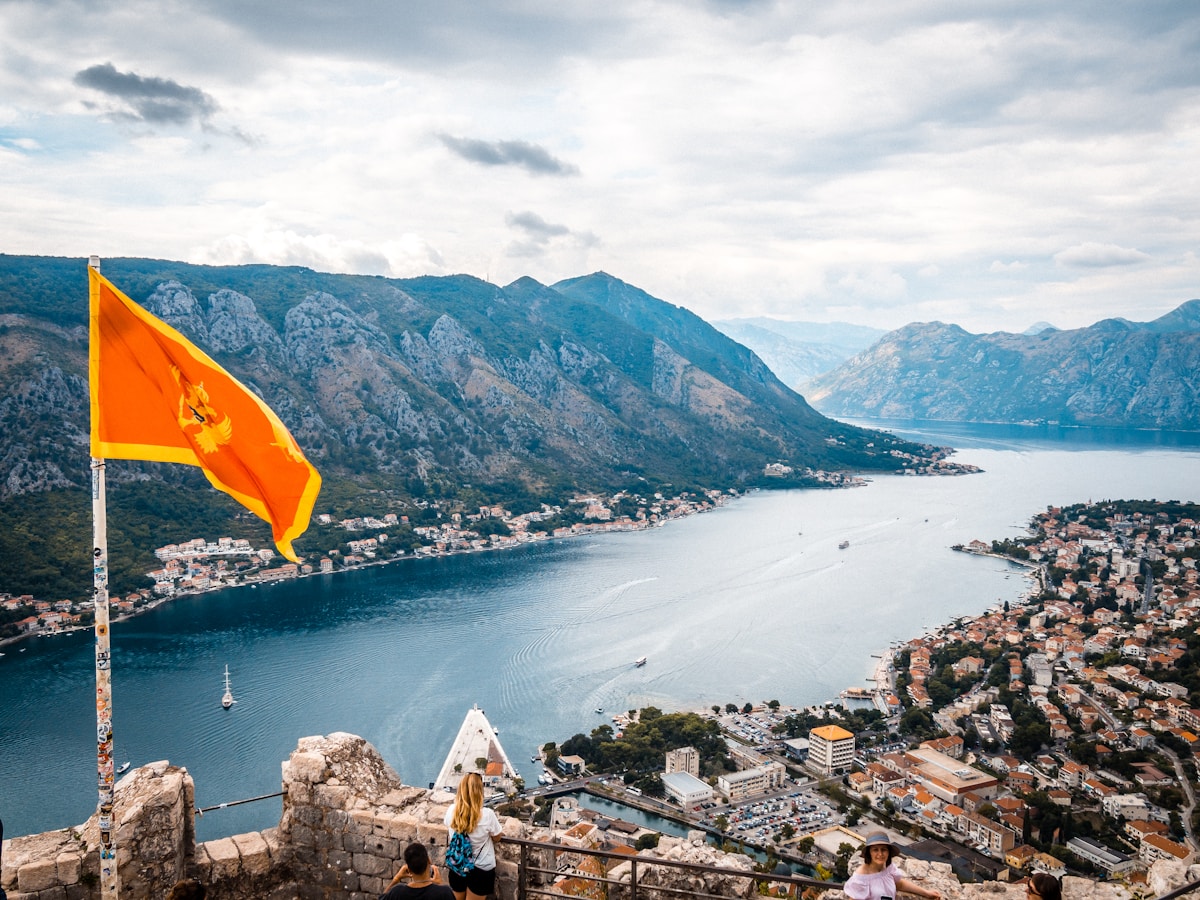
Croatia and Montenegro share a short land border south of Dubrovnik, making them a natural two-country pairing. The route here runs south to north: fly into Dubrovnik, cross into Montenegro via the Bay of Kotor, continue to Budva, then return to Croatia and end in Split. Both countries use the euro, border formalities are quick, and public buses are reliable. All prices are approximate as of 2026.
Overview
| Day | Location | Highlights |
|---|---|---|
| 1–3 | Dubrovnik | Old town walls, Cable car, Lokrum Island |
| 4 | Kotor (Montenegro) | Kotor old town, Bay of Kotor, Perast |
| 5 | Kotor | St John Fortress hike, Sveti Stefan viewpoint |
| 6–7 | Budva | Old town, Mogren Beach, Sveti Stefan island |
| 8 | Herceg Novi / coastal drive | Bay of Kotor villages, border re-crossing |
| 9 | Split | Diocletian’s Palace, Riva promenade |
| 10 | Split | Trogir day trip, departure |
Day 1 - Arrive Dubrovnik
Fly into Dubrovnik Airport (DBV) at Čilipi, 22 km south of the old town. Atlas shuttle buses run to the Pile Gate area (approximately €10, 45 minutes). Taxis and rideshares cost approximately €35–50.
Check in and walk the Stradun - Dubrovnik’s main limestone-paved street - in the early evening when cruise-ship crowds have thinned. Dinner at Konoba Kolona (Dalmatian classics, approximately €18–28 per person) inside the old town, or Pantarul (modern Croatian cooking, approximately €22–35 per person) just outside the Pile Gate - widely considered one of the best value dinners in Dubrovnik.
Where to stay in Dubrovnik:
- Budget: Old Town Hostel - dorm from approximately €35–55/night inside the walls
- Mid-range: Hotel Lero - from approximately €130–200/night; 10-minute walk from Pile Gate with a pool
- Comfort: Hotel Excelsior - from approximately €350–600/night; cliff-side sea views, legendary address
Day 2 - Dubrovnik: Old Town Walls and Cable Car
The city walls (approximately €35 entry as of 2026; book online) are the main event - 1,940 metres of 13th–17th century fortifications enclosing the old town. Go early: the walls open at 08:00 and cruise ships disgorge their passengers from around 09:30. The circuit takes 1.5–2 hours and is exposed to sun in summer; carry water. Views over the Adriatic and the terracotta rooftops are the best in the city from any direction.
The Dubrovnik Cable Car (approximately €25 return, station above Pile Gate) rides to Mount Srđ (412 m) in 4 minutes. At the top, the Museum of the Homeland War (approximately €8 entry) documents the 1991–1992 Siege of Dubrovnik with clarity and without melodrama - essential context for what you see below.
Book guided tours in Dubrovnik →
For lunch, Buffet Škola (Antuninska street, approximately €8–15 per person) is the cheapest honest meal inside the walls. For dinner try Nishta (vegetarian, approximately €18–28 per person) - one of the most consistently praised restaurants in the city; reservations essential.
See also: things to do in Dubrovnik and best restaurants in Dubrovnik.
Day 3 - Dubrovnik: Lokrum Island and Elafiti
Lokrum Island (ferries every 30–45 minutes from the old harbour, approximately €15 return, 15-minute crossing; seasonal April–October) is a forested nature reserve 600 m offshore with no permanent residents: a ruined Benedictine monastery, botanical garden, free-roaming peacocks, a seawater lake connected to the sea, and a Game of Thrones exhibit in the old fort. Allow 2–3 hours.
Afternoon: day trips from Dubrovnik can extend this day - an Elafiti Islands boat tour (approximately €35–50) covers three small car-free islands with swimming stops and lunch on board. Alternatively, use the afternoon for the Buža Bar cliff bars outside the southern walls - access through a hole cut in the city walls (look for “Cold Drinks” signs), with wooden platforms over the rocks and the open Adriatic below.
Day 4 - Dubrovnik to Kotor, Montenegro
Bus: Arriva/Autotrans, multiple daily departures from Dubrovnik bus station (15 minutes walk from Pile Gate), approximately €12–15, 2–2.5 hours including a 15-minute border stop at Debeli Brijeg. Keep your passport to hand. The bus passes through Herceg Novi and the coast before descending to Kotor.
Arrive Kotor by midday. Check into your accommodation then walk the old town - a medieval walled city at the innermost point of the Bay of Kotor. The old town is small enough to walk in 30 minutes but worth an afternoon of wandering: the Cathedral of Saint Tryphon (entry approximately €3, built 1166, completed 1267) contains a treasury of Byzantine and Renaissance religious art. The main square (Trg Sv. Tripuna) has a baroque clock tower and is permanently animated with café tables spilling onto the paving stones.
Boat tour on the Bay of Kotor (approximately €15–25 per person, runs from Kotor waterfront): passes the Our Lady of the Rocks church built on an artificial island in the bay near Perast - a Baroque church constructed on rocks deliberately accumulated by local sailors over three centuries. The island with the church can also be reached from Perast by private boat taxi (approximately €5 return).
Browse tours and boat trips in Kotor →
See: things to do in Kotor and best restaurants in Kotor.
Where to stay in Kotor:
- Budget: Montenegro Hostel Kotor - dorm from approximately €18–25/night; 5-minute walk from the Sea Gate
- Mid-range: Hotel Cattaro - from approximately €100–150/night; inside the old town walls
- Comfort: Palazzo Drusko - from approximately €180–280/night; boutique hotel in a 16th-century building
Day 5 - Kotor: St John Fortress and Perast
St John Fortress (entry approximately €8, opens 08:00): the fortress above Kotor requires a climb of approximately 1,350 steps from the old town’s north gate. The ascent takes 45–60 minutes at a comfortable pace. Views from the top over the bay and the surrounding mountains are the best available from land - the best time to climb is early morning before heat builds (and before the cruise ships arrive). The fortress walls are largely intact; goats wander the path.
Perast (10 km north of Kotor; taxi approximately €15, or local bus approximately €2.50) is one of the best-preserved Baroque towns in the Adriatic: a single main street along the waterfront, 16 churches, 17 palaces, and very few cars. The Town Museum (approximately €3 entry, in the Bujović Palace) traces Perast’s maritime history when its sailors served as admirals and navigators for the Russian and Venetian fleets. Lunch here at Restaurant Conte (Perast waterfront, approximately €18–28 per person, excellent grilled fish) or pick up burek from the bakery on the main road.
See: best food in Montenegro.
Day 6 - Kotor to Budva
Bus: Kotor to Budva (approximately 30 km south), multiple daily departures, approximately €4–6, 45 minutes. Alternatively, taxi approximately €25–35 - worth considering if you have luggage.
Budva is Montenegro’s most popular beach resort and offers a different atmosphere to Kotor - livelier, more commercialised, but with a well-preserved old town on a small peninsula and good beaches in walking distance.
The Budva old town (free to enter) sits on a small rocky promontory with intact Venetian walls. The Citadela (fortress + museum, approximately €4 entry) at the tip of the peninsula has sea views on three sides and a small collection of maritime artefacts and weapons. Walk the old town in the early evening when the light is good and the temperature drops.
Mogren Beach (15-minute walk south from the old town along the coastal path, free entry) is one of the best beaches in Montenegro: two sandy coves connected by a short tunnel through a rock. Arrive before 10:00 for a sunbed or bring your own mat. Sunbed rental approximately €10–15 per pair.
Find tours and activities in Budva →
Where to stay in Budva:
- Mid-range: Hotel Astoria - from approximately €120–180/night; boutique hotel inside the old town
- Comfort: Avala Resort & Villas - from approximately €250–400/night; beach-front south of Budva
Day 7 - Budva: Sveti Stefan and Beach Day
Sveti Stefan (5 km south of Budva, bus Line 7 approximately €1.50, or taxi approximately €10) is a 15th-century fortified island village connected to the mainland by a narrow causeway, now operating as the ultra-luxury Aman Sveti Stefan resort (closed to non-guests for the island itself, entry from approximately €40 for beach access to the public beach alongside). The best view is free: the Queen’s Beach viewpoint on the hill behind the bus stop looks directly across the isthmus to the island with the Adriatic behind - one of the most-photographed views in the Balkans.
Afternoon: back in Budva, Jaz Beach (3 km north, taxi approximately €8 or walk 40 minutes along the coastal road) is a large pebble-and-sand beach that held the Rolling Stones and Madonna concerts in the early 2000s. It is quieter than the central Budva beaches and has a good beach bar. Swimming is excellent.
Evening: dinner in the old town at Jadran (fresh Adriatic seafood, approximately €20–35 per person, terrace with sea views) or Konoba Stari Grad (approximately €15–25 per person, reliable Montenegrin grilled meats).
See: things to do in Budva and where to stay in Budva.
Day 8 - Coastal Drive: Herceg Novi and Re-entry to Croatia
If you hire a car or book a shared taxi, spend the morning exploring Herceg Novi (45 km north of Budva, approximately 1 hour drive). The town sits at the western entrance to the Bay of Kotor and has a different character from Kotor and Budva: a working town with a fortified old core, a long seaside promenade (the Šetalište Pet Danica), and the dramatic Forte Mare sea fortress (approximately €2 entry). It’s a quieter, more local experience.
Re-entering Croatia: the Debeli Brijeg / Karasović border crossing (Montenegro/Croatia) is the main crossing between the two countries. By bus from Herceg Novi (Globtour, approximately 4 hours to Dubrovnik, or approximately 6 hours to Split). Alternatively, the overnight bus from Herceg Novi or Kotor to Split departs late evening and arrives early morning. If continuing directly to Split by bus from Budva, expect approximately 6–7 hours including the border stop.
For a comfortable one-night stop: return to Dubrovnik for a final night, then bus to Split the next morning (4.5 hours, Flixbus/Croatia Bus, approximately €15–22).
Day 9 - Split: Diocletian’s Palace
Arrive Split and check into your accommodation. Bus from Dubrovnik takes approximately 4.5 hours (Flixbus/Croatia Bus, approximately €15–22). The bus station is a 5-minute walk from the old town.
Split is built around - and inside - Diocletian’s Palace, a 4th-century Roman emperor’s retirement complex that became the city centre when residents moved inside the walls in the 7th century. The palace walls, gates, peristyle and converted mausoleum (now the Cathedral of Saint Domnius, approximately €5 entry) are living parts of the city rather than a sealed museum.
Key stops inside the palace:
- Peristyle - the central colonnaded courtyard (free)
- Vestibule - the roofless domed entry hall to the imperial apartments (free)
- Temple of Jupiter (now a baptistery, approximately €3)
- Cathedral campanile - climb for city views (approximately €8)
Evening: the Riva promenade along the seafront is Split’s living room - café chairs, palm trees, and the palace’s southern walls lit up at night. Dinner at Konoba Matejuška (fresh Adriatic fish, approximately €20–30 per person) in the Varoš fishing quarter above the Riva.
Book tours and activities in Split →
See: things to do in Split and best restaurants in Split.
Where to stay in Split:
- Budget: Hostel Emanuel - dorm from approximately €22–32/night; inside the palace walls
- Mid-range: Hotel Vestibul Palace - from approximately €130–190/night; rooms in Roman chambers inside the palace
- Comfort: Le Méridien Lav Split - from approximately €200–350/night; beach access 6 km south of the old town
Day 10 - Split: Trogir and Departure
Trogir (Bus Line 37 from Split, approximately €2.50, 30 minutes; or taxi approximately €25) is a UNESCO-listed island city connected to the mainland and to the island of Čiovo by bridges. The medieval core is exceptionally intact: the Cathedral of St Lawrence on the main square contains the Portal of Master Radovan (1240), the finest example of Romanesque sculpture in the Eastern Adriatic. Entry to the cathedral approximately €5; campanile climb approximately €3.
Return to Split and use the afternoon for a final swim at Bačvice Beach (15 minutes walk from the old town) - a sandy, shallow-water bay famous for picigin, the traditional ball game played chest-deep in the water.
Split Airport (SPU) is 24 km from the old town. Bus (Promet, approximately €6, 35 minutes) or taxi (approximately €30–40). Allow at least 2 hours before your flight; the airport is compact but summer queues form quickly.
Transport Summary
| Leg | Method | Approx cost | Approx time |
|---|---|---|---|
| Dubrovnik Airport → old town | Atlas shuttle | €10 | 45 min |
| Dubrovnik → Kotor | Arriva bus | €12–15 | 2–2.5 hrs |
| Kotor → Perast | Taxi | €15 | 20 min |
| Kotor → Budva | Bus | €4–6 | 45 min |
| Budva → Sveti Stefan | Local bus | €1.50 | 15 min |
| Budva/Herceg Novi → Split | Bus (overnight option) | €20–30 | 6–7 hrs |
| Dubrovnik → Split | Flixbus/Croatia Bus | €15–22 | 4.5 hrs |
| Split → Airport | Promet bus | €6 | 35 min |
All prices as of 2026 and subject to seasonal variation.
Budget Overview
| Category | Budget/day | Mid-range/day | Comfort/day |
|---|---|---|---|
| Accommodation | €25–40 | €130–190 | €280–500 |
| Food | €18–28 | €40–65 | €70–120 |
| Transport | €4–12 | €10–25 | €20–50 |
| Sights/activities | €8–20 | €20–45 | €40–80 |
| Total | approx. €55–100 | approx. €200–325 | approx. €410–750 |
Note: Dubrovnik consistently runs 30–40% more expensive than the Montenegrin stops. Budget extra for the city walls entry (€35) and cable car (€25).
Related Guides
- Dubrovnik travel guide
- Best restaurants in Dubrovnik
- Things to do in Dubrovnik
- Day trips from Dubrovnik
- Kotor travel guide
- Things to do in Kotor
- Budva travel guide
- Things to do in Budva
- Split travel guide
- Things to do in Split
- Bay of Kotor cruise
- Croatia travel guide
- Montenegro travel guide
- 3 days in Dubrovnik
- Croatia 7-day itinerary
- Montenegro itinerary
Book Your Trip
Flights — search and compare on Aviasales eSIM — stay connected with Airalo Travel insurance — get covered with EKTA Airport transfers — book with Kiwitaxi Car rental — compare with GetRentaCar Hotels — compare and book accommodation on Booking.com Tours and activities — browse GetYourGuide