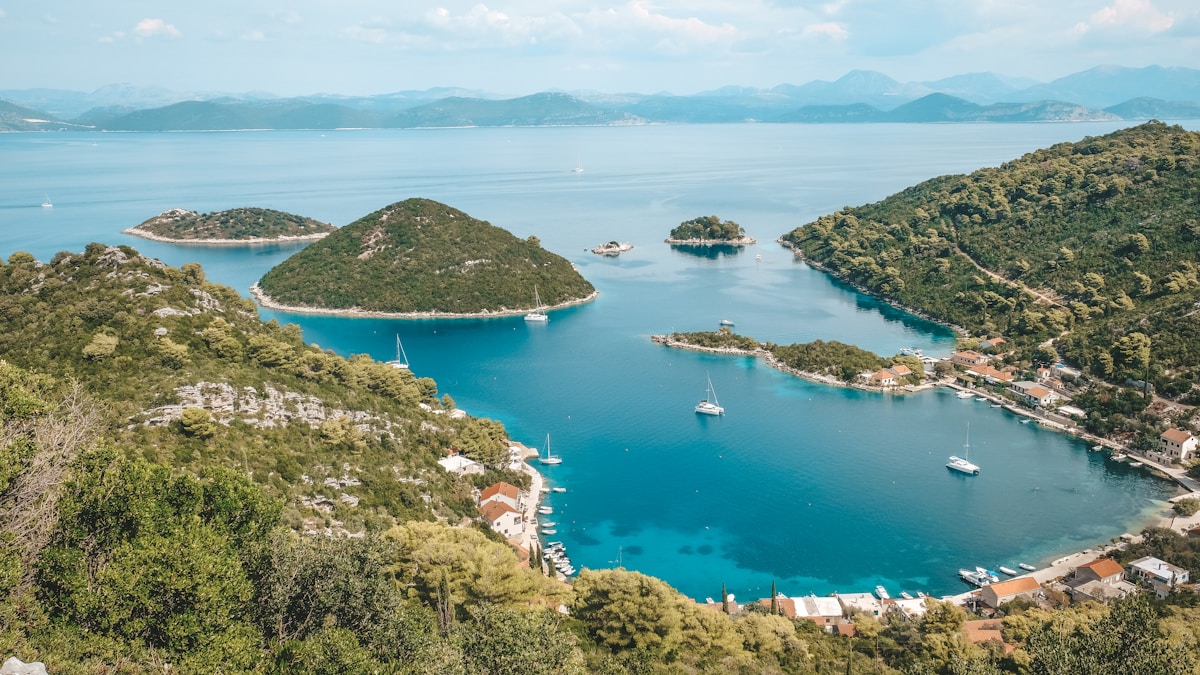
Kotor Travel Guide: Old Town, Fortress & Bay Trips
Kotor travel guide: walled old town, fortress walk to San Giovanni, Cathedral of Saint Tryphon, boat trips on the bay, and hotels covered.
Guides for Kotor Travel Guide
Kotor is the largest and most visited town on the Bay of Kotor - a medieval walled city pressed between the limestone mountain and the innermost point of the bay. The old town is a UNESCO World Heritage Site: fully enclosed within Venetian walls, dense with Romanesque churches, stone lanes, and one of the best-preserved urban environments in the Adriatic region.
The fortress of San Giovanni climbs directly above the town on 1,350 steps of stone stairs - the payoff view over the bay is one of the best in Montenegro. Below, the cat population is famous; the Cathedral of Saint Tryphon dates to 1166; the maritime history of the Bay sits in a dedicated museum. Kotor Blue Cave boat tours depart from the old town waterfront and are among the most popular excursions on the bay.
Kotor is the most practical base for the Bay of Kotor overall, with buses to Perast, Budva, Herceg Novi, and Podgorica, plus direct boat tours of the bay and ferry connection across the Verige strait.
Orientation
The old town is compact - roughly 400 m by 300 m inside the walls. Three main gates: the Sea Gate (main entrance from the bay), the Gurdić Gate (south), and the River Gate (north). Stradun does not exist here as in Dubrovnik; instead a network of flagstone lanes connects small squares anchored by churches.
Everything worth seeing in the old town is within a 10-minute walk of the Sea Gate.
Key sights
Fortress of San Giovanni
The dominant landmark - a medieval fortress at the top of the Kotor city walls, reached by 1,350 stone steps from inside the old town. The walk takes 45–60 minutes to ascend and offers progressively better views over the bay, the rooftops, and the mountain ridgeline.
- Entry: €8 per person (includes wall circuit)
Cathedral of Saint Tryphon
A 12th-century Romanesque cathedral in the centre of the old town, dedicated to Kotor’s patron saint. One of the most important religious buildings in Montenegro.
- Entry: €3
Maritime Museum of Montenegro
Three floors of navigational instruments, ship models, old maps, and the history of the Boka Kotorska as a seafaring culture.
- Entry: €4
Church of Saint Luke and Church of Saint Nicholas
Two well-preserved medieval churches just off the main square. Saint Luke (12th century) has been used simultaneously by both Catholic and Orthodox congregations at different points in history.
- Entry: Free
Getting to Kotor
From Dubrovnik: Bus (approx. 2 hours); also car ferry from Dubrovnik area. From Tivat Airport: 20–25 minutes by taxi or bus. Tivat is the nearest airport. From Podgorica: approx. 1.5 hours by bus. From Budva: approx. 30–40 minutes by bus or car.
Getting around
Kotor Old Town is fully walkable. For the rest of the bay, buses connect Kotor to Perast (20 min), Herceg Novi (1 hr), and Budva (40 min). Taxis and rental cars are available for more flexibility. The car ferry across the Verige strait saves significant time when driving around the bay.
Where to stay
Kotor has hotels inside and just outside the old town walls, plus a range of apartments around the bay area.
| Budget | Hotel | Price (€/night, as of 2026) | Notes |
|---|---|---|---|
| Budget | Hostel Old Town | €18–28 dorm | Just outside Sea Gate; convenient |
| Budget | Hostel Cattaro | €22–35 dorm/private | Inside walls; atmospheric |
| Mid-range | Hotel Vardar | €80–160 | Stari Grad main square; central |
| Mid-range | Hotel Marija | €70–140 | Near the old town; quiet side |
| Upper-mid | Cattaro Heritage Hotel | €120–240 | Inside old town walls; well-regarded boutique |
| Luxury | Palazzo Drusko | €200–380 | Restored Renaissance palazzo inside the walls |
Private apartments near the old town run approximately €60–130/night as of 2026.
Where to eat
Most restaurants are concentrated inside the old town. The main square and the streets leading from the Sea Gate are the primary dining zones.
- Restaurant Galion - outside the walls by the waterfront; one of the most celebrated seafood restaurants in Kotor; mains €18–35 as of 2026; book ahead in season
- Konoba Scala Santa - inside the old town; traditional Montenegrin dishes in a stone courtyard; mains €14–24 as of 2026
- Cesarica - old town favourite for fish and local wines; mains €13–25 as of 2026
- Restaurant Splendido - reliable mid-range option near the walls; mains €10–20 as of 2026
- Bokun café - the go-to for morning coffee inside the old town; coffee €2–3 as of 2026
Market mornings near the Sea Gate offer local produce, cheese, and prosciutto. Budget meals at basic konobas from €8–12.
Practical tips
- Crowds: July and August are very busy - cruise ships dock in the bay and passengers fill the old town by mid-morning. Arrive before 8:30am or after 5pm when day-trippers leave.
- Fortress walk hours: The San Giovanni fortress walk is open roughly 8am–8pm in summer; €8 entry as of 2026 (includes wall circuit). Ascent takes 45–60 minutes.
- Heat: The walled town gets extremely hot in summer afternoon. The fortress walk is best done early morning.
- Cats: Kotor’s cats are a legitimate attraction - the resident population of several hundred is celebrated with a dedicated museum (€1 entry) inside the walls.
- Swimming: The old town itself has no beach. The nearest beach swimming is at Dobrota (2 km north) or Škaljari.
Kotor guides
- Things to do in Kotor
- Best tours in Kotor
- Where to stay in Kotor
- Best hotels in Kotor
- Best restaurants in Kotor
- Food to try in Kotor
- Best cafés to work in Kotor
- Vegan food in Kotor
See also
- Montenegro travel guide
- Bay of Kotor
- Perast
- Day trips from Kotor
- Food tours in Kotor
- 1 week in the Balkans
- Kotor vs Dubrovnik
- Montenegro itinerary
- Kotor Art Festival
Plan your trip: Browse guided tours of Kotor to see what’s available, from walking tours to day trips. Hire a car if you want flexibility for the surrounding area, and cover your journey with Balkans travel insurance.
Book an experience
Top experiences in Kotor Travel Guide
Explore the best tours and activities in Kotor Travel Guide - instant confirmation, free cancellation on most bookings.