Ulcinj Montenegro Travel Guide
Plan your trip to Ulcinj - Montenegro's southernmost city with 12km of beach, a medieval Old Town, and an easy crossing to Albania.
Guides for Ulcinj Travel Guide
Ulcinj is the southernmost town in Montenegro and the most culturally distinct stop on the Montenegrin coast. It’s an Albanian-majority city with a history that runs from Illyrian settlement through Roman occupation, Ottoman rule, piracy, and finally incorporation into Montenegro in 1880. That layered history is visible in the old town’s stone ramparts, the mosque minarets, and the Albanian-language shop signs mixed with Montenegrin ones.
The result is a city that feels genuinely different from the Venetian polish of Kotor or the resort commercialism of Budva - rougher around the edges, less manicured, and considerably cheaper. It also has the longest beach on the Montenegrin coast.
Getting to Ulcinj
Bus is the most practical option. From Podgorica, buses run regularly throughout the day - the journey takes approximately 1.5 hours and costs around €6. From Bar (the main rail hub in southern Montenegro), it’s 30 minutes by bus for around €3. From Budva or Kotor, expect a 2.5-hour journey costing €10–12.
There is no train to Ulcinj. If you’re driving, the road from Bar is straightforward. The town itself is compact enough to walk once you arrive. For road trips along the Montenegrin coast, car hire in the Balkans is available from Podgorica or Bar.
Ulcinj Old Town (Stari Grad)
The old town sits on a promontory above the sea, surrounded by Ottoman-era walls. Entry to the ramparts and streets is free. The views from the sea-facing walls are among the best on the Montenegrin coast - particularly in the late afternoon when the light hits the stone directly.
Inside, the scale is small: a handful of streets, a few restaurants, a former mosque, and residential buildings built into the old fortifications. The evening bazaar street (Ulcinj Skadarlija) picks up after 7pm in summer, with café tables and grilled-food smells. It’s not curated for tourists in the way Kotor’s old town is - which is part of the appeal.
The fortress itself has no formal entry charge to walk the walls, though the small museum inside occasionally charges a nominal fee (€1–2). Allow 1.5 to 2 hours for a thorough wander.
Velika Plaža (Great Beach)
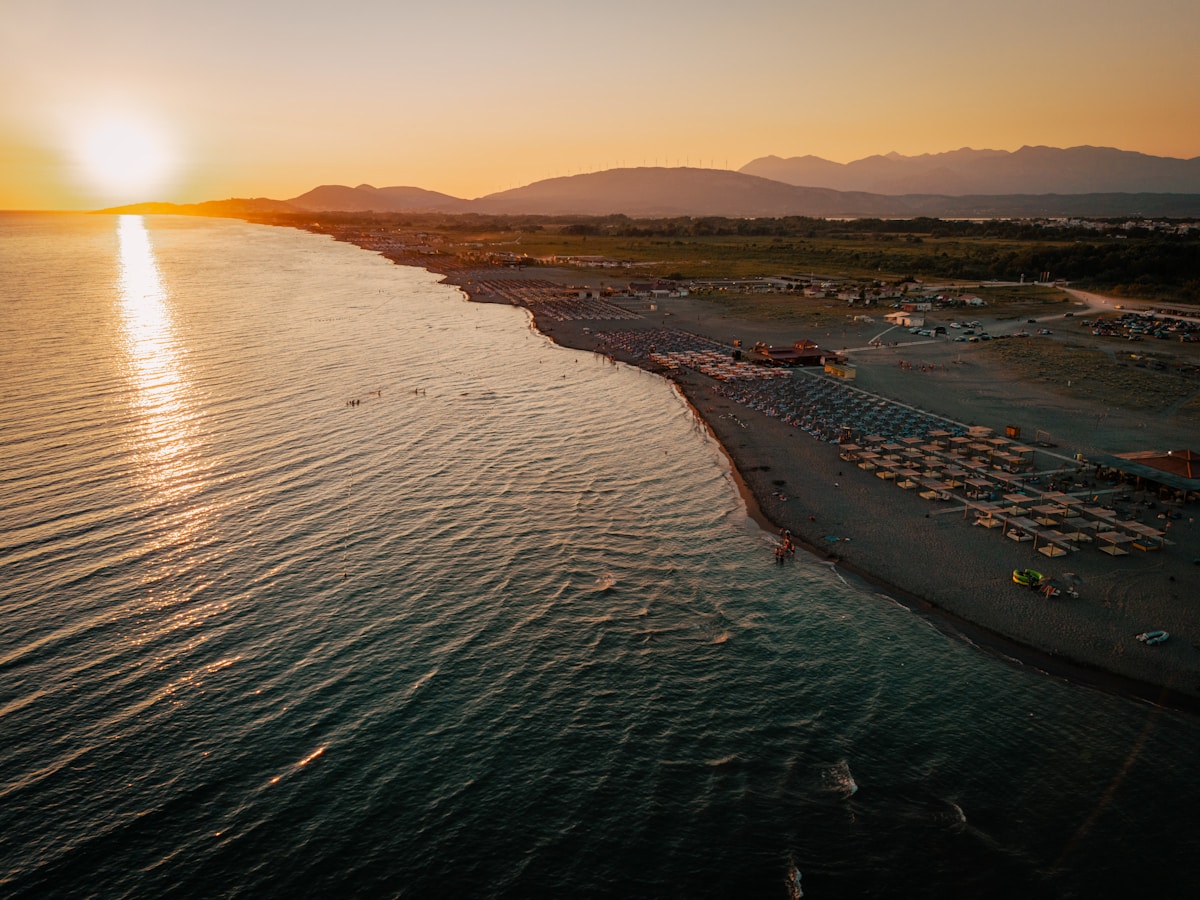
At 12 kilometres, Velika Plaža is the longest beach in Montenegro. It runs south of the old town in a broad arc of fine dark sand - darker and coarser than the white pebble beaches further north. Entry is free along the entire length. Sunbeds and umbrellas are available for hire at around €5–10 per day along the busier central sections.
The beach is backed by low dunes and holiday apartment blocks. It gets very busy in July and August but has enough length that finding space is rarely a problem outside the peak August weeks. Water quality is generally good; the beach is monitored and regularly earns EU Blue Flag status.
Ada Bojana River Island
Ada Bojana sits at the mouth of the Bojana River, about 10km south of Ulcinj’s old town. The island is reached by a short boat crossing (approximately €5 each way) or by driving down the peninsula road. It’s a triangular island formed by two channels of the river meeting before they reach the Adriatic.
The island has been a naturist destination since the Yugoslav era and remains popular with Serbian and regional visitors in that tradition, though the southern beach is also used by non-naturist visitors. Bungalow accommodation is available on the island from around €60 per night as of 2026. Camping pitches start at €15.
A day trip from Ulcinj is straightforward - boat from the harbour, a few hours on the beach, lunch at one of the simple fish restaurants on the island (grilled fish mains around €12–18), and back by early evening.
Šasko Lake and Birdwatching
Šasko Lake is a shallow freshwater lake about 8km north of Ulcinj, separated from the sea by a narrow barrier. It’s one of the few places in the Western Balkans where flamingos can be spotted - usually in small flocks during spring and autumn migration. Entry is free; binoculars are useful. The lakeside path is rough and mostly unmanaged, which keeps visitor numbers low.
Where to Eat
Stari Most - seafood restaurant in the old town with views over the sea. Mains €12–22. Reliable quality; book ahead in August.
Restaurant Pizzeria Bazar - a more casual option near the old town entrance, covering mixed grill, pizza, and pasta. Mains €9–16.
Bazar Restaurant - traditional Albanian-Montenegrin cooking: lamb dishes, grilled meats, stuffed peppers. Mains €10–18. A better representation of Ulcinj’s local food culture than the seafront tourist restaurants.
Budget meals (burek, grilled meat sandwiches) are available at takeaway spots around the market area for €2–4.
Where to Stay
| Accommodation | Area | From (per night, 2026) |
|---|---|---|
| Hotel Dvori Balšića | Old Town | €80 |
| Hotel Mediteran | Velika Plaža | €70 |
| Hotel Buffet | Old Town area | €50 |
| Ada Bojana bungalows | Ada Bojana island | €60 |
| Camping (Ada Bojana) | Ada Bojana island | €15/pitch |
| Private apartments | Various | €35 |
Full accommodation details are in our Ulcinj where-to-stay guide.
Day Trips from Ulcinj
Ulcinj works as a base for several nearby destinations. Budva is 2.5 hours by bus - more resort-focused but worth a day. Kotor is similarly accessible, though the journey requires a connection. The Albanian border crossing at Sukobin is 5km from Ulcinj; Shkodër in Albania is about 45 minutes by car. For organised day trips to Kotor, Budva, or beyond, browse tours and activities in Montenegro.
The Montenegro country guide has full transport and logistics details.
Practical Notes
- Currency: Montenegro uses the euro. Cards are accepted in most hotels and larger restaurants; smaller places and market stalls are cash only.
- Language: Albanian is widely spoken alongside Montenegrin. English is understood in most tourist-facing businesses.
- Season: The beach season runs May to September. July and August are the hottest and busiest months. September is often the best compromise - warm sea, thinner crowds, lower prices.
- Safety: Ulcinj is safe. The old town is quiet after midnight; Velika Plaža’s beach bars stay open until 2am in peak season.
For things to do, see our Ulcinj activities guide.
Book an experience
Top experiences in Ulcinj Travel Guide
Explore the best tours and activities in Ulcinj Travel Guide - instant confirmation, free cancellation on most bookings.