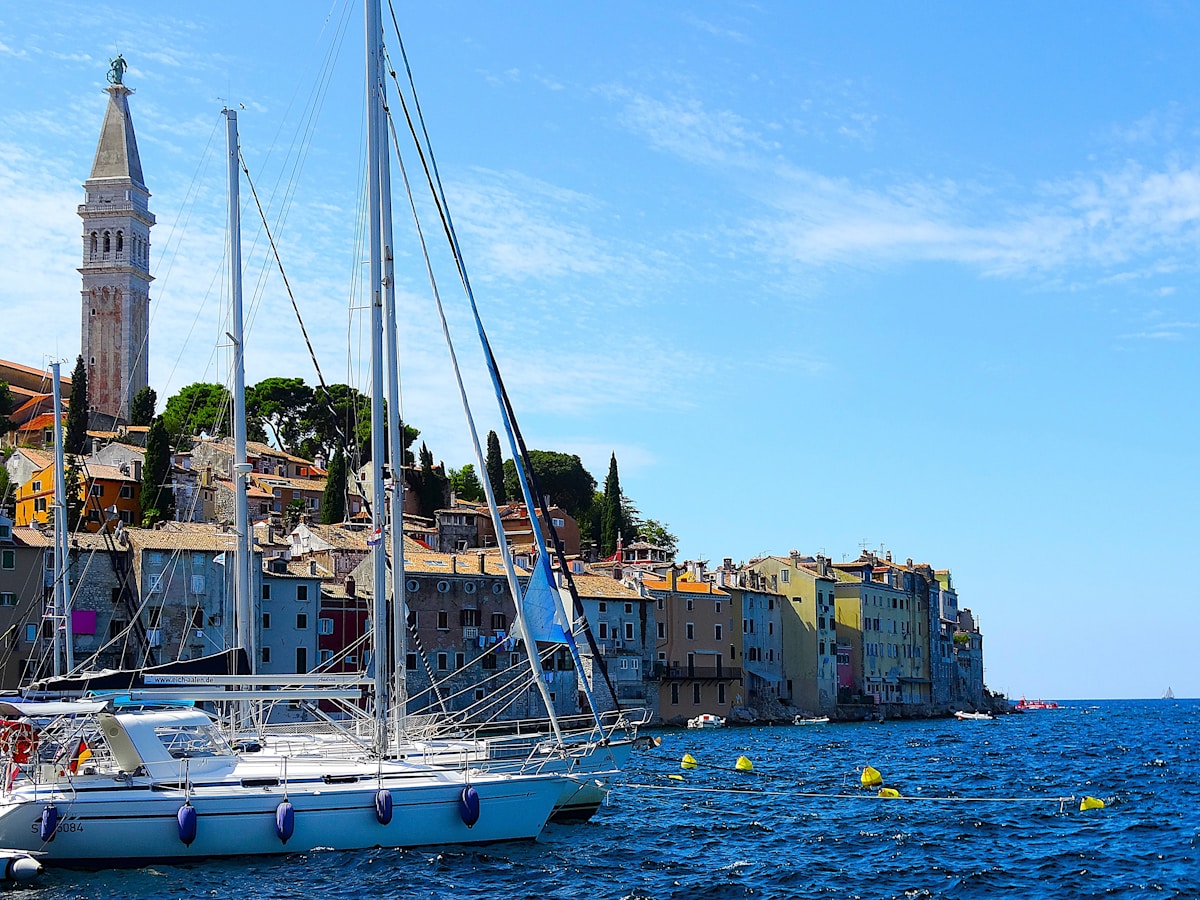
The Adriatic coastline is one of Europe’s most spectacular sailing destinations - more than a thousand islands off Croatia and Montenegro alone, with turquoise bays, medieval walled towns, and some of the clearest water in the Mediterranean. Island hopping by boat is the single best way to see it: you reach beaches and coves with no road access, drop anchor in places that day-tripper ferries never reach, and watch the sun set over limestone cliffs from the deck of your own vessel.
This guide covers the main routes, departure ports, vessel types, named operators with price ranges, the best season, and everything you need to book a trip that works for your budget and group.
Main Routes and What Each Covers
Split to Dubrovnik (the Classic)
The most popular route in the entire Adriatic. Most trips run seven nights northbound or southbound, calling at Hvar, Korčula, Mljet, the Elafiti Islands, and finishing in either Split or Dubrovnik.
Key stops:
- Hvar town - the most glamorous stop on the route, with restaurants set in medieval cloisters, a Spanish fortress above the harbour, and a famous lavender-and-pine interior
- Korčula - a fortified old town on a narrow peninsula, often called “little Dubrovnik”; the alleged birthplace of Marco Polo
- Mljet National Park - two saltwater lakes connected to the sea, surrounded by oak and Aleppo pine forest; walk, kayak, or swim in the lake
- Elafiti Islands - three small, largely car-free islands (Šipan, Lopud, Koločep) within day-tripping distance of Dubrovnik
Typical duration: 7 nights. Prices from approximately €700–€1,800 per person depending on vessel type and season.
Split to Zadar (Northern Dalmatia)
Shorter and less crowded than the southern route, this passage takes in Šibenik (with one of the few Gothic-Renaissance cathedrals built without any stone from elsewhere), the Kornati archipelago (89 mostly uninhabited islands inside a national park), and the island of Pag, known for its stark white limestone and excellent local cheese.
Typical duration: 5–7 nights. Prices from approximately €600–€1,500 per person.
Kotor to Dubrovnik (Montenegro + South Croatia)
This route is shorter but covers some of the most dramatic scenery in the Adriatic. Kotor Bay itself - a fjord-like inlet framed by limestone mountains - is reason enough to start here. Stops typically include Herceg Novi, Budva, and the Elafiti Islands before arriving in Dubrovnik.
Typical duration: 4–7 nights. Prices from approximately €650–€1,600 per person.
Greek Island Extensions (Ionian Route)
For those with more time, operators run extensions that continue south from Dubrovnik or Kotor into the Greek Ionian Islands - Corfu, Lefkada, Kefalonia, and Ithaca. These are usually 10–14 day packages and attract sailors who want to combine the Balkans stretch with the Greek islands in a single trip.
Typical duration: 10–14 nights. Prices from approximately €1,200–€3,000 per person.
Departure Ports
Split is the most practical starting point: good international flight connections via Split Airport (SPU), a large marina with easy provisioning, and central access to both the northern and southern Dalmatian routes. The old town and Diocletian’s Palace are worth a full day before departure.
Dubrovnik is the most dramatic starting point. The walled city is unmissable, but flights into Dubrovnik Airport (DBV) are pricier and the port itself can feel overcrowded in peak summer. Many operators prefer to depart from Dubrovnik and finish in Split rather than the reverse, so you end somewhere easier to fly home from.
Kotor (Montenegro) is the least obvious but increasingly popular base for Adriatic itineraries. The bay is one of the most scenic harbours in Europe. Tivat Airport (TIV) has grown significantly and now has direct connections to most European hubs.
Types of Vessels
Speedboat Day Trips
The most accessible option - no overnight accommodation, typically 6–8 hours, visiting 3–5 stops. Widely available from Split, Dubrovnik, Hvar, and Kotor. Prices run approximately €60–€120 per person including a light lunch and snorkelling stop. Ideal for those who want a taste of island hopping without committing to a full cruise.
Operators: Adriatic Tours Split, Dubrovnik Boat Tours, and dozens of independent skippers operating from harbour quaysides. Book directly or through GetYourGuide for verified operators.
Catamaran (Flotilla or Skippered)
Catamarans offer stability, speed, and more deck space than monohull sailboats. Bareboat charters (self-skippered) require an RYA or equivalent licence; skippered charters do not. Flotilla sailing - a convoy of boats with a lead vessel and support crew - is the best option for first-timers who want guidance without fully handing over control.
Operators: Sunsail (flotilla packages from Split and Dubrovnik; from approximately €1,100 per person/week for shared berth), Sailogy (catamaran charter marketplace with vetted owners), and Dream Yacht Charter (bareboat and crewed options from Split Marina; prices from approximately €3,500–€8,000 per week for the whole vessel).
Gulet
A traditional wooden motor-sailer, typically 20–35 metres, with a raised stern deck and wide beam that makes it practical to live aboard for a week. Gulets combine sailing with the comfort of a small hotel - most have en-suite cabins, a shaded deck area, and a cook who prepares three meals a day. They originated in Turkey but are now common across the Adriatic.
Small Ship Cruises / Katarina Line runs gulet itineraries from Split and Dubrovnik, with prices from approximately €950–€2,200 per person for a seven-night shared-cabin cruise. Adriatic Sailing and Croatia Sailing Holidays offer private gulet charters from approximately €5,000–€12,000 per week for the whole boat (typically 8–12 passengers).
Large Cruise Ships
Companies such as MSC Cruises and Costa Cruises include Split, Dubrovnik, Kotor, and Corfu on their Eastern Mediterranean itineraries. These are a different category of experience - port days are typically 6–8 hours, shore excursion prices add up quickly, and harbourfront queues can be significant in July and August. Worth considering for those who want the route without the logistics of a smaller vessel.
Best Season
May and June are the prime months for island hopping. Water temperatures are already warm enough to swim (around 20–22°C), crowds are lighter than July and August, and prices are 20–30% lower than peak. The light is exceptional for photography.
July and August are peak season. Popular anchorages fill early, Hvar and Dubrovnik are at their most crowded, and mooring fees spike. If you visit in August, depart ports by 7am to claim the best bays ahead of other boats.
September and early October are increasingly popular. The sea stays warm (23–25°C), summer crowds have thinned, and the autumn light over the limestone islands is remarkable. Prices drop back to May/June levels.
November through April - most charter operators suspend operations. Bora winds can be severe and unpredictable, and many island restaurants and accommodation close for the off-season.
What to Pack
The basics for an Adriatic cruise differ from a standard beach holiday:
- Boat shoes / non-marking soles - mandatory on most charter vessels
- Light layers - evenings cool quickly on the water, even in August
- Dry bag or waterproof case - for phone and documents when dinghying ashore
- Reef-safe sunscreen - required in Croatian marine parks; standard formulas are banned
- Sea-sickness tablets - even short passages can be rough when the Bora is blowing; take them 30 minutes before departure
- Reusable water bottle - drinking water is available in most marinas; bottled water on board adds up fast
- Compact towels - quick-dry microfibre saves space in a cabin
Keep luggage to a soft bag or duffel rather than a hard-shell case - storage space in boat cabins is tight.
Booking Tips
Book early for July and August. The best catamaran and gulet berths sell out by February or March for peak-season weeks. If you have flexible dates, you will find last-minute deals from May onwards.
Compare the base price carefully. Advertised per-person prices on gulet trips often exclude port fees (approximately €20–€40 per night), fuel surcharges, and the tip for the crew. Ask operators for a full cost breakdown before paying a deposit.
Choose your vessel by group size. A skippered catamaran suits 4–8 people who already know each other. A shared gulet berth is the better option for solo travellers or couples - you join a group of typically 12–18 passengers and costs are much lower.
Check the included meals. Some gulets include all meals; others include breakfast only. An all-inclusive board arrangement simplifies budgeting but reduces flexibility to eat at harbour restaurants - factor this in if you want to explore the local food scene ashore.
Verify the operator’s insurance and licensing. All legitimate charter operators in Croatia and Montenegro must hold a Nautical Tourism Operator licence from the relevant ministry of tourism. Ask for the licence number if you are booking independently, especially for smaller speedboat operators.
Island hopping the Adriatic is genuinely one of the most rewarding ways to travel through the Balkans - the combination of historic port towns, remote swimming spots, and the scale of the Croatian archipelago is hard to replicate anywhere else in Europe.