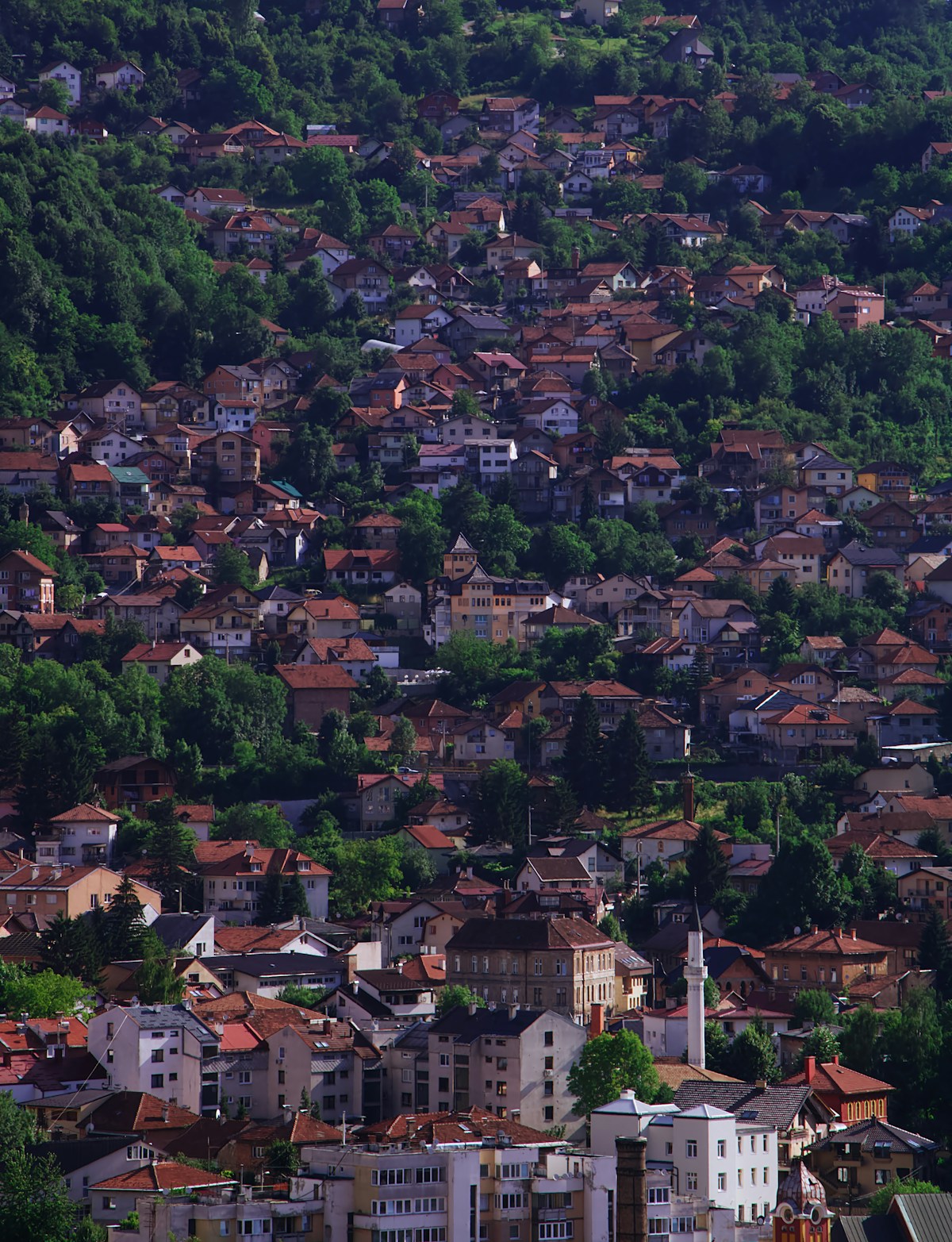
Nowhere in Europe compresses as much history into as compact a space as the Balkans. Within a two-week circuit you can stand at the spot where the First World War began, walk Roman streets still embedded in Diocletian’s Palace, explore a 15th-century Ottoman bazaar that has barely changed, and descend into a Cold War nuclear bunker built for Tito in 1972. This guide is for travellers who organise their trips around historical depth rather than beaches or nightlife.
Why the Balkans for History
The Balkans sat at the crossroads of four major civilising forces: the Roman and later Byzantine empires from the west, the Ottoman Empire from the east, the Austro-Hungarian empire from the north, and, in the 20th century, communist Yugoslavia. Each layer left physical evidence that is still largely intact — often because the region was too peripheral to the tourist economy to be extensively developed. You can stand inside a functioning Ottoman mosque in Sarajevo, a Roman amphitheatre in Pula, and a Byzantine church in Ohrid on the same trip.
The 20th-century history is also unusually accessible. The Balkans were at the epicentre of the First World War, the Yugoslav Wars of the 1990s, and some of the most singular episodes of Cold War politics. Guided tours that engage seriously with this material — not just the medieval architecture — are widely available in all the main cities.
Top Historical Destinations
Sarajevo, Bosnia-Herzegovina
The single most historically charged city in the region. In June 1914, Archduke Franz Ferdinand was assassinated on the Latin Bridge (Latinska ćuprija) — the event that triggered the First World War. The bridge still stands, and the Museum of Sarajevo (entry approximately €5, as of 2026) contains the original car, the pistol, and contemporary documentation of the assassination. The city’s Old Town (Baščaršija) is a well-preserved 15th-century Ottoman bazaar. The National Museum of Bosnia-Herzegovina (entry approximately €7) holds the Sarajevo Haggadah — a 14th-century illuminated Jewish manuscript smuggled out of Spain during the Inquisition and saved twice from destruction by Muslim officials.
For the 1990s siege: the Tunnel of Hope (Tunel spasa) on the southern edge of the city was the only supply route into the city during the 914-day siege. Entry approximately €7, including the tunnel section that remains accessible. The War Childhood Museum (entry approximately €5) documents civilian life during the siege through personal objects and testimonies.
Walking tours in Sarajevo covering both Ottoman history and the 1990s war are approximately €15–25 per person.
Mostar, Bosnia-Herzegovina
The old town of Mostar was systematically destroyed in 1993 and rebuilt to UNESCO standards in the early 2000s. The Stari Most bridge (1566, Ottoman) is the centrepiece — the original was destroyed by Croatian forces, the reconstructed version opened in 2004 and was inscribed on the UNESCO World Heritage List in 2005. The old town on both banks retains the physical character of a 16th-century Ottoman trading town. Full coverage: Mostar.
Ohrid, North Macedonia
One of the oldest cities in Europe and a UNESCO cultural and natural heritage site since 1980. The Church of St Sofia (11th century) contains the finest Byzantine frescoes in North Macedonia; entry approximately €2 as of 2026. The Church of St John at Kaneo (13th century) sits on a cliff above the lake and is one of the most photographed views in the Balkans. The ancient theatre — built in the 2nd century BC and still used for performances — overlooks the lake. Full coverage: Ohrid.
Diocletian’s Palace, Split, Croatia
The entire old town of Split is built within and around a 4th-century Roman emperor’s retirement palace. Diocletian abdicated in 305 AD and retreated to this vast fortified complex on the Dalmatian coast. The cathedral, built in the emperor’s own mausoleum, is the oldest cathedral in the world still used for regular services. Walking the corridors and subterranean crypts beneath the palace costs approximately €10 (as of 2026). Full coverage: Split.
Butrint, Albania
A UNESCO World Heritage Site and one of the most completely excavated ancient cities in the Balkans. Settled continuously from the Bronze Age through the Greek, Roman, Byzantine, and Venetian periods, Butrint sits on a peninsula beside a lagoon in southern Albania. The ruins include a 3rd-century BC theatre, Roman baths, a Byzantine baptistery with an extraordinary mosaic floor, and Venetian fortifications. Entry approximately €10 (as of 2026). See our Butrint guide.
Gjirokastër, Albania
A UNESCO-listed Ottoman town built on a steep hillside — the old town’s houses are made of stone and slate in a distinctive fortress-style architecture found nowhere else. The citadel (entry approximately €4 as of 2026) has sections dating to the Byzantine period and was used as a political prison under Enver Hoxha. Gjirokastër was the birthplace of both Hoxha and the novelist Ismail Kadare. The Cold War element: Hoxha built approximately 170,000 concrete bunkers across Albania between 1967 and 1986 — they are scattered across the countryside outside Gjirokastër. Full coverage: Gjirokastër.
Sofia and Plovdiv, Bulgaria
Sofia’s city centre sits above an exceptionally dense layer of ancient ruins — the Church of St George rotunda (4th century Roman, still in active use) is surrounded by excavated Roman streets visible through glass floor sections. The National History Museum (entry approximately €10) covers Thracian, Greek, Roman, and medieval Bulgarian history. Plovdiv’s old town is one of the best-preserved 19th-century Bulgarian National Revival architecture clusters in the country, alongside a Roman amphitheatre (approximately €5, 2026) that still hosts performances. Full coverage: Sofia | Plovdiv.
Thematic Circuits
Ottoman Trail (12–14 days): Sarajevo → Mostar → Berat (Albania) → Gjirokastër → Ohrid → Skopje. The Ottoman heritage is densest in this Bosnia-Albania-North Macedonia corridor. Berat full guide — its two-kilometre-long castle and Byzantine churches under Ottoman occupation make it one of the most complex historical sites in Albania.
Roman & Ancient (10–12 days): Split → Dubrovnik → Butrint → Thessaloniki → Ohrid → Skopje. The Adriatic coast and the overland route to North Macedonia and Greece traces the Via Egnatia, the Roman road that connected Dyrrachium (modern Durrës) to Byzantium.
20th-Century History (7–10 days): Sarajevo → Mostar → Belgrade → Niš (the Čele Kula skull tower, Ottomans vs Serbian rebels, 1809) → Sofia. Belgrade’s Museum of Yugoslavia and the House of Flowers (Tito’s mausoleum) add the Yugoslav period. Entry to the Museum of Yugoslavia approximately €5 (as of 2026).
Practical Tips for History Travellers
Guided vs self-guided: For the Ottoman and Byzantine material, self-guided works well — the sites are well-documented and labelling is good in Croatia, Slovenia, and increasingly in Bosnia and North Macedonia. For the 1990s conflict sites in Sarajevo and Mostar, guided tours add significant context that is not available from signage alone. Expect to pay €15–30 per person for a specialist war-history tour.
Best museums: The Museum of Sarajevo (assassination), the National History Museum Sofia, the Archaeological Museum Thessaloniki (ancient Macedonian gold), the Museum of Byzantine Culture Thessaloniki, and the War Childhood Museum Sarajevo are the five strongest.
Timing: Museums and historical sites across the Balkans keep reduced hours October–March. Butrint closes at 17:00 year-round; the Pula amphitheatre is best visited early morning in summer to beat cruise-ship crowds. The Sarajevo tunnel can be crowded mid-morning in July–August; go before 10:00 or after 14:00.
Costs: Budget approximately €30–50 per day in site entry fees on an intensive history circuit. Most cities have combination tickets — Ohrid’s multi-site card covers the main churches at a discount.
See Also
- Sarajevo guide
- Mostar guide
- Ohrid guide
- Gjirokastër guide
- Split guide
- Balkans 2-week itinerary
- Bosnia 7-day itinerary
Plan your trip: Browse guided history and culture tours in the Balkans — specialist walking tours, war-history guides, and archaeology visits across the region. Cover unexpected complications with Balkans travel insurance.