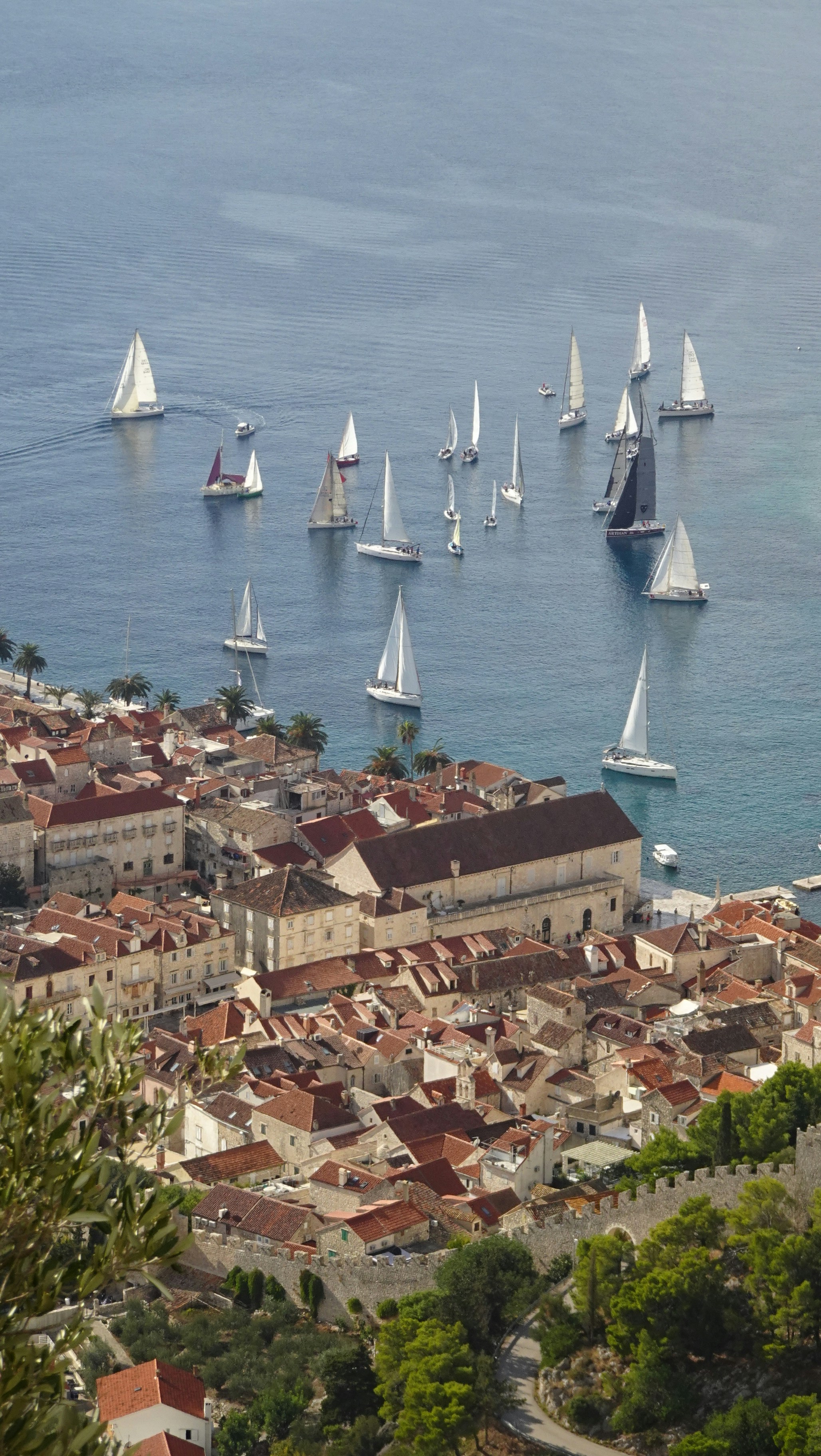
The Dalmatian coast has more than 1,000 islands, islets and reefs. Most are uninhabited. The ones that are inhabited - Hvar, Vis, Korčula, Brač, Šolta - range from internationally known to near-secret. Sailing is the most practical way to move between them on your own schedule, and Croatia is one of the most established sailing destinations in the Mediterranean: ACI (Adriatic Croatia International Club) operates 22 marinas along the coast, the infrastructure is well-developed, and charter operators of every size and price point operate from Split and Dubrovnik.
This guide covers the main routes, operators, islands, and practical costs.
Charter types
Bareboat charter means you rent the boat and sail it yourselves. You need a recognised skipper’s certificate (RYA Day Skipper, ICC, or national equivalent), a VHF radio operator’s certificate, and typically 2–3 years’ logged experience. The charter company will ask for your logbook. This is the cheapest option and gives total freedom of schedule.
Skippered charter adds a professional skipper to the crew, who handles navigation and boat management. Skipper costs run approximately €170–220/day as of 2026, on top of boat hire. Some charters include a hostess/cook as well (approximately €130–170/day additional). If your group lacks the qualifications or confidence for bareboat, skippered charter is the obvious solution.
Flotilla sailing is a group of 6–10 boats sailing the same route together, led by a lead boat with an experienced couple. You sail each leg independently but within sight of the rest. The lead boat provides daily route briefings and is on radio call if you get into difficulty. Flotillas suit couples or groups with limited offshore experience. Operators including Neilson and Sunsail run Croatian flotilla programs.
Gulet charter: a gulet is a traditional wooden Turkish-style motor-sailor, 15–35 metres long, with 3–8 double cabins. Gulets are crewed (skipper and cook included), motor between ports in the mornings, and use their sails when the wind allows. Predominantly used in Turkey but operating in Dalmatia too. Weekly gulet charters from Split start at approximately €4,000–6,000 for a 10-metre boat, rising to €15,000+ for larger vessels.
Operators
Sunsail (sunsail.co.uk) is one of the largest charter operators in Croatia, based from the ACI Marina in Trogir (7 km from Split). They offer bareboat, skippered, and flotilla options across a large fleet of Jeanneau and Beneteau monohulls, plus catamarans. Their fleet is well-maintained and heavily used; pre-season booking (November–January) is recommended for July–August departures. Bareboat 40-foot monohull approximately €2,500–4,200/week in peak season as of 2026.
Nava Yachts (navayachts.com) is a Split-based operator with a mixed fleet and a flexible approach to customisation. They offer bareboat, skippered, and crewed gulet options and have English-speaking staff on site. Prices are broadly similar to Sunsail for equivalent vessels; they are often cited for responsive service.
Navigare Yachting (navigare-yachting.com) operates from multiple bases including Split/Trogir and Dubrovnik. Strong for catamarans (Leopard and Lagoon 40–45 foot, approximately €4,500–7,500/week peak season). Their Dubrovnik base at ACI Marina Dubrovnik suits southern routes.
Ultra Sailing (ultra-sailing.hr) is a Croatia-based operator with a larger fleet in the mid-range charter segment. Less internationally marketed than Sunsail but often 10–20% cheaper for equivalent vessels. Check their current availability directly.
Local independent operators: Smaller agencies including Adriatic-Croatia Charter and Croatia Yacht Charter aggregate boats from private owners and smaller fleets. These can offer better value for experienced charterers who know what specifications they need. Always verify the company’s ACI registration and charter licence before paying a deposit.
Base: Split and Trogir
ACI Marina Split is the primary base for central Dalmatian charters. It sits 3 km west of Split’s Diocletian’s Palace, with good road access from Split Airport (20 minutes). The marina has 355 berths, fuel, a technical service centre, and a chandlery.
ACI Marina Trogir (7 km west of Split) is slightly more popular with charter operators due to its deeper basin and proximity to Trogir’s UNESCO old town. Sunsail, Neilson, and several independent operators are based here.
Both bases have regular water taxis and buses into Split centre (approximately 20 minutes, €3–5 by bus). Most charters begin and end on Saturday (the standard changeover day); hand-over is typically 09:00, hand-back 17:00–18:00.
Base: Dubrovnik
ACI Marina Dubrovnik at Komolac, 8 km east of the old city, is the Dubrovnik charter base. It is smaller than Split and more suited to gulet and skippered charters than large bareboat fleets. The southern route from here through the Elafiti Islands and to Korčula is less visited than the Split routes - fewer moorings are pre-reserved in advance.
Island by island
Brač
The island closest to Split (under 1 hour by ferry from Split port). Bol on the south coast has Zlatni Rat (Golden Cape), the Adriatic’s most photographed beach - a pebble spit that shifts shape with currents. The northern coast around Supetar and Pučišća is quieter. Marina Bol has 150 berths; book ahead for July–August. Rental apartments in Bol from approximately €70–120/night (mid-range) as of 2026.
Hvar
The most fashionable island on the Dalmatian coast. Hvar Town has a well-preserved Venetian arsenal and loggia, a fortress above the town, and a nightlife reputation that fills it in July–August. The Pakleni Islands - a chain of islets 10 minutes by dinghy offshore - have several clothing-optional coves. Stari Grad on the north coast is quieter and has the island’s most significant cultural site: the Stari Grad Plain, a 2,400-year-old Greek agricultural landscape, UNESCO-listed. Marina Hvar Town has 160 berths; arrive by 17:00 in peak season or you won’t get a berth. Restaurants in Hvar Town: Gariful (seafood, mains approximately €18–28) and Macondo (Dalmatian food, more local pricing, mains approximately €14–22).
Vis
The furthest inhabited island from the mainland (2 hours by ferry from Split). Vis was a Yugoslav military zone until 1989 and opened to mass tourism late, which preserved its character. The village of Komiža on the west coast is quieter and more traditional; Vis Town on the east has good restaurants. The Blue Cave on the nearby islet of Biševo is the island’s most visited natural site (boat trips from Komiža, approximately €25–35 per person). Snorkelling in Vis’s waters is among the best in the Adriatic - visibility 20–30 metres on good days. Anchorage at Stonca Bay on the north coast is one of the best free overnight spots in Dalmatia.
Korčula
Known as the putative birthplace of Marco Polo (disputed but locally maintained). Korčula Town is a Venetian walled city on a peninsula - smaller than Dubrovnik but with the same architectural character and far fewer visitors. The Moreška sword dance is performed Thursday evenings in summer (approximately €15 entry). The island produces Grk and Pošip white wines from indigenous grapes - both are worth trying at local konobas (approximately €10–15/bottle retail). ACI Marina Korčula has 150 berths.
Šolta
The least visited of the main Split-area islands - no international ferry connection and almost no large hotels. Maslinica on the west coast has a small marina and good anchorage; the village of Stomorska on the east is known for scuba diving. Honey from Šolta’s rosemary hives is considered among the best in Croatia.
Sample routes
7-day Split circuit
Saturday: depart Split/Trogir → Šolta (Maslinica, 2–3 hours) Sunday: Šolta → Hvar Town (3–4 hours) Monday: Hvar → Vis (Komiža, 3 hours) Tuesday: Vis → Korčula Town (4–5 hours) Wednesday: Korčula → Brač (Bol, 4 hours) Thursday: Brač → Šolta or Split approaches (2–3 hours) Friday: return Split/Trogir
7-day Dubrovnik south route
Saturday: depart Dubrovnik → Šipan (Elafiti Islands, 2 hours) Sunday: Šipan → Korčula (4 hours, Pelješac peninsula to port) Monday: Korčula → Lastovo (2 hours, remote, good anchorage) Tuesday: Lastovo → Vis (3–4 hours) Wednesday: Vis → Hvar (3 hours) Thursday: Hvar → Brač (Bol, 2 hours) Friday: Brač → Split (1.5 hours, disembark Split, bus to Dubrovnik ~4 hours)
This one-way route requires a return arrangement - bus or shuttle between Split and Dubrovnik.
Practical notes
Marina costs: ACI Marina berths for a 40-foot boat cost approximately €70–120/night in peak season. Several free-anchoring options exist (Vis’s Stonca Bay, various coves on Šolta and Lastovo) - no charge, but you’ll need your own anchor and chain and should check local rules.
Provisioning: Split’s Konzum supermarket (near the ACI marina) and the Lidl at Trogir are the best provisioning options before departure. Island stores have limited stock at higher prices.
Weather: The Maestral (afternoon westerly) blows reliably along the coast from May to September, typically 12–18 knots - good sailing conditions. The Bura (northeasterly) can arrive suddenly with gusts to 40+ knots, particularly in autumn; monitor forecasts via Meteo Adriatik or Windy.
VHF: Channel 16 is the emergency and calling channel. Croatian maritime rescue: call 9155 from a Croatian mobile or 112. ACI marinas monitor VHF channel 17.
Fuel: Diesel is available at most ACI marinas and at designated pumps in major harbours. Prices vary approximately €1.45–1.70/litre as of 2026 (confirm current prices on arrival).
Book a Day Sailing Trip from Split
For travellers who want a sailing experience without a multi-day charter commitment, these verified GetYourGuide tours offer skippered half-day and full-day options departing directly from Split:
| Tour | Duration | Format | Approx. Price | Covers | Book |
|---|---|---|---|---|---|
| Split: Half-Day Sailing with Swim Stop, Snacks & Wine | ~4 hours | Group sailboat | From ~€45/person | Sail the Dalmatian coast from Split, swim stop in a cove, local wine and snacks included | Book |
| Split: Full-Day Sailing to Šolta & Brač Islands | ~8 hours | Group sailboat | From ~€75/person | Circuit to Šolta and Brač, multiple swim stops, skippered, lunch included | Book |
| Split: 2-Day Private Sailing Trip with Crew & Fuel | 2 days | Private boat | From ~€250/person | Private skippered boat, overnight on board, fuel included, flexible island itinerary | Book |
Which to choose: The half-day tour suits travellers who want a taste of sailing without committing to a full day — or those with an afternoon free between other activities. The full-day Šolta and Brač tour is the most practical middle ground: it covers two islands with swim stops and a crew-cooked meal, and requires no sailing experience. The 2-day private trip offers genuine overnight sailing at a per-person cost that becomes competitive for groups of 4–6 — much lower than a bareboat charter week but with real island-hopping scope.
Prices are approximate as of 2026. Check current availability at the links above.
See also
- Croatia travel guide
- Split
- Dalmatian Islands
- Best beaches in the Balkans
- Croatian coast road trip
- 3-days in Dubrovnik
- Dubrovnik travel guide
- Montenegro travel guide
- Balkans in June
- Best time to visit the Balkans
Plan your trip: Browse sailing tours and coastal activities in Croatia and book in advance for peak season. Hire a car for reaching more remote spots, and cover your adventure with travel insurance. For flexible bookings closer to your travel dates, our last-minute tours page shows coastal activities still accepting guests.