Bosnia and Herzegovina and Serbia share a border, a post-Yugoslav identity, and the western Balkans in common — but they offer distinctly different travel experiences. Bosnia is intimate, historically layered, and shaped by the intersection of Ottoman, Austro-Hungarian, and 1990s war history in ways that are visible on almost every street corner. Serbia is larger, more outward-looking, and home to some of the best nightlife and food in the region. Here is how the two countries compare across costs, highlights, and practical travel.
Quick Verdict
| Factor | Bosnia & Herzegovina | Serbia |
|---|---|---|
| Signature city | Sarajevo — Ottoman old town, war history, Byzantine atmosphere | Belgrade — fortress, riverfront nightlife, creative districts |
| Second must-see | Mostar and Kravice Falls | Novi Sad and Zlatibor plateau |
| Countryside | Neretva valley, Una National Park, Sutjeska National Park | Uvac canyon, Tara National Park, Fruška Gora |
| History depth | Ottoman, Austro-Hungarian, WW1 (Franz Ferdinand), 1990s siege | Roman, medieval, Ottoman, Austro-Hungarian, Yugoslav-era |
| Nightlife | Relaxed cafe culture; excellent live music scene | Internationally known — river clubs, Savamala, open until dawn |
| Budget | Very affordable; accommodation slightly cheaper than Serbia | Affordable; Belgrade pricier than Sarajevo at the top end |
| Size | Compact — Sarajevo to Mostar is 130 km | Larger — Belgrade to Novi Sad is 90 km; more to cover |
| Schengen | Outside Schengen | Outside Schengen |
Bottom line: Bosnia wins for first-timers to the Balkans, those seeking to understand the region’s 20th-century history, and anyone who wants dramatic scenery packed into a compact country. Serbia wins for city lovers, food enthusiasts, and travellers who want a longer stay with more varied landscapes and a bigger urban energy. Many visitors do both — the bus between Sarajevo and Belgrade runs daily and takes under 6 hours.
Costs
Bosnia is one of Europe’s most affordable destinations. A Bosnian coffee (džezva served with lokum and a sugar cube) costs approximately €1–1.50. A sit-down meal in Sarajevo’s Baščaršija runs €7–13 for a main; outside the capital, €5–9. A mid-range double room in Sarajevo costs approximately €65–95; in Mostar, €55–85. A couple’s comfortable daily budget — guesthouse, three meals, one activity — runs approximately €90–130 in Sarajevo.
Serbia is similarly priced with some differences. Coffee in Belgrade is €1.50–2.50; restaurant mains €10–16 in the city centre. Belgrade has a wider range at the top end — boutique hotels and fine dining push the ceiling higher — but budget travel is very achievable. Outside Belgrade, prices drop considerably: Novi Sad and Niš are meaningfully cheaper than the capital. A couple’s daily budget in Belgrade runs approximately €120–170; in the Serbian countryside, €80–110.
Where to Stay
Bosnia & Herzegovina
- Sarajevo old town (Baščaršija area) — staying inside or adjacent to the bazaar gives the best first-morning experience. Boutique guesthouses from approximately €60–90 per night. See our Sarajevo accommodation guide.
- Mostar — book accommodation near the Old Bridge for the most atmospheric stay. Guesthouses from approximately €50–75; private apartments available in the old town from approximately €60–80.
- Trebinje — Bosnia’s sunniest and most Mediterranean town, 30 km from Dubrovnik, with a compact old walled town; guesthouses from approximately €45–65.
Serbia
- Belgrade, Savamala district — the creative waterfront quarter; boutique hotels and design-forward guesthouses from approximately €70–100 per night. Walking distance to river clubs and Kalemegdan fortress. See our Belgrade accommodation guide.
- Novi Sad — Serbia’s second city and cultural capital; mid-range hotels near the Petrovaradin Fortress from approximately €55–80. Much quieter than Belgrade.
- Zlatibor — the western Serbian plateau, popular with Serbian families; mountain hotels and chalets from approximately €40–70 per night.
Where to Eat
Bosnia & Herzegovina
- Ćevapi — Bosnia’s national dish: small minced meat cylinders grilled and served in a somun flatbread with kajmak (clotted cream) and raw onion; €3–5 at any ćevabdžinica. The best in the Balkans by most accounts.
- Burek — layers of filo pastry with meat, cheese, or spinach; €1.50–3 for a portion from street bakeries. Universally available and essential morning eating.
- Begova čorba — “Bey’s soup,” a rich chicken broth with vegetables and sour cream; a restorative starter at traditional Bosnian restaurants; approximately €4–6.
Serbia
- Pljeskavica — Serbia’s giant spiced burger, served in a lepinja bun with kajmak or ajvar (roasted red pepper spread); approximately €4–8 at grills across the country.
- Spit-roast lamb (jagnjetina) — whole spit-roasted lamb is Serbia’s celebration food, found at roadside restaurants across the countryside and at kafanas with live music; a full serving for two approximately €20–30.
- Ajvar — the roasted red pepper and aubergine relish that is as close as Serbia has to a national condiment; try it fresh at any village market in autumn.
Highlights You Can’t Miss
Bosnia & Herzegovina
Mostar: The rebuilt Stari Most (Old Bridge) arching over the Neretva River is one of the most photographed sights in the Balkans — and rightly so. The old town’s Ottoman-era stone streets, copper workshops, and tekke (dervish lodges) are in excellent condition. Day trips from Sarajevo are possible, but spending a night in Mostar gives you the bridge at dawn and dusk without the tour groups.
Sarajevo’s war history: The four-year Siege of Sarajevo (1992–1996) is documented throughout the city in a way that is moving but never morbid. The Tunnel of Hope (Tunnel D-B) — an 800-metre tunnel dug to supply the city under siege — is 6 km from the old town and costs approximately €5 to enter. The War Childhood Museum is one of the most affecting small museums in the Balkans. See our day trips from Sarajevo guide for transport details.
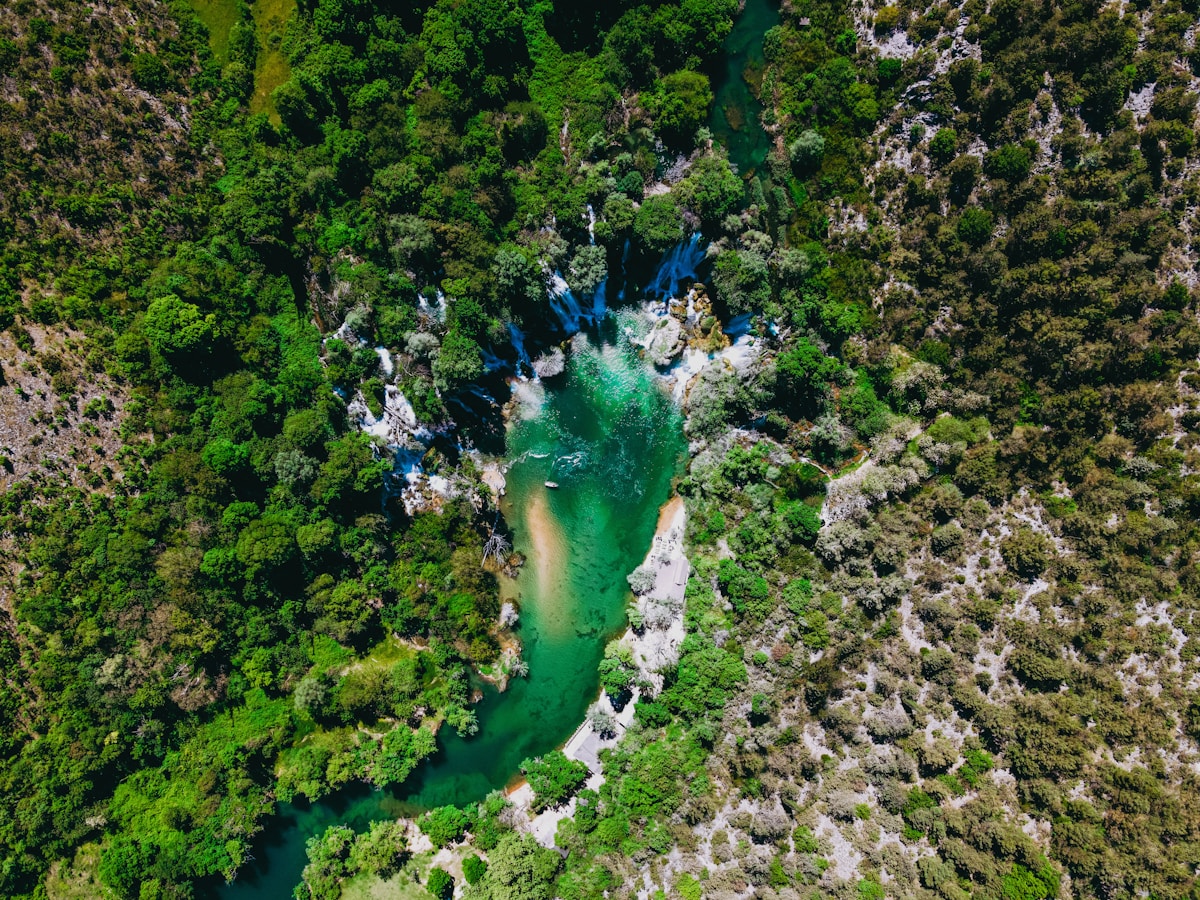
Kravice Falls: The Neretva River’s most dramatic cascade — a 28-metre-wide horseshoe of waterfalls dropping into a turquoise pool. Swimming is permitted in summer. Kravice is 40 km from Mostar; most visitors combine it with a Mostar day trip from Dubrovnik or Sarajevo.
Sutjeska National Park: Bosnia’s oldest and most remote national park, with Maglić peak (2,386m, the highest point in Bosnia) and the primeval Perućica forest — one of only two virgin forests remaining in Europe. Limited infrastructure; guided hiking or multi-day trekking only.
Serbia
Uvac Canyon: The Uvac Special Nature Reserve in western Serbia is one of the most photogenic landscapes in the Balkans — the Uvac River meanders in enormous loops through a canyon of white limestone, visible from a cliffside viewpoint that rivals anything in the region. Home to one of Europe’s largest populations of griffon vultures.
Novi Sad and EXIT Festival: Serbia’s most beautiful city has a compact old town, the Petrovaradin Fortress, and a cultural calendar anchored by the EXIT music festival (early July), which has been ranked among Europe’s best festivals for over a decade.
Zlatibor plateau: Western Serbia’s alpine plateau — rolling hills, pine forests, traditional villages, and the Sirogojno open-air museum of Serbian vernacular architecture. A popular domestic destination that most international visitors overlook entirely.
Kalemegdan Fortress, Belgrade: The Roman, medieval, and Ottoman-era fortress at the confluence of the Sava and Danube rivers is Belgrade’s defining landmark. The views from the upper ramparts over the two rivers are exceptional, particularly at sunset.
Getting Around
Bosnia & Herzegovina
Bosnia is compact but public transport between smaller towns is infrequent. Buses connect Sarajevo to Mostar (2.5 hours), Sarajevo to Trebinje (2 hours), and Sarajevo to Banja Luka (2.5 hours) reliably. A car is the best way to reach Kravice Falls, Sutjeska, and the Una canyon. Hire a car in the Balkans.
Serbia
Serbia’s bus network is extensive and reliable. Belgrade to Novi Sad is 90 minutes; Belgrade to Zlatibor is 3–4 hours. For Uvac Canyon and more remote western Serbia, a car or organised tour is necessary. Serbia also has useful train connections between Belgrade and Novi Sad.
Getting Between Bosnia and Serbia
By bus: Multiple daily services from Sarajevo Central Bus Station to Belgrade Bus Station. Journey time approximately 5–6 hours. Tickets from approximately €15–22. Direct services also run Sarajevo to Novi Sad.
By car: Approximately 4.5–5 hours via the E761/E65, crossing at Zvornik (Bosnian-Serbian border). The Drina valley section is scenic. Bring your passport.
Natural route combination: Dubrovnik → Mostar → Sarajevo → Belgrade → Novi Sad works well as a west-to-east transit of the western Balkans. The reverse — starting in Belgrade — is equally logical depending on your flight hub.
Best Season
Bosnia: April to June and September to October offer mild temperatures and manageable crowds. Sarajevo’s old town peaks in July and August. Winter is distinctive — the surrounding mountains (Jahorina, Bjelašnica) hosted the 1984 Winter Olympics; lift passes cost approximately €20 per day and accommodation is far cheaper than the Alps.
Serbia: May, June, and September are the best all-round months. July–August is peak river club and festival season in Belgrade. The countryside (Zlatibor, Uvac) is at its most beautiful in autumn with yellow-orange foliage.
Internal Links
- Bosnia and Herzegovina travel guide
- Serbia travel guide
- Where to stay in Sarajevo
- Where to stay in Belgrade
- Bosnia 7-day itinerary
- Serbia 7-day itinerary
- Serbia and Bosnia 7 days
- Sarajevo vs Belgrade
- Mostar vs Sarajevo
- Getting around the Balkans
- Balkans travel costs
- Best time to visit the Balkans
FAQs
Is Bosnia or Serbia cheaper? Both are very affordable. Day-to-day costs are similar; Bosnia is slightly cheaper for accommodation outside the capitals. Neither will strain a travel budget.
Which is better for first-time Balkans visitors? Bosnia is more immediately striking for first-timers — Sarajevo and Mostar are visually dramatic and historically dense. Serbia rewards those who want larger city energy and more varied rural landscapes.
Is it safe to travel in Bosnia? Yes. Bosnia is safe for travellers. In remote areas, stick to marked paths — landmine risk from the 1990s war exists off designated routes in a small number of areas.
Can you visit both Bosnia and Serbia in one trip? Easily. Sarajevo to Belgrade is 5–6 hours by bus. A 10–14 day itinerary covering both is one of the most natural and rewarding routes in the western Balkans.
See also: Serbia vs Croatia · Serbia vs Romania · Balkans Comparison Guide
Plan your trip: Tours in Bosnia · Tours in Serbia · Car hire in the Balkans · Travel insurance · Flights to the Balkans