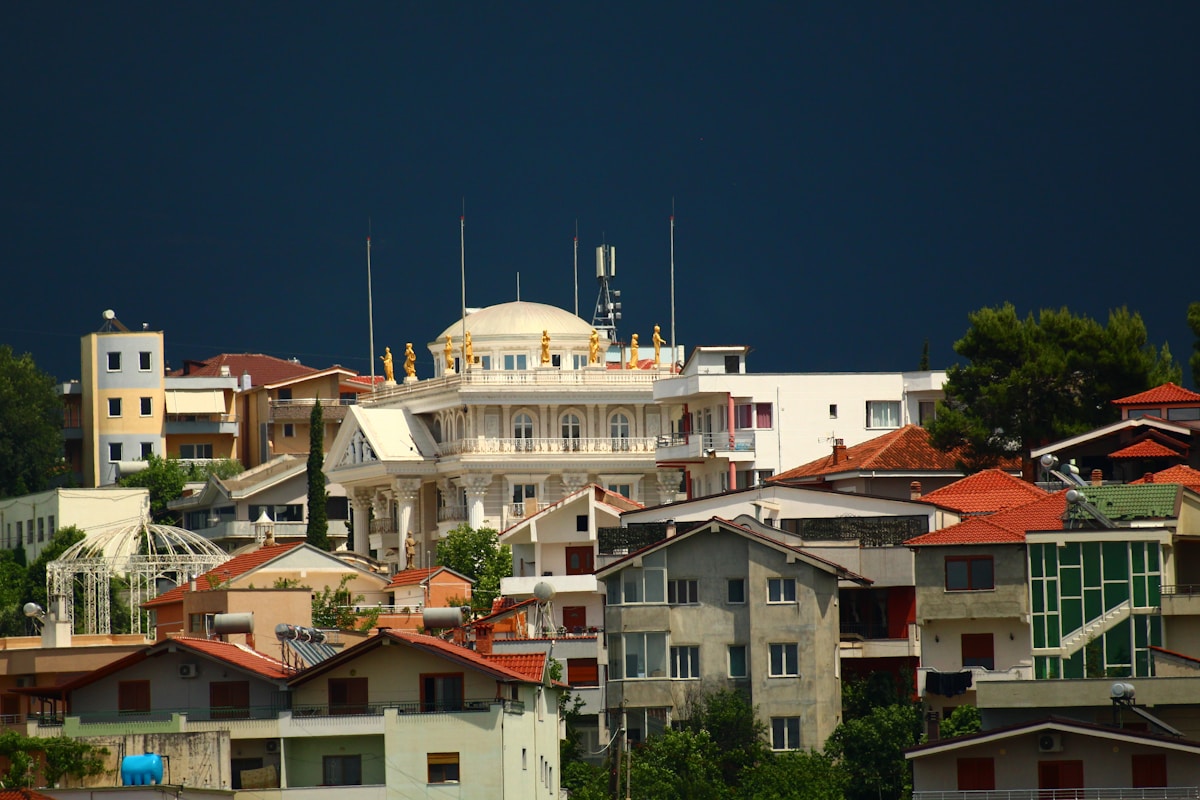
Albania is one of the most straightforward countries in Europe for long-term remote workers — not because it has an elaborate visa pathway, but because it largely does not need one. For most nationalities, you can simply arrive, stay, and work remotely for up to a year without any prior visa application.
Does Albania have a digital nomad visa?
Albania does not have a formally named “digital nomad visa” category. What it has instead is unusually generous visa-free access for Western passport holders.
EU and EEA citizens can stay indefinitely in Albania as an EU candidate state with ongoing alignment processes. There is no time limit for EU citizens.
US, UK, Canadian, Australian, New Zealand, and most other Western passport holders can stay up to one year (365 days) without a visa, under Albania’s general visitor provisions. This policy has been stable for several years and applies to over 90 nationalities.
For comparison, most European non-Schengen countries grant 90 days visa-free. Albania’s 365-day rule is a deliberate policy choice to attract visitors and investment, and it makes the country uniquely practical for nomads.
Before you arrive: sort your insurance
Albania is not covered by the EHIC system. If you have an EU health card, it is worthless here. Private travel insurance is mandatory for any sensible long-stay plan.
EKTA travel insurance → covers Albania and all non-Schengen Balkans countries. For stays over a month, look at the annual multi-trip plan. Medical costs in Albania are low by European standards, but hospital care in Tirana for anything serious requires private facilities — which cost money without insurance.
Who actually needs to do anything formal?
For most digital nomads, the answer is: very little.
If your stay is under 365 days and you hold a qualifying passport: arrive at the airport or land border, receive your entry stamp, and you are legal for up to a year. No application, no fee, no supporting documents required at the border beyond the standard passport and onward travel question.
If you want formal residency (for bank accounts, bureaucracy, or stays over a year): Albania has a temporary residence permit process. This requires:
- Valid passport
- Proof of accommodation (rental contract)
- Proof of income (bank statements, employment contract, or business registration)
- Health insurance policy
- Application at the National Registration Centre (QKB) in Tirana
- Fee: approximately ALL 5,000 (around €50)
The temporary residence permit grants 1-year renewable status and is useful if you want to open a local bank account, register a vehicle, or stay indefinitely. For most nomads on a 3–6 month stay, it is unnecessary overhead.
Police registration: the practical reality
Albanian law technically requires foreigners staying in private accommodation (apartments, Airbnbs) beyond 30 days to register at a local police station. Hotels and guesthouses do this automatically on your behalf.
What actually happens: The vast majority of short-to-medium-stay remote workers in Tirana, Vlorë, and Sarandë do not register. Enforcement is minimal, particularly for EU and US nationals. For stays over 6 months, we recommend registering — it is straightforward and protects you from any theoretical compliance issue.
To register: go to the local police station (komisariati) with your passport and rental contract. The process takes under an hour in most cases and is free.
Albania as a Schengen reset base
Albania’s primary strategic value for digital nomads is its position outside the Schengen Area. Days spent in Albania do not count towards the Schengen 90/180 rule. This is the core of what is commonly called a “Balkans reset.”
If you have spent 90 days in the Schengen zone (France, Germany, Italy, Spain, Greece, and 22 other countries), you cannot re-enter Schengen until your 180-day window drops below 90 Schengen days. Spending that waiting period in Albania — which does not consume Schengen days — is the cleanest solution available in Europe.
Practical routing example:
- January–March: 90 days across Schengen countries
- April–June: 90+ days in Albania (Tirana, Riviera, Berat, Gjirokastër)
- July: Re-enter Schengen with a fresh balance
For the detailed 90/180 mechanics and a full 6-month circuit including multiple Balkans countries, see the Balkans Schengen reset guide.
Cost of living in Albania for remote workers
Albania is the cheapest country in the Balkans for a comfortable nomad lifestyle. Approximate monthly costs in Tirana (2026):
| Item | Approximate cost |
|---|---|
| Studio/1-bed apartment (central Tirana) | €350–550/month |
| Coworking desk (monthly) | €80–120/month |
| Groceries | €150–250/month |
| Eating out (daily lunch) | €4–8 |
| Mobile data (unlimited 4G) | €5–8/month |
| Total comfortable budget | €700–950/month |
Coastal towns (Sarandë, Vlorë, Ksamil) are cheaper outside peak summer. Berat and Gjirokastër are significantly below Tirana prices for accommodation.
Internet and connectivity
Tirana has reliable fibre broadband in most central apartments and coworking spaces. Speeds of 50–100 Mbps are standard at coworking desks. Mobile coverage is strong across urban areas and the main coastal corridor; rural mountain areas are variable.
An Albanian SIM card is the cheapest option for local data. For a single-country eSIM you can configure before arriving, Airalo has Albania plans. If you are moving through multiple Balkans countries, a regional plan avoids the SIM-swap annoyance at each border.
Getting to Albania and around
Most nomads arrive by air into Tirana International Airport (TIA). Ryanair, Wizz Air, and Turkish Airlines connect Tirana to most major European hubs.
Overland arrivals are common from neighbouring countries — Montenegro (Shkodër crossing), Kosovo (Morinë), Greece (Kakavijë or Kapshticë), and North Macedonia (Qafë Thanë). For transfers between Balkans countries that public buses do not serve conveniently, Kiwitaxi handles cross-border routes.
Albania vs Croatia: which digital nomad route is better?
Croatia has a formal digital nomad visa but is a Schengen member — so days there count against your 90/180. If the point is a Schengen reset, Croatia does not help you. Albania’s informality (no special visa needed) combined with its non-Schengen status makes it the stronger choice for a reset base.
If you specifically want Croatian residency for banking or long-term settlement — and do not need to preserve Schengen days — the Croatia digital nomad visa is the more structured option.
Itineraries to combine with a Tirana base
While waiting out a Schengen reset in Albania, most nomads combine a Tirana work base with weekend and week-long escapes. Good options from Tirana:
- Albania 7-day itinerary — covers the full country circuit
- Albania and North Macedonia 7 days — combines both non-Schengen countries
Both avoid Croatia and Slovenia entirely, keeping you in non-Schengen territory.
Summary
| Factor | Detail |
|---|---|
| Visa required? | No — most Western passports visa-free for up to 365 days |
| Schengen? | No — days in Albania do not count towards 90/180 rule |
| Police registration | Technically required after 30 days in private accommodation; rarely enforced |
| Formal residence permit | Available but not necessary for stays under 1 year |
| EHIC valid? | No — private travel insurance required (see EKTA) |
| Best base city | Tirana (infrastructure, coworking); coastal for summer stays |
| Monthly budget | From approximately €700/month comfortable |
Travel Insurance
Albania is not covered by EHIC, so travel insurance is essential. We recommend EKTA for straightforward policies that cover medical treatment, emergency evacuation, and trip cancellation across Albania and the wider Balkans. A quote takes under five minutes and cover typically starts from around $30 for a two-week stay.