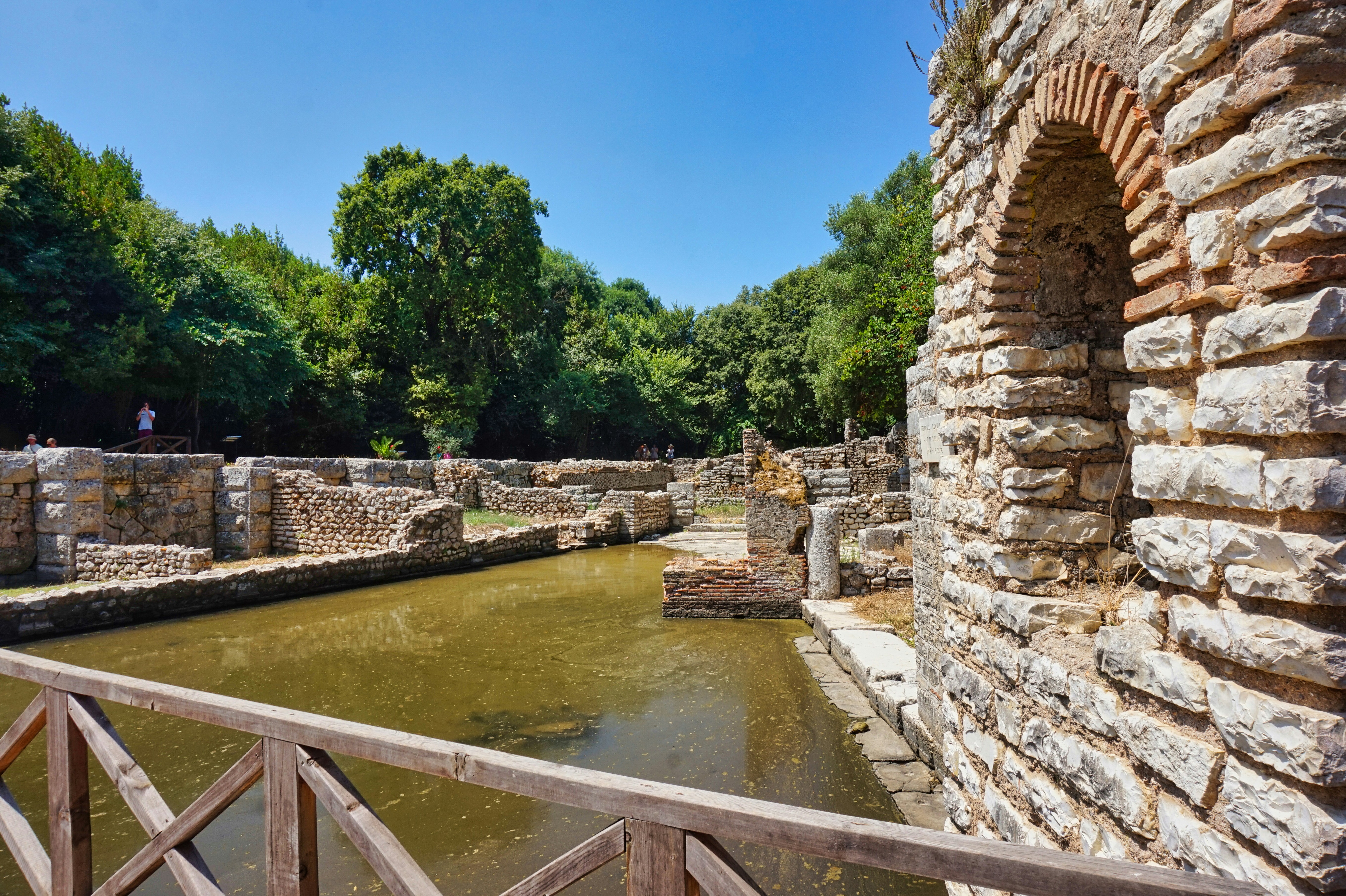
Butrint is one of the most layered archaeological sites in the Mediterranean - Greek, Roman, Byzantine, Venetian and Ottoman remains stacked on top of each other across a forested peninsula inside a national park. It stands 18 km south of Saranda, on a promontory flanked by the Vivari Channel and Lake Butrint. UNESCO listed the site in 1992; it has been inhabited, continuously or intermittently, for at least 2,500 years.
What you are looking at
Butrint’s earliest recorded occupation dates to the 7th century BCE, when it was a sanctuary of Asclepius (the Greek god of medicine). By the 4th century BCE it had grown into a fortified city-state; the ancient walls and towers from this period still ring the peninsula. Rome absorbed Butrint in the 2nd century BCE and Julius Caesar’s lieutenant Atticus established a Roman colony here - the remnants of that era include a theatre seating up to 2,500, thermal baths, a forum, mosaic floors, and a colonnaded baptistery whose floor mosaics rank among the finest in the Balkans.
Byzantine and later Venetian rulers left churches, additional fortifications and a triangular castle overlooking the channel. The Ottomans held the site from the 15th century until Greek independence movements of the 19th century gradually eroded their control. By then the city had long since been abandoned to vegetation, which is part of why so much has survived intact.
The main structures
The theatre is the site’s centrepiece. Built in the 3rd century BCE and expanded by the Romans, it retains most of its tiered seating cut directly into the hillside. Performances were still staged here in the early 20th century.
The baptistery (early 6th century CE) contains a geometric mosaic floor in extraordinary condition - hunting scenes, birds and fish rendered in tesserae. A protective roof covers it; the floor is partially buried for preservation but the visible section is impressive.
The Roman forum and adjacent macellum (marketplace) flank the main path between the theatre and the Lion Gate, one of the Hellenistic entrances. Inscriptions on the gate record Butrint’s Greek civic history.
The thermal baths demonstrate Roman engineering: underfloor heating channels (hypocausts) remain visible. Wall mosaics have been partially relocated to the on-site museum.
The Venetian castle (Ali Pasha’s Tower) sits opposite the main site across the Vivari Channel - reached by a short cable-ferry crossing included in the entry fee. The tower dates to the 13th century and was used as an Ottoman garrison. The viewpoint from the ramparts over the channel and lagoon is the best on the peninsula.
The museum inside the castle holds finds from the site: coins, ceramics, glass, bronze objects, and inscriptions spanning every period. Labels are in Albanian and English. Allow 30 minutes inside.
Entry fees and opening hours
As of 2026 the standard entry fee is approximately ALL 1,000 (around €10). The cable-ferry crossing to the castle and the castle museum are included in that fee. An audio guide costs approximately ALL 500 additional. Photography is allowed throughout.
Opening hours run approximately 08:00–19:00 in summer (May–September) and 09:00–17:00 in the shoulder months. The site closes on Mondays from October to April. Confirm current times at the entrance or via the Albanian Ministry of Culture website before visiting, as hours shift seasonally.
Allow at least two hours to cover the main circuit; three hours is more comfortable. There is a small café near the ticket office but no full restaurant - bring water, particularly in summer when the site offers little shade outside the forested sections.
Getting there from Saranda
By taxi is the most straightforward option. A taxi from Saranda’s seafront to the Butrint entrance takes approximately 25–35 minutes depending on traffic and costs approximately ALL 1,500–2,500 (€15–25) each way. Negotiate the return pickup time in advance; asking the driver to wait (with a waiting fee of approximately ALL 500–800/hour) is common for those without a round-trip tour.
By furgon (shared minibus) depart from Saranda market area. The fare is approximately ALL 200–300 (€2–3). Frequency varies: in July and August services run every 30–60 minutes; in May, June and September they are less predictable. The last return to Saranda typically runs around 17:00–18:00 in summer - confirm before relying on it.
Organised day tours from Saranda combine Butrint with Ksamil and sometimes include the Blue Eye spring (Syri i Kaltër). Prices range from approximately €25–40 per person depending on whether lunch and boat transfers are included. Several operators along the Saranda seafront run this circuit; Saranda Explorer and Outdoor Albania are two frequently cited names as of 2026 - verify current pricing directly before booking.
By rental car the drive from Saranda follows the SH81 road south. Parking at the entrance is free. Having a car also allows a straightforward stop at the Blue Eye (9 km north of Butrint, signposted off the main road) on the return leg.
Combining with Ksamil beach
Ksamil village is 4 km north of the Butrint entrance. The three small Ksamil islands just offshore are reachable by short boat transfer (approximately ALL 200–400 return from the beach, as of 2026). The main beach in Ksamil is pebbly-sand with clear shallow water; it gets very busy in July and August. Sun loungers and umbrellas from beach bars cost approximately ALL 1,000–1,500 for a pair per day.
For lunch, restaurants along the Ksamil seafront serve grilled fish and grilled meats at approximately ALL 800–1,800 per main course. Ksamil Restaurant and Riviera are commonly recommended though prices and quality shift seasonally - use recent reviews to assess current form.
A practical day-trip order: depart Saranda by 09:00, visit Butrint 09:30–12:00, taxi or walk to Ksamil for lunch and swimming 12:30–16:00, return to Saranda by 17:00.
Guided tours vs. self-guided
Self-guided visits work well - the main circuit path is clear and signposted in Albanian and English. The on-site museum provides context. An audio guide (available at the ticket office) adds considerable depth if you want to understand the layering of civilisations.
Guided tours from Saranda are worth considering if you want historical commentary and prefer not to manage transport. English-speaking local guides are available either pre-booked through tour operators or sometimes approached at the gate. Rates for a private guide at the site run approximately €15–25 per hour (2026 estimate). Group tours are cheaper per person but move at the group’s pace.
GetYourGuide and Airbnb Experiences both list Butrint tours departing from Saranda; comparing these against seafront operators on arrival often yields better prices for the same quality.
Best time to visit
May, June, and September offer the most comfortable conditions: 22–28°C, shorter queues, and the site’s vegetation at its best. July and August are hot (30–36°C) and the combined Butrint-Ksamil day attracts large crowds; arrive early (09:00 opening) to beat the midday heat at the ruins. October to April is quiet and cooler but some facilities reduce hours or close on Mondays.
The forested sections of the site provide shelter from afternoon sun, but the forum and thermal baths areas are exposed. A hat and water are essential from June through September.
See also
- Albania travel guide
- Saranda
- Ksamil
- Albanian Riviera
- 7-day Albania itinerary
- National parks in the Balkans
- Gjirokaster travel guide
- Hiking in the Balkans
- Best time to visit the Balkans
Plan your trip: Browse tours and activities in Albania and book in advance for peak season. Hire a car for reaching more remote spots, and cover your adventure with travel insurance.