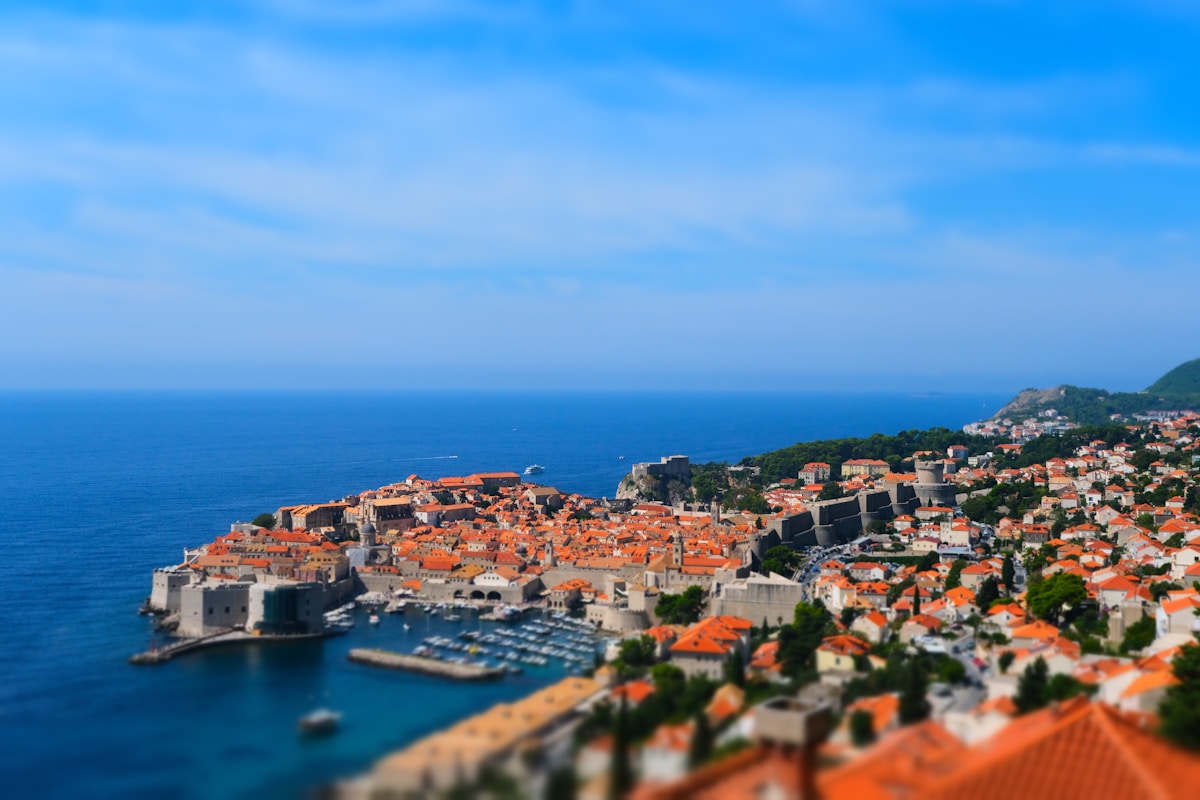
Croatia is the most developed and expensive retirement destination in the Western Balkans — but for retirees who want EU infrastructure, Adriatic coastline, a Mediterranean climate, and full access to European healthcare systems, it offers something that Albania, Montenegro, and Serbia cannot: full EU membership.
Since joining the Schengen Area in January 2023 and adopting the euro at the same time, Croatia has completed its transition to mainstream European standards. The trade-off is cost: Croatia is significantly more expensive than its Balkan neighbours, but still substantially cheaper than Portugal, Spain, or Italy.
This guide covers everything a prospective retiree needs to know: the residency routes, monthly costs, healthcare, the best locations for long-stay living, and the practical considerations that determine whether Croatia is the right move.
Croatia at a glance for retirees
Croatia is an EU member state on the Adriatic coast, stretching from Istria in the north to Dubrovnik in the south. Its 1,770 km of coastline includes more than 1,000 islands. The interior is dominated by the Dinaric Alps and lowland Slavonia. The capital, Zagreb, sits inland; most retirees settle on the Dalmatian coast — Split, Zadar, or Dubrovnik — or in Istria.
Key facts for retirees:
- Currency: Euro (EUR) — Croatia adopted the euro in January 2023
- Language: Croatian; English is widely spoken in coastal cities and tourist areas
- Climate: Mediterranean on the Dalmatian coast (hot dry summers, mild winters); continental in Zagreb and inland areas
- Time zone: CET (Central European Time) — same as Italy and Germany
- Healthcare: EU public system (HZZO) accessible to residents; private clinics available in major cities
Visa and residency options
EU citizens: freedom of movement
EU and EEA citizens have the right to live and work in Croatia without a visa. You can stay up to 3 months without formalities. For longer stays, you need to register your residence at the local police station or administrative office within 8 days of arrival. You will receive an EU registration certificate (Potvrda o prijavi boravišta). This is simple administrative registration — there is no income threshold and no application fee.
After 5 years of continuous lawful residence, EU citizens can apply for permanent residence.
Non-EU citizens: Temporary Stay permit
US, UK, Canadian, Australian, and New Zealand citizens need a Temporary Stay permit (Privremeni boravak) to stay beyond 90 days. Croatia joined the Schengen Area in January 2023, so your 90 days is part of the Schengen clock — plan accordingly.
The passive income route is the most appropriate for retirees:
Requirements (as of 2026):
- Valid passport (at least 6 months remaining)
- Proof of passive income: the generally cited threshold is approximately €2,500/month, higher than most non-EU Balkan neighbours — this reflects Croatia’s EU-member income standards
- Proof of accommodation (rental contract or property ownership)
- Health insurance valid in Croatia
- Clean criminal record (apostilled)
- Application submitted at the Croatian embassy in your home country before arrival; permit issued for 1 year and renewable
The application process and income requirements can vary. Using a Croatian immigration lawyer (cost approximately €400–700) significantly eases the process.
Croatia’s digital nomad framework
Croatia introduced a digital nomad residence permit in 2021. It is designed for remote workers earning income from non-Croatian sources. While technically for active workers rather than passive-income retirees, some retirees with investment or freelance income use this route. The Croatia digital nomad visa guide covers the specifics.
Monthly cost of living
Croatia is materially more expensive than Albania, Serbia, or North Macedonia, but still cheaper than Portugal or Greece.
Split (Dalmatia’s main city)
| Expense | Monthly cost (approx.) |
|---|---|
| 1-bedroom furnished apartment (central/near sea) | €700–1,100 |
| Utilities (electricity, water, internet) | €100–150 |
| Food (groceries + eating out 3-4x/week) | €350–500 |
| Private health insurance or HZZO contributions | €100–200 |
| Transport (bus, occasional taxi) | €50–100 |
| Total | €1,300–2,050 |
Split offers a compelling mix: a UNESCO World Heritage old town (Diocletian’s Palace), excellent ferry connections to the islands, a modern city with international restaurants and a growing creative scene, and better year-round value than Dubrovnik.
Zadar (north Dalmatia)
Zadar is Croatia’s most underrated city for long-stay living — a proper mid-sized city with a beautiful walled old town, excellent supermarket infrastructure, lower rents than Split, and good transport connections.
| Expense | Monthly cost (approx.) |
|---|---|
| 1-bedroom furnished apartment | €550–900 |
| Utilities | €90–140 |
| Food | €300–450 |
| Health insurance or HZZO | €100–200 |
| Transport | €50–80 |
| Total | €1,090–1,770 |
Rovinj (Istria)
Istria, Croatia’s northwestern peninsula, has a strong Italian cultural influence, excellent food and wine, and a more distinctly Mediterranean character than Dalmatia. Rovinj is the most sought-after address; Pula is more affordable with better infrastructure.
Costs in Rovinj run broadly similar to Split; Pula runs 15–20% lower.
Dubrovnik
Dubrovnik is Croatia’s most expensive city by a significant margin. Demand from short-let tourism inflates rental prices dramatically in summer; long-term rates are better, but the city remains the priciest option.
Monthly total: approximately €1,500–2,200 for a single person comfortable with city costs. Best for retirees who genuinely want the Dubrovnik lifestyle and can afford the premium.
How Croatia compares
| Country | Solo retiree monthly budget |
|---|---|
| Bosnia & Herzegovina | €700–1,100 |
| North Macedonia | €700–1,100 |
| Serbia | €800–1,200 |
| Albania | €800–1,200 |
| Montenegro | €900–1,400 |
| Croatia | €1,100–1,700 |
| Portugal (Algarve) | €1,500–2,200 |
Croatia is the most expensive non-Western-European option in this comparison, but the EU membership and Schengen access represent a genuine advantage over its cheaper Balkan neighbours.
Healthcare
Croatia has an EU-standard healthcare system. The Croatian Health Insurance Fund (HZZO) covers residents who pay contributions.
For EU citizens: Once registered as a resident and paying HZZO contributions (approximately €65–130/month depending on income), you access the same public system as Croatian citizens. Your EHIC card is valid on short stays before you establish full residence.
For non-EU residents: After obtaining a Temporary Stay permit, you can enrol in HZZO by paying voluntary contributions. Many non-EU retirees maintain international private health insurance for the first year and transition to HZZO once fully established.
Private clinics: Available in Split, Zagreb, Zadar, and Dubrovnik. Quality is good by regional standards:
- GP consultation: approximately €35–65
- Specialist consultation: approximately €60–100
- Dental cleaning: approximately €40–70
For serious procedures or specialist treatment, Zagreb’s university hospitals (KBC Zagreb, KBC Rebro) are the main referral centres. Vienna, Graz, or Ljubljana (Slovenia) are also accessible for complex care. International health insurance is advisable before establishing HZZO coverage.
Best places to retire in Croatia
Split
The best all-round retirement base in Croatia. Split has a 1,700-year history (Diocletian’s Palace is a living UNESCO site — people actually live inside the walls), a modern city of 160,000, good private and public healthcare, direct flights to most European capitals, and ferry connections to Hvar, Brač, Šolta, and the Dalmatian island chain. Best for retirees who want urban life with sea access.
Zadar
The best value coastal option for retirees wanting a genuine city rather than a resort town. Zadar has a smaller expat community than Split but is growing. The Sea Organ and Sun Salutation on the waterfront are genuinely special; the old town is compact and beautiful. Rents run 20–25% lower than Split. Good airport connections.
Rovinj / Istria
Istria offers something Dalmatia does not: Italian food culture, truffle-hunting country, rolling hills, and a distinctly Venetian architectural flavour. Rovinj is charming but expensive and seasonal; Pula has a better year-round feel and exceptional Roman ruins. Best for retirees who want the Italian Adriatic experience without Italian prices.
Dubrovnik
The most recognisable Croatian city globally — and the most expensive. Dubrovnik suits retirees who want prestige location, UNESCO World Heritage surroundings, and proximity to Montenegro. The tourist crowds are intense in summer (June–August) but the city is remarkably peaceful off-season.
Zagreb
The capital and Croatia’s largest city. Zagreb is often overlooked by retirees who assume “Croatia = coast”, but the city offers lower rents than Dubrovnik or Split, better healthcare infrastructure (university hospitals), an excellent café and cultural scene, and good rail and air connections. Best for retirees who prefer city life over beach living and want cooler summers.
Practical considerations
Banking: EU citizens can open Croatian bank accounts with standard documentation. Non-EU residents need a residence permit first. Before establishing residency, Wise and Revolut work well at Croatian ATMs. IBAN accounts in Croatia operate within SEPA.
Language: Croatian is a South Slavic language; written in Latin script (unlike Serbian, which uses Cyrillic). English is very widely spoken in coastal cities, tourist areas, and among younger Croatians everywhere. Italian is common in Istria.
Mobile and internet: Excellent 4G coverage across the coast and major cities; 5G in Zagreb and Split. Mobile providers include T-Mobile, A1, and Telemach. An eSIM for the Balkans works immediately on arrival. Fixed broadband runs approximately €20–35/month.
Safety: Croatia is very safe — one of the safest countries in this comparison. Petty crime in tourist areas exists in summer, particularly in Dubrovnik. No significant issues for long-stay residents.
Property: Foreign property ownership rules vary by nationality (see FAQ above). Property prices have risen sharply since EU accession and euro adoption — coastal apartments now command €2,500–6,000/m² in prime locations. The interior and smaller towns remain far more affordable.
Car: Essential outside the major cities. Croatia drives on the right. Roads are generally excellent on the coast (the A1 motorway runs Split–Zagreb); secondary roads can be slow.
Taxes for foreign retirees
Croatia has a dual-rate personal income tax: 20% on income up to approximately €47,000/year; 30% on income above that. However, foreign-source pension income is typically not subject to Croatian income tax under most double taxation treaties.
Croatia has DTAs with the UK, US, Germany, France, and many others. Under these treaties, pension income is usually taxed only in the source country. Confirm your specific situation with an international tax adviser — the Croatian Tax Administration (Porezna uprava) can also provide guidance.
Croatia’s relatively high income tax rate makes tax planning important for retirees with significant passive income beyond pension.
Summary: is Croatia right for you?
Croatia is best suited to retirees who:
- Want EU membership benefits — Schengen travel, EU healthcare access, EHIC portability
- Are comfortable with a budget of €1,200–1,600/month or above
- Value Adriatic coastline and Mediterranean climate as a daily backdrop
- Want proximity to Western Europe (direct flights from Split and Zagreb to most EU capitals)
Croatia is less suited to retirees who:
- Need to live on less than €1,000/month (Albania, North Macedonia, or Bosnia offer better value)
- Require a very large established Anglophone expat community (Portugal or Spain have stronger networks)
- Are non-EU citizens who find the income threshold for the Temporary Stay permit restrictive
See also
- Croatia travel guide
- Split guide
- Dubrovnik guide
- Cost of living in the Balkans
- Retire in Montenegro
- Retire in Albania
- Retire in Bulgaria
- Balkans visa guide
- Croatia digital nomad visa
Useful links: Health insurance for Croatia · Flights to Croatia · eSIM for Croatia · Hotels in Split · Hotels in Dubrovnik · Hotels in Zagreb · Tours in Croatia · Car hire in Croatia