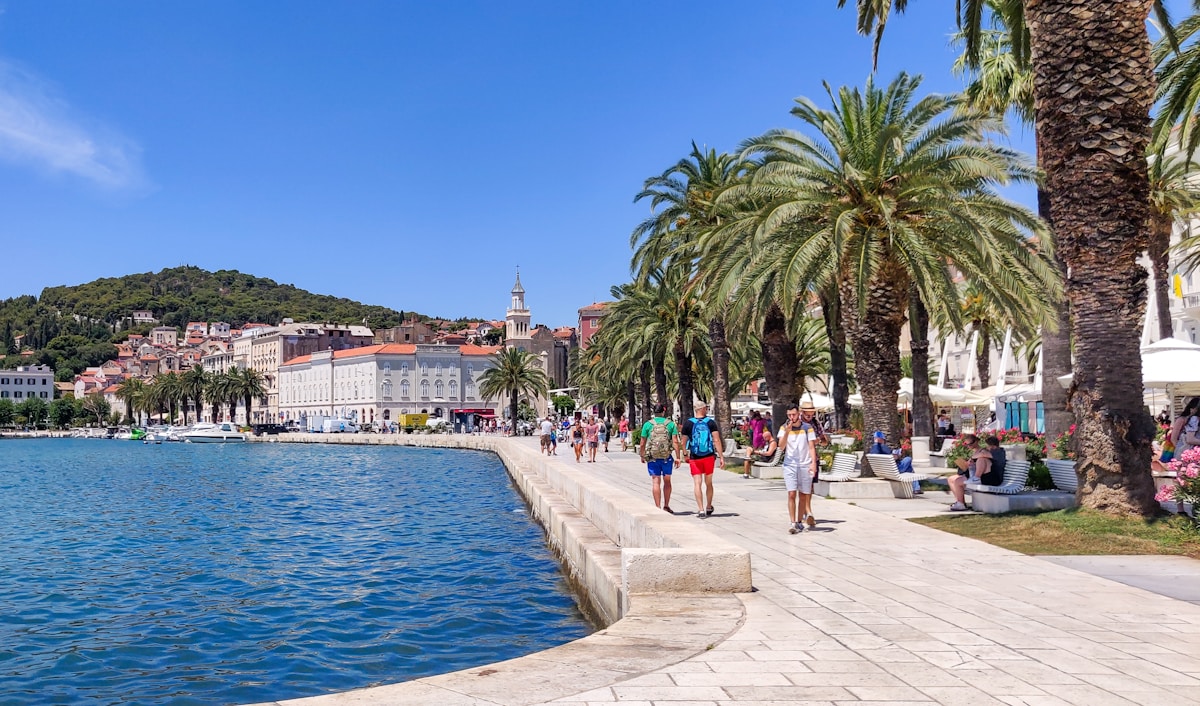
Croatia was among the first European countries to formalise a digital nomad visa when it launched the programme in January 2021. The permit is well-structured and genuinely useful for remote workers who want a legal basis for a full year in Croatia — but it comes with one critical caveat that many guides gloss over: Croatia is now in the Schengen Area, so this is not a Schengen reset option.
The Schengen catch — read this first
Croatia joined the Schengen Area on 1 January 2023. Before that date, Croatia was a popular Schengen reset destination. That is no longer the case.
Every day you spend in Croatia counts towards the Schengen 90/180-day rule, the same as France, Germany, Italy, or Greece. The Croatian digital nomad visa gives you legal status to live in Croatia — but it does not give you any special Schengen exemption. You are still bound by the 90/180 rule.
Practical implication: If you hold a US, UK, Canadian, or Australian passport (90 days visa-free in Schengen), applying for the Croatia digital nomad visa and then spending 6 months in Split means you have used 180 Schengen days. That is effectively your entire annual Schengen balance consumed in one country.
If Schengen flexibility is your goal, the Croatia digital nomad visa is the wrong instrument. See the Albania digital nomad visa or the Balkans Schengen reset guide for non-Schengen alternatives.
When the Croatia digital nomad visa does make sense:
- You are an EU/EEA citizen who wants a formalised long-term stay (though you do not need the visa — you can stay freely)
- You specifically want Croatia as your base and do not need Schengen reset flexibility
- You want official tax residency documentation for the year
- You are planning to open a Croatian bank account or sign a long-term lease
Before you apply: insurance is a requirement
Croatia requires proof of health insurance as part of the digital nomad application. This is not optional — you cannot submit a complete application without it.
EKTA travel insurance → provides policies that satisfy the Croatian health insurance requirement for visa applications. You will need a policy covering at least €30,000 in emergency medical expenses, which is standard with most travel insurance plans. Download the policy document before visiting the embassy or police station.
Requirements for the Croatia digital nomad visa
Croatia’s digital nomad temporary stay requires:
1. Valid passport — must be valid for at least 6 months beyond your intended stay
2. Proof of foreign income — you must demonstrate you work remotely for an employer or clients outside Croatia. Accepted documents:
- Employment contract with a non-Croatian employer
- Service agreements or invoices for non-Croatian clients
- Bank statements showing regular income transfers (3–6 months minimum)
- Income must be above the Croatian average gross salary, approximately €1,700/month as of 2026
3. Health insurance — covering the full duration of stay, with a minimum €30,000 emergency coverage
4. Proof of accommodation — rental contract or reservation for at least the initial period
5. Application form — official Croatian Ministry of Interior form (MUP)
6. Passport photos — standard visa-format photographs
7. Application fee — approximately €55–70 (HRK equivalent), paid at the embassy or police station
How to apply: two routes
Route 1: Apply at a Croatian embassy abroad (before arriving)
This is the recommended route if you are not yet in Croatia or are not from an EU country.
- Find the nearest Croatian embassy or consulate in your home country
- Download the digital nomad temporary stay application form from the MUP website
- Gather all documents (see requirements above)
- Submit in person at the embassy — appointments are usually required
- Processing time: typically 15–30 days
- Collect your visa/approval document before travelling
Route 2: Apply in-country at the local police station
If you are already in Croatia as a visa-free visitor (US, UK, Australian, etc. can enter Croatia visa-free for 90 days as Schengen), you can apply at the local police station (policijska postaja) in the area where you are living.
- Register your temporary address at the local police station
- Submit the same documentation as above
- Processing time: typically 30 days
- You may remain in Croatia while the application is processed
Important: Apply in-country only if you have enough Schengen days remaining to cover the processing period. If you have already used 60+ Schengen days, apply from your home country instead.
What you can and cannot do on the Croatia digital nomad visa
You can:
- Live and stay legally in Croatia for up to 12 months
- Work remotely for employers or clients outside Croatia
- Open a Croatian bank account with the permit as supporting documentation
- Leave and re-enter Croatia freely during the permit period
- Travel within the Schengen Area, subject to the standard 90/180 rule
You cannot:
- Work for a Croatian-registered company or client
- Renew the permit — after 12 months you must leave for at least 6 months
- Count Croatian days as non-Schengen (they are Schengen days)
Cost of living in Croatia for remote workers
Croatia is mid-range for European digital nomad destinations — significantly cheaper than Western Europe, but more expensive than non-Schengen Balkans neighbours like Albania or Serbia. Approximate monthly costs (Split or Zagreb, 2026):
| Item | Approximate cost |
|---|---|
| Studio/1-bed apartment (central) | €700–1,100/month |
| Coworking desk (monthly) | €100–180/month |
| Groceries | €200–300/month |
| Eating out (daily lunch) | €8–14 |
| Mobile data (local SIM) | €10–15/month |
| Total comfortable budget | €1,100–1,600/month |
Zagreb tends to run slightly cheaper than Split for rent. The Dalmatian coast (Split, Dubrovnik) commands a premium, especially in summer. For coastal living outside peak season (October–May), you can often negotiate long-stay rates that bring accommodation costs 20–30% below summer pricing.
Internet and coworking
Croatia has solid internet infrastructure. Zagreb has a growing coworking scene; Split has fewer dedicated spaces but good café culture for work. Home broadband in modern apartments reliably delivers 50–100 Mbps. Mobile coverage is strong across the coastline and major cities; rural inland areas are patchier.
For connectivity across the Balkans if you are combining Croatia with non-Schengen countries, Airalo has regional plans that work across borders without physical SIM swaps.
Split or Zagreb: which city to base in?
Split is the dominant choice for nomads arriving in spring or autumn. The old city centre is compact and walkable, ferry connections to the islands are excellent for weekend escapes, and the energy is genuinely Mediterranean. Summer (July–August) is busy and expensive; early June and September are the sweet spots.
Zagreb has better year-round infrastructure, a more developed coworking ecosystem, and is significantly more affordable than Split for long-term apartment rentals. It lacks the sea, which matters a lot to some people.
See the Dubrovnik vs Split guide for a deeper look at Croatia’s two most popular nomad cities on the Dalmatian coast.
Getting to Croatia
Flights to Split (SPU) and Dubrovnik (DBV) on Ryanair, Wizz Air, easyJet, and British Airways connect to most European hubs. Zagreb (ZAG) has year-round connections. The Split Airport transfer and Dubrovnik Airport transfer guides cover the options from airport to city.
For overland connections to/from Montenegro (Kotor, Budva) or Bosnia (Sarajevo, Mostar), Kiwitaxi handles cross-border routes where direct public transport is limited.
Croatia vs Albania: the digital nomad choice
| Factor | Croatia | Albania |
|---|---|---|
| Schengen? | Yes (from Jan 2023) | No |
| Days count towards 90/180? | Yes | No |
| Formal digital nomad visa? | Yes — 1 year permit | No — up to 1 year visa-free |
| Monthly budget | €1,100–1,600 | €700–950 |
| Infrastructure | Strong | Improving |
| EHIC valid? | Yes | No |
| Best for | EU citizens; long-term residency | Non-EU nomads needing Schengen reset |
If you need a Schengen reset, choose Albania (or Serbia, or Bosnia). If you want a formalised long-term base in a Schengen country with established infrastructure and do not care about Schengen flexibility, Croatia is a strong option.
For the full picture of how to structure a Schengen + non-Schengen Balkans circuit, see the Balkans Schengen 90/180 reset guide.
Travel Insurance
Travel insurance is worth arranging before you fly — it covers medical treatment, emergency evacuation, and trip cancellation if plans change. We recommend EKTA for policies suited to both short stays and year-long remote-work residencies in Croatia. A quote takes under five minutes and cover typically starts from around $30 for a two-week stay.
Itineraries for a Croatian base
If Croatia is your home base and you want to explore the region:
- Croatia 7-day itinerary — the classic Dalmatian coast circuit
- Croatia and Montenegro 10 days — crosses into non-Schengen Montenegro
- Croatian coast road trip — from Istria to Dubrovnik by road