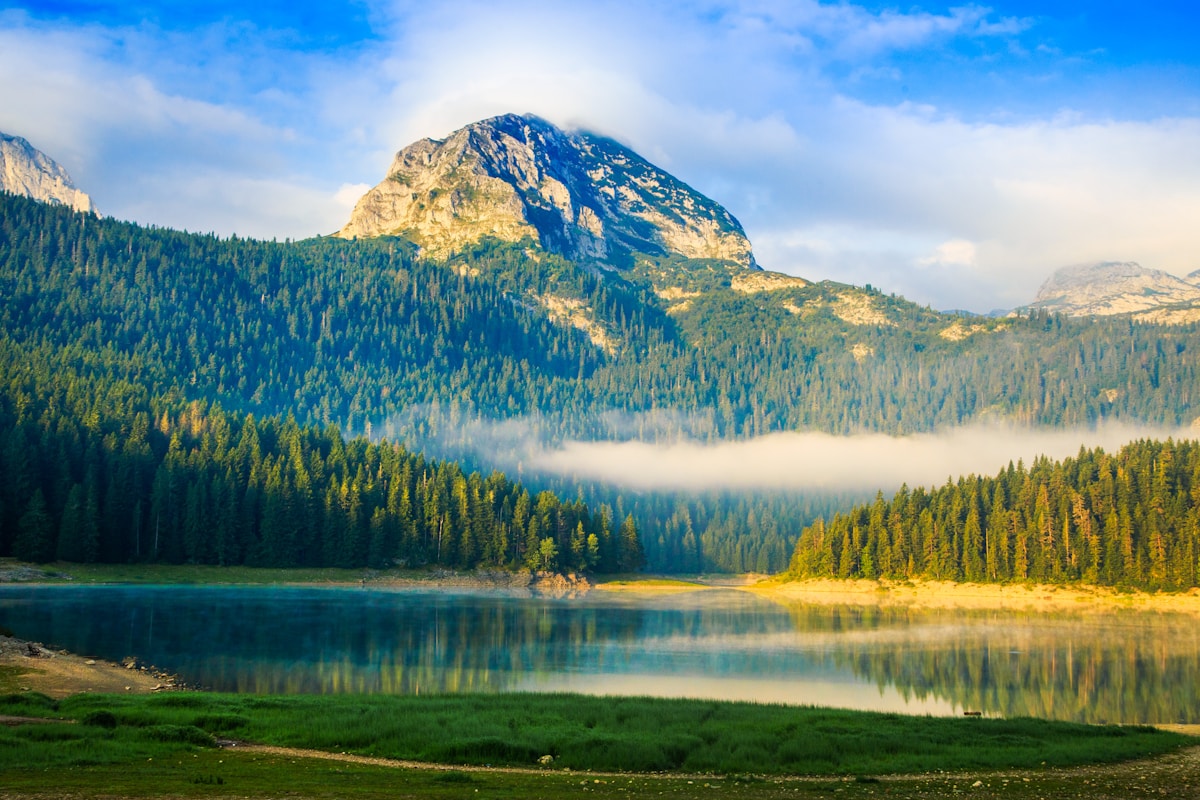
Montenegro is the most scenically dramatic country in the Balkans — a small country (roughly the size of Wales or Connecticut) that packs an Adriatic coastline, the Bay of Kotor (the only fjord-like inlet in Southern Europe), a mountainous interior, and a warmth of character that makes extended stays genuinely enjoyable.
It is also an EU candidate country working steadily toward membership, which shapes its legal framework in a direction that makes it increasingly familiar to Western retirees. Costs sit above Albania but below Croatia, and the country offers something Albania currently cannot: a proximity to Western Europe’s holiday infrastructure, a larger international expat community, and a recent history that has produced a more polished tourism and services sector.
This guide covers everything a prospective retiree needs to know: residency options, monthly costs, healthcare access, the best locations, and the practical details that determine whether Montenegro works for you.
Montenegro at a glance
Montenegro is a small Balkan country on the Adriatic coast, bordering Croatia and Bosnia to the north and west, Serbia to the east, and Albania to the south. Its geographical range is extraordinary for its size: 290 km of coastline, the Bay of Kotor fjord, Durmitor National Park with 2,500m peaks and glacial lakes, and the medieval old towns of Kotor, Budva, and Cetinje.
Key facts for retirees:
- Currency: Euro (EUR) — Montenegro uses the euro despite not being an EU member
- Language: Montenegrin (very similar to Serbian, Croatian, and Bosnian) — English widely spoken in coastal and tourist areas
- Climate: Mediterranean coast (warm dry summers, mild winters); continental and alpine interior (cold winters, snow above 1,500m)
- Time zone: CET (Central European Time) — same as Italy and Croatia
- Healthcare: Public system exists; private clinics in Podgorica and coastal cities; serious conditions often managed across the border in Croatia
Visa and residency options
90-day visa-free stays
EU, US, UK, Canadian, and Australian passport holders can enter Montenegro and stay up to 90 days without a visa. Montenegro is not in Schengen, so this does not affect your Schengen entitlement.
Temporary Residence Permit
For stays beyond 90 days, the standard route is the Temporary Residence Permit (Privremeni boravak). It can be issued on several grounds:
Property ownership: If you own property in Montenegro, you are entitled to apply for a residence permit. This is the most common route for foreign retirees — buy a modest apartment, gain residence.
Passive income: You can apply on the basis of sufficient passive income (pension, rental income, investments) to support yourself without working in Montenegro. The income threshold is not rigidly defined but approximately €500–700/month is commonly cited.
Requirements for both routes:
- Valid passport (6+ months remaining)
- Proof of property ownership or rental contract
- Bank statements showing sufficient funds
- Clean criminal record (apostilled from your home country)
- Health insurance valid in Montenegro
- Local registration at the municipality
The initial permit is for 1 year, renewable annually. After 5 years of continuous temporary residence, permanent residence is available. The process is best handled with a local lawyer (cost: approximately €300–600 for the full service).
Important: Montenegro and EU membership
Montenegro has been an EU accession candidate since 2010 and is the most advanced Balkans candidate. If accession occurs, EU citizens would gain freedom of movement rights; non-EU retirees would face the same rules as elsewhere in the EU. The timeline for accession remains uncertain but most optimistic estimates put it in the late 2020s.
Monthly cost of living
Kotor and Bay of Kotor area
The Bay of Kotor is Montenegro’s most desirable and most expensive residential area.
| Expense | Monthly cost (approx.) |
|---|---|
| 1-bedroom furnished apartment (Kotor/Dobrota) | €600–950 |
| Utilities (electricity, water, internet) | €80–120 |
| Food (groceries + eating out 3-4x/week) | €300–450 |
| Private health insurance | €80–150 |
| Transport (car or taxi) | €80–150 |
| Total | €1,140–1,820 |
The Bay of Kotor is expensive relative to other parts of Montenegro because short-let demand inflates long-stay rental prices. If you commit to a 12-month lease, prices drop meaningfully.
Budva Riviera
Budva and the Riviera (Bečići, Rafailovići, Petrovac) is Montenegro’s mass-market tourist coast — livelier than the Bay but cheaper.
| Expense | Monthly cost (approx.) |
|---|---|
| 1-bedroom apartment (off-peak or off-beach-street) | €500–800 |
| Utilities | €70–110 |
| Food | €280–400 |
| Private health insurance | €80–150 |
| Transport | €60–100 |
| Total | €990–1,560 |
Prices are highly seasonal in Budva. Renting out of tourist season (October–May) gives significantly better value.
Herceg Novi (northern coast)
Herceg Novi is Montenegro’s most underrated coastal town for long-stay living — old town with Ottoman and Austro-Hungarian architecture, good café culture, a more local feel than Kotor or Budva, and the lowest coastal prices.
| Expense | Monthly cost (approx.) |
|---|---|
| 1-bedroom apartment | €400–700 |
| Utilities | €70–100 |
| Food | €250–380 |
| Private health insurance | €80–150 |
| Transport | €60–100 |
| Total | €860–1,430 |
The Dubrovnik border is 20 minutes away — giving easy access to Croatian healthcare, international flights at Dubrovnik Airport, and a wider range of services.
Podgorica (capital)
Podgorica is the practical choice for retirees who prioritise services over scenery. It has the best private hospitals, a functioning public transport network, good supermarket supply, and significantly lower rents than the coast.
Monthly total: approximately €800–1,200 for a single person — the most affordable option in Montenegro for full-year living.
How Montenegro compares
| Country | Solo retiree monthly budget |
|---|---|
| Albania | €800–1,200 |
| Montenegro | €900–1,400 |
| North Macedonia | €800–1,200 |
| Bulgaria | €900–1,300 |
| Croatia | €1,100–1,700 |
| Portugal (Algarve) | €1,500–2,200 |
Healthcare
Healthcare is the most important variable for retirees in Montenegro. The honest picture:
Public healthcare: Montenegro has a public health system (funded through contributions) but it is significantly under-resourced. Most expat retirees do not use it routinely.
Private clinics: Podgorica has several private clinics offering reasonable GP and specialist care. The coast (Kotor, Budva, Herceg Novi, Tivat) has private clinics too — Tivat has benefited from Porto Montenegro’s international population and has better-than-average private medical options for the coast.
Approximate private costs:
- GP consultation: €25–45
- Specialist consultation: €50–90
- Blood panel: €30–60
- Dental cleaning: €30–50
Cross-border healthcare: Retirees in the Bay of Kotor area and Herceg Novi routinely use Dubrovnik (Croatia) for anything beyond routine care — 20–40 minutes by car, with Croatia’s EU healthcare system. The drive to Split from Herceg Novi is approximately 2.5 hours. EU citizens can use the EHIC in Croatia. Retirees in the south (Bar, Ulcinj) may prefer Albania or even a short flight to Belgrade.
Insurance is mandatory. Valid health insurance is required for the residence permit application and is genuinely necessary for practical reasons. International plans covering Montenegro run approximately €80–150/month depending on age and coverage. Get health insurance before you arrive.
Best places to retire in Montenegro
Kotor / Bay of Kotor
The most prestigious and beautiful address in Montenegro. The walled old town is a UNESCO World Heritage Site; villages like Perast, Dobrota, and Prčanj line the bay. The trade-off is cost (highest in Montenegro) and crowds in summer. Best for retirees who want extraordinary scenery, a cosmopolitan international community, and who are comfortable at the higher end of the budget range.
Herceg Novi
Our recommended pick for value-conscious retirees who still want coast and character. Older expat community than Kotor, more local atmosphere, lower rents, and the Dubrovnik border 20 minutes away. The old town is genuinely beautiful with sub-Mediterranean vegetation (palms, bougainvillea) and a café culture that runs year-round.
Budva
Best for retirees who want lively atmosphere and a wider range of restaurants and services. Budva can be noisy in summer but is a proper small city — supermarkets, medical clinics, ATMs, restaurants — with a beautiful medieval old town. Off-season (October–May) it quietens dramatically and becomes a very pleasant long-stay base.
Tivat / Porto Montenegro
Porto Montenegro has created a genuinely international marina community that has raised service quality across Tivat. There is a small but established expat residential community, some of the best medical options on the coast, and an airport with year-round connections to several European cities.
Cetinje (interior)
The historic royal capital of Montenegro, 15km inland from Kotor, is one of the Balkans’ most interesting small cities — extraordinary range of museums and royal-era buildings for its size. Significantly cheaper than the coast, genuinely un-touristy, and surrounded by mountains. Not for everyone, but for the right retiree, very special.
Practical considerations
Banking: Montenegro uses the euro, which simplifies budgeting for European retirees. Local banks (NLB, CKB, Hipotekarna) will open accounts for legal residents. Before gaining residency, Wise and Revolut work well at Montenegrin ATMs.
Language: Montenegrin is a South Slavic language closely related to Serbian and Croatian. Most people in tourist areas and among the under-40 population speak English; Italian and German are common too. Learning basic Montenegrin/Serbian is appreciated but not necessary for comfortable expat life.
Mobile and internet: Reliable 4G coverage across coastal and urban areas. Providers include T-Mobile, m:tel, and ONE. Monthly data plans cost approximately €8–20. Fixed broadband in apartments runs €15–30/month. An eSIM for the Balkans works immediately on arrival.
Safety: Montenegro is one of the safest countries in the Balkans for expats. Petty crime in tourist areas exists but is low by European standards. The country has an ongoing issue with organised crime (concentrated in specific cities and sectors) that does not typically touch retiree life.
Property taxes: Montenegro levies an annual property tax of approximately 0.1–1% of assessed property value per year — low by European standards.
Driving: A car is useful outside the main coastal towns. Roads are generally good along the coast; mountain roads require care. Montenegro drives on the right.
Taxes for foreign retirees
Montenegro has a flat income tax rate of 9–11% (varies by income level). However, foreign-source pension income is generally not subject to Montenegrin income tax for non-tax-resident foreigners. Tax treaties between Montenegro and major countries (UK, Germany, US) affect the picture — get specialist advice. The key question is whether you establish tax residence in Montenegro (which requires careful consideration of your home country’s rules too).
Summary: is Montenegro right for you?
Montenegro is best suited to retirees who:
- Want dramatic Adriatic and mountain scenery as their daily backdrop
- Can budget €1,000–1,500/month comfortably
- Value proximity to Croatia for healthcare, flights, and familiar EU infrastructure
- Want a country on a credible EU accession path
Montenegro is less suited to retirees who:
- Need to stay strictly under €900/month (Albania is better value)
- Require high-quality local healthcare within 15 minutes at all times (go to Dubrovnik or Sofia)
- Are looking for a large, established Anglophone expat community
See also
- Montenegro travel guide
- Kotor guide
- Cost of living in the Balkans
- Retire in Albania
- Retire in Bulgaria
- Balkans visa guide
Useful links: Health insurance for Montenegro · Flights to Montenegro · eSIM for Montenegro · Hotels in Kotor · Hotels in Budva · Hotels in Herceg Novi