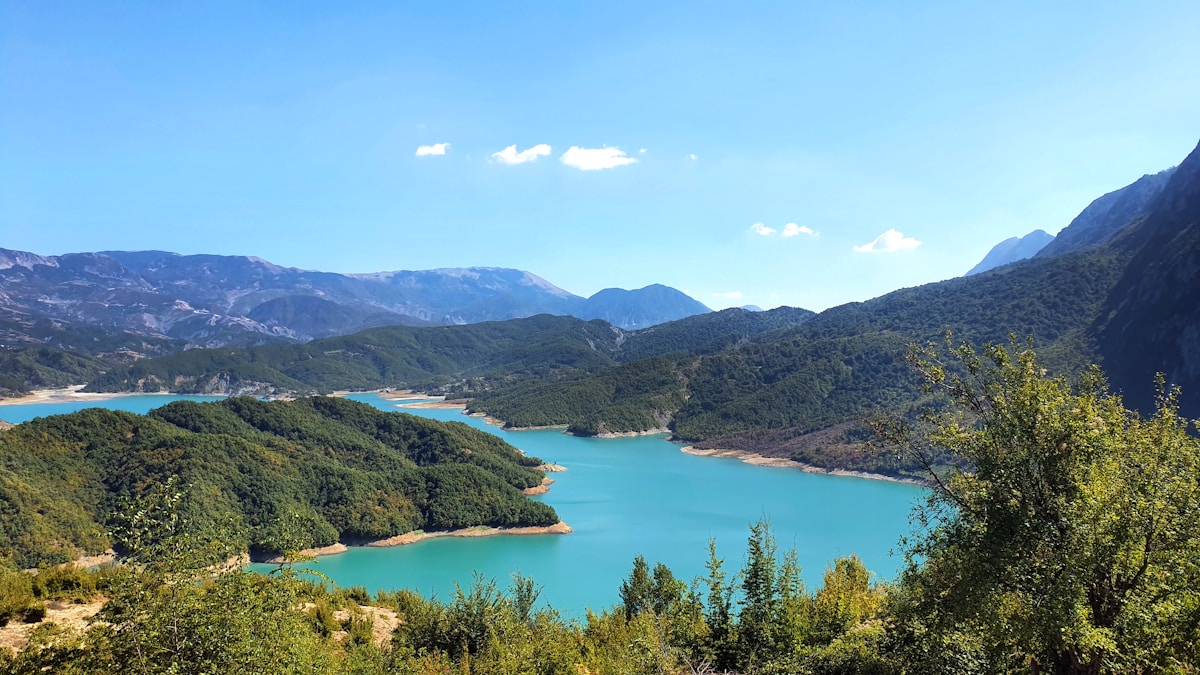
Albania is the most affordable country in Europe for retirement — cheaper than Portugal, cheaper than Spain, cheaper than Greece, and with a coastline and mountain interior that matches all three. A modest foreign pension goes further here than almost anywhere else on the continent.
The country is not yet on most retirees’ radar. That is partly why it works: property prices remain low, tourist crowds are seasonal, and the bureaucratic process for residence is simpler than in more established retirement destinations.
This guide covers the full picture: visa and residency rules, monthly costs, healthcare, the best cities, and what nobody tells you before you move.
Albania at a glance for retirees
Albania is a small Balkan country on the Adriatic and Ionian coasts, bordering Greece to the south, Montenegro to the north, and North Macedonia to the east. It is an EU candidate country with a strong desire to westernise. The capital, Tirana, is a modern, rapidly growing city; Saranda sits on the Ionian coast directly opposite Corfu; Berat and Gjirokastra are UNESCO-listed Ottoman towns inland.
Key facts for retirees:
- Currency: Albanian Lek (ALL); 1 EUR ≈ 100 ALL as of 2026
- Language: Albanian, with significant Italian and English spoken in urban areas and resorts
- Climate: Mediterranean coast, continental interior — warm dry summers, mild winters on the coast
- Time zone: CET (Central European Time) — same as Italy and France
- Healthcare: Public system exists but limited; private clinics used by most expats
Visa and residency options
90-day visa-free stay
Most Western passport holders — EU, US, UK, Canadian, Australian, New Zealand — can enter Albania and stay up to 90 days without a visa. Albania is not in the Schengen Area, so this does not affect your Schengen allocation.
Long-term residence permit
For stays beyond 90 days, you need a residence permit. Albania does not have a specific “retirement visa” but accepts applications under the Residence Permit for Self-Sufficient Persons, effectively covering retirees and those with passive income.
Requirements (as of 2026):
- Valid passport
- Proof of accommodation in Albania (rental contract or property ownership)
- Proof of sufficient income: approximately €500–700/month is the commonly cited minimum, though the requirement is not always applied rigidly
- Clean criminal record certificate
- Health insurance valid in Albania
- Application submitted at the State Police (Komisariati i Policisë) in your area of residence
The permit is initially issued for 1 year and is renewable. The process is bureaucratic but manageable with a local lawyer or notary, who typically charges €200–400 to handle the paperwork.
Albanian property ownership
Foreigners can buy property in Albania without restriction (EU citizens have had this right for many years; other nationalities can in most cases). Property ownership does not automatically grant residency but simplifies the proof-of-accommodation requirement.
Monthly cost of living
These figures are for a single person maintaining a comfortable lifestyle, not backpacker mode.
Tirana (capital)
| Expense | Monthly cost (approx.) |
|---|---|
| 1-bedroom furnished apartment (central) | €350–600 |
| Utilities (electricity, water, internet) | €60–90 |
| Food (groceries + eating out 3-4x/week) | €250–350 |
| Private health insurance | €60–120 |
| Transport (taxi apps + occasional bus) | €40–80 |
| Total | €760–1,240 |
Saranda (Ionian coast)
| Expense | Monthly cost (approx.) |
|---|---|
| 1-bedroom furnished apartment (sea view area) | €400–700 |
| Utilities | €60–100 |
| Food (groceries + local restaurants) | €220–320 |
| Private health insurance | €60–120 |
| Transport | €30–60 |
| Total | €770–1,300 |
Saranda is more expensive during summer (June–August) when short-let demand peaks; long-term rental rates are lower and more stable.
Berat and Gjirokastra (inland towns)
Costs run approximately 20–30% lower than Tirana or Saranda. A retired couple with a combined pension of €2,000/month would live very comfortably in either city.
How Albania compares
| Country | Solo retiree monthly budget |
|---|---|
| Albania | €800–1,200 |
| Portugal (Algarve) | €1,500–2,200 |
| Spain (Costa del Sol) | €1,400–2,000 |
| Greece (Crete) | €1,200–1,800 |
| Croatia | €1,000–1,600 |
| Montenegro | €900–1,400 |
Albania consistently undercuts all comparable European retirement destinations by 30–50%.
Healthcare
This is the most common concern — and rightly so. Do not rely on Albania’s public healthcare system for primary care.
Albania’s public hospitals are under-resourced. Expat retirees uniformly use private clinics for routine care, which are available in Tirana, Saranda, and Vlora, and are affordable:
- GP consultation: approximately €20–35
- Specialist consultation: approximately €35–70
- Dental cleaning: approximately €20–40
- Basic blood panel: approximately €25–50
For serious conditions or surgery, Tirana’s private hospitals (American Hospital Tirana and several others) provide better care. For complex procedures, many retirees use the healthcare systems in Greece (Corfu or Thessaloniki) or Italy, both a short ferry or flight away.
Health insurance is essential. Coverage valid in Albania is required for the residence permit and genuinely necessary for peace of mind. International health insurance plans covering Albania cost approximately €60–150/month depending on age and coverage level. Get a policy before arriving and before applying for residency — travel and health insurance for the Balkans.
Best places to retire in Albania
Tirana
The capital and by far the most cosmopolitan city. Tirana has good private hospitals, international restaurants, a growing expat community, air connections to most European capitals, and a walkable centre that has improved dramatically since 2020. The Blloku district is the social hub. Best for retirees who want urban energy, easy access to services, and regular flights home.
Saranda
The main Riviera town, sitting directly across from Corfu. The city has a genuine resort feel, good seafood restaurants, a promenade, and connections to Ksamil beaches. The proximity to Corfu (45-minute ferry) means access to a larger international expat community, Greek healthcare, and flights home. Healthcare in Saranda itself is limited — this is the primary trade-off.
Vlorë
Albania’s second city and the main gateway to the Albanian Riviera. Less touristy than Saranda, with a larger local city feel. Good apartment supply, reasonable restaurant scene, and improving infrastructure. Best for retirees who want coastal life without full resort pricing.
Berat
The UNESCO “city of a thousand windows” sits in a river valley inland. Extremely atmospheric — Ottoman castle, layered neighbourhoods, a pace of life that feels unchanged. Very inexpensive (apartments from €200/month), but limited English and limited private healthcare. Suits retirees who can be flexible about healthcare access.
Gjirokastra
Similar in character to Berat: a UNESCO-listed Ottoman city in the southern highlands, close to the Greek border. Gjirokastra is even quieter and cheaper than Berat. The Greek border at Kakavia is about 30 minutes away, giving access to Greek healthcare when needed.
Practical considerations
Banking: Non-residents can open accounts at some Albanian banks (Raiffeisen, Credins, OTP), but the process requires residence documentation. Most early-stage expats use Wise or Revolut multi-currency cards for daily spending. Once you have a residence permit, a local bank account is straightforward.
Language: Albanian is not an easy language; it has no close relatives and is genuinely distinct. However, Italian is widely spoken in coastal areas and Tirana (Albania had significant Italian TV influence for decades), and English proficiency is high among under-40s. Most expats manage comfortably with English in urban areas.
Internet and mobile: Albania has excellent mobile coverage (4G across most of the country; 5G in Tirana) and cheap mobile data — approximately €6–10/month for unlimited 4G. An eSIM for the Balkans works from arrival; local SIM cards are available at any phone shop. Fixed broadband in apartments runs €15–25/month.
Safety: Albania is genuinely safe for expats. Street crime is low, and the country has changed dramatically since the early post-communism period. The main practical safety consideration is road traffic — driving standards are erratic and roads outside cities can be poorly maintained.
Property purchase: Property in Albania is affordable by European standards. Apartments in Tirana run €1,000–2,500/m²; coastal properties in Saranda and Vlorë vary widely. Always use a registered Albanian notary for any property transaction and verify the title documentation thoroughly — property title disputes exist in Albania, particularly for land outside city centres.
Taxes for foreign retirees
Albania has a territorial tax system. Foreign-source income is generally not taxed in Albania for individuals who are not Albanian residents for tax purposes. However, if you establish formal tax residence in Albania, different rules apply (Albania has a flat 15% income tax rate on Albanian-source income as of 2026).
Tax residency rules are complex and depend on time spent in Albania vs your home country. Get specific advice from an international tax specialist before making a permanent move — this situation is common enough that advisors familiar with UK/US/EU pension arrangements and Albanian rules do exist.
Summary: is Albania right for you?
Albania suits retirees who prioritise:
- Value for money — the monthly cost advantage over Portugal or Spain is substantial
- Coastal and mountain scenery — the Albanian Riviera is genuinely beautiful; the Albanian Alps are world-class
- A less-trodden path — unlike Portugal or Spain, you will not be surrounded by large expat communities; Albania is for those comfortable with some adventure
Albania is less suitable for retirees who need:
- Robust public healthcare near home
- An established large English-speaking expat community
- EU freedom of movement (Albania is not yet an EU member)
See also
- Albania travel guide
- Cost of living in the Balkans
- Retire in Montenegro
- Retire in Bulgaria
- Balkans visa guide
- eSIM for the Balkans
Useful links: Health insurance for Albania · Flights to Albania · eSIM for the Balkans · Hotels in Tirana · Hotels in Saranda