Pula Travel Guide: Roman Arena, Temple of Augustus
Pula travel guide - Roman amphitheatre, Temple of Augustus, Cape Kamenjak beaches, and Brijuni Islands with restaurant picks.
Guides for Pula, Croatia Travel Guide
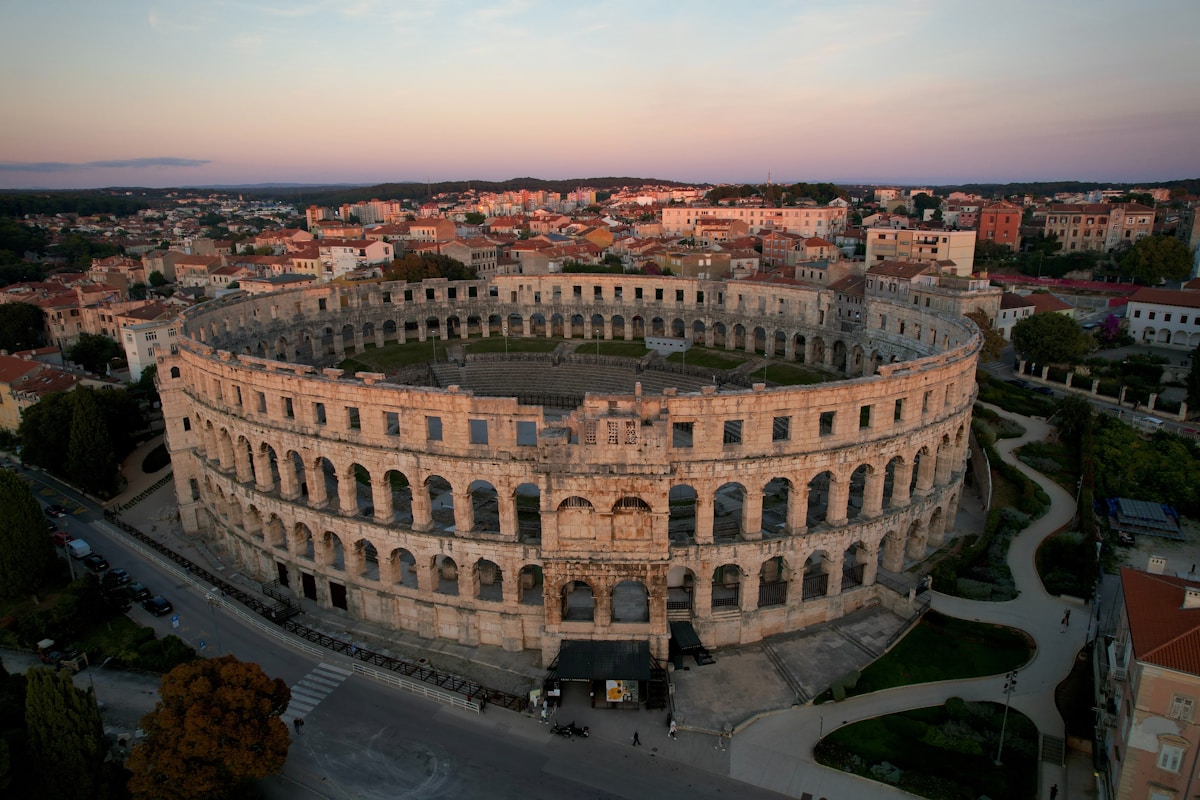
Pula is Istria’s principal city and Croatia’s most significant Roman site - the 1st-century amphitheatre that dominates its waterfront is one of the six largest and best-preserved in the world, seating 23,000 and still used for concerts today. Unlike Dubrovnik or Rovinj, Pula is primarily a working city of 60,000 people rather than a curated tourist showpiece - which gives it a different, less polished energy and considerably better value. All prices in euros (€).
The Pula Arena
The amphitheatre is the reason most people come to Pula, and it earns the visit. Built between 27 BCE and 68 CE under the emperors Augustus and Vespasian, it is structurally intact on all four sides - unusually complete for a Roman amphitheatre of its scale. The seating tiers and underground corridors where animals and gladiators were held are accessible.
Entry: approximately €12–18 as of 2026; open daily year-round. Arrive early to avoid the worst of the summer midday crowds - the arena fills noticeably between 11:00 and 15:00 in July and August.
Guided tours: walking tours of the arena with a guide cost approximately €20–35 for a 1-hour tour; book through the arena’s own ticket desk or via GetYourGuide. Evening events: the Pula Film Festival (held annually in July–August since 1954) screens films inside the arena at night - tickets from approximately €10–20. The Roman Film Festival uses the dramatic setting to show classic films projected against the ancient stone. Summer concerts (occasional large acts) have separate pricing - €50–150.
Roman Forum and Temple of Augustus
Pula’s Roman Forum is the main city square and has been the civic heart of the city continuously since the 1st century BCE. The Temple of Augustus, on the northern edge of the forum, is one of the best-preserved Roman temples outside Italy - built between 2 BCE and 14 CE, with a Corinthian colonnade that remained largely intact because the building was repurposed as a church and then a granary through the Middle Ages.
Entry to the Temple: approximately €5; small archaeological collection inside. The Forum itself is free to enter and walkable at any hour.
Adjacent: the Forum has the best café terrace in central Pula - Restaurant Kantina sits directly on the square, with the temple facade as a backdrop. Mains approximately €18–30.
Other Roman monuments
Pula’s old town is compact and walkable - most monuments are within 15 minutes on foot from the Arena:
- Arch of the Sergii - a 1st-century BCE triumphal arch commissioned by a local Roman family; free, on the edge of the old town
- Twin Gates (Porta Gemina) - a Roman city gate from the 2nd century CE; free
- Hercules Gate - the oldest Roman monument in Pula, 1st century BCE; free, in the old town
- Cathedral of the Assumption - built on foundations of a Roman temple and Byzantine church; free entrance
- Zero Strasse (Nula Strasse) - a network of underground wartime tunnels built by the Austro-Hungarian and Italian administrations; entry approximately €5, guided tours run in summer
The Archaeological Museum of Istria on the hill above the Forum has the most complete collection of Roman finds from the region, including inscriptions, mosaics, and glassware. Entry approximately €5; closed Mondays.
Cape Kamenjak
Cape Kamenjak is a 35km² nature park occupying the peninsula 13km south of Pula city - the southernmost point of Istria. It has some of the best swimming and snorkelling in northern Croatia: clear water, rocky coves, and a stretch of coast that is significantly wilder than anything in the Pula city area.
Entry to the park: approximately €8–10 per car as of 2026 (waived in low season). No private vehicles beyond the main car park in July–August - shuttle bikes and scooters available to rent from the entrance. The most popular coves (Safari Bar, Stupice) are a short cycle from the gate.
Best access without a car: rent a bicycle in Pula (approximately €15–20 per day) - the cycle route south to Kamenjak runs through the village of Medulin and is largely flat. Organised e-bike tours from Pula to Kamenjak run approximately €40–60.
Brijuni Islands
The Brijuni archipelago - 14 islands in the Fažana channel, 6km west of Pula - was the summer residence of Yugoslav leader Tito and remains a national park today. The main island, Veliki Brijun, has a safari park with animals gifted to Tito by African heads of state, Roman villa ruins, a Byzantine castle, and a collection of Tito memorabilia.
Getting there: ferries depart from Fažana, 8km north of Pula (bus from Pula market takes approximately 20 minutes). The national park run organised half-day and full-day tours - entry, ferry, and guided tour combined approximately €30–45 as of 2026. Independent access to the islands is restricted - you cannot simply take the ferry and explore alone; park tours are required.
Season: most tour options run April–October; limited options in winter.
Food and drink
Pula’s food scene reflects Istria’s dual Croatian-Italian heritage: fresh Adriatic seafood, handmade pasta (fuži, pljukanci), wild asparagus in spring, truffles in autumn, and Malvazija white wine and Teran red wine throughout.
Konoba Batelina - the most-cited seafood restaurant in Pula; run by a local fishing family who serve whatever was caught that day. Reservations essential. Mains approximately €20–35. Located in Banjole, 7km south of the centre (taxi approximately €10–15).
Restaurant Kantina - on the Roman Forum itself; Istrian classics with the best setting in the city. Mains approximately €18–30. Good for a longer lunch or pre-evening aperitivo.
Konoba Vodnjanka - in the village of Vodnjan, 12km north of Pula (10 minutes by bus); renowned for its Istrian meat dishes, truffles in season, and local wine. Mains approximately €15–25. Lower prices than in-city restaurants with better quality than most tourist-facing options.
Farabuto - a well-regarded wine bar in central Pula with a serious Istrian wine list and light plates; good for an evening stop before or after dinner.
For coffee, the Istrian ritual of a long morning espresso at a sidewalk table is observed seriously in Pula - the cafés along the Riva harbourfront and around the Forum are the right places for it.
Where to stay
Old Town - the most atmospheric area; walking distance to the Arena and Forum. Hotels and apartments command a premium; book ahead in July–August. A central hotel in this area typically runs €100–180 per night in peak season, €60–100 in shoulder season.
Stoja Peninsula - a peninsula 3km southwest of the old town, dominated by large campsites and some apartment complexes. Very good for self-catering stays and families; less convenient without a car. Camping from approximately €20–35 per night per pitch.
Medulin - a resort town 10km south of Pula with beaches, hotels, and a quieter pace. Better value than the old town; local buses connect to Pula centre.
Getting to Pula
From Zagreb by bus: approximately 3.5–4 hours; multiple daily departures from Zagreb Bus Terminal; tickets approximately €15–25 booked in advance. The most practical option if travelling from the Croatian capital. Private transfers from Zagreb can be arranged if travelling with a group.
From Split by bus: no fast direct connection; most routes go via Zagreb (total 7–9 hours) or require a connection at Rijeka. Flying or driving is more practical for a Split–Pula journey.
By air: Pula Airport (PUY) is 5km northeast of the city; taxis to the centre cost approximately €15–20. Seasonal direct flights serve London, Vienna, Frankfurt, Amsterdam, and other European cities in summer. Outside peak season, Rijeka Airport (75km north, approximately 1 hour by bus) has more year-round connections.
By car from Zagreb: the A8 motorway from Rupa (on the A7 Rijeka bypass) runs directly into Istria - total driving time approximately 3–3.5 hours. Fuel and motorway tolls approximately €20–30 return.
Local transport: the city centre is walkable for the main monuments. Buses serve Cape Kamenjak direction and Fažana (for Brijuni). A rental bike is effective for reaching Kamenjak. Hire a car for day trips to hilltop towns (Motovun, Grožnjan) or the wider Istrian interior.
Practical notes
- Best months: May–June and September; warm, manageable crowds, full range of services
- July–August: the Arena and Forum are busy; book accommodation and arena tickets in advance
- Currency: euro (€); ATMs widely available in the city centre
- Day trips from Pula: Rovinj (45 minutes by bus, €5–8), Brijuni Islands (see above), Cape Kamenjak (13km south), Motovun (1 hour by car)
See also
- Istria, Croatia travel guide
- Rovinj travel guide
- Croatia travel guide
- Best beaches in the Balkans
- Things to do in Pula
- Food to try in Pula
- Where to stay in Pula
Book activities: GetYourGuide lists guided arena tours, Brijuni boat trips, and Kamenjak e-bike excursions. Hire a car if you want to reach the Istrian hill towns or drive down to Kamenjak independently.
Book an experience
Top experiences in Pula, Croatia Travel Guide
Explore the best tours and activities in Pula, Croatia Travel Guide - instant confirmation, free cancellation on most bookings.