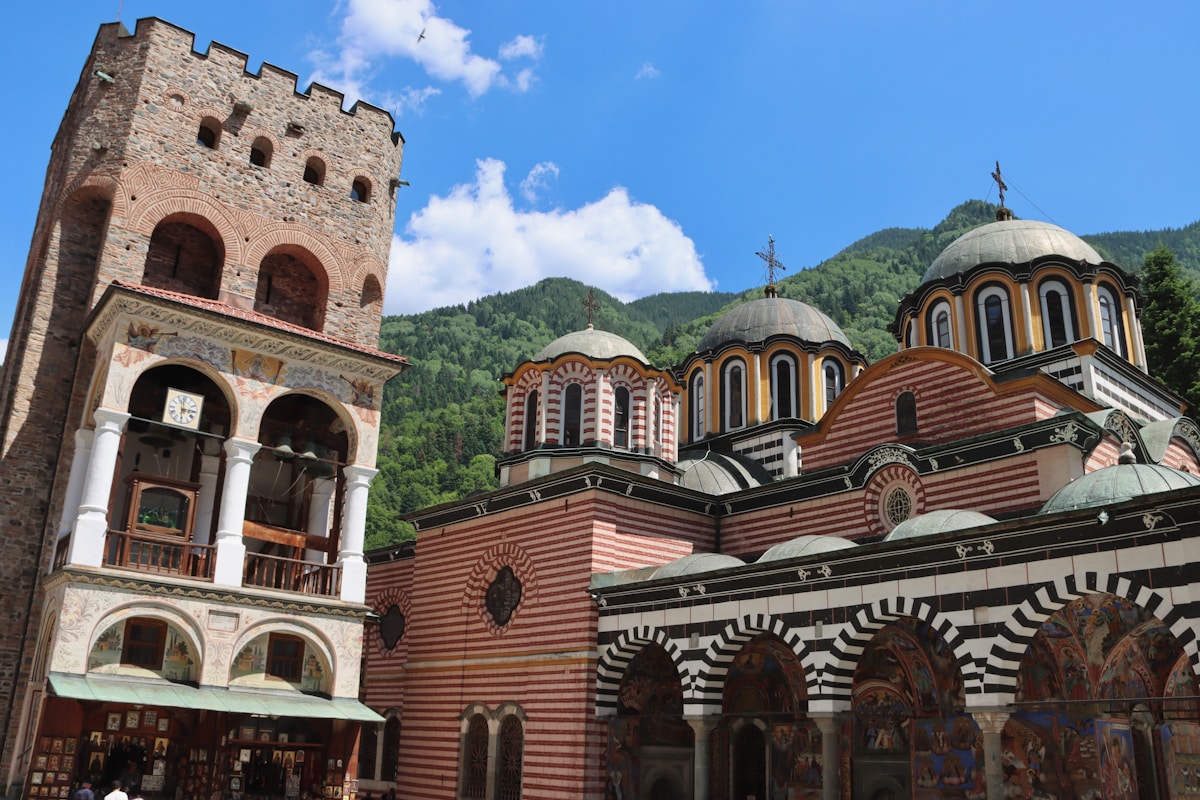
Bulgaria is the most overlooked retirement destination in the European Union. It offers EU membership (with all the rights that brings to EU citizens), a flat 10% income tax rate that is the lowest in the bloc, a Black Sea coastline, a ski resort in Bansko that competes with Alpine resorts at a fraction of the cost, and a cost of living that sits at approximately 40–50% of Western European levels.
For EU citizens, Bulgaria requires almost no bureaucratic effort to establish residence. For non-EU retirees (including post-Brexit UK citizens), the process is more involved but straightforward compared to non-EU countries.
This guide covers the residency routes, monthly costs, healthcare, the best cities and towns, and the practical matters that determine whether Bulgaria works for your retirement.
Bulgaria at a glance
Bulgaria is an EU member state on the Black Sea coast, bordered by Romania, Serbia, North Macedonia, Greece, and Turkey. The country has a rich history — Thracian, Greek, Roman, Byzantine, and Ottoman layers all visible — and a diverse geography: 378 km of Black Sea coast, the Rhodope and Rila mountains with peaks over 2,900m, rose valleys in the interior, and a thriving capital in Sofia.
Key facts for retirees:
- Currency: Bulgarian Lev (BGN); pegged to the euro at 1 EUR = 1.956 BGN (Bulgaria is preparing for eurozone accession, likely 2026–2027)
- Language: Bulgarian (Cyrillic script) — English widely spoken by under-40s in urban areas; Russian useful with older generations
- Climate: Continental with warm summers and cold winters; Black Sea coast warmer and milder
- Time zone: EET (Eastern European Time) — 1 hour ahead of CET; same as Greece and Romania
- Healthcare: EU public system via NHIF; private clinics widely used and affordable
Residency options
EU/EEA citizens
EU and EEA citizens have freedom of movement in Bulgaria. You can arrive, stay for 3 months without registration, and then register at the Migration Directorate with:
- Passport or national ID
- Proof of accommodation
- Proof of sufficient means (pension statement, bank statements)
- Private or public health insurance valid in Bulgaria
After 5 years of continuous legal residence, you can apply for permanent residence (EU long-term resident status). This is the simplest residency path of any non-EU Balkans country.
Non-EU citizens (US, UK, Canadian, Australian)
Post-Brexit UK citizens and non-EU nationals must follow the standard third-country national route:
Step 1: D-visa (long-stay national visa) Apply at the Bulgarian embassy in your home country. A D-visa is valid for up to 1 year with multiple entries. Required documents:
- Valid passport
- Proof of accommodation in Bulgaria
- Proof of passive income (pension, investment income — typically €500–600/month minimum, though not rigidly defined)
- Clean criminal record
- Health insurance valid in Bulgaria for the duration
Step 2: Residence Permit Within the first year on a D-visa, apply for a Temporary Residence Permit at the Migration Directorate in Bulgaria. Requirements are similar to the D-visa. Initial permit: 1 year, renewable annually.
Step 3: Long-term residence After 5 years of continuous temporary residence, you can apply for permanent residence.
A Bulgarian immigration lawyer can manage the full process; fees typically run €300–600.
Note on Schengen
Bulgaria joined the Schengen Area in 2024 (air and sea borders initially, full land border Schengen accession followed). This means the 90-day Schengen clock now applies to stays in Bulgaria for non-EU nationals. Non-EU retirees should apply for residence before the 90-day limit to maintain legal long-stay status.
Monthly cost of living
Sofia (capital)
| Expense | Monthly cost (approx.) |
|---|---|
| 1-bedroom furnished apartment (central) | €450–750 |
| Utilities (electricity, heating, water, internet) | €80–130 |
| Food (groceries + eating out 3-4x/week) | €300–450 |
| Private health insurance | €60–120 |
| Transport (public + occasional taxi) | €30–60 |
| Total | €920–1,510 |
Sofia has the best infrastructure for expat life — international airports with direct flights to most European capitals, good private hospitals, universities, and a cosmopolitan restaurant and café scene. It’s more expensive than other Bulgarian cities but still one of the cheapest EU capitals.
Plovdiv
Bulgaria’s second city and cultural capital. Plovdiv was European Capital of Culture in 2019 — its old town is exceptionally well-preserved, with Roman ruins, National Revival Period houses, and a gallery and café culture that punches well above the city’s population of 350,000.
Monthly total: approximately €800–1,200 — roughly 15% cheaper than Sofia with comparable quality of life.
Varna (Black Sea coast)
Varna is Bulgaria’s Black Sea capital — a real city of 350,000+, not just a summer resort, with year-round life, a port, good private hospitals, and beaches. Summer gets expensive due to tourism; out of season (October–May) rents drop significantly.
Monthly total: approximately €850–1,300, with significant seasonal variation.
Bansko (mountain)
Bansko is Bulgaria’s ski resort in the Pirin Mountains — but it has developed a substantial year-round international community of retirees and remote workers attracted by its alpine scenery, very low apartment prices, and proximity to Plovdiv and Sofia.
Apartments in Bansko are among the cheapest in Bulgaria: 1-bedroom properties from €150/month in off-season long-let, rising to €300–500 in winter. Summer hiking and fresh mountain air have made it a year-round retirement option.
Monthly total: approximately €800–1,100 — one of the cheapest comfortable-living options in Bulgaria.
Rural Bulgaria
Inland rural Bulgaria (Rhodope villages, Balkan Range villages) offers the lowest property purchase prices in the EU — houses in good condition can be bought for €20,000–60,000 in many villages. Ongoing living costs are very low but services are minimal. Best for retirees who are self-sufficient and comfortable with rural life.
How Bulgaria compares
| Country | Solo retiree monthly budget |
|---|---|
| Bulgaria | €900–1,300 |
| Albania | €800–1,200 |
| Montenegro | €900–1,400 |
| North Macedonia | €800–1,200 |
| Romania | €900–1,300 |
| Poland | €1,000–1,500 |
| Portugal (Algarve) | €1,500–2,200 |
Healthcare
Bulgaria has an EU public healthcare system through the National Health Insurance Fund (NHIF). EU citizens registered as residents can access public healthcare after completing the registration process — this is a significant advantage over non-EU Balkans destinations where you must always pay privately.
Public system: GP referral system, hospital care covered, prescription drugs subsidised. Quality is inconsistent — better in Sofia and Plovdiv, limited in rural areas. Waiting times exist for elective procedures.
Private clinics (widely used by expats):
- GP consultation: €20–40
- Specialist: €40–80
- Blood panel: €25–50
- Dental cleaning: €25–45
Sofia has multiple international-standard private hospitals (Acibadem City Clinic, Tokuda Hospital). Plovdiv and Varna also have private hospital capacity. For major procedures, many expats use the Sofia private hospitals, which are well-regarded regionally.
Insurance: Even with access to the public system, private health insurance is worth having for faster access to specialists and better facilities. International plans covering Bulgaria run approximately €60–120/month for a healthy 65-year-old. Compare health insurance options here.
Best places to retire in Bulgaria
Sofia
Best all-round choice for most retirees. Direct flights to most European capitals (Ryanair, Wizz Air, Bulgaria Air), the best private hospitals in the country, a functioning metro system, good supermarket supply, and a city centre that has become genuinely attractive since the 2000s urban renewal. The city is not beautiful in the way that Plovdiv or Kotor is, but it is functional, cosmopolitan, and has a real café and restaurant culture.
Plovdiv
The best city in Bulgaria for quality of everyday life. The old town is extraordinary — Roman amphitheatre, National Revival houses, galleries, restaurants. The Kapana district has a café and creative scene that rivals cities many times its size. Lower cost than Sofia, great transport links, and a warmer, more laid-back atmosphere.
Varna
Best for retirees who want coast, year-round city life, and don’t want to pay Kotor or Dubrovnik prices. The Black Sea is warmer than the Adriatic in summer (water temperatures reach 25°C in August). The city has a proper year-round population — not just a summer resort — and good enough private healthcare for routine care, with Sofia a 4-hour drive for anything serious.
Nesebar / Sozopol (Black Sea coast, smaller towns)
These UNESCO-listed old towns on the Black Sea coast are summer tourist destinations that have small year-round local populations. Very atmospheric; significantly cheaper than Varna. Better suited to self-sufficient retirees who are comfortable without city infrastructure nearby.
Bansko
For retirees who want mountains, cool summers, skiing in winter, and the cheapest comfortable accommodation in Bulgaria. The international community (significant UK and Irish presence) means good English language services. A car is essential.
Practical considerations
Banking: Bulgaria’s banking sector is EU-regulated. Expat retirees can open accounts at most major banks (UniCredit Bulbank, DSK, Raiffeisen) with residence documentation. The euro is not yet used (the lev is pegged to it) but eurozone accession is in progress — likely to complete by 2027.
Language: Bulgarian uses the Cyrillic alphabet — the same as Russian. Learning to read Cyrillic (not hard, perhaps 2 weeks of effort) makes everyday life vastly easier. English is widely spoken by under-40s in urban areas. German and Russian are also useful.
Transport: Sofia has a metro and good tram network. Outside Sofia, a car is highly recommended for comfortable long-stay life. Fuel costs approximately €1.60–1.80/litre as of 2026.
Mobile and internet: Bulgaria has good 4G/5G coverage in urban areas. Providers include A1, Vivacom, and Yettel. Monthly SIM plans from approximately €10–15. An eSIM for the Balkans works on arrival.
Property purchase: Foreign EU nationals can buy property in Bulgaria without restriction (there were previous restrictions on agricultural land that have now been lifted). Non-EU nationals can buy apartments but need a company structure to buy land in some circumstances — get legal advice. Sofia apartment prices run approximately €1,200–2,500/m² in central areas; Plovdiv is lower; rural Bulgaria dramatically lower.
Schengen: As noted above, Bulgaria’s Schengen accession means non-EU retirees must establish formal residence to stay beyond 90 days. This is a change from pre-2024 when longer stays were easier to manage informally.
Taxes for foreign retirees
Bulgaria has a flat 10% income tax — the lowest in the EU. However, what matters for retirees is which country has the right to tax your pension income under the double taxation agreement between Bulgaria and your home country.
- UK retirees: Under the UK-Bulgaria DTA, UK state pension and most occupational pensions are taxable only in the UK. You are unlikely to owe Bulgarian income tax on UK pension income.
- US retirees: The US-Bulgaria DTA limits Bulgarian taxation on US-source income in most cases.
- EU retirees: Varies by country — consult a specialist familiar with your home country’s DTA with Bulgaria.
The flat 10% rate is attractive if you do generate taxable income in Bulgaria (rental income, etc.).
Summary: is Bulgaria right for you?
Bulgaria is best for retirees who:
- Are EU/EEA citizens wanting easy residency with full EU rights
- Want EU healthcare access rather than private-only
- Are comfortable with a Cyrillic alphabet and a non-Western-European cultural environment
- Want the cheapest EU country for retirement with a Black Sea coast option
Bulgaria is less ideal for retirees who:
- Want Mediterranean coastline (the Black Sea is not the Adriatic or Aegean)
- Need warm winters (Sofia winters are cold)
- Are post-Brexit UK citizens who want genuinely simple residency (Albania or Montenegro may be simpler short-term)
See also
- Bulgaria travel guide
- Sofia city guide
- Plovdiv guide
- Cost of living in the Balkans
- Retire in Albania
- Retire in Montenegro
- Balkans digital nomad guide
Useful links: Health insurance for Bulgaria · Flights to Bulgaria · eSIM for Bulgaria · Hotels in Sofia · Hotels in Plovdiv