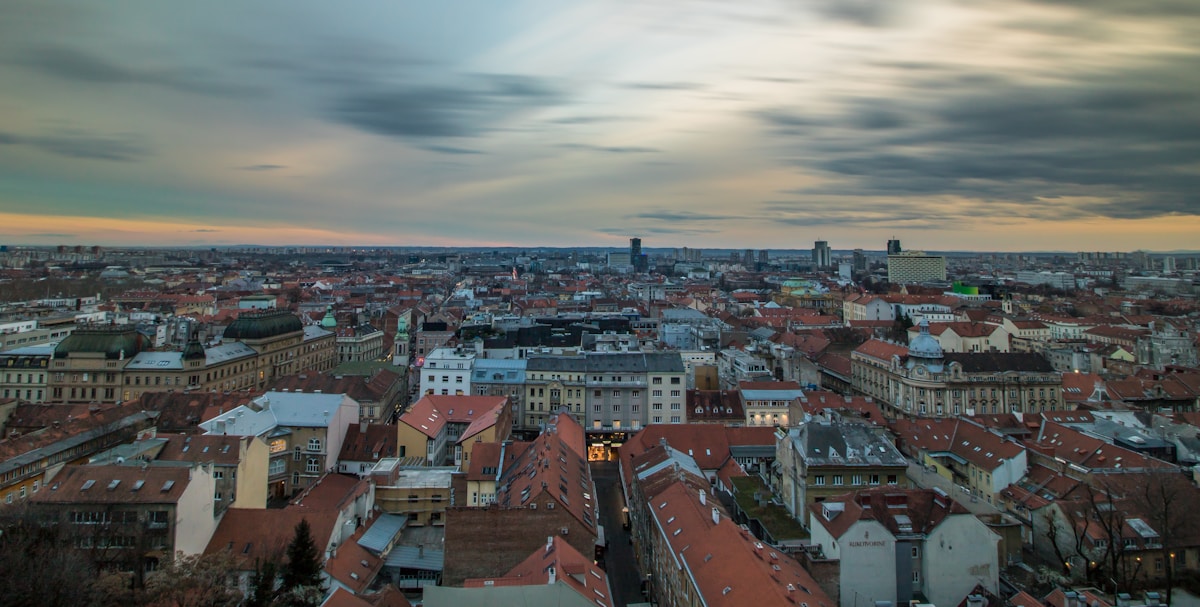
Zagreb and Split answer different questions about what you want from Croatia. Zagreb is the capital — an inland city of Austro-Hungarian boulevards, a strong café culture, a medieval upper town, and the country’s best museum scene. Split is the coastal gateway city — Diocletian’s Palace at its centre, the Adriatic on its doorstep, and ferries to Hvar, Brač, and Vis from the Riva. Neither is the better city in absolute terms. They are designed for different trips.
Quick Verdict
| Factor | Zagreb | Split |
|---|---|---|
| Setting | Inland capital | Adriatic coast |
| Headline sight | Gornji Grad, Museum of Broken Relationships | Diocletian’s Palace |
| Beach access | None — inland city | Bačvice beach; islands by ferry |
| Summer crowds | Manageable | Extremely busy in July–August |
| Year-round appeal | Strong — especially December | Quiet and limited Oct–April |
| Budget friendliness | Cheaper year-round | Peak-season prices are high |
| Island access | Day trips to coast (1.5 hours) | Hvar, Brač, Vis, Šolta ferries |
| City culture | Excellent — cafés, restaurants, museums | Good — strong food and nightlife scene |
| Best for | City breaks, off-season, culture | Summer, coast, island-hopping base |
Bottom line: Zagreb wins for city culture, year-round access, and value; Split wins for the coast, the palace, and as an island-hopping base. Most Croatia itineraries lasting more than five days include both.
Costs
Zagreb runs noticeably cheaper than Split outside peak summer. A coffee in Zagreb costs approximately €1.50–2.50; in Split’s palace area and Riva, expect €2.50–3.50. Restaurant mains in Zagreb run approximately €10–18 for mid-range dining; Split is broadly similar at €12–20, with prices rising sharply on the Riva waterfront in July and August.
The key difference is accommodation. Zagreb mid-range doubles run approximately €60–110 year-round with relatively little seasonal variation. Split doubles in May and September are €70–120 in a comparable hotel — but in July and August, the same room can cost €150–250+. The summer price spike in Split is significant and affects everything from restaurant covers to ferry booking fees.
A couple’s daily budget including accommodation (mid-range), three meals, and one activity:
| Zagreb (any season) | Split (May/Sep) | Split (Jul/Aug) | |
|---|---|---|---|
| Accommodation | €70–110 | €80–130 | €160–260 |
| Food (three meals) | €30–50 | €35–55 | €50–70 |
| Activity/transport | €15–25 | €15–30 | €20–40 |
| Daily total (couple) | €115–185 | €130–215 | €230–370 |
Visiting Split in May, June, or September gives you the coast without the price spike.
Where to Stay
Zagreb
- Esplanade Zagreb Hotel — the city’s grand dame; an Art Deco railway hotel opposite the main station. Doubles from approximately €120–170 in shoulder season. Worth a coffee in the Esplanade café even if not staying.
- Hotel Jägerhorn — centrally located near Ilica Street; reliable mid-range with doubles from approximately €75–100. Good value for the central location.
- Donji Grad apartments — the best budget option in Zagreb is self-catering in the Lower Town; well-located studios from €45–70 per night on short lets.
For full options by area, see where to stay in Zagreb.
Split
- Palace Judita Heritage Hotel — inside Diocletian’s Palace itself; doubles from approximately €130 in May, €200+ in peak summer. The most atmospheric location in the city.
- Hotel Vestibul Palace — boutique hotel in the palace interior; doubles from approximately €120–160 in shoulder season, significantly more in peak.
- Bačvice area — 10 minutes’ walk from the palace; a better option for budget-conscious visitors, with apartments from €50–80 outside July and August and easy beach access.
For full options by area, see where to stay in Split.
Where to Eat
Zagreb
- Vincek — Zagreb’s best sladoled (ice cream) and pastries, operating since 1972; on Ilica Street, near the centre. Queues at weekends — worth it.
- Tkalčićeva Street — the main outdoor café strip; a full kilometre of tables from morning coffee to late-night cocktails. The best place to spend a slow Zagreb afternoon.
- Mundoaka Street Food — small, lively restaurant near Dolac market; international small plates with strong local sourcing; mains approximately €12–18. Among the best casual dinners in Zagreb.
- Dolac market — morning only, every day above Ban Jelačić Square. Stone fruit in summer, chestnut and truffle season in autumn, and reliable year-round produce. Pick up local cheese and cured meats for picnic supplies.
Split
- Konoba Matejuška — fish tavern near the old fish market; grilled catch of the day approximately €16–22; wine lists with local Dalmatian varieties. One of the better value options near the palace.
- Sperun — long-running restaurant in the Veli Varoš neighbourhood behind the palace; Dalmatian pašticada and seafood mains €15–22; quieter than the Riva. Reliable.
- Bačvice neighbourhood — the strip running south from the palace has less tourist markup than the Riva frontage; solid konobas with peka (lamb or octopus slow-cooked under a bell) for approximately €12–18.
Both cities have strong café cultures built around slow morning coffee — a Croatian habit that Zagreb does particularly well.
Getting Between Zagreb and Split
The standard route is the A1 motorway bus (4–5 hours, approximately €15–25 depending on operator; several departures daily). This is faster, more frequent, and more comfortable than the train. Book through FlixBus or directly with Croatian operators (Autotrans, Arriva).
By car, the A1 motorway takes approximately 3.5 hours and gives flexibility to stop at Plitvice Lakes en route — one of Croatia’s best day trips and roughly halfway between the two cities.
There is a coastal catamaran from Split to Rijeka running in summer months, but no practical direct sea route from Split to Zagreb.
What to Do
Zagreb
- Gornji Grad (Upper Town) — cobbled medieval streets, St. Mark’s mosaic-tiled church, Lotrščak Tower (€2, noon cannon fired daily since 1877), and the Strossmayer Promenade overlooking the Lower Town.
- Museum of Broken Relationships (€7) — Zagreb’s most famous cultural export. A collection of objects donated from failed relationships worldwide, with accompanying texts. Unusual, affecting, and not easily summarised.
- Dolac Market and Tkalčićeva — the city’s daily rhythm. The market opens from early morning; Tkalčićeva Street fills with café tables from mid-morning.
- Advent in Zagreb — December’s Christmas market has won Europe’s best multiple times. The entire city transforms November through January.
- Day trips — Plitvice Lakes (2 hours, Croatia’s most visited national park), Varaždin (Baroque town, 1 hour north), and the Zagorje castle circuit.
Split
- Diocletian’s Palace — the entire Old Town is built inside a 3rd-century Roman emperor’s retirement complex. Walk the underground cellars (€5), climb the Cathedral bell tower (€5) converted from Diocletian’s own mausoleum, and sit at the Peristyle central courtyard. Free to walk; most interior sites €5–10.
- Klis Fortress (€10) — a hilltop fortress 15 minutes from Split used as Meereen in Game of Thrones. The views down to Split and the islands are exceptional.
- Riva waterfront — Split’s 500 m harbourfront is the social centre of the city, running day-to-night. Ferry ticket booths sit alongside café tables.
- Island day trips — Hvar by catamaran (1 hour, approximately €10 each way), Brač with Zlatni Rat beach (50 minutes by car ferry), Blue Cave tour from Vis (full day, approximately €80–110).
- Bačvice beach — Split’s city beach, 10 minutes’ walk from the palace; famous for picigin, a traditional ball game played in shallow water.
Best Season
Zagreb works year-round. Spring (April–May) and autumn (September–October) are ideal — mild temperatures, open terrace cafés, and no crowds. December is exceptional for the Advent market. Summer is fine but hotter than the coast; some Zagrabians leave for Split and Dubrovnik in July, which actually makes the city more pleasant for visitors.
Split peaks in June and September — warm enough to swim (sea temperature 22–24°C), manageable crowds compared to July and August, and prices around 30–40% below peak. July and August deliver the full Adriatic summer experience but at maximum crowds and prices. October through April, many restaurants and beach bars close; the palace is atmospheric but the coastline appeal largely disappears.
Getting Around
Zagreb runs on a reliable tram network. A single tram ticket costs approximately €0.53 (30 minutes); a 24-hour pass is €4. The city centre is compact and walkable. The funicular (€0.66) connects the Lower Town to Gornji Grad. Bolt operates across the city; most journeys under €5.
Split city centre is walkable. The Riva, the palace, Bačvice beach, and the bus/ferry terminal are all within 15 minutes on foot. Local buses cover outlying areas at €1.60 per ride. Taxis and Uber are available and more affordable than Dubrovnik. For Plitvice or day trips to the hinterland, car hire makes sense — the motorway network from Split is good.
Internal Links
- Croatia travel guide
- Zagreb travel guide
- Split travel guide
- Where to stay in Zagreb
- Where to stay in Split
- Plitvice Lakes
- Dubrovnik vs Split
- Belgrade vs Zagreb
- Ljubljana vs Zagreb
- Croatian coast road trip
- Croatia 7-day itinerary
- Balkans comparison guide
FAQs
Is Zagreb or Split better? Zagreb is the stronger city break and the better year-round destination. Split is the better summer base for the Dalmatian coast and island access. The two cities serve different purposes in a Croatia itinerary and are worth combining.
How long do you need in each? Two full days covers Zagreb well; three days is ideal if you want a day trip to Plitvice Lakes. Split works as a two-night base for the palace itself, with more time if you plan day trips to the islands. Most itineraries give three nights to Split to fit in one island.
Which is better for a long weekend? Zagreb for any season other than summer — the city is compact, affordable, and very flyable from across Europe. Split for a summer long weekend with beach access, but book accommodation and island ferries well ahead in July and August.
Is it possible to do both in one week? Yes — three nights in Zagreb and three nights in Split with a day in between travelling (bus or drive via Plitvice Lakes) is a standard Croatia week. It works well and shows you two genuinely different faces of the country.
Plan your trip: Guided tours in Zagreb · Guided tours in Split · Car hire in Croatia · Travel insurance