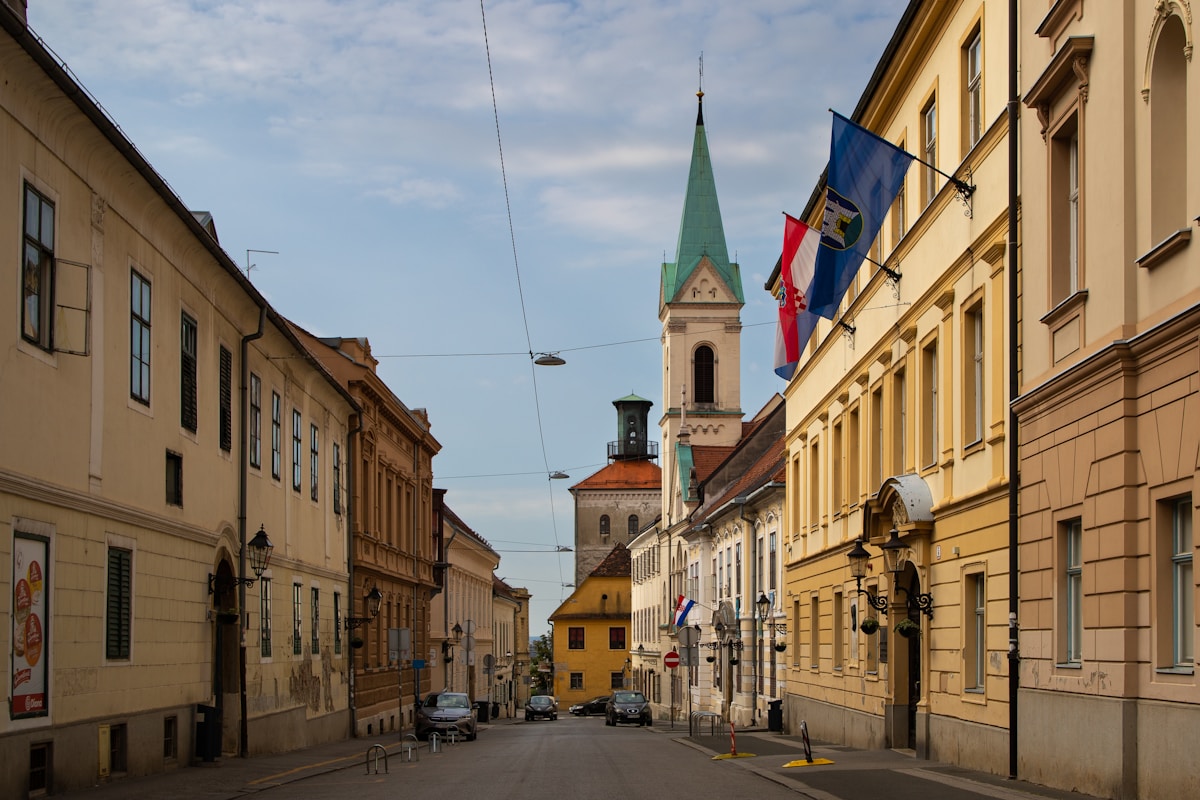
Zagreb sits at the northern edge of Croatia, separated from the coast by the Dinaric Alps and closer in atmosphere to Vienna or Graz than to Dubrovnik. It is a compact, walkable city built on two hills - Gornji Grad (Upper Town) on one, Kaptol on the other - with the commercial Lower Town grid laid out between them.
The city has grown in popularity significantly since 2020 as travellers discovered a European capital with strong café culture, an excellent food scene, and prices well below Western European equivalents. The Croatian kuna was replaced by the euro in 2023, making pricing more transparent for international visitors.
The Main Areas
Gornji Grad (Upper Town)
The historic core of Zagreb sits on a hill above the Lower Town, connected by a short funicular that runs every 10 minutes from Tomićeva Street. The Upper Town contains the Cathedral of the Assumption, the Lotrščak Tower, and the main art museums - the Croatian Museum of Naive Art, the Museum of Broken Relationships, and several galleries in restored Habsburg-era buildings.
Few hotels sit within Gornji Grad itself - most accommodation here consists of apartments. The area is quiet in the evening after tourists disperse, and the walk down to Dolac market in the morning is one of Zagreb’s better daily rituals. Best for visitors who want direct access to the old town atmosphere rather than the city’s commercial energy.
Donji Grad (Lower Town)
The Lower Town is Zagreb’s commercial heart, laid out in a grid pattern from the 19th century. Jelačić Square is its central hub - trams radiate outward from here, and most of the major hotels, restaurants, and department stores are within five minutes’ walk.
The Green Horseshoe (Lenucijeva potkova), a series of connected parks running through Donji Grad, makes it a more pleasant neighbourhood to walk through than its urban-grid layout suggests. The Dolac open market, operating every morning just above Jelačić Square, is one of Zagreb’s genuine pleasures and a useful reminder that the city has a functioning local life alongside its tourism economy.
Maksimir and Medvednica
East of the centre, Maksimir is a residential district anchored by a large park and the Zagreb Zoo. This area suits travellers who want to be close to nature and don’t mind a short tram ride to reach the centre (20–25 minutes). Medvednica mountain, accessible by cable car, offers hiking and in winter a small ski area. No significant hotel stock here - primarily relevant for apartment rentals.
Savska and Heinzelova
The area immediately south of the centre around Savska cesta has seen significant development since 2020, with several new boutique hotels, restaurants, and Zagreb’s emerging craft beer scene. Slightly removed from the main tourist circuit, it suits visitors making a return trip who already know the Upper Town.
Budget Options (Under €60/night)
Hostel Swanky Monkey Garden (Donji Grad, from approximately €20–30 per dorm bed as of 2026): A consistently well-reviewed hostel in the Lower Town with a rooftop terrace, private rooms from approximately €55–80, and a social atmosphere that suits solo travellers. Within walking distance of Jelačić Square.
Hostel Lika (near the Bus Terminal, from approximately €18–25 per dorm as of 2026): A quiet, well-maintained hostel convenient for early departures to Plitvice or Split. Private rooms available. Less central but good transport links.
Private apartments in Donji Grad: Booking.com and Airbnb both offer studio and one-bedroom apartments throughout the Lower Town from approximately €45–70 per night. Better value than hotels at this price point, particularly for stays of three or more nights.
Mid-Range Options (€60–160/night)
Hotel Jadran (Vlaška, from approximately €80–130 as of 2026): A mid-century three-star hotel in a quiet street north of Jelačić Square, recently modernised. One of the better-value options in central Zagreb - rooms are not large, but the location and pricing are right for a two or three-night stay.
Hotel Dubrovnik (Jelačić Square, from approximately €110–170 as of 2026): A landmark hotel on the main square, occupying a 1920s building overlooking the central tram hub. The location is unbeatable for orientation and logistics - you can walk anywhere from the front door. Rooms on the square side have good views.
Esplanade Zagreb Hotel (Donji Grad, from approximately €140–220 as of 2026): Built in 1925 to accommodate passengers on the Orient Express, the Esplanade is Zagreb’s most historically significant hotel. Renovated to a high standard, with a restaurant regarded as one of the better dining rooms in the city. At the upper end of the mid-range bracket.
Splurge Options (€160/night and above)
Palace Hotel Zagreb (Strossmayer Square, from approximately €170–280 as of 2026): A 19th-century building on one of the nicer squares in Donji Grad, with high ceilings, period details, and a respected restaurant. The Esplanade and Palace are the two properties that carry genuine historical character alongside modern facilities.
The Westin Zagreb (Krsnjavoga, from approximately €150–260 as of 2026): Zagreb’s largest full-service international hotel, with 350 rooms, a fitness centre, and business facilities. Less character than the Palace or Esplanade, but the international chain reliability and central position make it popular with business travellers and large groups.
Boutique Hotel Arcotel Allegra (Donji Grad, from approximately €130–220): A design-led boutique hotel popular with creative professionals and media visitors to Zagreb. Smaller and more personal than the Westin, with distinct interiors and a location close to the Botanical Garden.
Practical Booking Advice
Zagreb airport is 15 km southeast of the city centre. The official airport bus (operated by Pleso prijevoz) runs to Mihanović Street in the Lower Town every 30 minutes, costing approximately €7 as of 2026. A taxi runs approximately €25–35 and takes 20–30 minutes depending on traffic. Uber and Bolt are both available.
Prices remain relatively stable year-round because Zagreb has a large domestic tourism base and the hotel stock was built with business travel in mind. The main exception is the Advent season in December, when Zagreb’s Christmas markets - consistently ranked among the best in Europe - draw significant weekend crowds. Book December accommodation two to three months in advance.
The Dolac market operates Monday to Saturday until around 2pm - the freshest produce is available from 7–9am. The Upper Town museums cluster around St Mark’s Church and are all walkable from each other.
For day trips from Zagreb, Plitvice Lakes tours depart daily from the bus station and take approximately two hours each way.
Best Area for First-Timers
Donji Grad, within five minutes of Jelačić Square. The combination of Hotel Dubrovnik’s position and the walkability to Gornji Grad and Dolac market makes the central Lower Town the most practical base for a first visit.
Plan Your Trip
Flights: Search flights to Zagreb - Aviasales compares across airlines and OTAs to find the best available price for your dates.
Airport transfer: Book a fixed-price transfer from Zagreb Airport - Kiwitaxi shows the total cost upfront before you book.
Travel insurance: Get travel insurance for Croatia - covers medical, cancellation, and trip interruption.
eSIM: Buy an eSIM for the Balkans - Airalo data plans work across Croatia and the wider region.
See also: Zagreb city guide | Best hotels in Zagreb | Zagreb neighbourhoods guide | Croatia travel guide