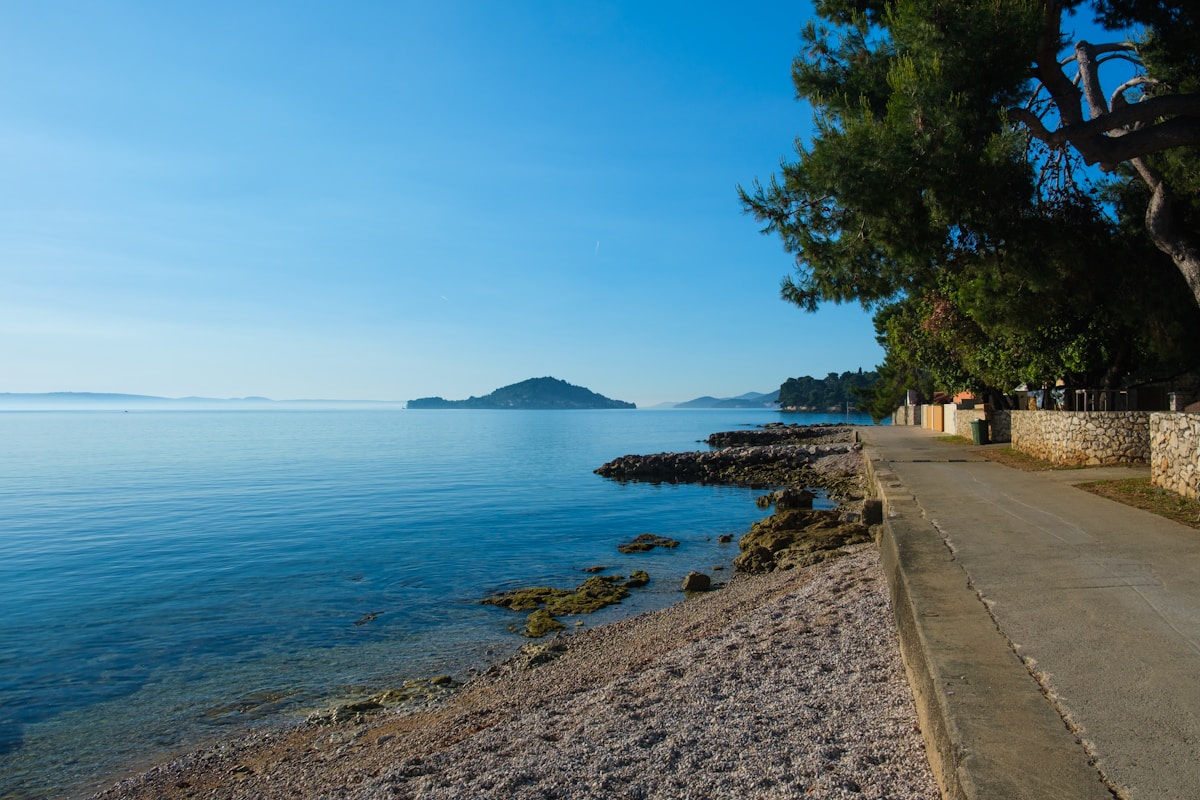
Croatia’s coastline was made for a road trip. This route runs from Zagreb south through Plitvice’s waterfalls, along the Dalmatian coast through Zadar and Split, across to Hvar island by car ferry, and finishes in Dubrovnik. Total driving distance is approximately 700 km (not counting the Hvar ferry), with no single day requiring more than 3 hours behind the wheel.
Route: Zagreb (2) → Plitvice Lakes (1) → Zadar (1) → Split (2) → Hvar (2) → Dubrovnik (2).
Typical costs (per person in a pair sharing a car, excluding flights): budget approx. EUR 700–1,000; mid-range approx. EUR 1,200–1,800 as of 2026.
Car Rental Practicalities
Rent from Zagreb Airport or the city centre. Major agencies include Sixt, Enterprise, and Europcar. A compact car costs approximately EUR 30–50 per day in shoulder season and EUR 50–80 in July–August as of 2026. Book at least 4–6 weeks ahead for summer. Use GetRentacar to compare rates across providers - they offer a 90-day price lock on confirmed bookings.
Key costs:
- Fuel: approximately EUR 1.45–1.55 per litre as of 2026
- Motorway tolls (Zagreb → Split via A1): approximately EUR 25 one way
- Parking in Old Towns: EUR 1–4 per hour, often free outside the walls at night
- Car ferry (Split → Stari Grad, Hvar): approximately EUR 35–50 per car + driver one way
Insurance: Check your credit card covers CDW. If not, expect approximately EUR 10–15 per day extra. Ensure your rental agreement covers all countries if you plan a Montenegro side trip.
Days 1–2 - Zagreb
Day 1: Upper Town and Museums
Pick up the car but leave it parked - Zagreb’s centre is walkable. Upper Town: St Mark’s Church, Stone Gate, Lotrščak Tower (approximately EUR 4, cannon fired at noon). Take the funicular (approximately EUR 1) between levels. Museum of Broken Relationships (approximately EUR 7) is worth an hour.
Evening: Le Bistro Esplanade (mains approximately EUR 16–28) for a special first night, or Vinodol (mains approximately EUR 10–18) for reliable Croatian fare.
Day 2: Dolac Market and Maksimir
Morning: Dolac Market for fresh produce, cheese, and kulen (spiced sausage). Walk the Tkalčićeva cafe strip. Afternoon: Maksimir Park for a slow walk, or drive to Samobor (30 minutes west) for a day trip - a small town famous for kremšnita (custard cake, approximately EUR 3 per slice at U Prolazu cafe).
Where to Stay
Budget: Swanky Mint Hostel - privates from approximately EUR 55. Mid-range: Hotel Jägerhorn - doubles from approximately EUR 85. Park at the hotel or use a city garage (approximately EUR 10–15 per night). Prices as of 2026. Full guide: where to stay in Zagreb
Day 3 - Plitvice Lakes
Driving
Zagreb to Plitvice: approximately 130 km, 1.5–2 hours via the A1 motorway (toll approximately EUR 7 for this section).
The Park
Arrive by 8:00 to beat tour buses. Plitvice Lakes National Park entry costs approximately EUR 20–30 depending on season as of 2026. Park at Entrance 1 (approximately EUR 1.50 per hour) for the Lower Lakes and the 78-metre Veliki Slap waterfall. Walk the boardwalks to the Upper Lakes, take the internal boat across Kozjak Lake, and shuttle bus back to Entrance 1. Full circuit: 4–6 hours.
Evening: stay near the park. Accommodation is scattered guesthouses along the main road (from approximately EUR 40–90/night) — search Booking.com for “Plitvice Lakes”. Restaurants near Plitvice are limited - eat at your guesthouse or the park-adjacent restaurants (mains approximately EUR 10–16). Prices as of 2026.
Day 4 - Zadar
Driving
Plitvice to Zadar: approximately 135 km, 1.5–2 hours via the A1 motorway (toll approximately EUR 8).
Zadar in One Day
Park outside the Old Town peninsula (public lots approximately EUR 1–2 per hour) and walk in. The Roman Forum is the centre of the old town - the 9th-century Church of St. Donatus (approximately EUR 4 entry) stands beside Roman columns. Walk to the Sea Organ on the western waterfront - a sound installation built into the steps that plays music from wave energy. Next to it, the Sun Salutation is a solar-powered light disc that glows at sunset.
Sunset in Zadar is famous - Alfred Hitchcock reportedly called it the finest in the world. Arrive at the Sea Organ 30 minutes before sundown to get a spot.
Evening: Pet Bunara (mains approximately EUR 12–20) near Five Wells Square, or Kornat (seafood, mains approximately EUR 14–22) on Liburnska Obala.
Where to Stay
Budget: Downtown Boutique Hostel - privates from approximately EUR 50. Mid-range: Boutique Hostel Forum - doubles from approximately EUR 80. Prices as of 2026. Full guide: where to stay in Zadar
Days 5–6 - Split
Driving
Zadar to Split: approximately 160 km, 1.5–2 hours via the A1 motorway (toll approximately EUR 10). Park at the Sust parking garage near the ferry terminal (approximately EUR 15–20 per day) or look for residential parking on the edges of Manuš and Varoš.
Day 5: Diocletian’s Palace
Diocletian’s Palace underground cellars (approximately EUR 8), Cathedral of Saint Domnius with bell tower climb (approximately EUR 6), the Peristyle courtyard. Walk through the Golden Gate to see the Grgur Ninski statue (touch the toe for luck - it is polished gold from millions of hands). The Riva promenade is the evening meeting point - sit with a coffee and watch the port.
Evening: Konoba Varoš (mains approximately EUR 10–16) in the residential streets behind Marjan, or Zinfandel (modern, mains approximately EUR 14–22) near the Riva.
Day 6: Marjan and Trogir
Morning: walk or cycle Marjan Hill - the summit viewpoint takes 30–40 minutes from the base. Swim at Kašjuni Beach on the south side.
Afternoon: drive to Trogir (30 minutes west, approximately 25 km). This UNESCO-listed island town has a 13th-century cathedral (approximately EUR 5 entry including bell tower), Venetian-era palaces, and a compact Old Town connected to the mainland by a short bridge. Park on the mainland side (approximately EUR 1–2 per hour).
Where to Stay in Split
Budget: Tchaikovsky Hostel - privates from approximately EUR 50. Mid-range: Heritage Hotel Antique Split - doubles from approximately EUR 100. Upscale: Hotel Vestibul Palace - doubles from approximately EUR 220. Prices as of 2026. Full guide: where to stay in Split
Days 7–8 - Hvar
Getting There
Drive to the Jadrolinija ferry terminal in Split. Ferries to Stari Grad (Hvar) run 3–6 times daily depending on season. Crossing time approximately 2 hours. A car + driver costs approximately EUR 35–50 one way as of 2026. Book in advance for July and August - ferries sell out. From Stari Grad, drive 20 minutes across the island to Hvar Town.
Day 7: Hvar Town
Walk the main square (Trg Svetog Stjepana) - one of the largest in Dalmatia. Visit the Fortica (Spanish Fortress) above the town (approximately EUR 8 entry) for the best view over Hvar, the Pakleni Islands, and the open sea. The climb takes 15–20 minutes.
Afternoon: swim at the rocky beaches below the fortress, or take a water taxi (approximately EUR 10 return) to the Pakleni Islands - Palmižana has a small restaurant and clear water for swimming.
Evening: Gariful (seafood, mains approximately EUR 18–30) on the harbour front - one of the most famous restaurant locations in Croatia. More affordable: Konoba Menego (mains approximately EUR 12–18) on a side street uphill.
Day 8: Lavender Fields and Stari Grad
Morning: drive to the Stari Grad Plain - a UNESCO-listed agricultural landscape of stone walls and olive groves dating to Greek colonisation in the 4th century BC. In June and July, the interior is full of lavender fields.
Visit Stari Grad itself - the Tvrdalj (the fortified summer house of Renaissance poet Petar Hektorović, approximately EUR 4 entry) and the waterfront promenade.
Afternoon: drive to one of Hvar’s quieter beaches - Dubovica (15 minutes from Hvar Town, steep walk down) or Zavala on the south coast.
Where to Stay in Hvar Town
Mid-range: Hotel Park Hvar - doubles from approximately EUR 120. Upscale: Adriana Hvar Spa Hotel - doubles from approximately EUR 250. Prices as of 2026 (Hvar is one of Croatia’s most expensive islands - book early).
Days 9–10 - Dubrovnik
Getting There
Ferry back from Stari Grad to Split (2 hours), then drive Split to Dubrovnik: approximately 230 km, 3–3.5 hours via the coastal road. The route passes through the Neum corridor (20 km of Bosnia) with two border checkpoints - usually quick but allow extra time in July–August.
Alternative: take the new Pelješac Bridge (opened 2022) which bypasses Neum entirely - the bridge section has no tolls.
Day 9: City Walls and Old Town
Leave the car at the Dubrovnik parking lot above Pile Gate (approximately EUR 8–12 per day depending on distance from the walls - lots P1 through P4). The Old Town is car-free.
City Walls (approximately EUR 35), Rector’s Palace (approximately EUR 15), Sponza Palace (free). Walk the side streets of Od Puča for quieter atmosphere. Book a small-group City Walls tour →
Evening: Kopun (mains approximately EUR 18–28) for traditional Dalmatian lamb, or Nishta (vegetarian, mains approximately EUR 12–16).
Day 10: Elaphiti Islands or Cavtat
Option A: Boat trip to the Elaphiti Islands (Koločep, Lopud, Šipan) - organised tours approximately EUR 45–55 including lunch, departing from the old port. Book an Elaphiti Islands boat tour →
Option B: Drive to Cavtat (20 minutes south, approximately 20 km) - a smaller, quieter Dalmatian town with a waterfront promenade, the Račić Mausoleum (approximately EUR 3), and swimming spots. Lunch at Leut (seafood, mains approximately EUR 14–22).
Drop the car at Dubrovnik Airport (DBV) - most agencies have desks there. The airport is 22 km from the Old Town (25 minutes via the D8).
Where to Stay in Dubrovnik
Budget: Hostel Angelina - dorms from approximately EUR 25, privates from approximately EUR 70. Mid-range: Hotel Stari Grad - doubles from approximately EUR 130. Prices as of 2026. Full guide: where to stay in Dubrovnik
Driving Cost Summary
| Item | Cost (approx.) |
|---|---|
| Car rental (10 days, compact) | EUR 300–600 |
| Fuel (approx. 700 km + local driving) | EUR 80–120 |
| Motorway tolls (total) | EUR 45–55 |
| Car ferry Split ↔ Hvar (return) | EUR 70–100 |
| Parking (10 days) | EUR 60–100 |
| Total driving costs | EUR 555–975 |
All prices approximate as of 2026. Costs are per vehicle - split between two people for per-person rates.
Practical Driving Tips
- Speed limits: 50 km/h in towns, 90 km/h on open roads, 130 km/h on motorways. Speed cameras are common on the A1.
- Headlights: Required at all times while driving, year-round.
- Alcohol limit: 0.05% BAC (effectively zero after 1–2 drinks).
- Motorway payment: Cash (EUR or kuna legacy coins not accepted - EUR only since 2023) or credit card at toll booths. ENC electronic tags available from rental agencies for faster passage.
- Parking: Old Town centres are car-free. Park in designated lots and walk in. Yellow-marked kerbs mean no parking.
- Neum corridor: If driving Split to Dubrovnik, you pass through 20 km of Bosnia. Have passports ready. The Pelješac Bridge bypasses this - follow signs for the bridge after Ploče.
- Ferry booking: Jadrolinija ferries to islands can be booked at jadrolinija.hr. For Hvar in summer, book 1–2 weeks ahead minimum.
See also
- Croatia travel guide
- Split city guide
- Best tours in Split
- Dubrovnik city guide
- Best tours in Dubrovnik
- Zadar city guide
- Plitvice Lakes guide
- Dalmatian Islands guide
- Zagreb city guide
- Sailing in Croatia
- Best beaches in the Balkans
- 3 days in Dubrovnik
- Dubrovnik vs Split
- Car rental in the Balkans
- Balkans travel costs
Where to Stay
- Zagreb — Where to stay in Zagreb
- Zadar — Where to stay in Zadar
- Split — Where to stay in Split
- Dubrovnik — Where to stay in Dubrovnik
Things to do at each stop:
Book Your Trip
Flights — search and compare on Aviasales eSIM — stay connected with Airalo Travel insurance — get covered with EKTA Airport transfers — book with Kiwitaxi Car rental — compare with GetRentaCar Hotels — compare and book accommodation on Booking.com Tours and activities — browse GetYourGuide