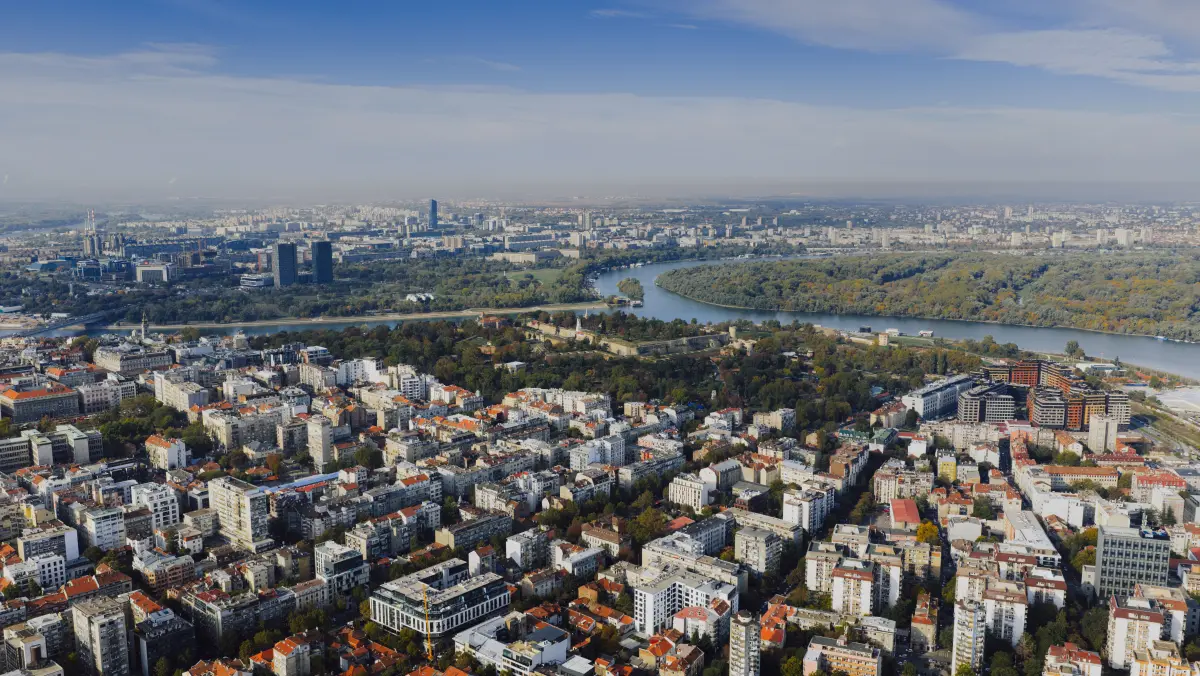
Belgrade and Zagreb sit at opposite ends of the Balkans personality spectrum. Belgrade is chaotic, loud, and relentlessly alive - a city that keeps going until 6 am and then starts again. Zagreb is composed, café-heavy, and architecturally more Central European than Balkan. Both are underrated. Choosing between them depends more on what you want from a city than on logistics.
Quick Verdict
| Factor | Belgrade | Zagreb |
|---|---|---|
| Nightlife | One of Europe’s best | Good but more low-key |
| Architecture | Ottoman-Habsburg mix, brutalist contrast | Austro-Hungarian, very well preserved |
| Currency | Serbian Dinar (RSD) | Euro (EUR) |
| Budget friendliness | Very affordable | Moderate (pricier than Belgrade) |
| Food scene | Strong - grilled meats, burek, local rakija | Strong - Austro-influenced, excellent markets |
| Coastal access | 5+ hours to Montenegro or Croatia | 2 hours to Plitvice, 4 hours to Split |
| Visa/Schengen | Outside Schengen | Outside Schengen (EU member, adopting 2023+) |
Bottom line: For nightlife, raw energy, and stretching a budget, Belgrade wins. For easy day trips to stunning nature and a calmer European city feel, Zagreb is the better choice.
Costs
Belgrade is notably cheaper. Serbia uses the dinar (RSD), and exchange rates favour travellers. A coffee in a café costs approximately 200–300 RSD (€1.70–2.50), a sit-down lunch 700–1,200 RSD (€6–10), and a large beer 250–400 RSD (€2.10–3.40). A mid-range dinner for two runs approximately 3,000–5,000 RSD (€25–43).
Zagreb is priced closer to Western European standards since adopting the euro in 2023. Coffee costs €2–3, a lunch €10–16, a beer €3–4. A mid-range dinner for two comes to approximately €35–55.
A daily budget for one person (hostel/budget guesthouse, three meals, local transport) is roughly €25–35 in Belgrade versus €45–60 in Zagreb.
Where to Stay
Belgrade
- Hotel Moskva - landmark Art Nouveau hotel on Terazije square; doubles from approximately €90–110 per night. Excellent central location, classic Balkan character.
- Square Nine Hotel - boutique design hotel near Skadarlija; doubles from approximately €120–150. The rooftop pool is a summer asset.
- Savamala neighbourhood - hostels and guesthouses cluster here from approximately €15–25 per person in a dorm or €50–70 for a private room. Closest to the floating clubs (splavovi).
Zagreb
- Hotel Esplanade - Art Deco landmark next to the main station; doubles from approximately €130–170. The coffee house is excellent.
- Hotel Jägerhorn - central and cosy in the Upper Town; doubles from approximately €90–120. One of Zagreb’s oldest hotels.
- Jarun lake area - quieter neighbourhood with apartments from €50–75 per night. Good for a longer stay; the lake is walkable.
Where to Eat
Belgrade
- Ambar - Balkan mezze in a converted warehouse near the riverfront; shared plates approximately 800–1,400 RSD (€7–12) each. One of the city’s standout spots.
- Little Bay - opera-themed Serbian restaurant in Skadarlija; three-course dinner approximately 3,500 RSD (€30) per person. Nightly live music.
- Kafana Question Mark (Znak Pitanja) - the oldest kafana in Belgrade, operating since 1823; traditional bean soup, grilled meats, local wine. Mains 600–900 RSD (€5–7.50).
Zagreb
- Vinodol - reliable, long-standing Croatian cooking in a covered courtyard; mains €14–22. Peka (lamb or veal under the bell) is excellent.
- Agava - modern Croatian with a terrace on Tkalčićeva street; mains €16–24. Good wine list.
- Dolac Market - Zagreb’s morning produce market. Buy cheese, bread, and fruit for a self-catered lunch. Open daily until around 2 pm.
Getting Between Belgrade and Zagreb
Bus: Multiple daily departures from both cities. Journey approximately 5–6 hours. Tickets from approximately €15–25 booked online via FlixBus or local carriers (Arriva, Lasta).
Train: An overnight sleeper runs but journey time is longer (7+ hours) and the service is less reliable than buses. Worth considering for the experience; book via Serbian Railways or Croatian Railways.
Driving: Around 4.5 hours on the A3 motorway via Slavonski Brod. You cross the Croatia–Serbia border at Bajakovo/Batrovci - have your passport ready and expect a 20–40 minute stop.
Best Season
Belgrade: Spring (April–May) and autumn (September–October) are ideal for the city’s outdoor café culture. Summer is hot (often 35°C+) but the splavovi (floating clubs on the river) make it worthwhile. December brings a good Christmas market on Republic Square.
Zagreb: Best April–June and September–October. The Advent season (December) is one of Central Europe’s most atmospheric. July and August are warm but Zagreb is less crowded than Croatia’s coast.
Day Trips
From Belgrade: Novi Sad (1.5 hours by train, €5–7) has a beautiful fortress and is worth a half-day. Sremski Karlovci (30 minutes) is a pretty wine town. For nature, Tara National Park is 3 hours south.
From Zagreb: Plitvice Lakes National Park (2 hours south) is Croatia’s most spectacular natural sight - entry approximately €35 in peak season, book online. Rastoke watermills (2 hours) and the Krapina Neanderthal Museum (45 minutes north) work well as half-days.
Internal Links
- Serbia travel guide
- Croatia travel guide
- Belgrade city guide
- Zagreb city guide
- Things to do in Belgrade
- Things to do in Zagreb
- Where to stay in Belgrade
- Where to stay in Zagreb
- Food to try in Belgrade
- Novi Sad guide
- Sofia vs Belgrade
- 2 weeks in the Balkans
- Balkans travel costs
FAQs
Is Belgrade safe to visit? Yes. Belgrade has low violent crime rates for a European capital. The main risk is petty theft in busy areas. The nightlife scene is safe for visitors.
Do I need a visa for Serbia? Most Western passport holders (EU, UK, US, Canada, Australia) enter Serbia without a visa for stays up to 90 days. Check your specific passport requirements before travelling.
Which has better food? Belgrade wins on value and grilled-meat traditions (ćevapi, pljeskavica). Zagreb has a stronger café culture and better markets. Both have genuinely good restaurants well below Western European prices.
Can I use euros in Belgrade? Officially, transactions are in Serbian dinars. Many hotels and some restaurants accept euros, but the rate will not be in your favour. Withdraw dinars from ATMs.
Is Zagreb worth visiting without going to the coast? Absolutely. Zagreb is a full-day city on its own. Most visitors combine it with Plitvice or use it as a transit point for the coast, but it stands alone well.
Comparing other destinations? See our full Balkans comparison guide.
Plan your trip: Guided tours in Belgrade · Guided tours in Croatia · Search flights · eSIM for the Balkans
🏨 Search hotels in Belgrade - Search hotels in Zagreb
Plan Your Trip
✈️ Book your flights to the Balkans 🛡️ Get travel insurance 📱 Stay connected with an eSIM 🚗 Rent a car