Plitvice Lakes National Park: Tickets, Routes, and Tips
Plitvice Lakes guide: routes A, B, C and K, ticket prices, best time to visit, entry gates, transport from Zagreb and Split, and what to expect.
Guides for Plitvice Lakes National Park
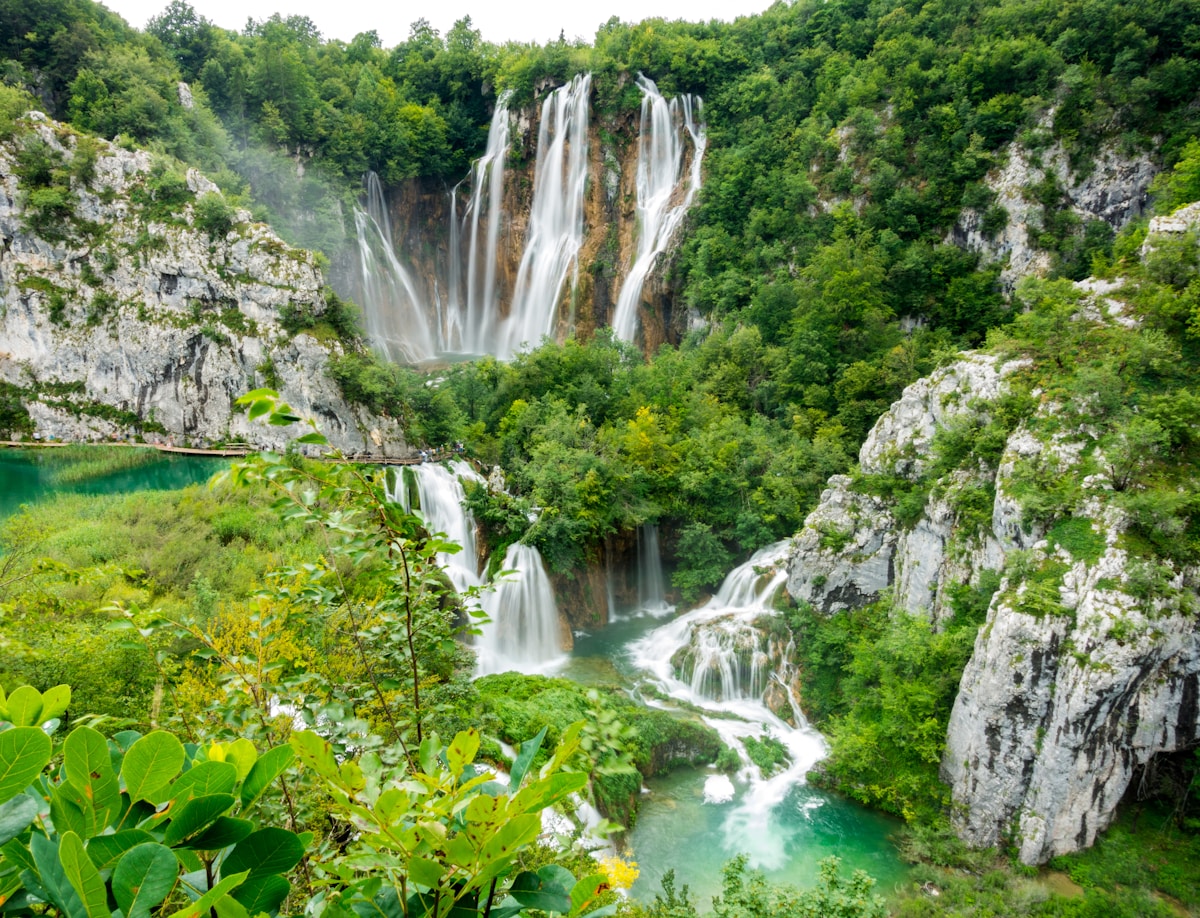
Plitvice Lakes National Park is Croatia’s most visited natural site and one of the most visually distinctive landscapes in the Balkans. Sixteen terraced lakes connected by cascading waterfalls thread through karst terrain in the Lika region of central Croatia, joined by a network of wooden walkways that keeps visitors above the water and gives the park a sense of moving through a gallery rather than just hiking a trail.
It is a UNESCO World Heritage Site (listed since 1979) and draws over 1.5 million visitors per year, which makes planning and timing critical. The park is genuinely worth the effort - but visiting without preparation, especially in July or August, means crowds that can undermine the experience.
The 16 Lakes and How They Work
The park divides naturally into two sections: the Lower Lakes (Donja jezera) and the Upper Lakes (Gornja jezera), connected by a series of waterfalls.
The Lower Lakes are the most photogenic section - smaller, more intimate, and home to the biggest single waterfall in Croatia, Veliki Slap (78 metres), which sits at the boundary between upper and lower sections. The turquoise-to-emerald colour of the water comes from a combination of minerals, algae, and moss interacting with light, and it is markedly different from standard Croatian coastal water.
The Upper Lakes are more expansive - wider lake bodies with more walking space and slightly fewer visitors per square metre - but the cascades are smaller and less dramatic than the Lower Lakes.
An electric boat crosses the largest lake (Kozjak) between the Upper and Lower sections, and a small panoramic train runs between Gate 1 and Gate 2 and the starting points for the upper area. Both are included in the park entry ticket.
The Four Official Walking Routes
The park operates four main marked routes. Durations below are typical pace estimates.
Route A (2–3 hours): Starts at Gate 1 and covers only the Lower Lakes, including Veliki Slap. The shortest and least complete option - recommended mainly if you have very limited time or mobility issues. Takes you on the wooden walkways above and beside the main lower waterfalls and returns by boat across Kozjak.
Route B (3–4 hours): Also from Gate 1, covering the full Lower Lakes circuit in more depth than Route A. This is the most popular single route and the best if you have one day and want to see the most iconic scenery. Includes the boat ride across Kozjak.
Route C (4–6 hours): Combines the Lower Lakes (Route B equivalent) with the Upper Lakes. Starts at Gate 1, uses the boat to reach the upper section, then walks the Upper Lakes circuit back. This is the best single-day route for anyone who wants to see the full park in one visit.
Route K (6–8 hours): The full circuit covering the entire park in one day. Starts at Gate 2, covers the Upper Lakes in full, descends to the lower section, crosses on the boat, completes the Lower Lakes circuit, and returns by the panoramic train. Only worthwhile if you have very good physical condition and a full day starting early.
For most visitors, Route C from Gate 1 is the best choice: complete, scenic, and achievable in a full day without feeling rushed.
Ticket Prices
Prices vary significantly by season and have increased substantially in recent years as the park manages visitor numbers.
| Season | Adult price (approx.) |
|---|---|
| High season (June–September) | ~€40 |
| Shoulder (April–May, Oct) | ~€20–30 |
| Low season (Nov–March) | ~€10 |
Children under 7 enter free. Students with valid ID receive discounted rates.
The electric boat and panoramic train are included in the ticket price - there is no additional charge for these when following the official routes. Tickets are purchased at the park entrance or increasingly via the park’s online booking system, which is worth using in high season to avoid queues.
Entry Gates: 1 or 2?
The park has two main entry gates:
Gate 1 (Ulaz 1) is on the south side near the Lower Lakes and the most popular starting point. It drops you directly into the most dramatic scenery quickly and is where Route A, B, and C all begin.
Gate 2 (Ulaz 2) is on the north side near the Upper Lakes and the starting point for Route K. It is the less busy gate and gives a different first impression - larger lake bodies and a more open landscape before descending to the Lower Lakes.
If you only have one day and want the most intense visual experience first, start at Gate 1. If you want a quieter arrival and prefer to save the Lower Lakes drama for later in your walk, Gate 2 is a reasonable alternative.
Best Time to Visit
Spring (April–May): One of the best times. The waterfalls are at their most powerful due to snowmelt and spring rain, the water colour is vivid, and visitor numbers are lower than in summer. The park is green and fresh.
Autumn (September–October): The other sweet spot. Autumn colours on the forest surrounding the lakes create a dramatically different - and equally beautiful - landscape. Crowds thin noticeably after the school holidays end in early September.
Winter (November–February): Genuinely atmospheric if conditions are cold enough. Frozen waterfalls and snow-draped walkways make for striking photography. Some boat services are suspended and some walkways close, so check in advance. Very low visitor numbers.
July–August: Peak season. The park can feel genuinely overcrowded during this period, with walkways jammed at midday and ticket queues backing up. If you must visit in peak summer, arrive at opening time (park opens at 7:00) and go on a weekday.
Photography Tips
The wooden walkways put you at water level for sections of the lower route, giving an unusually close view of turquoise water and cascades. Key shots:
- The boardwalk running directly over the shallow cascade sections between the lower lakes - the overhead angle looking down at the water is distinctive
- Veliki Slap from the viewing platform - most powerful in spring
- Milanovac Lake from the lower trail - the wide turquoise lake framed by forest
- Dawn light from Gate 1 on the first lower boardwalk section, before the main crowds arrive
A wide-angle lens is useful for the narrow gorge sections; a longer focal length is helpful for compression shots of the waterfalls against the forest backdrop.
What Is Not Allowed
Plitvice has strict rules enforced by park rangers:
- No swimming or wading anywhere in the park
- No touching the water or formations (the travertine that forms the cascades is alive and fragile)
- No drones without a special permit
- No picnicking on the walkways or near the water
- No feeding wildlife
These rules are enforced seriously, and fines apply. The prohibition on swimming is not just a rule - the ecosystem depends on minimal human contact with the water.
Transport from Zagreb
Buses depart Zagreb Main Bus Station (Autobusni Kolodvor) throughout the day for Plitvice. Journey time is approximately 2–2.5 hours depending on the service. Tickets cost around €8–15 each way.
Multiple companies operate the route - Autotrans, Samoborček, and FlixBus are the main ones. The bus stops directly at Gate 1 and Gate 2, with most services stopping at both. Return buses run until early evening, but check timetables: the last bus back to Zagreb can be as early as 17:00–19:00 depending on season and operator.
A rental car from Zagreb and the option to stay overnight gives you significantly more flexibility, including an early morning arrival before the crowds.
Transport from Split
From Split, the journey to Plitvice by bus takes approximately 3–3.5 hours, depending on the route. Direct services are available in summer but less frequent than the Zagreb connection. Prices are around €15–20 each way.
Plitvice sits almost exactly between Zagreb and Split on the Zagreb–Split highway, making it a logical stop on a trip up or down the coast. Driving is the easiest way to make this work smoothly - you can leave Split in the morning, spend 4–5 hours in the park, and continue to Zagreb (or vice versa) in the same day. Guided tours from Split to Plitvice Lakes handle all transport and entry logistics for those without a car.
Nearby: Rastoke
The village of Rastoke, about 15 km west of Plitvice near Slunj, is worth a stop if you have your own transport. A cluster of old watermills sits at the confluence of the Slunjčica and Korana rivers, with waterfalls running directly through the village. Entry is free to walk through, and there are a few restaurants serving local trout. It takes about 45 minutes–1 hour to walk and is a good way to break the drive from Zagreb.
Accommodation villages immediately around the park include the settlements of Mukinje, Plitvička Jezera, and Grabovac - all basic but functional, mainly guesthouses and small hotels in the €50–100 range per night in peak season.
Plitvice Lakes guides
See also
- Croatia travel guide
- Zagreb
- Split
- National parks in the Balkans
- Plitvice Lakes guided tours
- Croatian coast road trip
- Hiking in the Balkans
- Balkans in April
- Balkans in May
- 3 weeks in the Balkans
- Balkans travel costs
Plan your trip: Browse guided tours to Plitvice Lakes to see what’s available, from walking tours to day trips. Hire a car if you want flexibility for the surrounding area, and cover your journey with Balkans travel insurance.
Book an experience
Top experiences in Plitvice Lakes National Park
Explore the best tours and activities in Plitvice Lakes National Park - instant confirmation, free cancellation on most bookings.