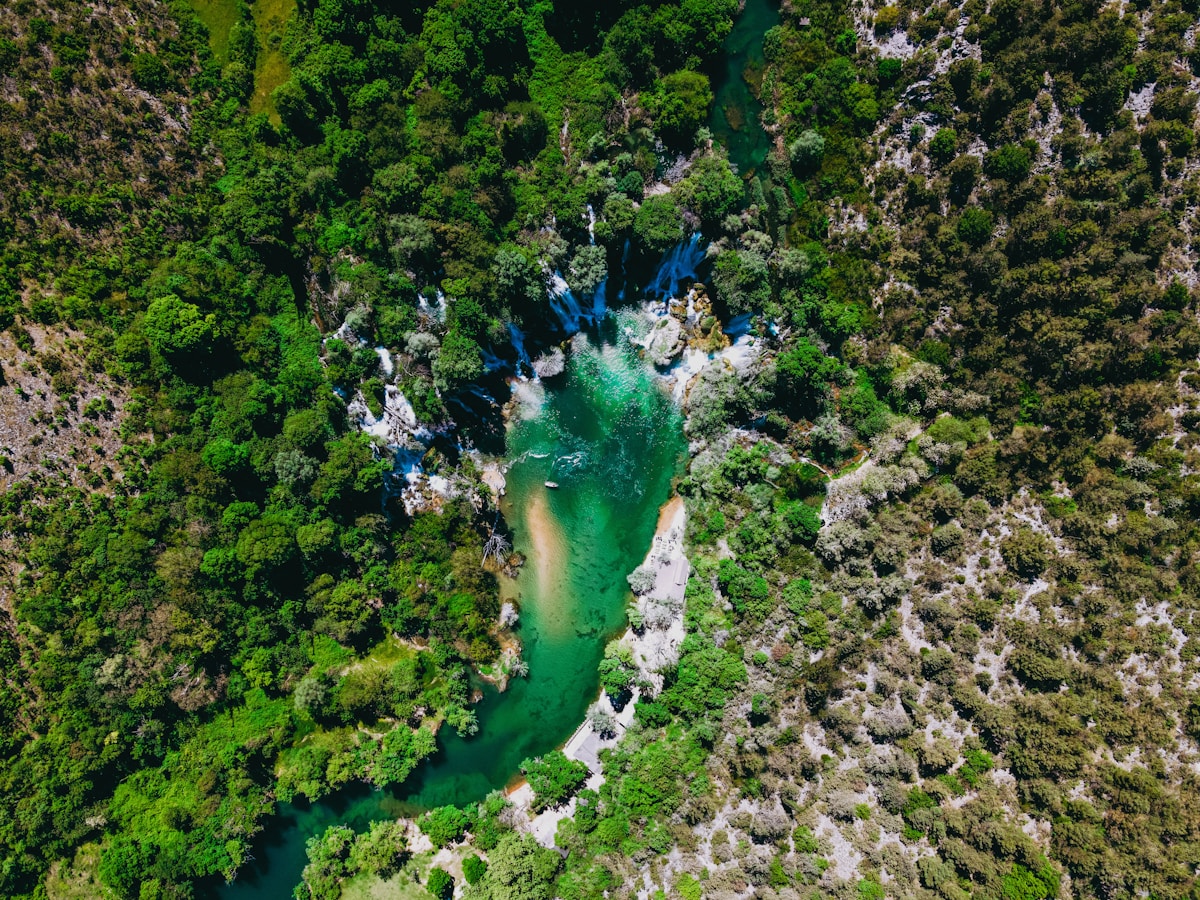
Bosnia & Herzegovina offers something rare in the retirement landscape: extraordinary cultural depth at an extraordinarily low cost. Sarajevo — a city that survived a 44-month siege in the 1990s and emerged more cosmopolitan, more philosophical, and somehow more optimistic — is one of Europe’s most unexpectedly fascinating capitals. Mostar is visually one of the most beautiful small cities in the world. Trebinje in the far south has a Mediterranean feel that contradicts every assumption you might have about the Balkans interior.
Costs sit at the bottom of the Balkan range, comparable only to North Macedonia. The trade-offs are real — healthcare is the main one — but for retirees who do their research and maintain proper international health insurance, Bosnia & Herzegovina rewards generously.
Bosnia & Herzegovina at a glance for retirees
Bosnia & Herzegovina (BiH) is a country in the western Balkans, bordered by Croatia to the north and west, Serbia to the east, and Montenegro to the southeast. It has a short coastal strip on the Adriatic near Neum. Geographically it is dominated by the Dinaric Alps — a rugged, forested interior with cold winters and spectacular scenery. The Neretva River cuts through the south past Mostar toward the Adriatic.
The country has a unique constitutional structure: two entities (Federation of BiH, with a Bosniak and Croat population, and Republika Srpska, with a Serb majority) coexist within a single state under an internationally supervised framework. In everyday life, this matters less than it sounds — the country functions, cities are safe, and international visitors encounter no barriers.
Key facts for retirees:
- Currency: Bosnian Convertible Mark (BAM), pegged at 1.956 BAM = 1 EUR — essentially euro stability without euro membership
- Language: Bosnian, Croatian, and Serbian are mutually intelligible and all official; English growing, particularly in Sarajevo and among younger residents
- Climate: Continental interior (cold winters, hot summers); Mediterranean microclimate in Trebinje and the Neretva valley
- Time zone: CET (Central European Time) — same as Germany and Croatia
- Healthcare: Public system fragmented; private clinics in Sarajevo and major cities; serious conditions to Croatia or Serbia
Visa and residency options
90-day visa-free stays
EU, US, UK, Canadian, Australian, and New Zealand passport holders can enter Bosnia & Herzegovina visa-free and stay up to 90 days. Bosnia is not in Schengen, so this is separate from your Schengen allocation.
Temporary Residence Permit
For stays beyond 90 days, the standard route is the Temporary Residence Permit (Privremeni boravak), issued by the Service for Foreigners’ Affairs (Služba za poslove sa strancima). Permits are issued for up to 1 year and are renewable.
Passive income / financial self-sufficiency: The most relevant ground for retirees. You must demonstrate sufficient foreign income — pension, investment income, or other passive sources — to support yourself without working in BiH. The income threshold is approximately €400–600/month per person at current standards, among the lowest in the Balkans.
Property ownership: Not a standalone ground for residence in BiH (unlike some neighbours), but owning property simplifies the accommodation documentation requirement.
Requirements (as of 2026):
- Valid passport (minimum 6 months remaining)
- Proof of accommodation (rental contract or property ownership documentation)
- Bank statements or pension income documentation
- Health insurance valid in Bosnia & Herzegovina
- Clean criminal record (apostilled in your home country)
- Application submitted to the nearest Service for Foreigners’ Affairs office
A note on complexity: Bosnia’s political structure means administrative processes can be slower and require more patience than in neighbouring countries. Using a local lawyer (cost approximately €300–500) is strongly recommended for first applications. Processing times can run to several weeks.
After 5 years of continuous temporary residence, permanent residence is available.
Monthly cost of living
Sarajevo (capital)
| Expense | Monthly cost (approx.) |
|---|---|
| 1-bedroom furnished apartment (central/Centar or Novo Sarajevo) | €400–700 |
| Utilities (electricity, water, internet) | €70–110 |
| Food (groceries + eating out 3-4x/week) | €280–420 |
| Private health insurance | €60–120 |
| Transport (tram/bus + occasional taxi) | €30–60 |
| Total | €840–1,410 |
Sarajevo punches far above its price point for cultural richness. The Baščaršija (Ottoman bazaar) is one of the most authentic and intact old quarters in the Balkans; the café culture along the Miljacka River rivals anything in the region; the food scene has improved dramatically. The city has a warmth and resilience that many long-stay visitors describe as singular.
Rents in Sarajevo remain significantly lower than in Dubrovnik, Split, or even Belgrade — partly because the city’s post-war image has suppressed demand from Western European retirees who don’t know what they’re missing.
Mostar (Herzegovina)
Mostar is Bosnia’s most photographed city and one of the Balkans’ most beautiful small towns. The Old Bridge, rebuilt in 2004 after its destruction during the 1993–1995 war, is magnificent; the Ottoman bazaar around it is livelier and more commercial than Sarajevo’s but still genuinely atmospheric.
| Expense | Monthly cost (approx.) |
|---|---|
| 1-bedroom furnished apartment | €350–600 |
| Utilities | €65–100 |
| Food | €250–380 |
| Private health insurance | €60–120 |
| Transport | €25–50 |
| Total | €750–1,250 |
Mostar has a more strongly Mediterranean character than Sarajevo — warmer winters, a hotter and drier summer, and proximity to the Adriatic (Dubrovnik is about 2 hours by road). The tourist infrastructure in the old town is fully developed; the residential neighbourhoods away from the bridge are quiet and very affordable.
Trebinje (south Herzegovina)
Trebinje is one of the Balkans’ best secrets for retirement. A small city (30,000 people) in the far south of Bosnia, close to the Croatian border and just 30 km from Dubrovnik, Trebinje has a genuinely Mediterranean climate (olive trees, pomegranates, lavender), a beautiful old town with a clock tower and fortress, and costs that are among the lowest of any comparable European town.
Monthly total: approximately €650–1,000 for a single retiree. The Dubrovnik proximity is a significant practical advantage — international flights, Croatian healthcare, and familiar EU services within 40 minutes.
Banja Luka (Republika Srpska)
Banja Luka is the second-largest city in Bosnia and the administrative centre of Republika Srpska. It has a pleasant city centre with the Kastel Fortress and the Vrbas River canyon, a livelier urban character than Trebinje, and costs that run 20–25% below Sarajevo.
Monthly total: approximately €700–1,100 for a single retiree. Healthcare in Banja Luka is more limited than in Sarajevo; for serious conditions, Belgrade (4 hours) is the practical destination.
How Bosnia compares
| Country | Solo retiree monthly budget |
|---|---|
| Bosnia & Herzegovina | €700–1,100 |
| North Macedonia | €700–1,100 |
| Albania | €800–1,200 |
| Serbia | €800–1,200 |
| Montenegro | €900–1,400 |
| Croatia | €1,100–1,700 |
Bosnia and North Macedonia are the two most affordable retirement options in the Balkans. Bosnia’s edge is cultural depth — particularly Sarajevo; North Macedonia’s edge is natural scenery — particularly Lake Ohrid.
Healthcare
Healthcare is the most important practical consideration for retirees in Bosnia & Herzegovina. The picture is genuinely challenging outside Sarajevo.
Public healthcare: Bosnia has a public health system, but it is fragmented between the entities and significantly under-resourced. Most expat retirees do not rely on it.
Private clinics in Sarajevo: Sarajevo has a growing private clinic sector that handles routine and some specialist care:
- GP consultation: approximately €20–40
- Specialist consultation: approximately €40–75
- Dental cleaning: approximately €20–40
- Blood panel: approximately €20–45
Notable private facilities in Sarajevo include Klinika Eurofarm Centre and several general practice clinics. For routine and moderately complex care, Sarajevo’s private sector is adequate.
Cross-border healthcare: The most important backstop. Options depend on location:
- Sarajevo: Belgrade (5 hours), Split (3 hours), or Mostar (2.5 hours) for more complex care
- Mostar: Split (2 hours) or Dubrovnik (1.5 hours) are the realistic options for higher-level care
- Trebinje: Dubrovnik (40 minutes) — the most convenient cross-border healthcare access of any location in BiH
- Banja Luka: Belgrade (4 hours) or Zagreb (3.5 hours)
EU citizens can use their EHIC in Croatia, making Split and Dubrovnik the preferred cross-border options for EU retirees.
International health insurance is essential — both for the residence permit and for practical peace of mind. Plans valid in Bosnia (ideally covering Croatia and Serbia too for cross-border use) cost approximately €60–130/month. Get health insurance before arriving.
Best places to retire in Bosnia & Herzegovina
Sarajevo
The most compelling retirement destination in Bosnia and one of the most unexpectedly fascinating cities in Europe for long-stay living. Sarajevo is a city where Ottoman, Austro-Hungarian, Communist, and post-war architectural layers sit within walking distance; where the Baščaršija serves traditional ćevapi alongside specialty coffee; and where the trauma of the 1990s siege has produced a remarkable philosophical depth in the local character.
The city is not for everyone — it requires engagement, some tolerance for bureaucracy, and a genuine curiosity about a place that doesn’t fit easy categorisation. For retirees who have those qualities, Sarajevo can be extraordinary. Best for culturally curious retirees with good private health coverage and a flexible attitude to administrative complexity.
Trebinje
Our top recommendation for retirees who want affordability, warmth, Mediterranean character, and practical proximity to Croatia. Trebinje combines the cultural depth of the southern Balkans (Orthodox monasteries, Ottoman fortifications, Byzantine wine culture) with a climate that feels more like Dubrovnik than the Bosnian interior. The old town is genuinely beautiful; the wine from the Vranac grape produced locally is excellent.
The Dubrovnik proximity (40 minutes) solves the healthcare problem more elegantly than any other location in Bosnia. International flights from Dubrovnik Airport connect to most European cities year-round.
Mostar
The most scenic retirement option in Bosnia for retirees who want aesthetic drama as their daily backdrop. The Old Bridge is genuinely one of the most beautiful structures in the Balkans, and the old town around it — despite its tourism — retains real life when you move beyond the main bazaar street. Mostar has a strongly Herzegovina character: warmer, drier, and more Mediterranean than Sarajevo, with excellent local wine and a food scene built around burek, ćevapi, and river fish.
Healthcare is the limitation — for anything serious, Split (2 hours) or Dubrovnik (1.5 hours) are the practical options. Best for retirees with solid health insurance and a love of Balkan heritage architecture.
Banja Luka
The most practical choice for retirees specifically interested in Republika Srpska and the northern part of the country. Banja Luka is a comfortable, functional city with a pleasant riverfront and lower rents than Sarajevo. Less culturally compelling than Sarajevo or Mostar, but more liveable in a conventional sense for retirees who want an uncomplicated daily routine.
Practical considerations
Banking: Bosnia does not use the euro (it uses BAM, which is pegged to the euro — a practical distinction). Opening a local bank account requires a residence permit and is straightforward once established. Before that, Wise and Revolut cards work well at Bosnian ATMs. Local banks include UniCredit Bank BiH, Raiffeisen Bank BiH, and Intesa Sanpaolo Banka.
Language: Bosnian, Croatian, and Serbian are constitutionally all official in BiH and are mutually intelligible. In practice, most Bosnians speak what is functionally the same language with different names depending on ethnic identity. English is growing in Sarajevo and Mostar, particularly among under-35s; in smaller towns and with older residents, it is more limited.
Mobile and internet: Mobile coverage is reasonable in urban areas and main roads; rural and mountain areas can be patchy. Operators: BH Telecom, m:tel, HT Eronet. Monthly mobile plans: approximately €6–15. Fixed broadband: €15–25/month. eSIM for the Balkans works from arrival.
Safety: Bosnia & Herzegovina is safe for daily life and travel. The legacy of the 1990s conflict is visible in some areas (war damage, minefields in isolated mountain areas — marked with signs), but urban life is entirely safe. Follow standard travel precautions and avoid unmarked paths in remote highland areas.
BAM currency stability: The BAM-EUR peg has been in place since 1998 and is backed by a currency board (meaning the central bank cannot print money without full foreign reserve backing). This is effectively euro stability — retirees with euro-denominated pensions face no currency risk on expenses in Bosnia.
Property: Foreigners can buy apartments and urban property in BiH; agricultural land has restrictions. Property in Sarajevo’s central districts runs approximately €1,500–3,000/m²; Mostar and Trebinje are cheaper. Always use a certified notary and conduct full title due diligence — property title issues can arise, particularly for property from the socialist period.
Taxes for foreign retirees
Bosnia & Herzegovina has a flat 10% personal income tax rate (applied separately in each entity). For foreign retirees, the key question is whether foreign pension income is taxable.
Bosnia has double taxation treaties with a number of countries, but the treaty network is less comprehensive than larger Balkan states. Under most existing DTAs, foreign pension income is not subject to BiH tax for non-tax-resident foreigners. However, the treaty situation is worth verifying with an international tax adviser, particularly for US and UK retirees where the treaty provisions may differ.
Tax residence in BiH is triggered by 183+ days in the country per year.
Summary: is Bosnia right for you?
Bosnia & Herzegovina is best suited to retirees who:
- Prioritise cultural richness and authentic character over beach or mountain scenery
- Want to live on a budget of €800–1,100/month in a city with genuine European character
- Are specifically drawn to Trebinje (for the Mediterranean feel and Dubrovnik proximity) or Sarajevo (for the cultural depth)
- Are comfortable with limited local healthcare and willing to use Croatia or Serbia for more than routine care
Bosnia is less suited to retirees who:
- Need reliable high-quality healthcare within 30 minutes at all times
- Want EU membership and Schengen access (Croatia or Bulgaria are better choices)
- Prefer a simple, low-bureaucracy residency process (BiH requires more administrative patience than most neighbours)
See also
- Bosnia & Herzegovina travel guide
- Sarajevo guide
- Mostar guide
- Cost of living in the Balkans
- Retire in Croatia
- Retire in Montenegro
- Retire in Serbia
- Balkans visa guide
Useful links: Health insurance for Bosnia · Flights to Bosnia · eSIM for Bosnia · Hotels in Sarajevo · Hotels in Mostar · Tours in Bosnia · Car hire in Bosnia