Trebinje Travel Guide: Old Town, Wineries and Day Trips
Trebinje travel guide: Old Town, Tvrdoš Monastery, Herzegovina wine country, and Arslanagić Bridge. Day trip from Dubrovnik.
Guides for Trebinje: Vineyards & Old Town
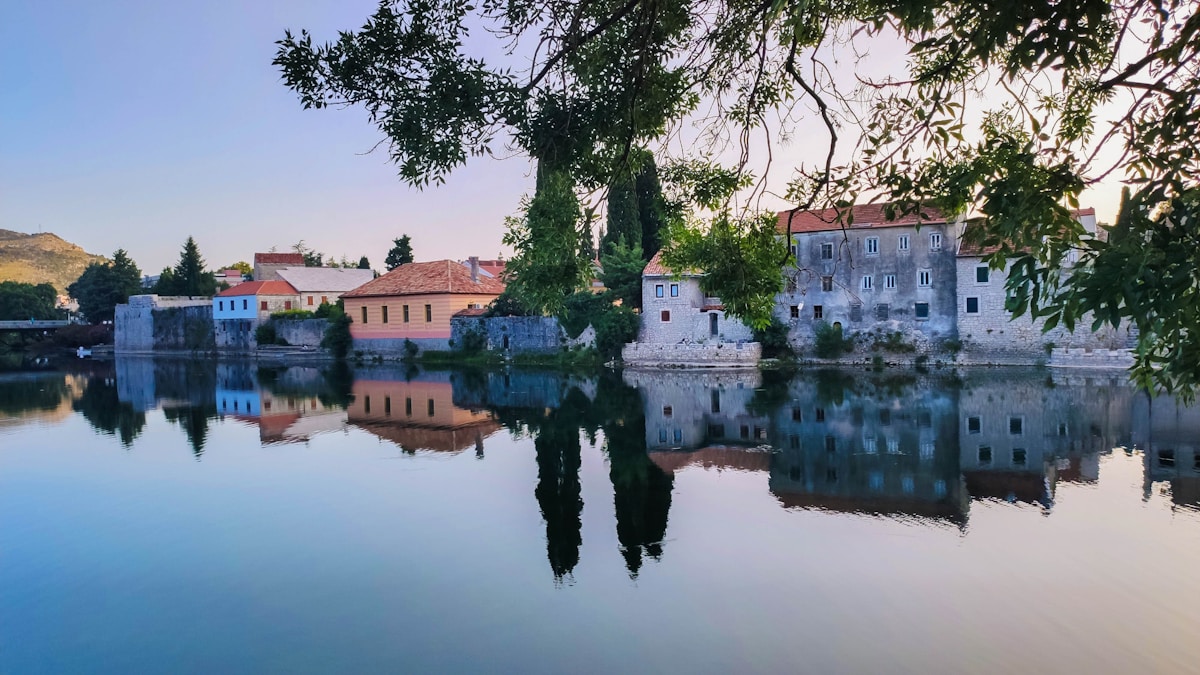
Trebinje is Herzegovina’s most southerly city - a sun-baked, stone-built town on the wide Trebišnjica river, sitting comfortably between the Adriatic coast and Bosnia’s inland mountains. At just 28km from Dubrovnik, it’s an easy side trip from Croatia, but most visitors who stay overnight find themselves wishing they’d allocated more time.
The city has a distinctly Mediterranean character unlike anywhere else in Bosnia: outdoor café culture, a shaded plane tree square, a 17th-century mosque tucked into the Old Town, and a serious local wine industry anchored by Tvrdoš Monastery. It’s also one of the most genuinely affordable places near the Dalmatian coast.
Getting to Trebinje
From Dubrovnik: The bus takes approximately 1 hour and costs €8–12 one way. Schedules are limited - check current timetables at Dubrovnik bus station before relying on this option. By car it’s 35 minutes along the E65 highway, which crosses the Bosnian border south of Trebinje. This is the easiest and most flexible option.
From Mostar: Bus, approximately 2.5 hours, KM 24 (approx €12). Several departures daily.
From Sarajevo: Bus, approximately 4 hours, KM 36 (approx €18). Passes through Mostar.
From Herceg Novi (Montenegro): Approximately 1.5 hours by car via Nikšić road.
Most visitors arrive by car, which also makes the outlying monastery and winery visits much easier. If you’re travelling without one, car hire in the Balkans can be arranged from Dubrovnik or Mostar.
Top Sights in Trebinje
Trebinje Old Town (Stari Grad)
The compact Ottoman-era old town occupies a small fortified area on the north bank of the Trebišnjica. Stone streets, the 17th-century Old Mosque (Stara džamija), the remains of city walls, and small café terraces fill the interior. Entry to the Old Town area is free. Allow 45–60 minutes to walk through properly.
Trebinje Platani (Main Square)
The social heart of the city is the large plane tree-shaded square alongside the river. Locals gather here from early morning to late evening - café tables spill under the trees, and the atmosphere is relaxed and genuinely local. Coffee costs KM 2–3 (approx €1–1.50). This is the place to sit for an hour and watch Trebinje go about its day.
Arslanagić Bridge
Built in the 18th century and relocated stone by stone in the 1970s when the Trebišnjica was dammed, this Ottoman humpback bridge now sits above the Gorica reservoir a short walk from the Old Town. Entry is free. One of the most photographed structures in Herzegovina - best in morning light before tour groups arrive.
Hercegovačka Gračanica Church
A Serbian Orthodox church on Crkvina Hill above the city, built in 1999 as a deliberate replica of the medieval Gračanica Monastery in Kosovo. Entry is free, though donations are welcomed. The hilltop position gives panoramic views over Trebinje, the Trebišnjica valley and surrounding karst landscape. A 15-minute uphill walk from the Old Town.
Tvrdoš Monastery
The most distinctive excursion from Trebinje, 6km south of the city. This 16th-century Serbian Orthodox monastery is active and well-maintained. It’s also one of Herzegovina’s most serious wine producers - the monks produce sparkling wine, still wine and brandy in cellars beneath the monastery. Wine tastings cost approximately KM 10–20 (€5–10) depending on what you taste. Monastery entry itself is free. A taxi from Trebinje costs approximately KM 15–20 (€8–10) return; the monastery is not easily walkable.
Eating Out in Trebinje
Trebinje’s restaurant scene is modest in scale but good value. Prices are among the lowest in this region of the Balkans.
Restoran Stari Grad - located within the Old Town, this is one of the most atmospheric dining options. Dalmatian and Bosnian cooking: grilled meats, fish, mixed platters. Mains KM 16–28 (€8–14).
Konoba Polju - a local favourite for grilled meats and local Herzegovina wine. The atmosphere is informal and the portions are generous. Mains KM 14–24 (€7–12).
Restoran Lasta - fish, grills and Bosnian classics, with a terrace setting. Mains KM 18–30 (€9–15).
Platani square cafés - for breakfast and coffee, the cafés spread under the plane trees are the best option. Coffee KM 2–3 (€1–1.50), burek from KM 3 (€1.50).
Where to Stay in Trebinje
Full accommodation details are in our Trebinje where to stay guide.
| Property | Area | From (per night) |
|---|---|---|
| Hotel Platani | Main square | €65 |
| Hotel Kruna | Central | €55 |
| Hotel Leotar | Central | €50 |
| Private apartments | Various | from €35 |
Most hotels in Trebinje include breakfast. Book through Booking.com for the widest range of options - availability is generally good outside summer weekends.
Things to Do Around Trebinje
Full activity details are in our Trebinje things to do guide.
Swimming: The Trebišnjica river and Orašje reservoir (a short drive from the city) offer summer swimming. The reservoir is the main local beach spot in hot weather. Entry to the river area is free.
Wine region: The Herzegovina wine district - Žilavka white and Blatina red are the native varieties - extends across the karst plateau around Trebinje. Several wineries beyond Tvrdoš offer tastings; half-day wine tour packages are available from local operators for approximately KM 80–120 (€40–60 per person). Browse organised tours in Bosnia & Herzegovina to compare and book.
Kayaking: Kayak rental on the Trebišnjica river is available in summer, from approximately KM 20 (€10) per hour.
Saturday Market: A weekly market runs in the city centre on Saturday mornings, selling local produce, honey, cheese and handicrafts. Free.
Day Trips from Trebinje
Dubrovnik: 35 minutes by car or 1 hour by bus. The easiest connection from any Bosnian city to the Croatian coast. Note that Dubrovnik imposes a daily visitor cap in peak summer - arrive early.
Mostar: 2.5 hours by bus (KM 24/€12) or 2 hours by car. Bosnia’s most visited city and worth a full day.
Sarajevo: 4 hours by bus. A longer journey but worth it if you’re extending your Bosnia itinerary.
Practical Notes
Trebinje uses the Bosnian convertible mark (KM/BAM). The exchange rate is fixed: 1 € = 1.9558 KM. Cash is widely used, though most hotels and larger restaurants accept cards. The city is very compact - the Old Town, the square and the river are all within a 10-minute walk of each other.
Summer temperatures in Trebinje regularly exceed 35°C - it’s one of the hottest cities in Bosnia due to its southern, sheltered position. A shaded café on the platani is the sensible midday option.
Book an experience
Top experiences in Trebinje: Vineyards & Old Town
Explore the best tours and activities in Trebinje: Vineyards & Old Town - instant confirmation, free cancellation on most bookings.