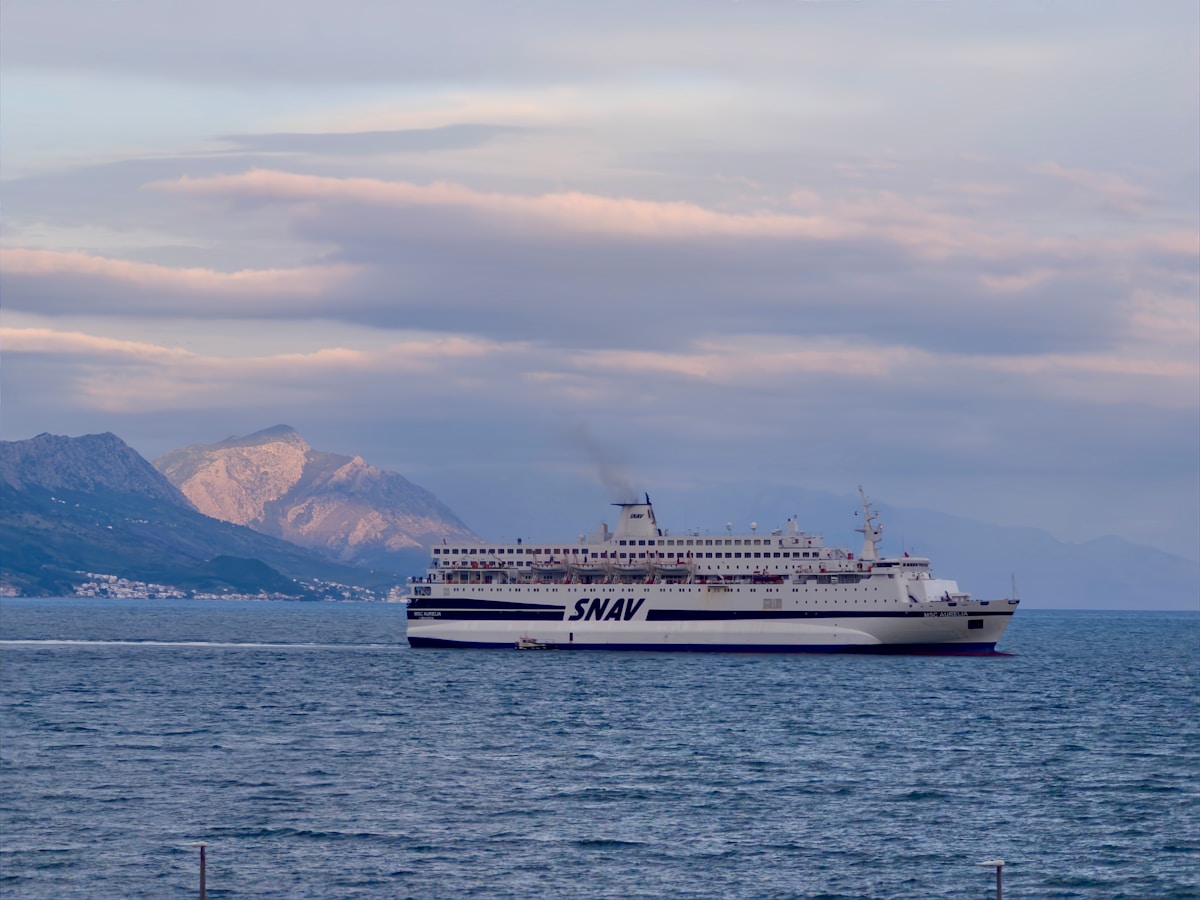
Crossing the Adriatic by ferry is one of the great slow-travel moves on the Balkans circuit. You board in Croatia as the sun sets over the Dalmatian coast and wake up in Italy - ready to continue west or loop back via Rome and fly home. For those running a Croatia–Italy route in reverse, the eastern Adriatic coast opens up immediately from the ferry terminal. This guide covers the two main routes: Split to Ancona and Dubrovnik to Bari.
Why Take the Ferry?
It saves a leg. Flying Split to Rome or Dubrovnik to Milan involves airports, security queues, and onward transfers. The ferry deposits you directly in a working Italian port city - Ancona is 3 hours from Bologna and Rome; Bari is a gateway to Puglia, Naples, and Sicily.
It suits travellers with vehicles. If you are driving the Adriatic coast, the ferry is the logical continuation. Putting the car on the boat and rolling off into Italy the next morning is straightforward - no mountain passes, no long drives.
It is comfortable and civilised. The overnight crossing means you are sleeping rather than burning a hotel night. Cabin options range from basic 4-berth to private en-suite; the bar and restaurant are open during the crossing.
Route 1: Split to Ancona
Split–Ancona is the main Adriatic crossing, operated by Jadrolinija (Croatia’s national ferry company) and SNAV (Italian operator). The two companies share the route with broadly similar schedules and comparable fares, so comparing both for your date is worthwhile.
Journey time: Approximately 9–10 hours (overnight). Most sailings depart Split in the early evening (18:00–20:00) and arrive Ancona in the morning (05:00–07:00). Daytime crossings are occasionally scheduled in peak season.
Frequency: In summer (June–September), Jadrolinija and SNAV together offer daily or near-daily departures. In spring and autumn, frequency drops to 3–5 per week. In winter (November–February), the route typically runs 2–3 times per week at minimum.
Fares (approximate, 2026):
| Ticket type | Low season | High season |
|---|---|---|
| Foot passenger, deck seat | €35–45 | €55–80 |
| Foot passenger, basic cabin (per person, 4-berth) | €55–70 | €75–100 |
| Foot passenger, 2-berth cabin | €70–90 | €100–140 |
| Car (under 4m) | €70–95 | €130–165 |
| Motorcycle | €30–45 | €50–70 |
| Bicycle | €10–15 | €10–15 |
Split port: Ferries for Italy depart from Ancona Gate at Split’s international ferry terminal, located in the centre of town on Obala Kneza Domagoja, about 500 m from the Old Town / Diocletian’s Palace. Check-in opens 2 hours before departure; cars should be at the vehicle marshalling area 90 minutes before.
Ancona port: Italy’s largest Adriatic port. From Ancona, direct trains run to Bologna (2 hrs), Florence (3 hrs), and Rome (4–5 hrs). Ancona has a small airport, though onward train connections are often more convenient.
Booking: Book directly via jadrolinija.hr or snav.it, or use ferry aggregators such as Ferryscanner, DirectFerries, or Direct Ferries. Aggregators are useful for comparing operator options side by side; direct booking avoids platform fees.
Route 2: Dubrovnik to Bari
Dubrovnik–Bari is operated by Jadrolinija and runs approximately 3–4 times weekly in summer, reducing to 1–2 times per week in low season. It is a slightly shorter crossing than Split–Ancona at around 8–9 hours, and the departure profile is similar - evening departure, morning arrival.
Journey time: 8–9 hours. Typical departure from Dubrovnik is around 22:00–23:00, arriving Bari at approximately 07:00.
Fares (approximate, 2026):
| Ticket type | Low season | High season |
|---|---|---|
| Foot passenger, deck seat | €32–42 | €50–75 |
| Foot passenger, cabin (4-berth, per person) | €50–65 | €70–90 |
| Car (under 4m) | €65–90 | €120–155 |
Dubrovnik port: International ferries depart from Dubrovnik Port (Luka Gruž), located in the Gruž harbour approximately 4 km west of the Old Town. Bus #1A connects Gruž port and Pile Gate (the Old Town entrance) in around 15 minutes. Taxis from the Old Town to Gruž cost approximately €8–12. Check in at least 90 minutes before departure for vehicles, 60 minutes for foot passengers.
Bari: A working port city and regional capital of Puglia. The old town (Bari Vecchia) is a genuine highlight - tight Norman alleys, the Basilica di San Nicola. From Bari, trains reach Naples in 3 hours and Rome in 4–5 hours. Bari also has connections to the Greek island ferries (Bari–Patras), making it a hub for wider Mediterranean routing.
Cabin vs Deck Options
Most travellers on overnight Adriatic crossings opt for at least a basic cabin. A deck seat works fine if you can sleep sitting up, but the cabins are significantly more comfortable for a 9-hour night crossing.
Deck/recliner seat: Cheapest option. Large reclining airline-style seats in a shared lounge. Busy on peak sailings - arrive early to secure a good spot.
4-berth cabin (shared): Four bunk-style berths in a compact cabin. You may share with strangers of the same gender, or book all four berths with your group. Has a small desk and overhead storage. Most travellers find this adequate for one night.
2-berth cabin: Two berths, private. More comfortable for couples or those wanting guaranteed privacy. Prices rise sharply in July–August.
En-suite cabin: Some vessels offer cabins with private bathroom. These are the most expensive option and book out first in peak season. If you want one in July or August, book 4–6 weeks ahead.
Porthole vs interior: Cabins below the main deck have no window. A porthole cabin on an overnight crossing gives you morning light as you approach port - worth paying for if it matters to you.
Booking Tips
Book early for summer. Car spaces on peak-season sailings fill 3–6 weeks ahead. If you are travelling with a vehicle in July or August, do not leave booking until the last minute.
Check both operators. On the Split–Ancona route, Jadrolinija and SNAV run on different days. Checking both gives you more sailing options and sometimes better pricing - one may have a remaining low-season promotional rate the other has already withdrawn.
Flexible date bracket. If your schedule allows, check three or four consecutive dates - prices can vary by €20–40 per person depending on the specific sailing and how full it is.
Return tickets. If you plan to return the same way, a return ticket often saves €10–20 per person vs two one-way fares - useful for travellers doing a circular route.
Passenger registration. Both operators require passengers to submit their personal details (passport number, date of birth) at booking or check-in. Have your passport handy when booking online - you will need to enter the details.
What the Crossing Is Like
The vessels are roll-on-roll-off car ferries, substantially larger than the fast ferries used on shorter Adriatic hops. Onboard you will typically find:
- Restaurant / self-service cafeteria: Hot meals, pasta, pizza, salads. Quality is functional rather than outstanding; prices are tourist-level. Eating before boarding in Split or Dubrovnik is fine - you will not go hungry overnight either way.
- Bar: Open from departure until late, sometimes through the night on busier sailings.
- Outdoor decks: The Adriatic sunset from the upper deck on departure from Split is one of the finer things about this crossing. The islands of Brač, Šolta, and Vis pass as you head out into open water.
- Shops: Small onboard shops selling duty-free items, snacks, and basics.
- Wi-Fi: Available on most sailings, quality variable. Do not rely on it for work.
The crossing can be rough if there is a Bora (a strong northeast wind prevalent in winter and spring), but overnight sailings in summer are usually smooth.
Getting to the Italian Side
From Ancona:
- Train: Ancona Centrale station is in the city centre. Direct services to Bologna (2h), Rome Termini (4.5h), and Florence (2.5h). Check trenitalia.com.
- Renting a car: If arriving from the ferry without your own vehicle and heading south into Puglia, several hire companies operate from Ancona port and train station.
From Bari:
- Train: Bari Centrale is 15 minutes from the port by taxi or on foot. Fast trains to Naples (2.5h) and Rome (4h).
- If continuing to Puglia: Lecce is 90 minutes from Bari by rail and is one of the most beautiful baroque cities in southern Italy.
Planning Your Trip
- Explore Croatia first: 7-day Croatia itinerary and Croatia & Montenegro 10-day route
- Before you leave Dubrovnik: Things to do in Dubrovnik
- Where to stay in Split: Split accommodation guide
- Where to stay in Dubrovnik: Dubrovnik accommodation guide
- Tours and activities: Croatia tours and experiences
- Travel insurance: Essential for ferry travel with luggage and vehicles - compare policies
- eSIM: Stay connected across the EU border transition - Balkans eSIM options