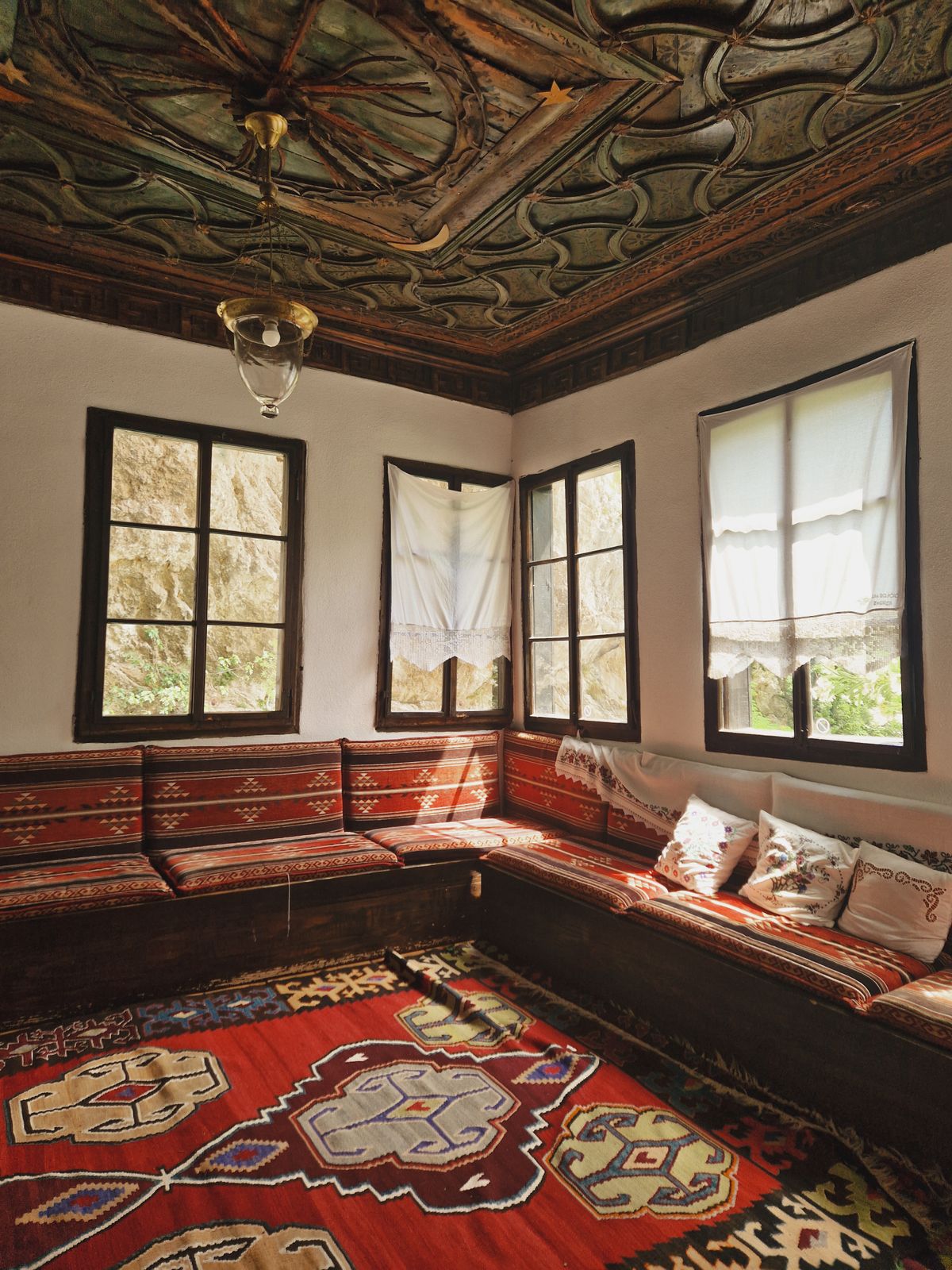
The Balkans covers a wide arc of cultures, religions and histories. Bosnia is majority Muslim. Serbia, Montenegro and North Macedonia are predominantly Orthodox Christian. Croatia is largely Catholic. Albania has a secular tradition with Muslim and Christian minorities living side by side. Kosovo is majority Muslim. Knowing who you are visiting and what they hold dear goes a long way toward getting everything else right. What follows covers the practical side: what to wear, how much to tip, how to greet people, and what to avoid saying.
Dress Codes at Religious Sites
Cover your shoulders and knees before entering any mosque, Orthodox church, monastery or Catholic cathedral. The rule is consistent across the region regardless of denomination.
At the Gazi Husrev-beg Mosque in Sarajevo, women are lent headscarves at the entrance if they arrive without one. Men in shorts are asked to wrap a cloth around their waist before entering. Removing shoes before entering the prayer hall is mandatory. The same applies at the mosques in Baščaršija, Sarajevo’s old bazaar, and at any mosque in Kosovo or Prizren.
At Ostrog Monastery in Montenegro, one of the most important Orthodox pilgrimage sites in the region, visitors climbing to the upper church must cover their legs. Sarongs are available near the entrance for a small donation. The monastery receives thousands of Serbian and Montenegrin pilgrims each year, and arriving in beachwear draws obvious disapproval.
At Sveti Naum Monastery on the shores of Lake Ohrid in North Macedonia, the rule is the same. Peacocks wander the grounds freely, but the dress standard inside the church is strict: nothing sleeveless, nothing above the knee.
At Rila Monastery in Bulgaria, long-sleeved or short-sleeved shirts are acceptable, but shorts are not. The monastery sells printed wraps near the main gate.
On beaches, standards are relaxed. Ksamil in Albania, Budva and Sveti Stefan in Montenegro, and Hvar in Croatia all see topless sunbathing without issue at busier tourist stretches. Away from those spots, particularly on smaller Albanian beaches or family-oriented Montenegrin coves, topless sunbathing causes discomfort and is best avoided.
In restaurants, smart-casual is fine almost everywhere. Dubrovnik’s upmarket Nautika or Zagreb’s Michelin-listed Noel expect a neater standard than beachwear, but a jacket is never required.
Tipping Culture
Tipping is expected in tourist-facing restaurants across the region but percentages are lower than in North America or the UK.
- Croatia: 10 to 15 percent is standard. Rounding up the bill is also acceptable in casual restaurants.
- Serbia: 10 percent is appreciated, often less in local places away from tourist centres. At Dva Jelena in Belgrade’s Skadarlija district, where tourists and locals mix freely, leaving 10 percent is the norm.
- Bosnia: 10 percent in Sarajevo’s tourist restaurants, including Inat Kuca opposite the Vijeca Brod (the city hall). In Mostar, tipping is common at restaurants along the Neretva riverbank. Outside tourist areas, rounding up is enough.
- Albania: 10 percent in Tirana restaurants and along the Riviera coast. In smaller towns and villages, many restaurants don’t expect a tip at all. Pay attention to whether a service charge appears on the bill.
- Montenegro: 10 to 15 percent in Kotor and Budva, where prices are higher and service is tourist-facing.
- North Macedonia: 10 percent in Ohrid and Skopje. At the restaurants around Skopje’s Old Bazaar, tipping directly to the server in cash is preferred over leaving money on the table.
Do not tip in markets, supermarkets, petrol stations, or at street food stalls. In rural guesthouses and family-run konobas where the owner is also the cook, a verbal compliment on the food is at least as valued as a tip.
Greetings and Social Customs
The standard greeting across much of the region is a firm handshake on meeting someone for the first time. Among friends and acquaintances, cheek kissing is common: one kiss in most of the Balkans, three in Serbia and Montenegro (alternating cheeks). Watch what others do and follow their lead.
Coffee is treated as an event rather than a transaction. An invitation to coffee in Bosnia, Serbia or Croatia carries a social weight that asking someone for “a quick coffee” in northern Europe does not. Sitting down to Bosnian coffee at a place like Kino Bosna in Sarajevo means spending at least 45 minutes, not draining a cup and leaving. Refusing the coffee itself is fine; rushing through it is not.
Bargaining is not part of the culture in most shops and restaurants. The Old Bazaar in Skopje and Baščaršija in Sarajevo are exceptions: small souvenir stalls and coppersmith workshops expect some negotiation. A polite counter-offer is welcome; aggressive haggling is not.
Photography: ask before photographing people, particularly in rural areas, at markets, and outside mosques on Friday prayer time. Photographing war memorials and cemeteries is generally accepted, but posing for selfies at sites like the Srebrenica-Potocari Memorial Centre reads as disrespectful and will be noted.
Religious and Cultural Sensitivities
The 1990s wars are recent history for everyone who lived through them. Bosnia, Croatia and Kosovo each experienced serious violence within living memory. Treating any of it as trivia, or asking Bosnians, Serbs or Croats to summarise “which side was right,” is unwelcome regardless of how the question is framed. If someone wants to discuss it, they will raise it themselves.
Kosovo’s independence is a genuine dispute. Serbia does not recognise Kosovo as a state. Pressing Serbian locals for their opinion, or dismissing the dispute as settled, leads to difficult conversations that add nothing to a visit. The same applies to comparisons between Orthodox Serbs and Muslim Bosniaks, or to casual generalisations about which Balkan country is most corrupt, most chaotic or most developed.
During Ramadan in Bosnia and Kosovo, eating, drinking or smoking in public near mosques during daylight hours is not forbidden for visitors, but showing basic awareness by not doing so immediately outside mosque gates is appreciated.
Orthodox Christmas falls on 7 January, not 25 December. Many Serbs and Montenegrins follow the Julian calendar. Knowing this explains why shops reopen and celebrations restart in the first week of January.
Dining Etiquette
Meals in the Balkans tend to be long and communal. Sharing dishes from the centre of the table is standard in Bosnia and Albania in particular. At a traditional Bosnian restoran, a meal might begin with a shared platter of cured meats, salty cheeses and ajvar before main courses arrive separately.
Wait to be invited to sit at a table in someone’s home. At restaurants, service is rarely rushed; catching the eye of a waiter and asking for the bill (racun in Croatian and Serbian, smetka in Macedonian, fatura in Albanian) is necessary rather than expecting it to appear.
Rakija, the regional fruit brandy, is often produced at home and offered as a welcome drink. Refusing it entirely is fine, but accepting even a small glass and not drinking it is preferable to declining outright. Hosts interpret the gesture.
Behaviour When Visiting Homes
Remove your shoes at the door unless the host explicitly says otherwise. This is standard in Bosnia, Albania and Kosovo, and common but not universal in Serbia and Croatia.
Arriving with a gift is expected when visiting for a meal: a bottle of wine, a box of chocolates or a small item from your home country all work. Bringing flowers is also common in Serbia, but bring an odd number (even numbers are associated with funerals).
Hosts will typically insist you eat more than you want. A firm but polite refusal after a second helping is understood. Saying you cannot eat more because the food was so good is a reliable formula.
Hospitality in Balkan homes is genuine and generous. Treating the invitation with the seriousness it carries, arriving on time or communicating if you are delayed, and expressing thanks before leaving covers most of what is required.