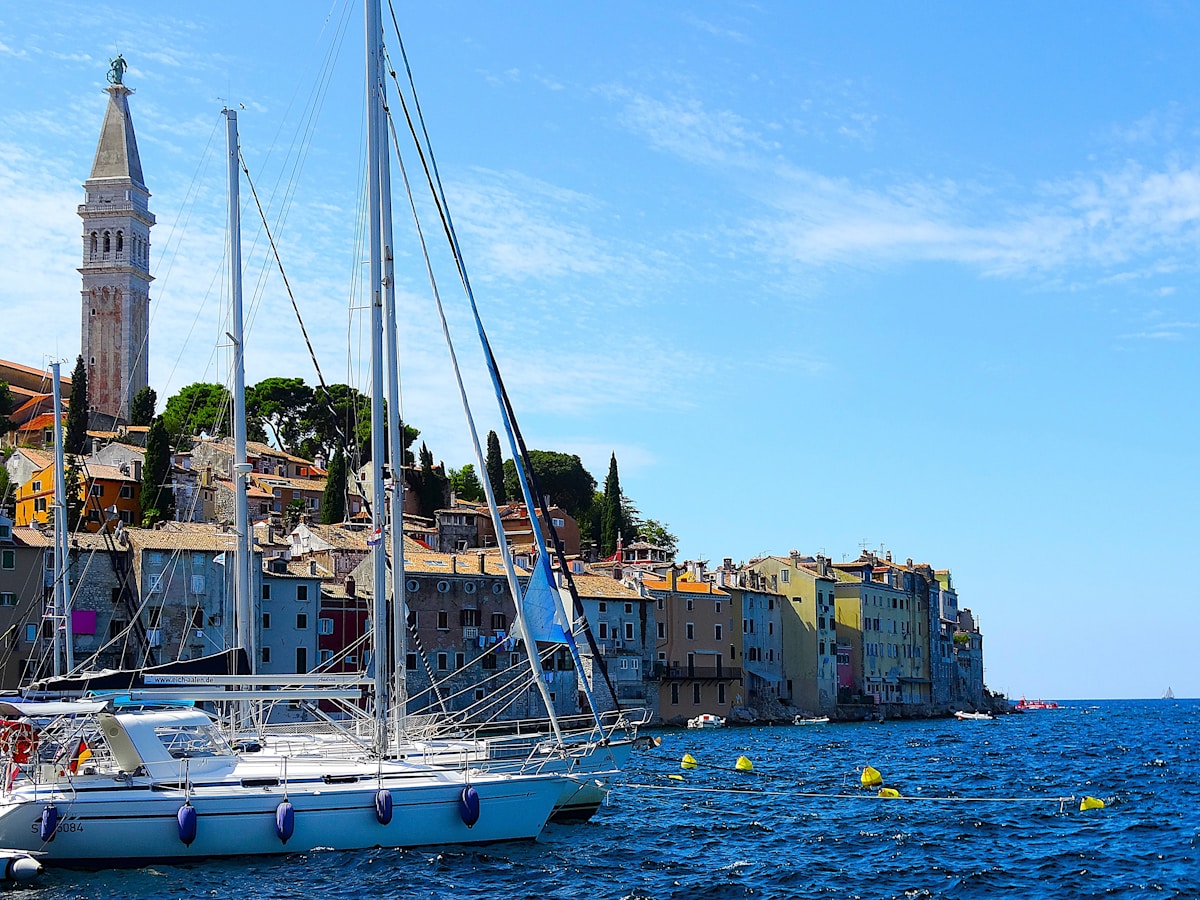
Jadrolinija, Croatia’s national ferry company, operates the backbone of island-hopping along the Dalmatian coast. Understanding the network - which routes are walk-on, which demand advance booking, and how the online system actually works - is the practical part of planning any trip through Croatia’s islands.
The Two Types of Ferry
Car ferries (trajekti) are large roll-on-roll-off vessels. They carry passengers, cars, motorcycles, and bicycles, and run on fixed timetables between mainland ports (Split, Dubrovnik, Drvenik) and island ports. Slower than catamarans, but you can bring your vehicle.
Catamarans and fast ferries are foot-passenger only. Faster and often more direct - they typically dock at town harbours rather than remote ferry terminals. Higher per-person cost.
The practical rule: if you have a car, you are using car ferries. On foot, you often have a choice, and the catamaran is usually the better call for island-hoppers watching travel time.
Key Routes: What to Expect
Split to Hvar
Car ferry (Split → Stari Grad): ~2 hours, arrives at Stari Grad on Hvar’s eastern end. Buses and taxis connect to Hvar Town (20–25 min, approximately €10–15). Runs 6–8 times daily in season.
Catamaran (Split → Hvar Town): ~1 hour, arrives directly at Hvar Town harbour. Foot passenger only. The faster, more practical choice if you are not travelling with a vehicle.
Fares (approximately, 2026):
- Foot passenger, car ferry: €5–7
- Foot passenger, catamaran: €10–14
- Car under 4m, car ferry: €28–45 (season-dependent)
For a full breakdown of this route, see our Adriatic ferry routes guide.
Split to Vis
The Split–Vis car ferry is one of the most popular island routes, and the one most likely to catch visitors off-guard with sold-out car spaces. Vis is 45 km offshore - it was a closed military zone until 1989 and still has a quieter feel than Hvar, but that mystique means demand exceeds supply in July and August.
Journey time: Approximately 2 hours 15 minutes. Vis Town is the main arrival port.
Frequency: 2–4 sailings daily in peak season; 1–2 daily in shoulder and winter months.
Fares (approximately, 2026):
- Foot passenger: €8–11
- Car under 4m: €40–60 (peak season)
Booking pressure: Higher than other island routes. Car spaces on the Split–Vis service sell out 3–4 weeks ahead in July and August. Foot passengers can usually book 3–7 days ahead in peak season, but do not leave it to the day. Vis has a second smaller settlement, Komiza, on the island’s western side - served by local buses from Vis Town (approximately 30 minutes).
Split to Korcula
A direct car-ferry service runs from Split to Korcula Town (Vela Luka or Korcula Town, depending on season). This is an alternative to the Hvar–Drvenik–Domince route for travellers not stopping on Hvar.
Journey time: Approximately 3 hours to Vela Luka (western Korcula), or around 4 hours for sailings that continue to Korcula Town.
Fares (approximately, 2026):
- Foot passenger: €9–12
- Car under 4m: €35–55
The Drvenik–Domince crossing (Hvar island to the Korcula peninsula) remains the standard route for those island-hopping from Hvar. The direct Split–Korcula service suits travellers starting from Split without a Hvar stop.
Dubrovnik to Hvar
A seasonal catamaran connects Dubrovnik with Hvar Town in approximately 2 hours. This route is foot-passenger only and does not operate year-round - typically June to September, sometimes extended by a few weeks depending on the operator.
Jadrolinija and GV Lines both run services on this route in peak season; check both jadrolinija.hr and gv-line.hr for current sailings, as timetables and operators shift year to year.
Fares (approximately, 2026): €15–22 foot passenger.
For travellers planning the popular Dubrovnik → Hvar → Split routing, this is the cleanest link. The alternative is a bus along the coast road via the Pelješac bridge - longer and overland, but it runs daily year-round.
How to Book Online
jadrolinija.hr is the primary source. The English booking flow works as follows:
- Select route, date, and passenger/vehicle numbers
- Enter passport details for each passenger (required for car-ferry reservations)
- Pay by card - Visa and Mastercard accepted
- Download or print the PDF confirmation - this is your boarding document
KRCKO app (Jadrolinija’s official iOS/Android app) mirrors the website and adds mobile ticket storage.
DirectFerries (directferries.com) aggregates Jadrolinija and smaller operators across multiple routes on a single page, useful for comparing dates and prices. A small booking fee applies.
At the port: Outside July–August, foot passengers on most island routes can buy tickets at the port kiosk 20–30 minutes before departure. In peak season, do not rely on this - car spaces especially go quickly, and some foot-passenger sailings also fill.
Peak Season Strategy: July and August
The core problem: Croatian domestic tourism peaks hard in July–August, and islands like Vis and Hvar absorb that demand. Car spaces are the constraint - ferries load fewer vehicles than they carry passengers.
Booking windows that work:
| Scenario | Book ahead |
|---|---|
| Foot passenger, shoulder season (June, Sept) | Walk-on or 1–3 days |
| Foot passenger, peak season (July–Aug) | 3–7 days |
| Car, any route, July–Aug | 2–4 weeks minimum |
| Car, Split–Vis, peak season | 3–4 weeks minimum |
Travel mid-week. Saturday and Sunday sailings carry peak domestic traffic. Midweek departures (Tuesday–Thursday) have shorter queues and better space availability.
Arrive early. Car-ferry loading starts 45–60 minutes before departure. Late-arriving vehicles risk being held to the next sailing. Foot passengers should arrive 20–30 minutes before.
Car hire and ferry planning go together. If you are hiring a car for the islands, confirm your car hire in Croatia before booking ferry slots - vehicle rental availability and car-ferry spaces need to be aligned in July and August, when both can run short at the same time.
Further Reading
- Adriatic ferry routes guide - Split, Hvar, Korcula, Bar to Bari
- Croatia to Italy ferry - Split to Ancona, Dubrovnik to Bari
- 7-day Croatia itinerary
- Where to stay in Split
- Where to stay in Dubrovnik
- Balkans transport overview
- Travel insurance for the Balkans - recommended before any multi-island trip; covers trip interruption if ferries are cancelled or delayed in bad weather