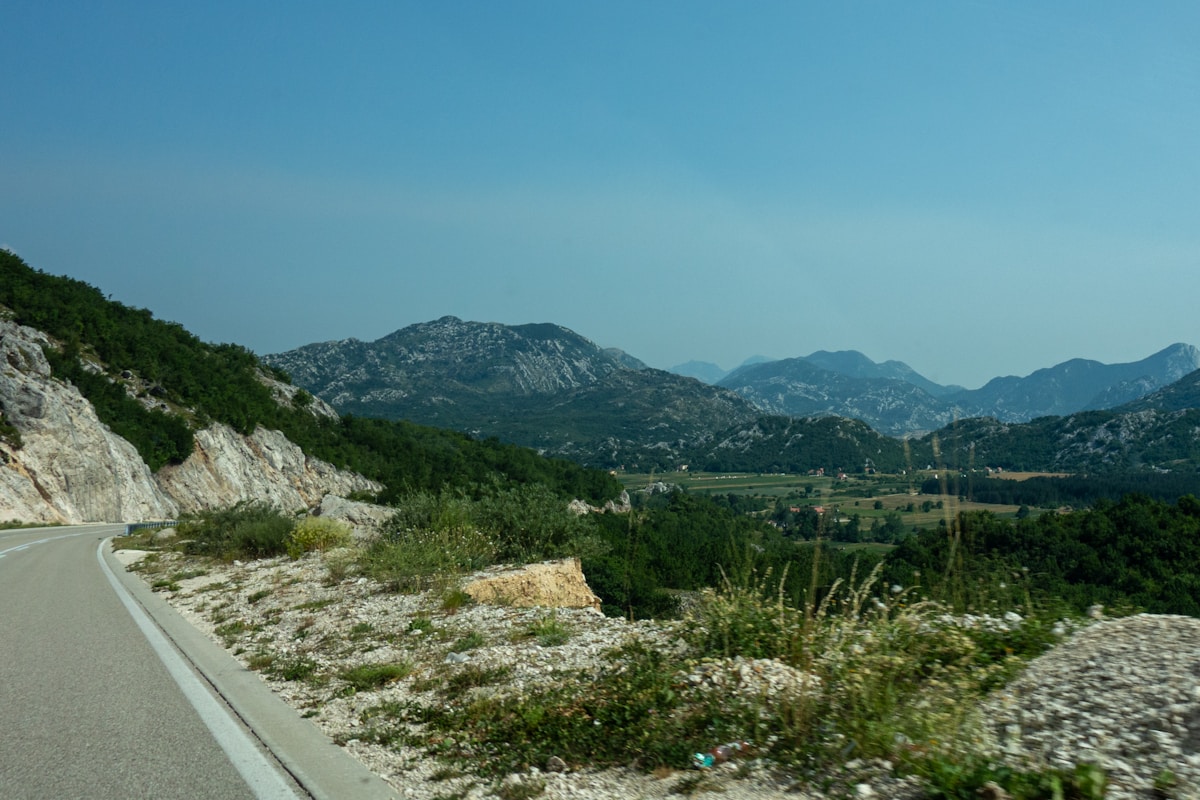
The Albania–Montenegro corridor is one of the more scenic border crossings in the Balkans, passing through karst mountain terrain before descending toward the Lake Shkodër plain. There are two main road crossings: Hani i Hotit (the main route for Podgorica and the Montenegrin interior) and Muriqan (the Lake Shkodër lakeside route, slower but more scenic). Most travellers use Hani i Hotit - it is on the main highway, handles coaches, and is significantly faster under normal conditions.
Which Documents Do You Need?
EU / EEA citizens: A valid national ID card is sufficient for both Albania and Montenegro. Neither country is in Schengen. Your card is checked on exit from Albania and entry to Montenegro.
UK citizens: A valid passport. UK nationals enter Montenegro visa-free for up to 90 days and Albania visa-free for up to 90 days without a visa stamp; ensure your passport has at least six months’ validity remaining.
US, Canadian, Australian nationals: A valid passport. All three nationalities receive visa-free entry to Montenegro for 90 days within 180 days, and Albania grants the same terms.
Other nationalities: Both Albania and Montenegro publish visa requirement lists separately - check both before travelling, as approval for one country does not guarantee approval for the other.
Important: Albania is not yet in Schengen (accession negotiations are ongoing). Your Albania entry/exit stamps are separate from any Schengen record.
The Main Crossing Points
Hani i Hotit
The principal crossing, located on the main SH1/M18 highway that links Shkodër with Podgorica. The border post sits at around 40 m elevation in a narrow valley; the road continues north through Tuzi (a largely Albanian-inhabited municipality of Montenegro) before reaching the ring road into Podgorica, approximately 20 km from the border.
Best for: Almost all travellers heading from Shkodër to Podgorica, Budva, Kotor, or Bar.
Typical wait: 10–20 minutes outside peak summer; 30–60 minutes on busy coastal-bound weekends in July–August.
Note: Large coaches stop and border officers board the bus. Passengers remain seated. The process takes approximately 10–15 minutes per coach.
Muriqan – Božaj
A secondary crossing on the east bank of the Buna river near the point where Lake Shkodër (Skadar) meets the outflow channel. The road here is narrow, crosses a low bridge, and leads into the Bojana delta area. Muriqan is rarely congested but is a poor choice if you are in a hurry - the approach roads on both sides are slow, and it adds 45–60 minutes compared to Hani i Hotit.
Best for: Cyclists, motorcyclists, and travellers with time to explore the lake edge.
Caution: Road surface quality deteriorates on the Albanian side; some rental car terms prohibit use of this route.
Wait Times by Season
| Season | Hani i Hotit | Muriqan |
|---|---|---|
| Jan–Mar | 5–10 min | 5 min |
| Apr–Jun | 10–20 min | 5–10 min |
| Jul–Aug | 30–60 min | 10–20 min |
| Sep–Oct | 15–25 min | 5–10 min |
| Nov–Dec | 5–10 min | 5 min |
The worst congestion at Hani i Hotit occurs on Friday and Saturday afternoons in July and August, when coastal-bound traffic from Albania merges with travellers returning from Montenegro. Crossing before 09:00 or after 19:00 reduces waits substantially.
Bus Options
Multiple daily buses run between Shkodër and Podgorica via Hani i Hotit. Journey time is approximately 1 hour 45 minutes to 2 hours 15 minutes depending on the border wait. The main operators are Autobusi Shkodra–Podgorica (departing from Shkodër bus station on Rruga Marin Barleti) and a handful of Montenegrin carriers that depart from Podgorica’s main bus terminal.
From Tirana, there are direct buses to Podgorica that also cross via Hani i Hotit. Journey time from Tirana is approximately 3.5 to 4 hours. Flixbus operates this route seasonally; local operators run it year-round.
There is no regular bus service over the Muriqan crossing.
Tip: Book bus tickets in person at the station if possible, especially in summer. Online booking for regional Balkan routes is inconsistently available. Early morning departures (06:00–08:00) avoid the worst summer border queues.
Rental Car Rules
This corridor requires particular attention for car hire. Albanian rental companies vary widely in their cross-border policies, and Montenegro is not always included in the standard coverage.
Before booking:
- Confirm explicitly that Montenegro is covered in your rental agreement - compare car hire options in the Balkans before choosing an operator
- Ask for a Green Card (Zelena Karta) endorsed with country code MNE (Montenegro)
- Some budget operators in Shkodër and Tirana include Montenegro but charge a supplemental daily cross-border fee (typically €10–20/day)
- Check whether the Muriqan crossing is permitted - some operators exclude it due to road conditions; Hani i Hotit is universally allowed
Montenegrin rental cars into Albania: The same rules apply in reverse. Montenegrin rental companies based in Podgorica or the coast generally cover Albania, but verify before departure and carry the Green Card plus the original rental agreement.
If you are driving your own vehicle, ensure your home insurer’s Green Card covers both Albania (AL) and Montenegro (MNE). Most pan-European policies include both, but it is worth confirming.
Duty-Free Allowances
When entering Montenegro from Albania, the Montenegrin customs allowance per adult is approximately:
- 200 cigarettes (or 250g of tobacco)
- 1 litre of spirits over 22% ABV, or 2 litres of wine/beer
- Goods for personal use up to €300 in declared value
Albanian customs allow similar quantities on exit. Officers do periodically check vehicles entering Montenegro, particularly those with commercial quantities of cigarettes or fuel canisters. Montenegro levies excise duty on tobacco - bringing in quantities that clearly exceed personal use invites a detailed inspection.
Cash: Sums above €10,000 (or equivalent) must be declared. Both Albania and Montenegro use the euro (€) as their currency, which removes any currency exchange friction at the border.
Practical Tips
Language at the border: Border officers on the Montenegrin side speak basic English, and the Albanian side often has at least one officer with functional English. Communicating in simple English is generally fine; knowing a few words of Montenegrin/Serbian is appreciated but not necessary.
Fuel: Albanian fuel prices are slightly lower than Montenegrin. Fill up in Shkodër before the crossing if you are doing a longer onward journey.
Time zones: Both Albania and Montenegro are in the same time zone (CET/CEST), so no adjustment needed.
Onward connections from Podgorica: From Podgorica, the Bay of Kotor (Kotor, Perast, Tivat) is approximately 1.5 hours by car via the E65 coastal motorway. Bar is 45 minutes south. Budva is 1 hour. All three routes pass through varying degrees of coastal tunnel infrastructure - the Sozina tunnel (toll: approximately €2.50) saves significant time on the Podgorica-to-Bar run. For guided tours of the Bay of Kotor and the Montenegrin coast, browse tours and activities in Montenegro.
Healthcare: Both Albania and Montenegro have public health systems, but facilities are limited in the border zone. Carry travel insurance that covers medical evacuation; the nearest well-equipped hospital on the Montenegrin side is the Clinical Centre in Podgorica. We recommend comprehensive travel insurance for the Balkans that includes medical evacuation coverage.
Camping near the border: The Lake Shkodër area on the Albanian side has basic campsites. On the Montenegrin side, the village of Virpazar on Lake Skadar offers better facilities, approximately 30 km east of the crossing via a detour from the main Podgorica road.
Plan Your Trip
- Flights - Find the best fares to the Balkans
- Travel Insurance - Get covered before you go
- eSIM - Stay connected from landing
- Car Rental - Compare prices across providers