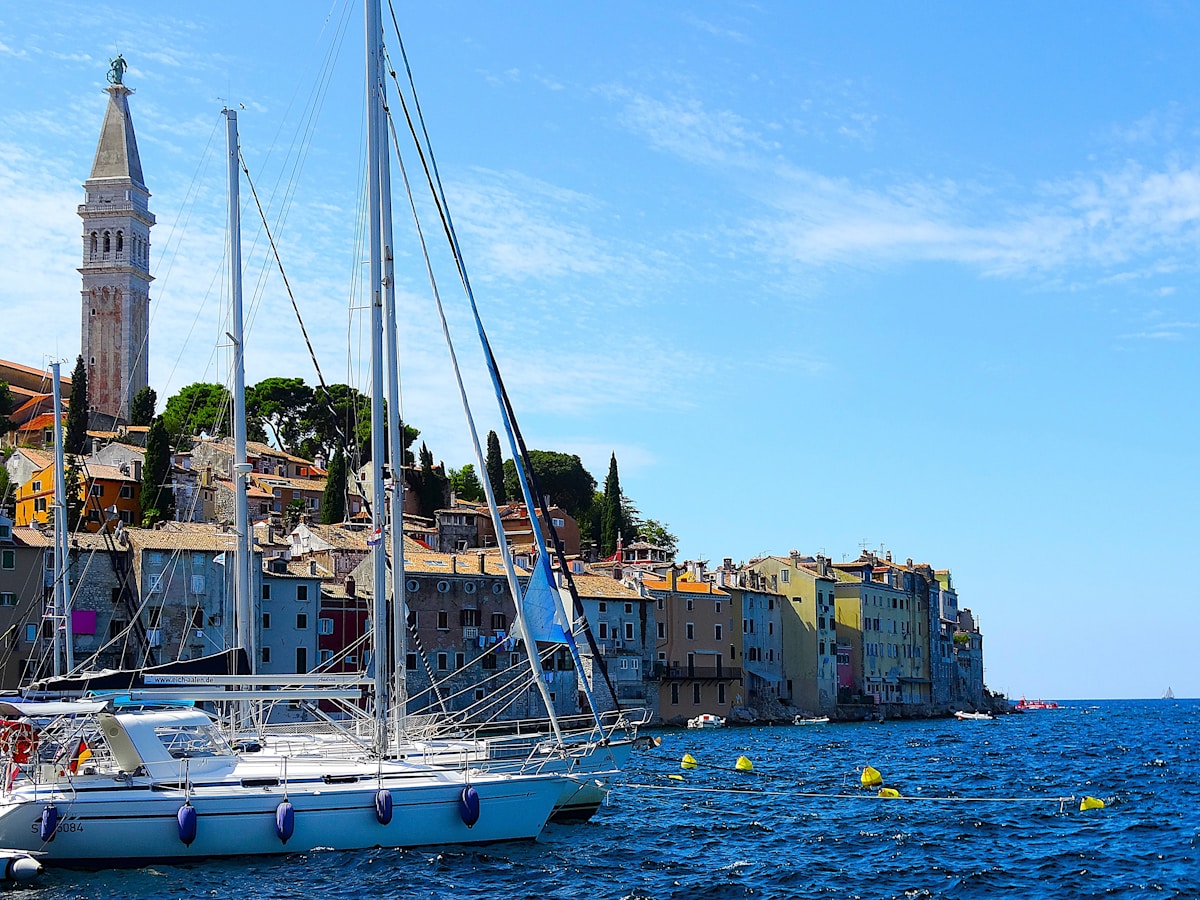
The Adriatic coastline from Split to the Albanian border is among the best ferry-served stretches in Europe. Jadrolinija, Croatia’s national ferry company, operates an extensive network connecting the mainland with the Dalmatian islands, while its overnight service links Montenegro’s Bar with Bari in Italy. Understanding how the network fits together - which routes are walk-on, which need advance booking, what the car-versus-passenger distinction means in practice - saves both money and stress.
The Jadrolinija Network in Brief
Jadrolinija runs two distinct types of service on the Adriatic:
Car ferries (trajekti): Large roll-on-roll-off vessels carrying passengers, cars, motorcycles, and bicycles. Slower, but you can bring your vehicle. Routes include Split–Stari Grad (Hvar), Drvenik–Domince (Korcula), and the Bar–Bari international crossing.
Catamarans and fast ferries: Foot-passenger only. Faster, more direct, but no vehicles. The Split–Hvar Town catamaran is the main example on the island routes - it docks at Hvar Town harbour directly rather than Stari Grad on the far end of the island.
The practical implication: if you are travelling with a car, you must use car ferries. If you are on foot, you often have the choice between a slower car ferry (with more flexibility on departure time) and a faster catamaran.
Split to Hvar
Two options, two different arrivals:
| Service | Journey time | Arrives | Vehicle? | Frequency (peak season) |
|---|---|---|---|---|
| Car ferry (Split–Stari Grad) | ~2 hours | Stari Grad, east coast | Yes | 6–8 daily |
| Catamaran (Split–Hvar Town) | ~1 hour | Hvar Town harbour | No | 3–5 daily |
Stari Grad is a quieter port at the island’s eastern end; getting to Hvar Town from Stari Grad takes around 20–25 minutes by bus or taxi (approximately €10–15). Hvar Town is the main hub - most bars, restaurants, and accommodation are here. If you are on foot and heading to Hvar Town, the catamaran is the more direct choice.
Fares (approximate, 2026):
- Foot passenger on car ferry: €5–7 one way
- Car (under 4m): €28–45 depending on season
- Catamaran, foot passenger: €10–14 one way
Car-ferry tickets are cheap for foot passengers. The catamaran costs more per person but saves significant time if you do not have a vehicle.
Hvar to Korcula
The standard route from Hvar island to Korcula is the Drvenik–Domince car ferry - a 15–20 minute crossing, several times daily in summer. Drvenik is a small port on the southern coast of Hvar island; from Hvar Town you can reach Drvenik by bus (around 30 minutes, infrequent) or taxi (approximately €15–20).
From Domince on the Korcula peninsula, the Jadrolinija ferry docks a few kilometres from Korcula Town. Buses usually meet arrivals; a taxi into Korcula Town costs approximately €5–8.
Fares (approximate, 2026):
- Foot passenger: €5–8 one way
- Car (under 4m): €22–35 depending on season
This is one of the most scenic short crossings in the Adriatic - the channel between Hvar and the Pelješac peninsula is exceptionally clear and calm in summer.
Alternative: A faster catamaran connects Hvar Town to Korcula Town directly in season (operated by Jadrolinija or smaller operators). This is foot-passenger only but skips the bus journey to Drvenik. Check current timetables on jadrolinija.hr - service on this route varies year to year.
Bar (Montenegro) to Bari (Italy)
The Bar–Bari service is Jadrolinija’s international overnight crossing from Montenegro, and for travellers finishing a Balkans circuit it is a natural exit point west.
Journey time: Approximately 9 hours. Typical departure from Bar is around 22:00–23:00; arrival in Bari around 07:00–08:00.
Frequency (2026 approximate):
- June–September: 5–7 sailings per week
- October–May: 2–4 sailings per week
Fares (approximate, 2026):
| Ticket type | Low season | High season |
|---|---|---|
| Foot passenger, deck seat | €45–60 | €65–85 |
| Foot passenger, 4-berth cabin (per person) | €65–80 | €85–110 |
| Car (under 4m) | €75–100 | €130–160 |
Book via jadrolinija.hr or aggregators such as DirectFerries. The route is less busy than the Croatia–Italy crossings, and foot passengers can often book closer to departure. Car spaces still fill in July and August - book 3–4 weeks ahead with a vehicle.
Bar port is at the southern end of Montenegro’s coast. From Bar, buses connect to Budva (1 hour), Kotor (1.5 hours), and Podgorica (1 hour). If you are arriving in Bar for the evening departure, the town itself is small but functional - check in at the port building at least 90 minutes before departure with a car, 60 minutes on foot.
From Bari: The city is the capital of Puglia with direct trains to Naples (2.5 hours) and Rome (4 hours). Bari Centrale station is a short taxi or 15-minute walk from the port.
How to Book
Jadrolinija (jadrolinija.hr): The primary source for all routes above. The English-language booking interface is functional. You will need passport details for each passenger when booking car-ferry tickets; print or download confirmation - it is required at check-in.
DirectFerries (directferries.com): Lists Jadrolinija and other Adriatic operators with side-by-side comparison. Useful for checking availability across multiple dates and routes in one view. A small platform fee typically applies.
Walk-on for short island routes: Outside July and August, foot passengers on the Split–Stari Grad and Drvenik–Domince routes can typically buy tickets at the port kiosk before boarding. Do not rely on this in peak season, particularly for early or evening sailings that sell out.
Advance Booking vs Walk-On
| Scenario | Recommendation |
|---|---|
| Foot passenger, island hop, June or Sept | Walk-on usually fine |
| Foot passenger, island hop, July–Aug | Book 1–3 days ahead to be safe |
| Car, any island route, July–Aug | Book 2–4 weeks ahead - car spaces limited |
| Bar–Bari overnight, foot passenger | Book 3–7 days ahead in peak season |
| Bar–Bari overnight, with car | Book 3–4 weeks ahead in summer |
Peak Season Tips
Travel on weekday mornings. Weekend sailings - especially Saturday and Sunday - carry the heaviest domestic traffic (families, weekend visitors). If your schedule allows, mid-week crossings have shorter vehicle queues and more space onboard.
Arrive early. The boarding sequence for car ferries starts 45–60 minutes before departure. If you are at the back of the vehicle queue when loading begins, you may be held over to the next sailing. For foot passengers, arriving 20–30 minutes before is sufficient.
Check the vessel: Jadrolinija operates a mixed fleet. Larger vessels on the Split–Stari Grad route have cafeteria, bar, and outdoor seating areas. The Drvenik–Domince crossing is a smaller, utilitarian ferry with minimal facilities - the crossing is short enough that this does not matter.
Flexibility pays. If you are not locked to a specific date, checking fares two or three days either side of your preferred date often reveals a cheaper sailing. Prices are demand-driven and a Tuesday departure can be noticeably cheaper than the same route on Saturday.
Planning Your Dalmatian Coast Trip
- Where to stay in Split: Split accommodation guide
- Where to stay in Dubrovnik: Dubrovnik accommodation guide
- Croatia coast itinerary: 7-day Croatia itinerary
- Croatia and Montenegro: Croatia & Montenegro 10-day route
- Croatia to Italy crossings: Split–Ancona and Dubrovnik–Bari guide
- Transport overview: Balkans transport guide
- Car hire: Compare car hire for Croatia and the Balkans - essential if you are island-hopping with your own vehicle
- Travel insurance: Compare policies for ferry travel
- eSIM for the Balkans: Stay connected across borders