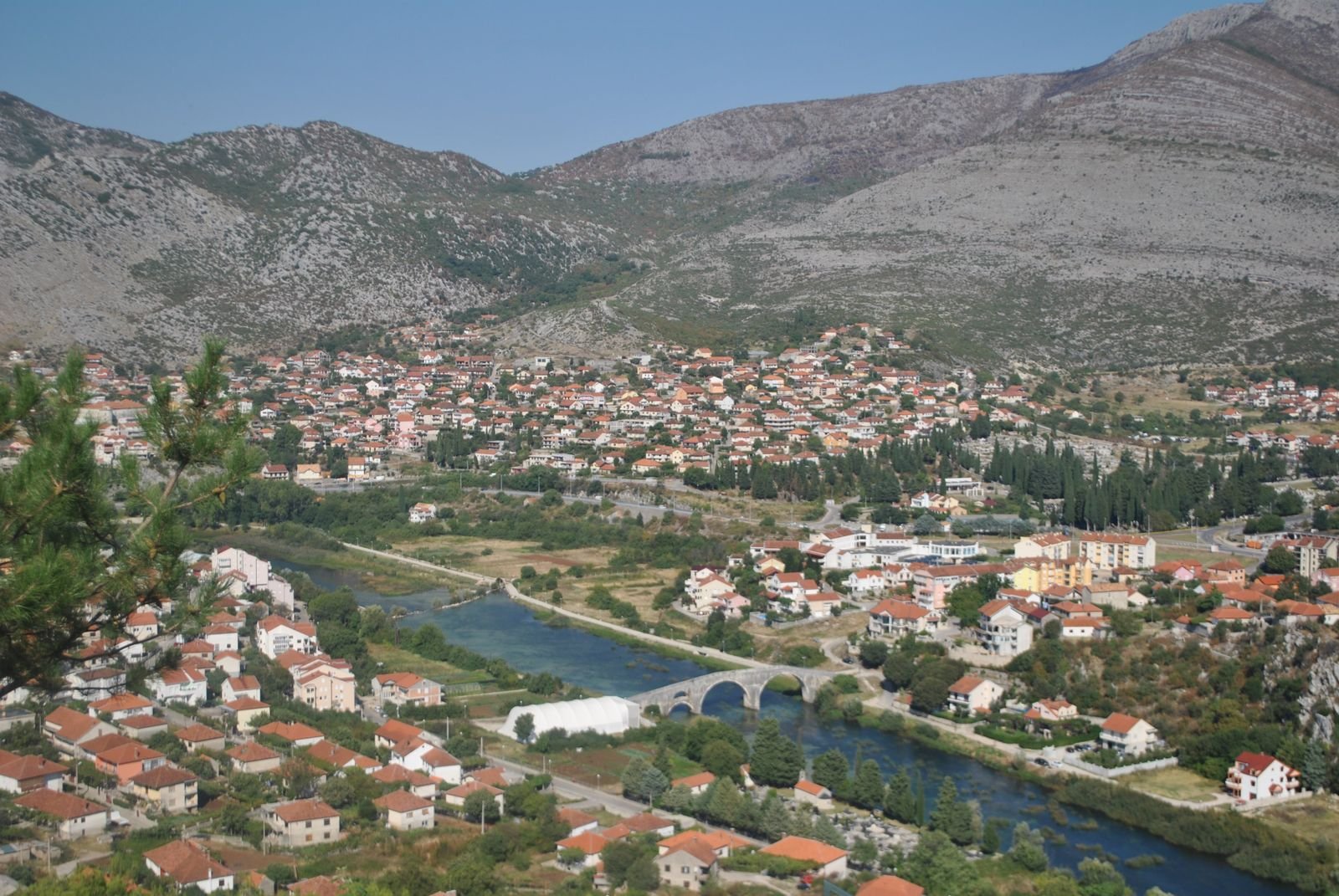
The five most underrated towns in the Balkans are Prizren in Kosovo, Trebinje and Jajce in Bosnia and Herzegovina, Cetinje in Montenegro, and Shkodër in Albania. Each has a real historic centre, low prices as of 2026, and far fewer visitors than Dubrovnik, Kotor or Mostar, which sit within a short ride of most of them.
We picked these five because each is easy to reach from a better-known base, costs little, and offers one clear reason to go. None is a hidden gem in a literal sense, since locals have always known them. They are simply skipped by most first-time itineraries.
1. Prizren, Kosovo
Prizren was Kosovo’s most important city for centuries, and its Ottoman core survives: the Stone Bridge over the Bistrica River, the bazaar streets, the Sinan Pasha Mosque (1615), a hammam, and a fortress above town. Shadërvan Square is the natural starting point.
- Getting there: about 1.5 hours by bus from Pristina, approximately €3 each way
- Fortress: free, a steep 15-20 minute walk up from the old town
- Prices: main course approximately €5-8, coffee approximately €1
Local tip: most visitors come as a day trip, so staying overnight gives you the quiet evening streets after they leave. Read the Prizren guide, see where to stay in Prizren, or browse Prizren tours.
2. Trebinje, Bosnia and Herzegovina
Trebinje is Herzegovina’s southernmost city, a stone town on the Trebišnjica river only 28 km from Dubrovnik. It has a Mediterranean feel: a plane-tree-shaded main square, a 17th-century mosque in the Old Town, and the Arslanagić Bridge, an 18th-century Ottoman bridge moved stone by stone in the 1970s when the river was dammed.
Tvrdoš Monastery, 6 km south, makes sparkling wine, still wine and brandy, with tastings at approximately KM 10-20 (€5-10).
- Getting there: about 1 hour by bus from Dubrovnik (€8-12) or 35 minutes by car
- Prices: coffee on the main square about KM 2-3 (€1-1.50)
Local tip: visit the Arslanagić Bridge in the morning, before tour groups arrive. See our Trebinje guide and Dubrovnik day trips. Check Trebinje stays for an overnight.
3. Jajce, Bosnia and Herzegovina
Jajce is a medieval walled town where the Pliva River drops 22 m straight into the Vrbas in the middle of town. The citadel above dates from the 14th century. Jajce also matters for 20th-century history: on 29 November 1943 the AVNOJ council met here to set up the postwar Yugoslav federation, and the building is preserved.
- Waterfall: free to view from the stone bridge
- Citadel: approximately KM 3-5 (€1.50-2.50), a 15-20 minute climb
- Getting there: about 3 hours by bus from Sarajevo (KM 20-28)
Local tip: the falls are strongest in spring, April to June, after snowmelt. A car helps for the Pliva lakes, 3-4 km out. See the Jajce guide and Jajce stays, and read Sarajevo for the onward route.
4. Cetinje, Montenegro
Cetinje was Montenegro’s royal capital until 1918 and is now its cultural capital. The Royal Palace (State Museum, approximately €5) tells the story of the Petrović-Njegoš dynasty, the Blue Palace history museum costs approximately €4, and the monastery houses important Orthodox relics. The old embassy buildings line the main boulevard.
The drive from Kotor over the Lovćen Pass is 13 km of hairpin bends climbing to about 1,200 m, with views over the Bay of Kotor. The Njegoš Mausoleum at 1,657 m takes 461 steps to reach.
- Getting there: about 1 hour by bus from Kotor, €3-4
- Time needed: a full day, including the mausoleum
See our Cetinje guide, Kotor, and the day trips from Kotor. You can also search Cetinje experiences on Viator or book Cetinje stays.
5. Shkodër, Albania
Shkodër is northern Albania’s cultural and outdoor hub: a walkable city between hills and Lake Shkodër, with Rozafa Castle above the meeting of three rivers (approximately €1.80-2.70 entry), the Marubi photography museum, and Mesi Bridge. It is also the gateway to Theth and Valbona in the Albanian Alps.
Start on Rruga Kole Idromeno, walk to the castle, and finish at a lakeside café. Taxis save the climb up to the castle.
Read the Shkodër guide, see where to stay in Shkodër, or book Shkodër tours.
Which town should you pick?
Choose by what you want from the trip:
- History and atmosphere in one compact centre: Prizren, where the bazaar, bridge, mosque and fortress sit within a few minutes of each other.
- A calm, Mediterranean day with wine: Trebinje, especially if you are already based in Dubrovnik.
- Scenery in the middle of a town: Jajce, for the waterfall and the citadel.
- Museums and royal history: Cetinje, ideally with the Lovćen drive.
- A walkable base with lake and mountain access: Shkodër.
Costs stay low in all five as of 2026: most sights are free or under €5, and coffee is about €1-1.50 in Prizren and Trebinje. Cetinje’s museum tickets add up a little if you visit both palaces. Staying overnight puts you in the evening streets after the day-trippers have gone home.
Getting between them
These towns sit near famous neighbours, which makes them easy to add. Trebinje and Cetinje slot into a Dubrovnik and Kotor trip, Jajce sits on the Sarajevo to Banja Luka road, Prizren is a short hop from Pristina, and Shkodër links Montenegro and Albania. If you want flexibility for outlying sights, compare car hire in the Balkans.
For official planning information, see the Montenegro tourism board. Bus times change seasonally, so check them locally.