Jajce Bosnia Herzegovina: Waterfalls, Citadel
Jajce: Pliva waterfall in the city centre, medieval citadel, AVNOJ building, Pliva lakes, and how to reach it from Sarajevo or Banja Luka.
Guides for Jajce: Waterfalls & Fortress
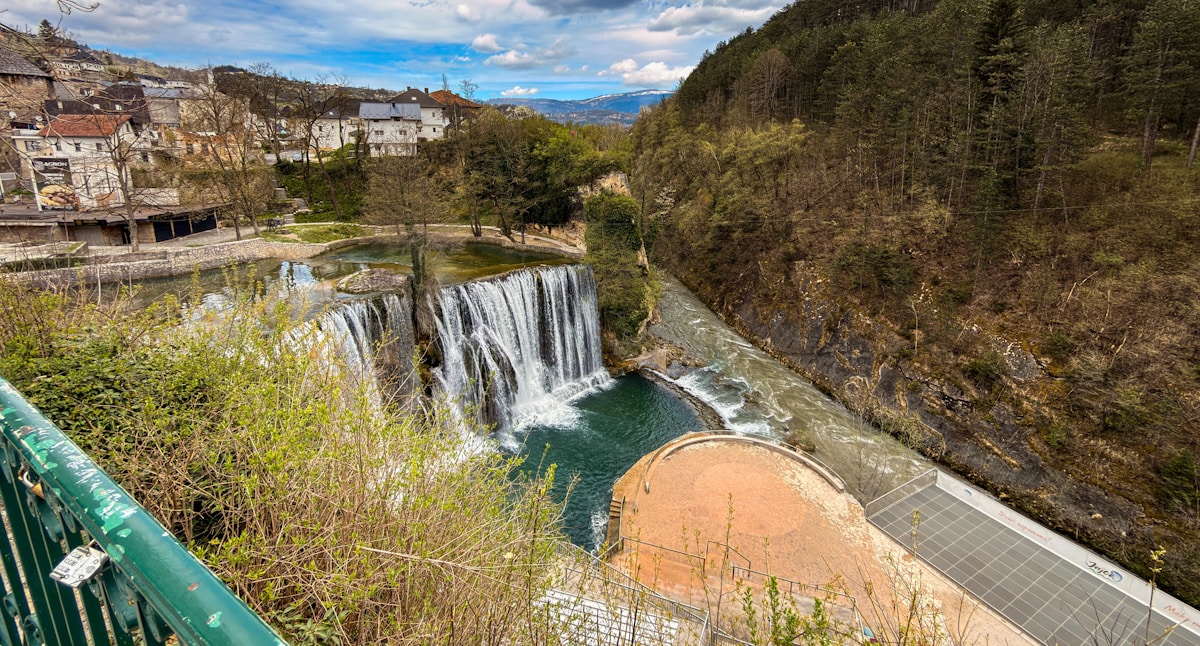
Jajce is one of Bosnia’s most visually dramatic cities - a medieval walled settlement where the Pliva River drops 22 m in a free-fall waterfall directly into the Vrbas River below, in the middle of the city. The waterfall alone justifies the stop on any Sarajevo–Banja Luka transit route, and the medieval citadel above and the Pliva lakes outside town make the case for staying longer.
The city also carries significant 20th-century history: it was here, on 29 November 1943, that Tito’s AVNOJ (Anti-Fascist Council of National Liberation of Yugoslavia) convened the session that established the postwar Yugoslav federation. The building where this happened is preserved and open to visitors.
Getting to Jajce
From Sarajevo: Bus, approximately 3 hours, KM 20–28 (€10–14). The route is the main Sarajevo–Banja Luka intercity service; multiple departures daily. By car, approximately 2.5 hours via the M5 highway.
From Banja Luka: Bus, approximately 1.5 hours, KM 12–16 (€6–8). The most common entry point from the north. By car approximately 1 hour.
From Mostar: Via Sarajevo (approximately 4.5–5 hours total); alternatively a more scenic route via Prozor-Rama, approximately 3 hours by car.
From Split (Croatia): Via the border crossing near Livno; approximately 3 hours by car. The journey passes through the Dinaric highlands and makes a rewarding drive.
By car: Jajce’s compact centre has parking near the waterfall and below the citadel. The Pliva lakes are 3–4 km outside town and require a car or taxi.
The Pliva Waterfall - Vodopad Plive
The Pliva waterfall is Jajce’s defining image and the reason most visitors come. The Pliva River, having flowed through the upper Pliva lakes, drops 22 m in a wide free-fall curtain into the Vrbas valley - with the medieval citadel rising above on the cliff to the right, and the Ottoman-era mill district below. It’s a genuinely striking urban landscape.
Practical details:
- Entry: free (viewed from the riverside platform and bridge)
- Best viewpoint: the stone bridge directly in front of the falls, approximately 100 m from the town centre
- Best time: morning light falls on the falls from the east; the setting is dramatic in any weather
- Volume and appearance: the waterfall is at its most powerful in spring (April–June) after snowmelt; lower flow in late August–September
Allow 20–30 minutes at the falls. Continue across the bridge for close-up views and down to the Vrbas confluence.
The Citadel (Tvrđava)
Jajce’s medieval citadel crowns the limestone hill above the waterfall, giving views over the Pliva, Vrbas, and the surrounding valley. The fortifications date from the 14th century and reflect several periods of occupation: Bosnian medieval kingdom, Ottoman, and later modifications.
Climb from the town centre via steep stone streets - approximately 15–20 minutes to the main gate. The walls are walkable; views from the upper ramparts span the whole city, both rivers, and the mountain ridges beyond.
Entry: approximately KM 3–5 (€1.50–2.50). Duration: 45–60 minutes for a thorough circuit. Note: The citadel area is uneven and steep - not suitable for pushchairs; wear closed shoes.
AVNOJ Building (Museum of Jajce)
The session hall where Tito’s AVNOJ convened in November 1943 and proclaimed the Yugoslav federation is preserved as a museum. The exhibition covers the anti-fascist resistance, the AVNOJ sessions (both 1942 in Bihać and 1943 in Jajce), and the founding of socialist Yugoslavia.
The building retains the original session arrangement, with the historic chairs and podium where the decisions were taken.
Entry: approximately KM 3–4 (€1.50–2). Duration: 30–45 minutes.
The Pliva Lakes (Plivska Jezera)
Two glacial lakes - Malo (Small) and Veliko (Large) Plivsko jezero - sit 3–4 km above Jajce on the Pliva River. The larger lake, stretching approximately 3 km, is surrounded by forest and backed by karst mountains. The setting is serene and the water clear.
Activities:
- Walking the lake shore (flat, well-maintained path, approximately 6 km full circuit of Veliko jezero)
- Swimming (the lake is clean and swimming is possible from the grassy banks)
- Kayak and boat rental (operators at the lake in summer; approximately KM 10–20/€5–10 per hour)
- Fishing (local permits required; ask at accommodation)
Getting there: 3–4 km from Jajce; taxi approximately KM 8–12 (€4–6) or by car.
The Pliva Mills (Mlinčići)
Along the Pliva River between the main lake and the waterfall is a remarkable collection of over a dozen wooden water mills (mlinčići) - small structures built on stilts over the river channel, used for grinding grain. Most date to the 18th–19th centuries. The collection is unusual for its scale and survival.
The mills are a 10–15 minute walk from the main waterfall. Free to view from the path along the river. One or two may be open for interior visits depending on season.
St Luke’s Church (Crkva Svetog Luke)
A late medieval church in the city centre, one of the oldest still-functioning churches in Bosnia. The interior has fragmented fresco remnants. Free entry; check with accommodation for current opening hours.
Where to eat
Restaurant Stari Grad - near the citadel, with Bosnian traditional food and a terrace overlooking the town. Mains approximately KM 14–24 (€7–12).
Restaurant Slapovi Plive - positioned near the waterfall area, with river views. Mains approximately KM 12–22 (€6–11).
Kafane and buregdžinice: Several traditional cafés and burek bakeries in the centre. Burek from approximately KM 2–3 (€1–1.50).
Where to stay
| Accommodation | Type | Approx. price/night |
|---|---|---|
| Hotel Stari Grad | 3-star, central | KM 90–120 / €46–61 |
| Hotel Jajce | Mid-range | KM 75–100 / €38–51 |
| Pansion Plivska Jezera | Near lakes | KM 60–80 / €31–41 |
| Private guesthouses | Rooms | From KM 50–65 / €25–33 |
See the Jajce where-to-stay guide for detail.
Day trips from Jajce
Travnik - the former seat of Ottoman Bosnia’s vezirs, with a well-preserved colourful mosque (Sulejmanija mosque with painted exterior), a citadel, and significant history. Approximately 40 km southeast by road; 45 minutes by bus. Worth a half-day. Guided tours from Sarajevo to Jajce are a practical way to cover both destinations in a single day.
Ključ - a quieter historic town northwest of Jajce with a medieval fortress.
Banja Luka - the main city of the Republika Srpska entity, 1 hour north. Large and urban, with several interesting buildings and the Kastel fortress.
Practical notes
- Currency: Bosnian Convertible Mark (BAM / KM). 1 € ≈ 1.96 KM. ATMs available in the city centre.
- Language: Bosnian, Croatian, and Serbian are all spoken and understood. English is limited but improving at tourist-facing businesses.
- Multi-ethnic character: Jajce has a significant Bosniak Muslim and Bosnian Croat population. Both mosques and Catholic churches are prominent in the city - the historic diversity is part of the city’s character.
- Best season: May–October. April–June gives the waterfall at highest flow. Summer is warm and pleasant. Winter sees fewer visitors and the waterfall can be partially frozen in cold years.
See also
- Bosnia and Herzegovina travel guide
- Sarajevo
- Mostar
- Trebinje
- Things to do in Jajce
- Where to stay in Jajce
Plan your trip: Browse guided tours from Sarajevo to Jajce for day-trip packages. Hire a car for the Pliva lakes, Travnik, and flexible travel on the central Bosnian circuit. Cover your journey with Balkans travel insurance.
Book an experience
Top experiences in Jajce: Waterfalls & Fortress
Explore the best tours and activities in Jajce: Waterfalls & Fortress - instant confirmation, free cancellation on most bookings.