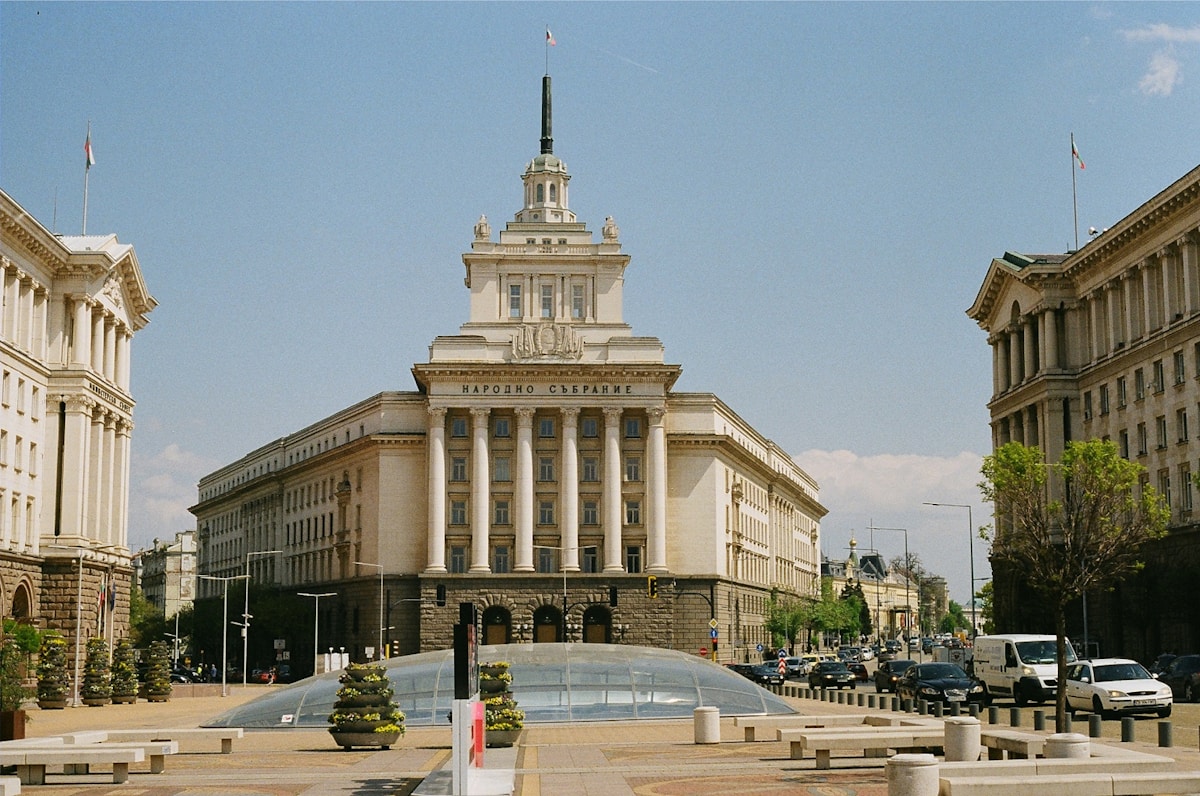
Bulgaria covers a wider range than most Balkans itineraries suggest: Byzantine churches, rose-valley villages, a UNESCO monastery fortress in the mountains, a Roman-era city with one of the region’s best old towns, and a medieval capital above a river gorge. This 7-day circuit covers the core without a car - though renting a car unlocks more flexibility on day three (Rila) and makes the Bachkovo Monastery day trip from Plovdiv significantly easier.
All prices are in Bulgarian Lev (BGN) and approximate euros (€). Estimates are as of 2026.
Overview
| Day | Area | Key activities |
|---|---|---|
| 1 | Sofia | Vitosha Boulevard, Alexander Nevsky Cathedral, Serdica ruins |
| 2 | Sofia | Boyana Church, National History Museum, Vitosha Mountain |
| 3 | Rila Monastery | Day trip from Sofia or overnight at Rila |
| 4 | Plovdiv | Old town (Kapana, Nebet Tepe), Kapana arts district |
| 5 | Plovdiv | Bachkovo Monastery day trip, old town evening |
| 6 | Veliko Tarnovo | Tsarevets Fortress, Samovodska Charshiya bazaar |
| 7 | Veliko Tarnovo | Arbanasi village, depart via Gorna Oryahovitsa |
Day 1 - Sofia: city centre and Alexander Nevsky
Arrive into Sofia Airport (Terminal 2). Metro Line 1 connects the airport to the city centre in approximately 20 minutes (BGN 1.60/€0.82 per journey). Taxis from the official desk cost approximately BGN 15–20 to central Sofia.
The Alexander Nevsky Cathedral is Sofia’s most photographed landmark: a vast neo-Byzantine church with gold domes built between 1882 and 1912 to commemorate Russian soldiers who died in the Russo-Turkish War of Liberation. Entry to the cathedral is free; the crypt museum housing Bulgarian Orthodox icons costs approximately BGN 6 (€3). The adjacent Alexander Nevsky Square fills with antique and art market stalls on weekends.
Walk south along the pedestrianised Vitosha Boulevard - Sofia’s main commercial strip - to reach the Rotunda of St George, a 4th-century Roman brick rotunda now embedded inside a hotel courtyard. Free to enter and easy to miss if you don’t know it’s there. Below street level nearby, the Serdica Roman ruins are visible through a glass floor beneath the Serdika metro station - authentic Roman street and public baths, viewable at no charge.
The National Archaeological Museum (in the former Great Mosque, BGN 10/€5 entry) houses Thracian gold treasures and Roman artefacts. Closed Mondays.
Where to stay in Sofia:
- Budget: Hostel Mostel - from approximately BGN 32–40/dorm (€16–20), breakfast included, centrally located near Vitosha Boulevard
- Mid-range: Hotel Niky - from approximately BGN 130–180/night (€65–90), boutique style in a central location
- Upper: Sofia Hotel Balkan (Autograph Collection) - from approximately BGN 260–360/night (€130–180), on Sveta Nedelya Square
Full guide: where to stay in Sofia
Dinner: Pri Yafata (“At Yafata’s”) on ul. Solunska - traditional Bulgarian mehana (tavern) with shopska salad (BGN 6–8/€3–4), kavarma clay pot stew (BGN 16–20/€8–10), and homemade rakia. Queue for a table at peak times. Alternatively, Hadjidraganovite Kashti on ul. Lavele for a wider menu in a 19th-century National Revival house.
Day 2 - Sofia: Boyana Church and Vitosha
Boyana Church (UNESCO World Heritage Site, BGN 10/€5, book online) sits 8 km southwest of the centre in the Boyana neighbourhood. The 13th-century frescoes inside are among the finest examples of medieval Bulgarian art - vivid, naturalistic portraits painted three centuries before the Italian Renaissance. Entry is limited to small groups on timed tickets (max 10 minutes inside to protect the murals); book at least a few days in advance. Bus 64 from the centre takes approximately 40 minutes.
The National History Museum, a five-minute walk from Boyana Church, houses Bulgaria’s largest collection of Thracian gold and Slavic artefacts. Entry approximately BGN 12 (€6). Combine both in a half-day trip.
In the afternoon, take the Simeonovo gondola lift (approximately BGN 14/€7 return) up Vitosha Mountain for panoramic views over Sofia at 1,800 metres. In good weather, the ridgeline walk between Aleko hut and the Cherni Vrah summit (2,290m) takes 2–3 hours return. No specialist gear needed in summer.
Lunch: Cafe-restaurants at the Aleko hut on Vitosha serve Bulgarian mountain food - bean soup (BOB chorba, BGN 8–10/€4–5), grilled meats, and banitsa pastry.
Day 3 - Rila Monastery day trip
Rila Monastery (UNESCO World Heritage Site) sits at 1,147 metres in the Rila Mountains, 120 km south of Sofia. Direct buses depart Ovcha Kupel bus terminal in Sofia daily (approximately BGN 12–14/€6–7 one-way, 2 hours). Alternatively, a private transfer from Sofia costs approximately BGN 100–140 (€50–70) for the car. The monastery is free to enter; the Hrelyo Tower and treasury museum cost approximately BGN 10 (€5).
Founded in the 10th century by St. Ivan of Rila, the current buildings date from the 14th–19th centuries after repeated fires. The courtyard is one of the most striking architectural spaces in the Balkans: a striped arcade of black-and-white arches surrounding the Nativity Church, whose exterior frescoes cover every surface with biblical scenes, saints, and hellfire imagery. The interior frescoes number over 1,200.
For those preferring to stay overnight, Monastery guesthouse rooms cost approximately BGN 30–50/night (€15–25) - spartan, authentic, and perfectly positioned for the morning light before day-tripper coaches arrive. Book directly by phone.
Return to Sofia for the night or continue directly to Plovdiv (bus from Rila village to Blagoevgrad, then Blagoevgrad to Plovdiv - total journey approximately 3–3.5 hours, BGN 14–18/€7–9).
Day 4 - Plovdiv: old town and Kapana
Plovdiv (2.5 hours from Sofia by bus, BGN 18–22/€9–11, multiple departures daily from Central Bus Station) is one of Europe’s oldest continuously inhabited cities - settled since 6000 BCE and known to the Romans as Philippopolis. The Old Town (Stariat Grad) on the Three Hills is the main draw: a neighbourhood of National Revival–style merchants’ houses from the 18th and 19th centuries, painted in vivid ochre, blue, and terracotta, with projecting bay windows and ornate carved wooden ceilings.
Key sights on the hills: the Balabanov House (BGN 5/€2.50, see the original period furniture), the Ethnographic Museum in the Argir Kuyumdzhioglu house (BGN 5/€2.50), and the Roman Theatre - a 2nd-century amphitheatre seating 6,000, still used for summer concerts. Entry to the theatre costs approximately BGN 5 (€2.50).
The Kapana arts district (“The Trap”) below the old town has been the most photographed neighbourhood in Bulgaria since a 2015 regeneration project filled its narrow streets with independent cafés, craft beer bars, and creative studios. The Kapana Fest runs annually in August.
Where to stay in Plovdiv:
- Budget: Hostel Old Plovdiv - from approximately BGN 36–45/dorm (€18–22), steps from the old town
- Mid-range: Landmark Creek Hotel - from approximately BGN 160–210/night (€80–105), river views
- Upper: Boutique Hotel Hebros - from approximately BGN 300–400/night (€150–200), inside a restored 19th-century mansion in the old town
Full guide: where to stay in Plovdiv
Dinner in Plovdiv: Rahat Tepe (old town) for Bulgarian classics - stuffed peppers, lamb gyuvech clay pot (BGN 18–22/€9–11), and baklava. Or Pavaj in the Kapana district for a more contemporary Bulgarian menu.
Day 5 - Bachkovo Monastery and Plovdiv evening
Bachkovo Monastery (40 km south of Plovdiv, bus approximately BGN 4–5/€2, 45 minutes) is Bulgaria’s second-largest monastery, founded in 1083 by a Georgian general. The 11th-century ossuary and the 17th-century refectory frescoes are the highlights. Entry is free; the ossuary has a small fee (BGN 2/€1). Return to Plovdiv for the afternoon.
Spend the late afternoon on Nebet Tepe (Prophet’s Hill) - the highest of the three hills, with a partially excavated Thracian citadel and the best sunset views over the city. No entry fee. Below, the Roman Stadium ruins are visible in the underpass on pl. Dzhumayata - free viewing through glass.
In the evening, the Kapana district fills with locals. Try craft beers at Naughty Nuns Craft Beer Bar or cocktails at Monkey House.
Day 6 - Veliko Tarnovo
Bus from Plovdiv to Veliko Tarnovo (approximately 3 hours, BGN 18–22/€9–11, change in Stara Zagora or direct service). Alternatively, train from Plovdiv to Gorna Oryahovitsa (approximately 3.5 hours, BGN 12–15/€6–7) then taxi 10 minutes to Veliko Tarnovo.
Tsarevets Fortress dominated the Bulgarian medieval capital from 1185–1393, when Tarnovo was the seat of the Second Bulgarian Empire. The fortress sits on a 206-metre hill above the Yantra River gorge and is Bulgaria’s most visited site outside Sofia. Entry approximately BGN 10 (€5). The evening light show (Sound and Light) runs during summer - tickets approximately BGN 15 (€7.50), worth seeing if you’re here on a night it operates.
The Samovodska Charshiya (Samovodene Bazaar) cobblestone street in the old craftsmen’s quarter has been restored with traditional workshops - potters, weavers, woodcarvers - and small restaurants. Mehana Gurko on ul. General Gurko (overlooking the gorge) is a classic stop for tarator cold cucumber soup (BGN 6/€3) and grilled trout from the Yantra (BGN 20–26/€10–13).
Where to stay in Veliko Tarnovo:
- Budget: Hostel Mostel Tarnovo - from approximately BGN 32–40/dorm (€16–20), panoramic terrace
- Mid-range: Hotel Meridian - from approximately BGN 140–180/night (€70–90), gorge views
- Upper: Hotel Interhotel Tarnovo - from approximately BGN 200–260/night (€100–130), central
Day 7 - Arbanasi and departure
Arbanasi village (5 km from Veliko Tarnovo, taxi approximately BGN 10/€5) is a well-preserved 17th-century Bulgarian village on a plateau above the Yantra. The Nativity Church interior is completely covered in 3,500 square metres of frescoes painted 1649–1650 - one of the most remarkable ecclesiastical interiors in Bulgaria. Entry approximately BGN 4 (€2). Combine with the Konstantsalieva House museum (BGN 3/€1.50), a wealthy merchant’s home with original period furnishings.
Depart Veliko Tarnovo from Gorna Oryahovitsa train station (taxi BGN 10/€5 from the centre) - trains run to Sofia (2.5 hours, BGN 22–28/€11–14) and Varna (2.5 hours, BGN 18–22/€9–11) for onward travel. Bus from Veliko Tarnovo’s bus terminal also serves Sofia (3–3.5 hours, multiple departures).
Getting around Bulgaria
Bulgaria has reasonable intercity bus and train connections between major cities. Buses are generally faster and more frequent than trains on this route. Union Ivkoni and Biomet are the main intercity bus operators; tickets are available at bus station counters or online. You can search and compare schedules for all operators on Omio. For Rila Monastery, the direct Sofia–Rila bus is the easiest option; a rental car adds flexibility for Bachkovo and the Rhodope villages.
Car rental from Sofia: approximately BGN 70–120/day (€35–60) for a compact car. Petrol as of 2026: approximately BGN 2.50–2.80/litre.
See also
- Bulgaria travel guide
- Sofia
- Plovdiv
- Skiing in the Balkans
- Balkans travel costs
- National parks in the Balkans
- Hiking in the Balkans
- Bansko travel guide
- Sofia vs Belgrade
- Planning a Balkans trip
Where to Stay
- Sofia — Where to stay in Sofia
- Plovdiv — Where to stay in Plovdiv
Things to do at each stop:
Book Your Trip
Flights — search and compare on Aviasales eSIM — stay connected with Airalo Travel insurance — get covered with EKTA Airport transfers — book with Kiwitaxi Car rental — compare with GetRentaCar Hotels — compare and book accommodation on Booking.com Tours and activities — browse GetYourGuide