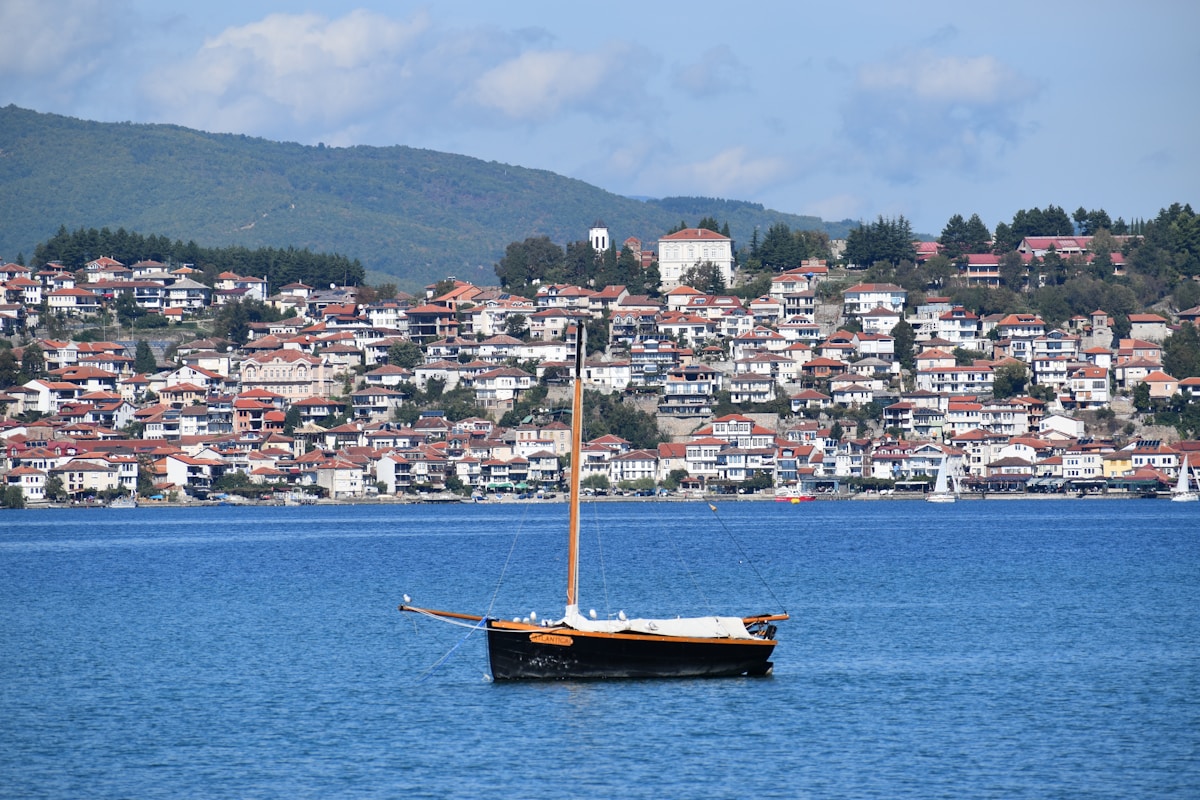
Albania and North Macedonia are two of the least-visited countries in the Balkans and two of the most rewarding for it. This 7-day route moves south to north: Tirana for urban energy, Berat for Ottoman hill-town architecture, Lake Ohrid for water and history, Skopje for the most improbable capital skyline in Europe. The two countries share a land border at Lake Ohrid - the crossing is straightforward, and the lake itself straddles both sides. Prices are in euros for reference (Albania: ALL, North Macedonia: MKD);.
Overview
| Day | Location | Highlights |
|---|---|---|
| 1 | Tirana | Skanderbeg Square, Blloku, National History Museum |
| 2 | Tirana | Dajti Mountain, Et’hem Bey Mosque, evening cocktail bars |
| 3 | Berat | Berat Castle, Mangalem quarter, Ethnographic Museum |
| 4 | Berat → Ohrid | Travel day, Ohrid old town and lakeside |
| 5 | Ohrid | St John at Kaneo, Ohrid Fortress, Plaošnik monastery |
| 6 | Skopje | Old Bazaar, Kale Fortress, Macedonia Square |
| 7 | Skopje | Matka Canyon, departure |
Day 1 - Arrive Tirana
Fly into Tirana International Airport Nënë Tereza (TIA), 17 km north-west of the city centre. City Bus 225 (approximately ALL 40 / €0.35, 50–60 minutes) is the cheapest option but infrequent; official airport taxis cost approximately ALL 2,500–3,000 (€22–26) to the centre; rideshare apps (Bolt works in Tirana) cost approximately ALL 1,200–1,800 (€10–15).
Tirana has remade itself rapidly over the past 20 years: murals cover entire apartment blocks, the Blloku neighbourhood (once off-limits to ordinary Albanians, reserved for Communist Party leadership) is now the city’s most animated café and bar district.
Skanderbeg Square - the vast central plaza in front of the National History Museum - is named for the 15th-century Albanian nobleman Gjergj Kastrioti (Skanderbeg) who led the resistance against the Ottoman Empire. His equestrian statue stands at the square’s centre. The National History Museum (approximately ALL 300 / €2.50, Skanderbeg Square, closed Mondays) has excellent coverage of Albania’s history from antiquity through Enver Hoxha’s 40-year Communist dictatorship; allow 2 hours.
Evening: walk the Blloku area (10-minute walk south of Skanderbeg Square) and have dinner at Era Restaurant (traditional Albanian food, approximately ALL 1,500–2,500 / €13–22 per person) or Restorant Gjelltore e Vjetër (approximately ALL 800–1,500 / €7–13 per person; excellent byrek and roast lamb in a no-frills setting).
Browse tours and activities in Tirana →
Where to stay in Tirana:
- Budget: Freddy’s Hostel - dorm from approximately ALL 1,400 / €12/night; highly rated, central
- Mid-range: Hotel Colosseo - from approximately ALL 6,500 / €55/night; city centre, well-run
- Comfort: Tirana Marriott Hotel - from approximately ALL 14,000 / €120/night; the best-positioned full-service hotel in the city
Search all Tirana hotels → Full guide: where to stay in Tirana
Day 2 - Tirana: Dajti Mountain and the City
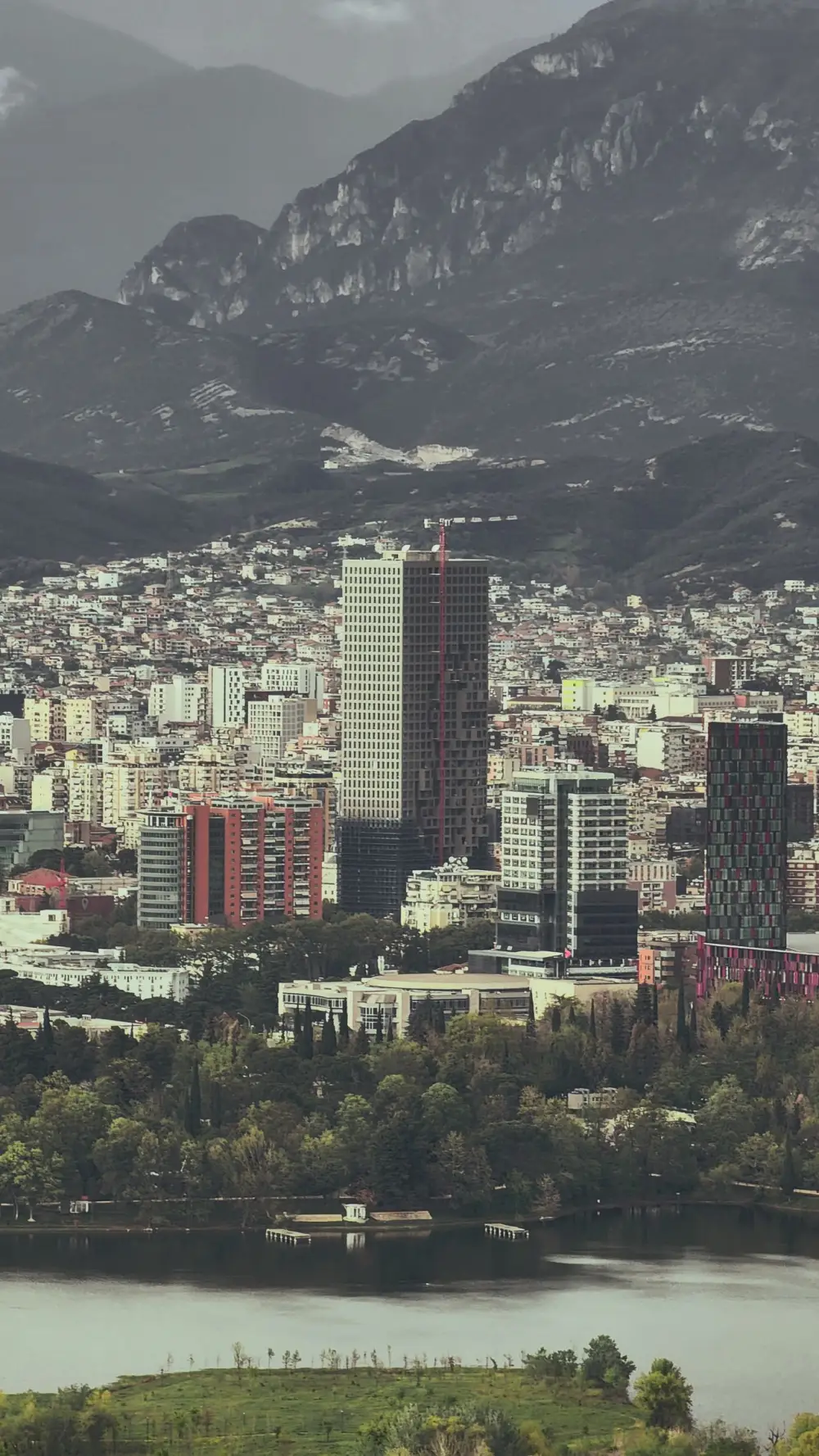 Tirana sits in a basin ringed by mountains, with Dajti to the east.
Mount Dajti (Dajti Ekspres cable car, approximately ALL 1,500 / €13 return, 15-minute ride, departures every 15 minutes from 09:00, station 5 km east of centre) rises 1,613 m above sea level and offers wide views over Tirana and towards the Adriatic coast on clear days. The forest at the summit has walking trails and a Soviet-era restaurant (National Park Dajti, approximately ALL 1,500–2,500 / €13–22 per person) with mountain lamb and Dajti beer. A 2-hour walk north from the cable car top station leads to the Dajti Peak viewpoint - bring appropriate footwear.
Back in the city: Et’hem Bey Mosque (Skanderbeg Square, free, check opening hours; non-Muslims welcome outside prayer times) was built between 1789 and 1823, famously survived Hoxha’s 1967 campaign to close all religious institutions, and was reopened by a public crowd acting spontaneously in 1991 before the regime’s final collapse. The interior has well-preserved Ottoman frescoes of landscapes and flowers - unusual in a mosque.
The Bunk’Art 2 museum (approximately ALL 500 / €4, Sheshi Avni Rustemi, walking distance from Skanderbeg Square) occupies a nuclear bunker beneath the Ministry of Internal Affairs and documents the history of Albania’s state security apparatus (Sigurimi) during the Communist era. Disturbing and excellent; allow 90 minutes.
Evening drinks at Radio Bar or Folie Terrace (Blloku, cocktails approximately ALL 600–900 / €5–8).
See: things to do in Tirana and best restaurants in Tirana.
Day 3 - Tirana to Berat
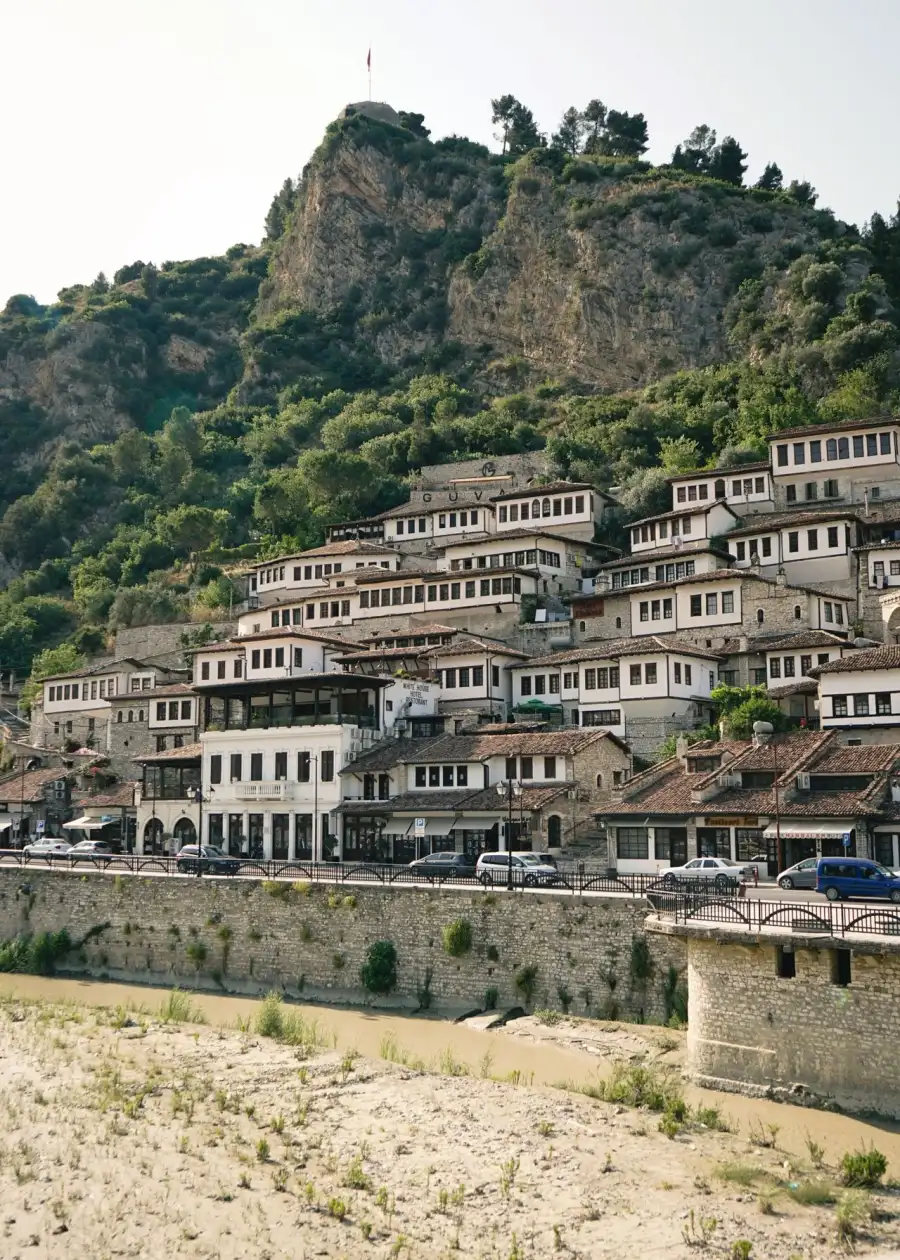 Berat’s Ottoman houses stack up the hillside beneath the castle.
Bus: Tirana South Bus Terminal (Terminali i Ri) to Berat - approximately hourly from 06:00, approximately ALL 400 / €3.50, 2 hours. The terminal is accessible by Tram 1 from the city centre (approximately ALL 40 / €0.35).
Berat is a UNESCO World Heritage Site and one of the most architecturally coherent Ottoman-era towns in the Balkans. It is split by the Osum River into two old neighbourhoods: Mangalem (mainly Muslim, south bank) and Gorica (mainly Orthodox Christian, north bank), above which rises the medieval Berat Castle.
Berat Castle (entry approximately ALL 200 / €1.70, open daily; allow 2 hours) is an inhabited hilltop fortress still home to several hundred residents. The ramparts are partially walkable; inside are churches converted to museums, the Onufri National Museum (the icon painter Onufri, Albania’s most celebrated medieval artist, lived and worked in Berat), and views over the white-windowed houses stacked up the hillside below - earning Berat its nickname “the city of a thousand windows.”
The Ethnographic Museum (Mangalem quarter, approximately ALL 200 / €1.70, in an 18th-century Ottoman house) is one of the best-presented museums in Albania: traditional household objects, costumes, and tools that illustrate everyday life under Ottoman and early 20th-century rule.
Evening: dinner at Restaurant Antigoni (riverside, approximately ALL 2,000–3,500 / €17–30 per person, fresh Osum trout and grilled meats) - excellent location on the bridge between Mangalem and Gorica.
Where to stay in Berat:
- Mid-range: Hotel Mangalemi - from approximately ALL 6,000 / €52/night; traditional stone building inside Mangalem quarter
- Comfort: Kala Hotel - from approximately ALL 9,000 / €78/night; inside the castle walls, extraordinary position
Search all Berat hotels → Full guide: where to stay in Berat
Day 4 - Berat to Ohrid (North Macedonia)
This is the travel day and requires planning. The standard route:
- Bus Berat → Elbasan (approximately ALL 250 / €2, 1.5 hours, runs from Berat bus station)
- Bus/furgon Elbasan → Pogradec (approximately ALL 300–400 / €2.60–3.50, 1.5 hours)
- Taxi or minibus Pogradec → Qafë Thanë border crossing → Ohrid (approximately €15–25 total, 1.5 hours including border)
Allow a full day for this journey - approximately 5–6 hours in total. The Qafë Thanë crossing is the standard one used by travellers between the two countries. It is usually quick (15–30 minutes), but summer weekend queues can be longer.
Arrive in Ohrid in the afternoon. Ohrid sits on the northern shore of Lake Ohrid - one of Europe’s deepest and oldest lakes, estimated at 3 million years old, and a UNESCO World Heritage Site together with the surrounding cultural landscape. The old town climbs from the lakeside up to the castle on the hill.
Walk down to the lakeside promenade for dinner. Restaurant Damar (approximately MKD 600–1,100 / €10–18 per person, excellent lake trout - pastrmka - and grilled meats) or Restaurant Antiko (in the old town, approximately MKD 700–1,200 / €12–20 per person) are both reliable.
Where to stay in Ohrid:
- Budget: Sunny Lake Hostel - dorm from approximately MKD 1,000 / €16/night; lakeside views
- Mid-range: Hotel Riviera - from approximately MKD 3,500 / €57/night; on the lake, good location
Search all Ohrid hotels → Full guide: where to stay in Ohrid
Day 5 - Ohrid: Churches, Castle and the Lake
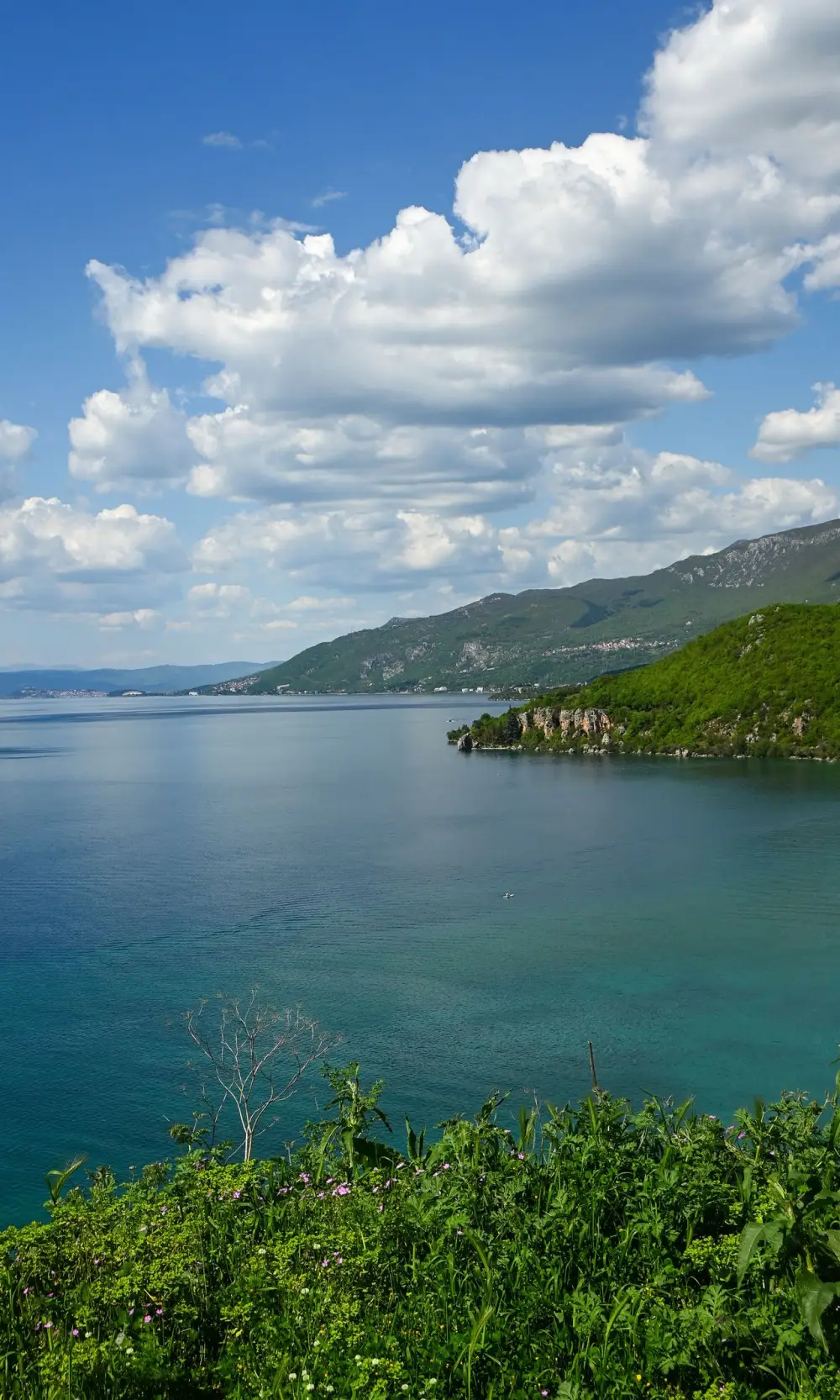 Lake Ohrid, one of Europe’s oldest lakes, from the hills above the shore.
St John at Kaneo (Church of St John the Theologian; free exterior, approximately MKD 100 / €1.60 interior): this 13th-century Byzantine church perched on a rocky promontory above the lake is the most photographed image in North Macedonia. The church interior has frescoed walls, but the location - above the water with the lake and Albanian mountains behind - is the main draw. Walk the 20-minute coastal path west from the old town’s southern quay.
Samuel’s Fortress (Samuil’s Castle, approximately MKD 120 / €2 entry, open daily 08:00–20:00): the hilltop fortress above Ohrid old town was built by Tsar Samuel of the First Bulgarian Empire around 990 CE. The walls are substantially intact; the views over the lake and old town are excellent. Allow 1 hour.
Plaošnik (immediately below the fortress, free): the archaeological site of an early Christian basilica dating to the 5th century, beside the Church of Saints Clement and Panteleimon (approximately MKD 100 / €1.60 entry) - a modern reconstruction of the 9th-century church built by St Clement of Ohrid, who developed the Cyrillic alphabet here. This is one of the most significant early Christian sites in the region.
Boat trip on Lake Ohrid (approximately MKD 600–1,000 / €10–16 per person, 1.5-hour tour departing from the old harbour) covers the Church of St John at Kaneo from the water and the Bay of Bones - a prehistoric lake-dwelling museum (approximately MKD 200 / €3 entry) built on stilts over the water at Gradište, approximately 7 km south of Ohrid.
Book lake tours and activities in Ohrid →
See: things to do in Ohrid and best restaurants in Ohrid.
Day 6 - Ohrid to Skopje
Bus: Ohrid to Skopje, approximately 5 daily departures, approximately MKD 400 / €6.50, 3 hours. The bus station in Ohrid is at the northern edge of the old town.
Arrive Skopje by midday. The Macedonia Square (Ploštad Makedonija) is the city’s central square and the controversial heart of the “Skopje 2014” urban redevelopment project - a government programme from 2010–2014 that installed approximately 400 Baroque-style statues, neoclassical fountains, and monumental buildings on a largely Socialist-era city. The result is either impressive or bewildering depending on your point of view, but it is undeniably unique: the equestrian Warrior on a Horse statue (the Alexander the Great statue, approximately 22 metres tall) dominates the square and the river.
The Old Bazaar (Čaršija): cross the Stone Bridge (Kameni Most, 1451) from Macedonia Square to the Ottoman old bazaar - the largest bazaar in the Balkans outside Istanbul, with approximately 3,000 shops covering metalwork, textiles, food stalls and cafés. The Daut Pasha Hamam (currently the National Gallery of Macedonia – Classic, approximately MKD 100 / €1.60 entry) is one of the largest surviving 15th-century bathhouses in the Balkans; the Mustafa Pasha Mosque (1492, free entry) has a garden courtyard with views of the Kale Fortress above.
Kale Fortress (free entry, dawn to dusk): the hilltop Ottoman fortress above the Old Bazaar dates to the 6th century (rebuilt substantially under Ottoman rule) and gives 360-degree views over Skopje. The interior contains ongoing archaeological excavations of Byzantine and Roman remains.
Evening: dinner at Restaurant Han (Old Bazaar, Macedonian traditional food, approximately MKD 700–1,200 / €11–20 per person) or Stara Gradska Kuḱa (approximately MKD 600–1,000 / €10–16 per person, traditional recipes with a good selection of Macedonian wine).
Browse tours and day trips from Skopje →
Where to stay in Skopje:
- Budget: Shanti Hostel - dorm from approximately MKD 1,200 / €20/night; close to the Old Bazaar
- Mid-range: Hotel Tim’s Apartments - from approximately MKD 3,500 / €57/night; modern apartments near the river
- Comfort: Marriott Skopje - from approximately MKD 8,000 / €130/night; riverside location, full-service
Search all Skopje hotels → Full guide: where to stay in Skopje
Day 7 - Skopje: Matka Canyon and Departure
Matka Canyon (Bus 60 from Skopje bus station to end of line, approximately MKD 80 / €1.30, 40 minutes; or taxi approximately MKD 700–1,000 / €11–16): a narrow limestone canyon 15 km south-west of Skopje carved by the Treska River, now partially flooded by a reservoir. Vrelo Cave (boat from the Matka dam wall, approximately MKD 300 / €5 per person including guide; the cave contains one of the deepest underwater lakes in the world, depth incompletely surveyed) is the main attraction; boat trips on the reservoir run approximately every 30 minutes from 09:00. Hiking trails lead up the canyon walls - the path to Sveta Trojca Monastery (30 minutes one-way from the dam, free) gives views down the canyon.
Return to Skopje for your afternoon or evening departure. Skopje International Airport (SKP) is 23 km east of the city. Airport bus (Vardar Ekspres, approximately MKD 200 / €3.30, 30 minutes, runs to match flight schedules) or taxi (approximately MKD 1,200–1,800 / €20–30, 25 minutes).
See: things to do in Skopje and Matka Canyon guide.
Transport Summary
| Leg | Method | Approx cost | Approx time |
|---|---|---|---|
| Tirana Airport → city | Bolt rideshare | €10–15 | 25 min |
| Tirana → Berat | Bus | €3.50 | 2 hrs |
| Berat → Elbasan | Bus | €2.20 | 1.5 hrs |
| Elbasan → Pogradec | Bus/furgon | €2.60–3.50 | 1.5 hrs |
| Pogradec → Ohrid (border crossing) | Taxi/minibus | €15–25 | 1.5 hrs |
| Ohrid → Skopje | Bus | €6.50 | 3 hrs |
| Skopje → Airport | Airport bus | €3.30 | 30 min |
All costs approximate.
Budget Overview
| Category | Budget/day | Mid-range/day |
|---|---|---|
| Accommodation | €12–20 | €50–80 |
| Food | €8–15 | €25–40 |
| Transport | €3–10 | €8–20 |
| Sights/activities | €3–8 | €10–20 |
| Total | approx. €26–53 | approx. €93–160 |
Albania and North Macedonia are among the most affordable countries in the Balkans. A mid-range budget here goes considerably further than in Croatia or Montenegro.
Related Guides
- Tirana travel guide
- Things to do in Tirana
- Best restaurants in Tirana
- Berat travel guide
- Things to do in Berat
- Ohrid travel guide
- Things to do in Ohrid
- Matka Canyon guide
- Skopje travel guide
- Things to do in Skopje
- Albania travel guide
- North Macedonia travel guide
- Albania 7-day itinerary
- North Macedonia 5-day itinerary
- Best food in Albania
- Best food in North Macedonia
Where to Stay
- Tirana - Where to stay in Tirana
- Berat - Where to stay in Berat
- Ohrid - Where to stay in Ohrid
- Skopje - Where to stay in Skopje
Things to do at each stop:
- Day trips from tirana
- Day trips from skopje
- Best tours in Tirana
- Best tours in Ohrid
- Best tours in Skopje
Book Your Trip
Flights - search and compare on Aviasales · flights guide eSIM - stay connected with Airalo · eSIM guide Travel insurance - get covered with VisitorsCoverage · insurance guide Airport transfers - book with Kiwitaxi Car rental - compare with GetRentaCar · car hire guide Hotels - compare and book accommodation on Booking.com Tours and activities - browse GetYourGuide