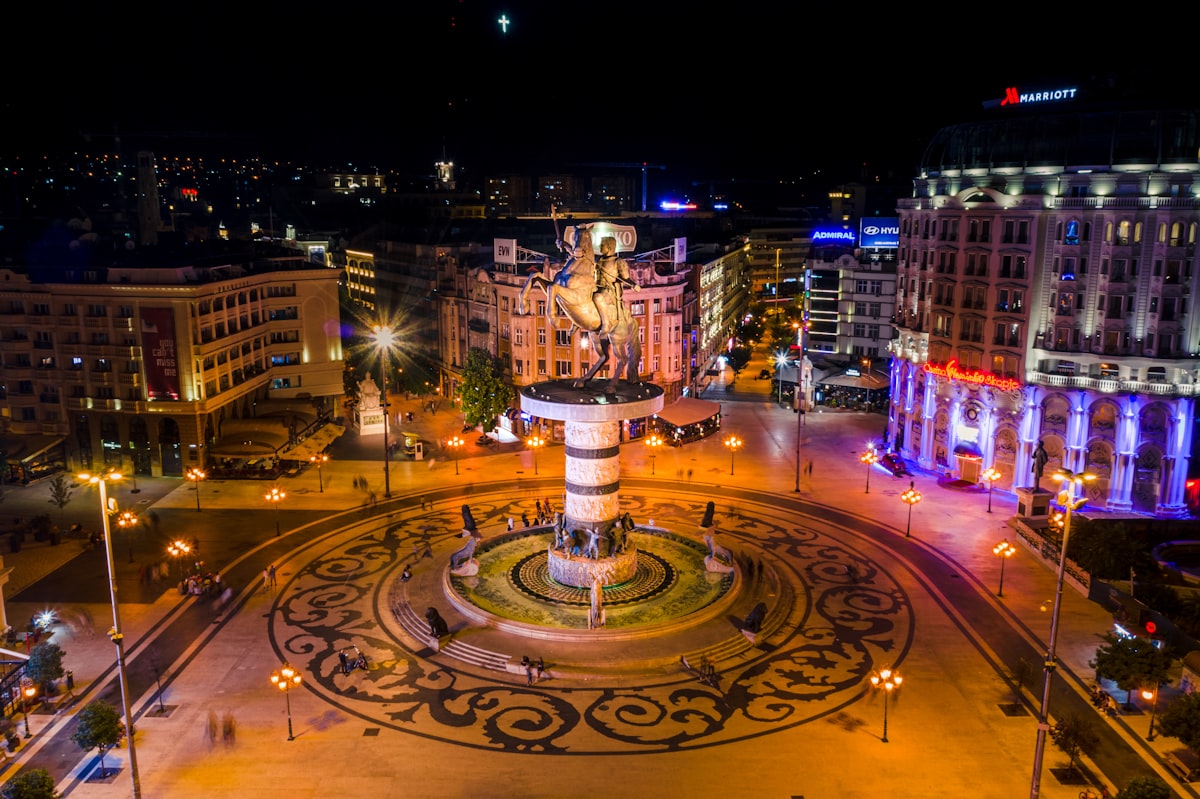
Skopje divides visitors reliably: some find the city’s post-2010 Baroque makeover fascinating as an exercise in national myth-making; others want to spend less time there and more time in the landscape around it. The good news is that North Macedonia’s most compelling destinations are accessible from Skopje within a single day’s drive, and the variety is genuine - lake, canyon, mountain, and a Hellenistic city that punches above its profile.
Below are five day trips from Skopje worth making in 2026.
Ohrid (2 hours 30 minutes each way)
The signature destination. Ohrid is a UNESCO World Heritage Site twice over - once for the natural lake (shared with Albania) and once for the medieval religious and cultural heritage of the town. Lake Ohrid is one of the world’s oldest lakes, approximately 3 million years old, and contains several endemic species found nowhere else on earth.
The old town above the lake contains around 365 churches, most from the Byzantine era (9th–14th centuries). The ones worth prioritising are St. Sophia Cathedral (11th century, with exceptional Byzantine frescoes; entry approximately 100–150 MKD as of 2026) and St. John the Theologian at Kaneo - a small Byzantine church on a promontory over the lake that delivers the postcard view. The climb up to Samuil’s Fortress (entry approximately 60–100 MKD) gives you the overview of the town and lake.
The lake itself allows swimming from pebble beaches below the old town - Lagadin and Gradište beaches, 10–15km south, are cleaner and less crowded.
Organised tour: The standard format for a Skopje day trip. Tours depart 7:00–8:00am and return by 8–9pm, typically including a guide for the old town churches, a boat trip on the lake, and free time at a restaurant for lunch. Price approximately €35–55 per person as of 2026. GetYourGuide listings and operators including City Walk Skopje run this route regularly in summer.
Bus: Direct buses from Skopje bus terminal (Авто станица, on Dame Gruev Street) depart regularly, fare approximately 350–500 MKD (about €6–8) each way, journey 2 hours 30–40 minutes. Return services run until early evening.
Self-drive: Via the A3 motorway south, approximately 2 hours 30 minutes. Parking in Ohrid old town is limited; park at the lower lake car parks and walk up.
Best season: May–June and September. July–August is extremely busy with Macedonian tourists; the Ohrid Summer Festival (late July to late August) brings outdoor classical concerts and theatre.
Matka Canyon (30 minutes each way)
The closest significant natural attraction to Skopje - 15km southwest, up the Treska river gorge. Matka Canyon is a narrow limestone gorge with walls rising 50–200 metres above the river, formed behind an early 20th-century dam. The canyon is navigable by kayak and rowboat for hire (approximately 200–400 MKD per hour) and by organised boat trip to Vrelo Cave at the canyon head (one of Europe’s deepest underwater caves, approximately 500 MKD for the 45-minute boat tour).
The canyon’s trails give hikers access to several medieval monasteries - Sv. Andrej (14th century, with well-preserved frescoes) and Sv. Nikola are both reachable on a 2–3 hour round trip from the lakeside restaurant and pier.
Getting there: Taxi from Skopje approximately €8–12 one way (agree the fare before). City bus 60 departs from central Skopje; journey approximately 40 minutes, fare approximately 35 MKD (about €0.60). Self-drive is straightforward.
Several Skopje half-day tours include Matka Canyon, running approximately €20–30 per person. A good option for a half-day if you want to avoid driving.
Best season: April–October. The canyon is at its most dramatic in spring when the river is full; summer offers swimming from rocks near the pier.
Bitola (2 hours each way)
North Macedonia’s second city, set in a valley close to the Greek border. Bitola’s Ottoman old town - the Čaršija - is unusually well preserved and less touristified than Skopje’s version. The clock tower, the covered bazaar, and the 16th-century mosque complex are the architectural anchors.
The reason to make the trip rather than stay in Skopje is Herakleja Linkestis - a Hellenistic and early Roman city excavated on the southern edge of Bitola. The site contains exceptional floor mosaics (some of the finest surviving examples in the Balkans), a complete small theatre, and Roman baths, all walkable in about 90 minutes. Entry approximately 100–150 MKD as of 2026.
Bitola’s café culture along Sirok Sokak (the main pedestrian street) is worth time after the ruins - the city has a historic identity as a consular city (multiple European powers maintained consulates here in the Ottoman period) and the café tradition reflects that cosmopolitan past.
Getting there: Buses from Skopje bus terminal, approximately 2 hours, fare around 350–500 MKD (about €6–8) each way. Several daily departures. Self-drive via the A1/E75 motorway south, approximately 2 hours.
Best season: May–October. Bitola at 616 metres elevation is noticeably cooler than Skopje in summer.
Vodno Mountain and Millennium Cross (45 minutes from city centre)
The mountain that forms Skopje’s immediate backdrop. The Millennium Cross - erected in 2002 at the summit ridge at 1,066 metres - is the dominant presence on the skyline and the obvious landmark orientation point from anywhere in the city. A gondola (cable car) runs from Sredno Vodno to near the cross; roundtrip approximately 100 MKD as of 2026.
The mountain trails begin effectively from the southern suburbs and are popular with Skopje residents for morning runs and weekend hikes. The summit area is developed - a small café operates near the cross - but the views across the Vardar plain and toward Albania and Kosovo are the reason to go.
Getting there: City bus 25 departs from Macedonia Square for Sredno Vodno (lower gondola station). Alternatively, taxi to the lower gondola station approximately €5–8. Self-drive follows the same route.
Vodno works well as a morning trip - up by gondola, a walk along the summit ridge, back for lunch in the city. Total time from city centre approximately 3–4 hours.
Best season: April–November. The gondola operates year-round but may suspend in high wind. The views are best in spring before summer haze develops.
Kokino Megalithic Observatory (1 hour 30 minutes each way)
A UNESCO-ranked archaeological site that most visitors to Skopje have never heard of. Kokino is a Bronze Age observatory on a volcanic rock outcrop at 1,013 metres altitude, dating to approximately 1800 BCE. It’s the fourth-oldest known astronomical observatory in the world - the rock formations were deliberately carved to mark solstice and equinox sunrise positions. The site feels genuinely remote and rarely visited; a complete contrast to the Skopje city spectacle.
Getting there: Hiring a car is strongly recommended - approximately 90 minutes north toward Kumanovo. No direct public transport. Private tour from Skopje approximately €50–80 per person for a combined Kumanovo region tour.
Best season: May–October. The site is at altitude and exposed; winter visits require appropriate clothing.
Browse guided day trips from Skopje - Ohrid, Matka Canyon, private transfers, and more - on GetYourGuide.
For planning your time in the city, the Skopje city guide covers what to make of the Baroque redevelopment, where to stay, and which parts of the Old Bazaar are worth your time.