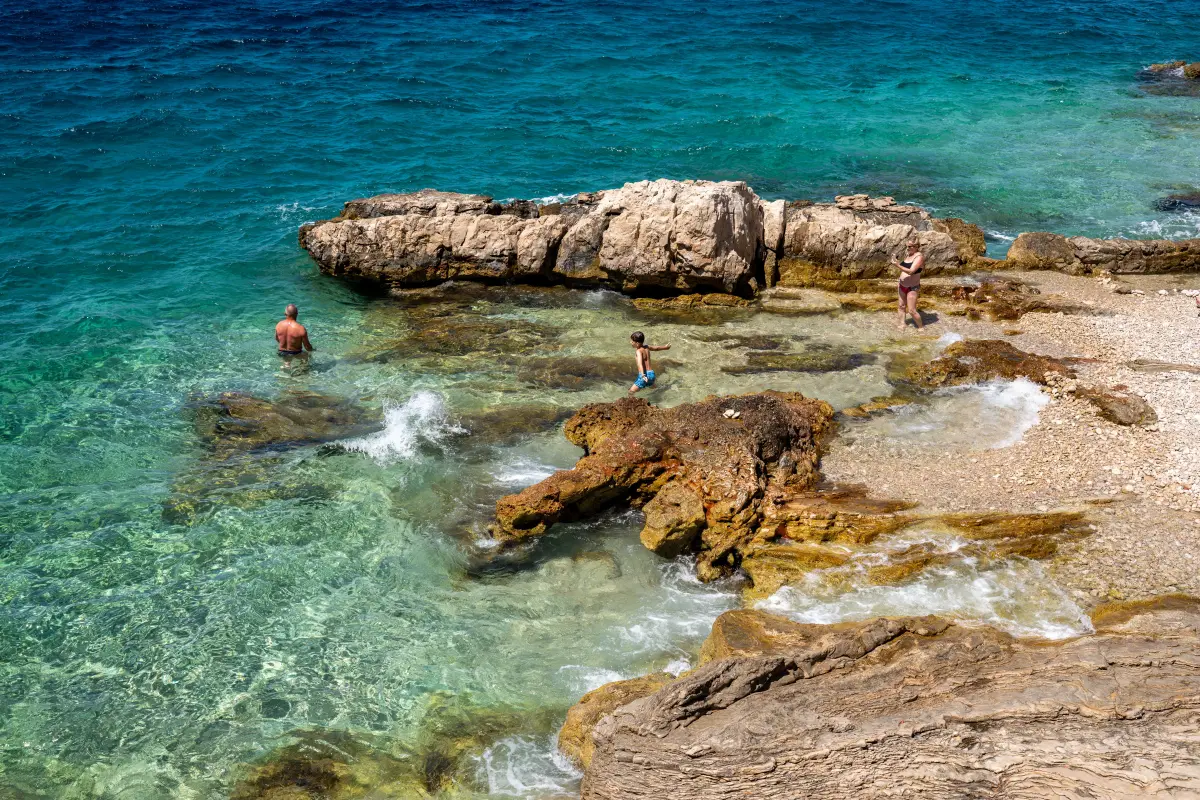
Travelling the Balkans with children works better than most families expect. The region is compact enough to manage without long flights, the beaches on the Adriatic and Montenegro coasts are among the best in Europe for children, the food is family-friendly, and the costs are significantly lower than Italy or Greece. The main challenge is managing distances between highlights — this guide helps you build a practical family circuit.
Why the Balkans Work for Families
A few things that make the Balkans particularly suited to families travelling with children:
Affordable family accommodation: a family room in a good hotel rarely exceeds €100–150 in most cities, and apartments are widely available through booking platforms for €60–100 per night in most destinations outside Dubrovnik.
Short hops between highlights: Montenegro, Albania, and Bosnia can be covered in a two-week circuit with drives rarely exceeding three to four hours. Children’s tolerance for car travel is not heavily tested.
Food that children actually eat: the Balkans runs on grilled meats, bread, pizza, and pasta in every restaurant. Even very fussy eaters rarely go hungry. Portions are large and prices reasonable.
Beaches without complicated logistics: the Montenegro and Albanian Riviera coasts have beaches reachable by bus or short taxi, without needing boat transfers or complex bookings.
Best Destinations for Families
Montenegro: Budva and Bečići Beach
Budva is the most family-practical destination on the Montenegrin coast. Bečići, a long sandy beach about 2km south of Budva, is one of the best family beaches in the Balkans — wide, gently shelving into the sea, with beach bars that provide sunbeds and children can run freely. Water sports rental (kayak, paddleboard) is available from approximately €10–15/hour.
Hotels in Budva include several family-friendly properties with pools within walking distance of Bečići. The Splendid Conference and Spa hotel has a large pool and is directly adjacent to the beach; approximately €120–200/night for a family room in high season.
Kotor is also excellent for older children (ages 8+) — the walls walk is a genuine adventure for kids old enough to manage the 1,300 steps. Younger children may struggle.
Albania: Ksamil
Ksamil, a small village about 17km south of Saranda on the Albanian Riviera, has some of the clearest and shallowest water in the entire Adriatic/Ionian coast. The beach at Ksamil itself and the small islands accessible by paddleboat are ideal for children under 10 who want shallow, calm water rather than waves.
Accommodation in Ksamil ranges from €60–120/night for a family room or apartment in peak summer; browse options here. Saranda, the nearest town, has supermarkets, restaurants, and a small promenade.
Butrint National Park — a UNESCO archaeological site 20 minutes south of Saranda — is worthwhile for older children interested in history, with well-preserved Roman and Byzantine ruins in a wildlife reserve setting. Entry costs approximately 700 ALL (approximately €7) per adult, less for children.
Croatia: Split over Dubrovnik for Families
Split is a better family base than Dubrovnik. It is less crowded, has wider streets more navigable with pushchairs, and has its own set of Roman ruins (Diocletian’s Palace, still partly inhabited) that fascinate older children. Hotels in Split run €80–180 for a family room.
The nearby beaches at Bačvice (flat sandy shore, traditional picigin ball game) and the Kaštela coastline north of Split are good for young children. The island ferries from Split to Brač (Blue Cave, Zlatni Rat beach) add a half-day boat excursion suitable for ages 5+.
North Macedonia: Ohrid for Calmer Family Travel
Ohrid works well for families who want a slower pace. The lake beach — a long pebble-and-sand strip below the old town — is calm and shallow, good for all ages. The Old Town itself is compact and walkable, and the view from the Tsar Samuil’s Fortress (approximately 100 MKD entry, about €1.60) rewards the short uphill walk.
Hotels in Ohrid at the lakeside run approximately €70–130 for a family room.
Bosnia: Mostar for an Afternoon, Not a Base
Mostar is better as a day trip or one-night stop rather than a family base. The old town is atmospheric but compact — most families cover it in half a day. The historic bridge, the bazaar, and Koski Mehmed Pasha Mosque give children a tangible sense of Balkan history. Keep the stop at one or two nights maximum.
Family-Friendly Activities
Water sports: widely available on the Montenegrin and Albanian coasts. Kayak rentals, paddleboard hire, and pedalo boats are suitable from age 5+. Jet ski and parasailing from around age 10–12.
Guided family tours: GetYourGuide Balkans tours includes family-specific options in Dubrovnik (walls walk with guide), Kotor (boat trip on the bay), and Split (Diocletian’s Palace tour). Most operators list minimum ages in the booking details — filter for “family” or check the “Is this suitable for children?” section on each tour page.
Mountain hiking (age-dependent): Prokletije mountains in Albania, Durmitor in Montenegro, and the Sutjeska National Park in Bosnia all offer family-level trails for ages 8+ with proper footwear. Durmitor’s Crno jezero (Black Lake) trail is a flat 3.5km loop suitable for younger children.
Kayaking the Neretva, Bosnia: half-day kayak trips on the Neretva river near Mostar are available for ages 10+ at approximately €25–35 per person. A calmer option than white-water rafting.
Practical Logistics for Families
Getting Around
Renting a car is strongly recommended for families with young children — it eliminates bus timetables, allows for flexible beach stops, and makes luggage management far easier. Car hire in the Balkans runs approximately €35–60/day for a standard five-seat car; book early for peak July–August.
Child car seats are available from most car hire companies but availability is not guaranteed — confirm at booking.
Health and Medical
Healthcare standards vary across the region. Montenegro and Croatia have reasonable hospital facilities in main cities. Albania’s standard outside Tirana and Saranda is more limited. For peace of mind, ensure your travel insurance covers children for emergency medical evacuation. Balkans travel insurance — check that children are included and that the policy covers any adventure activities you plan.
eSIM for Staying Connected
Managing data roaming across multiple Balkans countries gets complicated and expensive. An Airalo eSIM for the Balkans gives data coverage across most of the circuit without needing to swap physical SIMs in each country — useful when travelling with children who may need maps or entertainment during drives.
Best Time for Families
June and September are the recommended months for families. Beaches are usable, temperatures are comfortable (24–27°C on the coast), school holiday crowds have not peaked, and Dubrovnik’s visitor restrictions are less stringent.
July and August: beaches are at their best but Dubrovnik and Kotor become very crowded. Acceptable with children but plan early arrivals and avoid mid-afternoon outdoor activities in 32–35°C heat.
May: good for sightseeing cities, potentially too cool for sustained beach time, depending on how young your children are.
Sample 10-Day Family Itinerary
- Days 1–2: Fly into Dubrovnik; old town walls walk and Banje beach (pebble, calm)
- Days 3–4: Drive to Split (~2.5 hrs); Diocletian’s Palace, Bačvice beach
- Days 5–6: Drive to Mostar (~2.5 hrs); old bridge, Kravice waterfalls (30 min further, great for swimming)
- Days 7–8: Drive to Kotor (~3 hrs); bay boat trip, old town walls (older kids)
- Days 9–10: Drive to Budva/Bečići (~45 min from Kotor); beach days to finish
Total driving: around 9 hours spread across the circuit. Each leg is manageable without overnight stops.