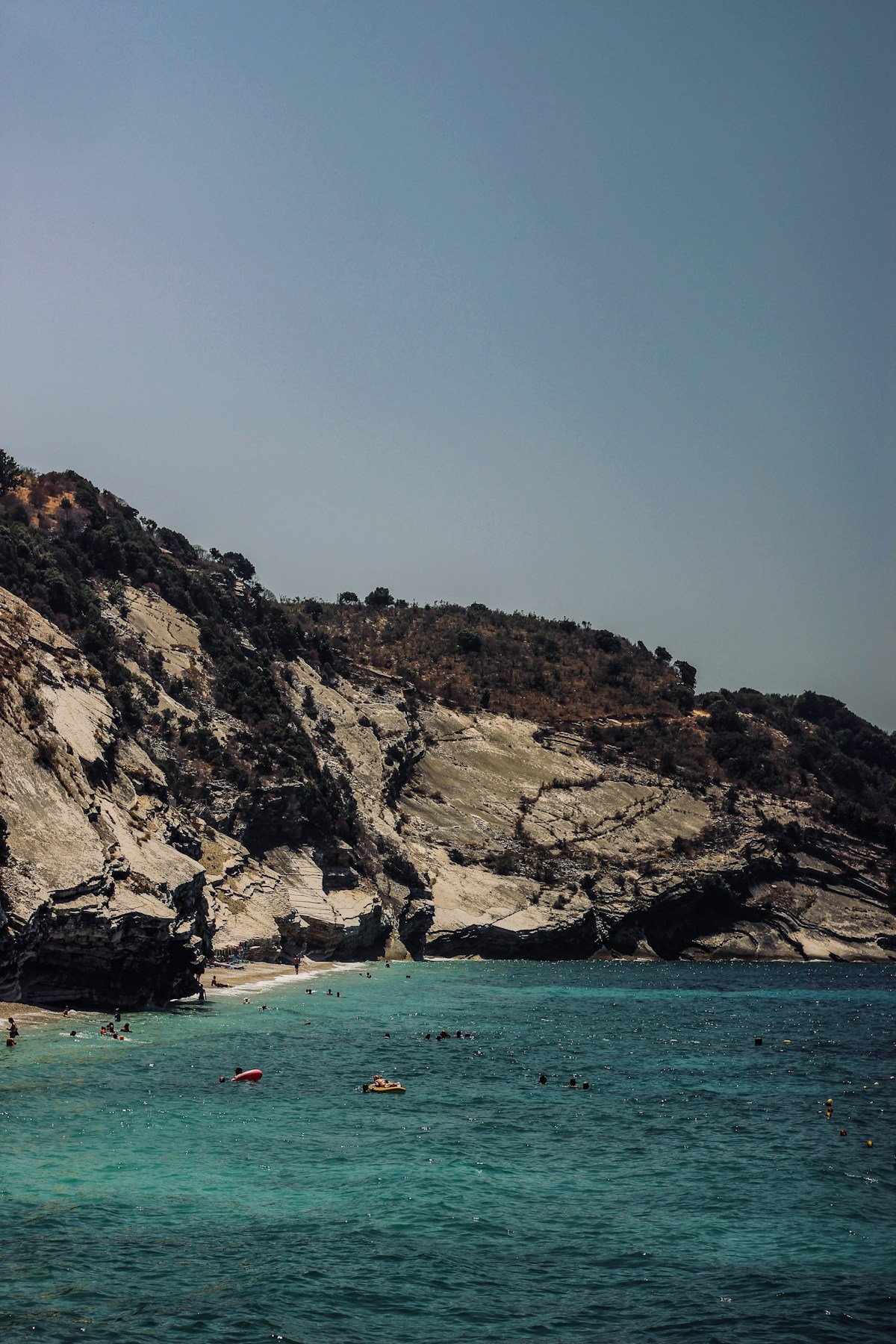
The Saranda to Corfu ferry is one of the shortest international crossings in Europe - 35 minutes of open Ionian Sea separating southern Albania from a Greek island. For travellers on the Balkans circuit, it is the most efficient way to switch between Albania and the Greek islands without routing through Tirana or Athens. For island-hoppers heading north, it opens an easy door into Albania’s riviera. The crossing is fast, straightforward, and operates multiple times daily in season.
The Route: Saranda Port to Corfu New Port
Ferries depart from Saranda Port (officially Porto Romano), located at the northern end of Saranda’s promenade. The terminal building is compact - allow 30–45 minutes before departure to pass through Albanian border control and board. From the Albanian side, departures are managed at the port building directly on the waterfront.
On arrival, ferries dock at Corfu New Port (Limenas Kerkiras), approximately 1 km from Corfu Town centre. The port has taxi ranks, a bus stop serving the island, and luggage storage nearby.
The sea distance is roughly 7 nautical miles. High-speed catamarans complete the crossing in 35 minutes. Conventional ferries are not typically used on this route - it is predominantly fast-ferry services.
Operators
Ionian Seaways and Finikas Lines (also written Finikas Ferry) are the two principal operators on the Saranda–Corfu route. Both are established Ionian carriers with modern high-speed vessels. The two companies sometimes share slot times to ensure coverage through the day; on some days one operates more frequencies than the other.
- Ionian Seaways: ionianseaways.gr - online booking available, multi-language
- Finikas Lines: finikasferry.gr - direct booking portal
Booking through either operator’s website gives you the same fare as aggregators without the platform fee. In peak season, however, aggregators such as Ferryscanner and DirectFerries offer a useful single view of both operators’ availability side by side.
Note: This route carries foot passengers and motorcycles only. If you are travelling with a full-size vehicle, the Saranda–Corfu crossing is not available to you - the nearest vehicle ferry connection to Greece is via the overland route to Igoumenitsa.
Schedules and Frequency
| Season | Daily sailings (each direction) | First departure from Saranda |
|---|---|---|
| June–September (peak) | 3–5 sailings | Approximately 08:30–09:00 |
| April–May, October | 2–3 sailings | Approximately 09:00–10:00 |
| November–March (low) | 1–2 sailings or suspended | Check current timetable |
Exact departure times shift year to year depending on operator scheduling and seasonal demand. Always confirm directly on the operator website for your travel date. In winter, some weeks see no service at all - do not assume the ferry runs in January or February without checking.
Last departure from Saranda in peak season is typically in the late afternoon (around 17:00–18:00). The equivalent last departure from Corfu is broadly mirrored. If you are trying to reach Saranda from Corfu in the same day, aim for the first or second sailing to leave time for onward travel.
Ticket Prices
Fares vary by operator, season, and how far in advance you book:
| Passenger type | Low season estimate | High season estimate |
|---|---|---|
| Adult foot passenger | €15–17 one way | €18–22 one way |
| Child (under 12, approx.) | €8–10 one way | €10–12 one way |
| Bicycle | Small supplement, typically €5 | Small supplement, typically €5 |
| Motorcycle | €25–35 depending on size | €35–45 depending on size |
Prices above are indicative for 2026 and are subject to change. Check operator websites for current fares. Return tickets offer a modest saving on some sailings.
Last-minute tickets at the port are usually available outside July and August, but in peak season the boat can sell out - particularly morning departures when day-trippers from Corfu head over for a few hours in Saranda. Booking online 48–72 hours ahead in high season is the safest approach.
Passport and Border Formalities
This is a fully international border crossing - Albania is not a Schengen or EU member state, and Greece is. Processing is conducted at both the Albanian port of departure and the Greek port of arrival.
Documents required:
- All passengers: a valid passport. Expired or damaged passports will not be accepted.
- EU/EEA citizens: a valid national ID card is accepted by Greece; check whether Albania also accepts your national ID, though a passport is always the safer option.
- Non-EU nationals: check Greek entry requirements for your nationality before travelling. Most Western passport holders (US, UK, Canada, Australia) enter Greece visa-free for up to 90 days within any 180-day Schengen period.
Schengen note: Entering Greece via Corfu counts as entering the Schengen Area. Your 90-day Schengen allowance clock runs from this point. Time spent in Albania does not count against the Schengen 90/180 rule - see our Schengen 90/180 rule guide for a full breakdown.
Border processing at the port: On the Albanian departure side, present your passport at the border police window in the terminal - processing takes 5–10 minutes for most nationalities. On the Greek arrival side, formalities are handled in the ferry terminal at Corfu New Port. Processing typically takes 10–20 minutes depending on the number of passengers arriving together.
Tip: Have your passport easily accessible, not buried in a bag. The ferry boarding line moves quickly once the gate opens; queuing behind someone searching for documents costs everyone time.
What to Bring
Luggage: There is no formal luggage limit on this route, but the vessels are fast ferries with limited storage. Large backpacks and soft bags are manageable; oversized hard-shell cases can be awkward in the narrow aisles. Stow your bag on the designated racks and keep essentials (passport, tickets, valuables) with you in your seat.
Motion sickness: The Ionian crossing is generally calm, but the high-speed catamarans can feel choppy if there is any swell. If you are sensitive to motion, sit midship rather than at the bow, keep your gaze on the horizon, and take anti-nausea medication before boarding if needed. The crossing is so short that most passengers have no issues.
Cash and cards: Albanian currency is the lek (ALL) and Greek currency is the euro (€). If you are departing from Saranda, exchange remaining lek before boarding - euros are not accepted at Albanian vendors. There are ATMs in central Saranda and in Corfu Town.
Food: There is no onboard catering service on the fast ferries - the crossing is too short. Eat before you board or grab something in Saranda’s waterfront area beforehand.
Getting to Saranda Port
From Saranda city centre: The port is on the promenade, walkable from most guesthouses in 10–20 minutes. A taxi from the upper residential areas costs approximately ALL 300–500 (around €3–5).
From Ksamil: Ksamil is approximately 14 km south of Saranda. A taxi to Saranda port costs roughly ALL 1,000–1,500 (€9–14). Allow at least 30 minutes for the drive plus port formalities.
From Gjirokaster: No direct bus to Saranda port - buses arrive at Saranda’s main bus terminal, from where a short taxi completes the journey. The Gjirokaster–Saranda bus takes approximately 2 hours. Allow a full half-day buffer if connecting from Gjirokaster.
From the Albanian riviera: Shared furgons (minibuses) run from Himara and other riviera stops to Saranda. Services concentrate in the morning.
Onward from Corfu
Corfu Town is 2 km from the New Port. The #15 bus runs from the port area; taxis are available at the rank outside arrivals and cost approximately €8–12 to the town centre.
Onward to mainland Greece: Regular ferries run from Corfu to Igoumenitsa (1.5 hours) on the Greek mainland, and from Igoumenitsa you can pick up connections to Patra, Athens, or the wider ferry network.
Day trip option: Corfu to Saranda works well as a day trip from the Greek side. Take an early morning crossing, spend the day in Saranda and at the beaches of Ksamil, and return on an afternoon sailing. Several tour operators in Corfu run organised day trips on this basis - typically €55–80 per person including the ferry and a guided stop. Independent travellers can do the same for the cost of two ferry tickets.
Planning Your Trip
- Where to stay in Saranda: Browse Saranda accommodation
- Things to do in Albania: Tours and activities from Saranda
- Itinerary ideas: 7-day Albania itinerary
- Travel insurance: Cover yourself for the Adriatic crossing - compare policies
- eSIM: Stay connected as you cross borders - Balkans eSIM options