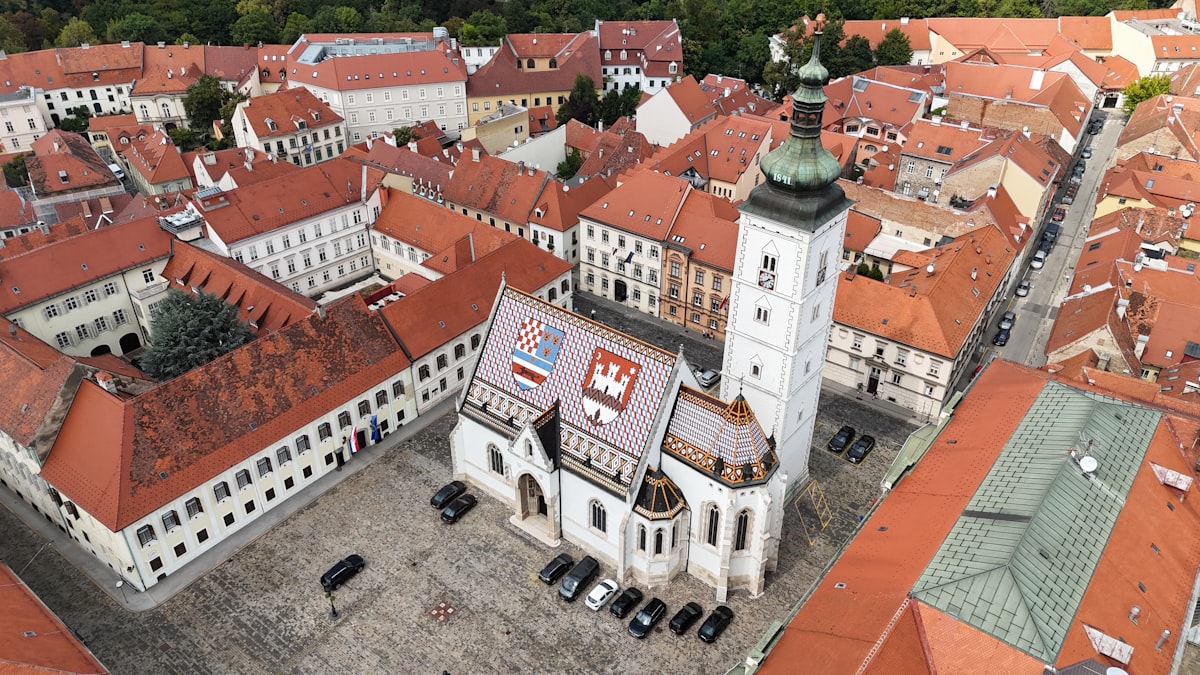
The Balkans punch well above their weight for winter travel. While the Adriatic coast closes for the season, the inland cities — Zagreb, Ljubljana, Sarajevo, Belgrade — come alive in December with Christmas markets, New Year celebrations, and the opening of the mountain ski season. The best Christmas markets in Europe’s southeast are less crowded, considerably cheaper, and more local in character than their Austrian or German equivalents.
Zagreb Advent
Zagreb Advent is the benchmark. The city’s Christmas market has been voted Europe’s Best Christmas Market multiple times and — unlike many European markets that have become tourist-oriented retail exercises — Zagreb’s remains genuinely festive and local in character.
The market runs from late November through 7 January across six city-centre locations:
- Advent on Zrinjevac — the main park location, with a tram decorated as an Advent tram. The centrepiece is the large Christmas tree and bandstand events. Entry is free.
- Advent on King Tomislav Square — the ice rink. Open through early January, skate hire costs around 30 HRK. This is the most photogenic location.
- Strossmayer Square — food and craft stalls running across the park.
- Advent in Tkalčićeva Street — the main pedestrian street fills with artisan stalls, live music, and bar terraces with outdoor heaters.
- Advent in the Upper Town — the historic Gradec district, including Markov Square (adjacent to the cathedral in the photo above), with a quieter, craft-focused market.
- Christmas at Bundek Lake — a family-focused location on the southern edge of the city.
The Upper Town (Gornji Grad) is the most atmospheric in the evenings, when the medieval streets are lit by string lights and the crowd thins compared to the lower city. Mulled wine (kuhano vino) costs 15–20 HRK per cup. Fritule — small doughnuts with powdered sugar — are the traditional street food, sold at most stalls for 5–10 HRK per portion.
Getting there: Zagreb Airport is served year-round by Ryanair, Wizz Air, and Croatia Airlines from multiple European hubs. The market operates across walkable distances in the city centre.
Staying in Zagreb: Browse our Zagreb accommodation guide for hotels near the market locations. The best options for the Advent period are within walking distance of Zrinjevac and the Upper Town.
Ljubljana Festive Fair
Ljubljana’s festive fair is smaller than Zagreb’s but arguably more beautiful. The city’s compact historic centre — the Ljubljanica River, the triple bridge (Tromostovje), and the castle above — creates a natural festive setting that Zagreb’s spread-out market lacks.
The market runs from late November through early January along the riverfront and through the old town. Market stalls cluster around Prešeren Square and along the river embankment, selling Slovenian handicrafts, hot wine, and local food. The illuminations are exceptional — Ljubljana invests heavily in its light installations, which transform the entire city centre.
The market is quieter than Zagreb and more manageable as a day trip or single-night stay. Ljubljana is easily combined with Zagreb (1.5 hours by bus; buses run hourly from the main Zagreb bus station, costing €10–15 one-way).
Practical: See our Ljubljana city guide for the best areas to stay and the highlights beyond the market.
Sarajevo in Winter
Sarajevo does not have a traditional Western-style Christmas market. What it has is more distinctive: a city under snow, a functioning Ottoman bazaar (the Baščaršija) operating year-round with wood-smoke and warmth, and the mountain resorts of Jahorina and Bjelašnica within 30 minutes of the old town.
Sarajevo’s New Year’s Eve is the main winter event, centred on the Baščaršija square with fireworks and live music — a genuine local celebration rather than a tourist performance. Accommodation prices during the Christmas–New Year week rise sharply; book early.
For skiers, Sarajevo in December combines a city break in one of Europe’s most atmospheric settings with day trips to Olympic-legacy ski resorts at a fraction of Alpine prices. Our skiing in the Balkans guide covers lift pass prices, resort comparisons, and the logistics of combining Sarajevo old town with Jahorina or Bjelašnica.
Browse where to stay in Sarajevo for apartments in the Baščaršija quarter and hotels on the slopes.
Belgrade New Year
Belgrade’s New Year’s Eve (Dočekivanje Nove Godine) is one of the largest NYE celebrations in southeastern Europe. Republic Square hosts a mass outdoor concert and countdown, drawing 100,000+ people. The Skadarlija bohemian quarter fills with visitors for the week between Christmas and New Year, with live folk music and restaurants running full capacity.
Unlike the Christmas market cities, Belgrade’s appeal is specifically New Year rather than December as a whole — the city lacks a traditional market but compensates with nightlife, kafana culture, and the New Year atmosphere. Hotels book out for 31 December–1 January months in advance.
Combining the Markets: Suggested Routes
Weekend: Zagreb only — 2 nights in Zagreb, fully focused on the Advent market. Most visitors need no more than 2 days to cover all six market locations.
Extended weekend: Zagreb + Ljubljana — 2 nights Zagreb, 1 night Ljubljana. The 1.5-hour bus connection makes the combination straightforward. Ljubljana works best as the final night before flying home from Ljubljana Airport.
One week: Zagreb + Ljubljana + Sarajevo — 2 nights Zagreb, 1 night Ljubljana, 3 nights Sarajevo. The Sarajevo leg adds the ski option and the NYE atmosphere if dates align. Flights link Zagreb and Sarajevo directly with Wizz Air.
Practical Notes
Temperatures: December across all four cities ranges from 0–8°C. Pack warm layers, waterproof footwear for cobblestones, and a hat. None of the markets require specialist cold-weather gear — standard winter clothing is sufficient.
Costs: Zagreb and Ljubljana are mid-range European cities. Expect to spend €60–100/day on accommodation, food, and market activities combined in Zagreb; slightly less in Sarajevo. Belgrade is the cheapest of the four.
Transport between cities: Bus connections link all four cities; Flixbus and regional operators run regular schedules. Our Balkans transport guide covers routes, journey times, and booking platforms. Book flights to the Balkans for direct routes from the UK and Western Europe.
See Also
- Balkans in December — full December weather, skiing, and travel guide
- Balkans in January — after Christmas, into ski season
- Skiing in the Balkans — Jahorina, Bansko, Kopaonik, Kolašin compared
Plan your trip: Search flights to the Balkans · Travel insurance · Balkans eSIM via Airalo · Tours in Zagreb · Tours in Ljubljana · Tours in Belgrade