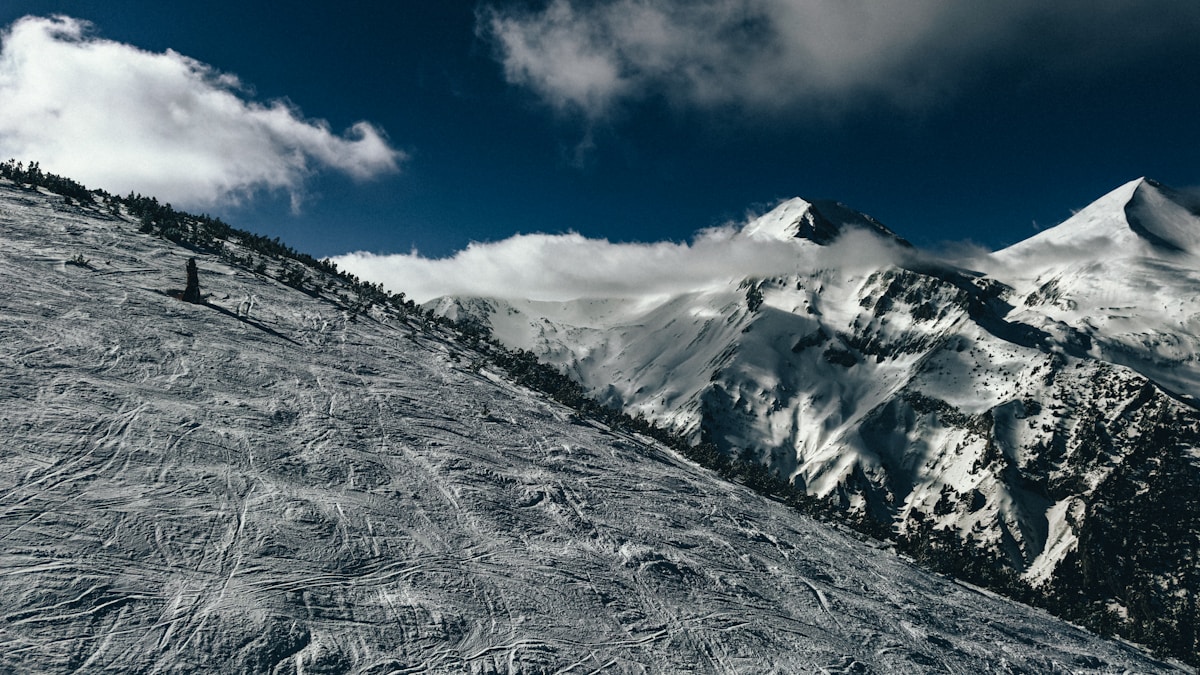
The Balkans is one of Europe’s most underrated ski destinations. Four resorts stand out as genuinely worthwhile: Bansko in Bulgaria, Jahorina in Bosnia, Kolašin in Montenegro, and Popova Shapka in North Macedonia. Each has a distinct character. None costs what the Alps charge. And the competition is stiff — what each resort lacks in polish, it usually makes up in price, atmosphere, or uncrowded slopes.
The Four Resorts at a Glance
| Resort | Country | Altitude (summit) | Lift passes (day) | Season |
|---|---|---|---|---|
| Bansko | Bulgaria | 2,560 m | approx. €35–40 | Dec–Apr |
| Jahorina | Bosnia & Herzegovina | 1,894 m | approx. €25–30 | Dec–Mar |
| Kolašin 1450 | Montenegro | 1,868 m | approx. €20–25 | Jan–Mar |
| Popova Shapka | North Macedonia | 2,088 m | approx. €15–20 | Dec–Mar |
All prices as of the 2025–26 season. Budget travellers should look at multi-day passes, which offer better per-day rates.
Bansko (Bulgaria) — The Infrastructure Pick
Bansko is the closest thing the Balkans has to a fully developed Alpine resort. It sits at the foot of the Pirin Mountains and has a gondola lift system connecting the old town to slopes at up to 2,560 m.
Why Bansko:
- Largest lift network of the four — 75 km of marked runs
- Consistent snow from December to early April at altitude
- Strong après-ski scene in the old town’s mehanas (taverns)
- Well-developed accommodation — from budget hostels to international chain hotels
- Ski school infrastructure is the most comprehensive in the region
Limitations:
- Gets crowded — especially February half-term — compared to others on this list
- The gondola queue at peak times can be 40+ minutes on busy days
- Bansko old town and the ski area are 4 km apart — you need the gondola or a shuttle
Getting there: Fly into Sofia (SOF) and take a 2-hour transfer. Book a transfer from Sofia Airport directly to Bansko. Most operators run this route as a fixed route.
GYG activities in Bansko: Ski lessons, snowshoeing, and winter hiking are available through GetYourGuide in Bansko.
Lift pass cost: Approximately €35–40/day as of the 2025–26 season. Weekly passes from approximately €190.
Jahorina (Bosnia & Herzegovina) — The Atmosphere Pick
Jahorina hosted the women’s downhill events at the 1984 Sarajevo Winter Olympics — a fact that still gives it a slightly mythologised quality among Balkans ski enthusiasts. The resort sits 28 km from Sarajevo at 1,894 m and is genuinely charming in a way that Bansko, despite its old-town marketing, is not quite.
Why Jahorina:
- Intimate, uncrowded slopes — far fewer visitors than Bansko even in peak weeks
- 1984 Olympic history adds character; the original gondola cabins are still a talking point
- Excellent local food — Bosnian staples (cevapi, burek, pita) are cheap and good at slope-side huts
- Easily combined with Sarajevo for a city-ski break (28 km / 45-minute drive)
- Genuinely friendly local scene — less international party crowd, more local families
Limitations:
- Smaller lift network than Bansko — 20 km of marked runs
- Maximum altitude of 1,894 m means snow reliability is more weather-dependent
- Accommodation is basic-to-mid range; fewer luxury options than Bansko
Getting there: Fly into Sarajevo Airport (SJJ) and take a 45-minute transfer. Local buses also serve the route. Book tours and winter activities from Sarajevo.
Lift pass cost: Approximately €25–30/day as of the 2025–26 season.
Kolašin 1450 (Montenegro) — The Beginner and Family Pick
Montenegro’s main ski resort is split across two peaks — Kolašin 1450 and Kolašin 1600 — connected by lift. The combined area is modest by Alpine standards but genuinely usable, and the lack of crowds is its defining characteristic.
Why Kolašin:
- Relaxed beginner terrain — wide, gentle runs make it approachable for first-timers
- Small and manageable — easy to navigate without getting overwhelmed
- Montenegro’s Tara River Canyon is nearby for non-skiers (one of Europe’s deepest gorges)
- Good value accommodation in Kolašin town (8 km from the resort)
- Combines well with Durmitor National Park for a Montenegro winter itinerary
Limitations:
- Shortest runs of the four — limited for intermediate-to-advanced skiers seeking variety
- Snow reliability is the most variable; January to February offers the most consistent conditions
- Less nightlife than Bansko or Jahorina
Getting there: Fly into Podgorica (TGD) or Tivat (TIV). Kolašin town is approximately 80 km from Podgorica (1.5 hrs) and 110 km from Tivat (1.75 hrs). Book a winter transfer from Tivat or Podgorica.
GYG activities: Winter tours and activities in Montenegro including snowshoeing in Durmitor.
Lift pass cost: Approximately €20–25/day as of the 2025–26 season.
Popova Shapka (North Macedonia) — The Value Pick
Popova Shapka sits at 1,780–2,088 m in the Šar Mountains near Tetovo and is the least internationally known of the four resorts. It regularly holds snow from December to March and offers day-pass prices that are the lowest in the region.
Why Popova Shapka:
- Cheapest lift passes of the four — approximately €15–20/day
- Good natural snow record due to high position in the Šar Mountains
- Uncrowded even in peak season; predominantly local skiers
- Can be combined with Ohrid for a North Macedonia winter itinerary (2 hrs south)
- High-altitude terrain with open bowls suited to intermediate skiers
Limitations:
- Infrastructure is the most dated of the four — lifts are older, fewer grooming runs
- Accommodation is limited and mostly basic in Popova Shapka village; Tetovo (12 km) has more options
- Less accessible than Bansko or Jahorina for international visitors
Getting there: Fly into Skopje (SKP) and take a 45-minute transfer to Tetovo, then a further 30 minutes up to the resort. Book winter activities in North Macedonia from Skopje.
Lift pass cost: Approximately €15–20/day as of the 2025–26 season.
Which Resort Is Right for You?
| Traveller type | Best pick |
|---|---|
| First-time skier | Kolašin 1450 — gentle terrain, small crowds |
| Most runs per day | Bansko — largest lift network |
| Budget maximiser | Popova Shapka — lowest day-pass cost |
| City-ski combo | Jahorina + Sarajevo — 45 min between them |
| Best overall atmosphere | Jahorina — Olympic heritage, local food scene |
| Families | Kolašin or Jahorina — relaxed pacing |
| Intermediate-advanced | Bansko or Popova Shapka — more varied terrain |
Ski Insurance for the Balkans — What You Need
Standard travel insurance excludes skiing and snowboarding. Before booking, make sure your policy specifically covers:
- On-piste skiing and snowboarding
- Piste rescue and mountain rescue (helicopter evacuation if needed — essential at altitude)
- Off-piste skiing if you plan to ski outside marked runs
- Ski equipment theft or damage
- Trip cancellation due to poor snow or resort closure
Emergency healthcare in Bansko and Sarajevo is accessible, but for Kolašin or Popova Shapka, facilities near the resort are basic — helicopter evacuation cover is more important, not less.
Get a winter sports travel insurance quote before you travel. The EKTA policy includes ski cover as standard for European destinations.
Getting to and Between the Resorts
The four resorts are spread across four countries — combining two or more in a single trip requires some planning:
- Bansko to Jahorina: Sofia → Belgrade → Sarajevo → Jahorina (long overland); most practical as two separate trips
- Bansko to Sofia: 2 hrs by transfer or shuttle bus — the most straightforward entry point
- Jahorina to Kolašin: Sarajevo → Podgorica (3.5 hrs overland) → Kolašin (1.5 hrs) — a viable 5-day circuit
- Popova Shapka to Ohrid: Tetovo → Ohrid (2 hrs) — works as a North Macedonia ski-lake combination
Pre-book airport transfers for all major Balkans airports serving these resorts — fixed prices and no queuing on arrival.
When to Go
Peak season: February. All four resorts are at their best — snowpack deepest, most ski school options, most activities available. Busiest too, especially at Bansko.
Value season: January. Often uncrowded and cheaper accommodation, but snow depth at lower resorts (Jahorina, Kolašin) is less predictable.
Late season: March–early April at Bansko and Popova Shapka. Fewer crowds, spring sunshine, and often good snow at higher elevations. Kolašin and Jahorina can be thin by mid-March.
Plan Your Trip
- Flights — Find the best fares to the Balkans
- Travel Insurance (incl. ski cover) — Get a quote before you go
- Car Rental — Compare providers for resort access
- Bansko tours — Book ski lessons and winter activities
- Montenegro winter tours — Snowshoeing and activities near Kolašin