Bulgaria has a stronger plant-based food tradition than most of its Balkan neighbours, largely because of the Orthodox Christian fasting calendar - periods of avoiding meat and dairy during Lent, Advent, and other fasts produce a cuisine with a meaningful range of meatless dishes. This is not the same as modern veganism, and some dishes described as vegetarian contain meat stock or butter, but it does mean that traditional Bulgarian restaurants have more usable options than you might expect. All prices below are approximate; 1 EUR ≈ 1.96 BGN.
Naturally Vegan and Veganisable Bulgarian Dishes
Bob Chorba (Bean Soup)
The simplest and most widely available vegan dish in Bulgaria. A thick, slow-cooked soup of white or kidney beans with onion, carrot, tomato, paprika, and dried mint. The traditional version sometimes includes a smoked pork bone for depth - always ask “bez meso” (without meat) to confirm the stock is vegetable-based. When prepared without meat products, bob chorba is completely vegan and genuinely satisfying.
Price: BGN 5–9 (€2.50–4.50).
Lyutenitsa
A thick relish made from roasted red peppers, tomatoes, garlic, and aubergine. Eaten spread on bread, alongside grilled vegetables, or as a condiment. Bulgarian lyutenitsa is sold in jars everywhere and varies significantly in quality - homemade versions from markets are considerably better than supermarket varieties. Universally vegan, universally present.
Where to find it: Every grocery store, market, and most restaurant tables. Look for homemade versions at the women’s market (Zhenski Pazar) in Sofia.
Ajvar
A roasted pepper and aubergine paste from the broader Balkan tradition, also common in Bulgaria. Spicier than lyutenitsa, with a looser texture. Naturally vegan, used the same way.
Zelnik (Spinach Phyllo Pastry)
The spinach version of banitsa - layers of thin phyllo dough filled with wilted spinach and (optionally) onion, baked until crisp. The cheese-free version is vegan. Most bakeries make both cheese and spinach versions - look specifically for zelnik or ask for banitsa bez sirene (banitsa without cheese).
Price: BGN 1.50–3 (€0.75–1.50) from bakeries.
Tikvenik (Pumpkin Phyllo Pastry)
A sweet phyllo pastry with a filling of grated pumpkin, walnuts, sugar, and cinnamon. Sold in bakeries, especially in autumn. Traditional recipes are often vegan or can be - ask if butter or eggs are in the dough.
Price: BGN 1.50–2.50 (€0.75–1.25).
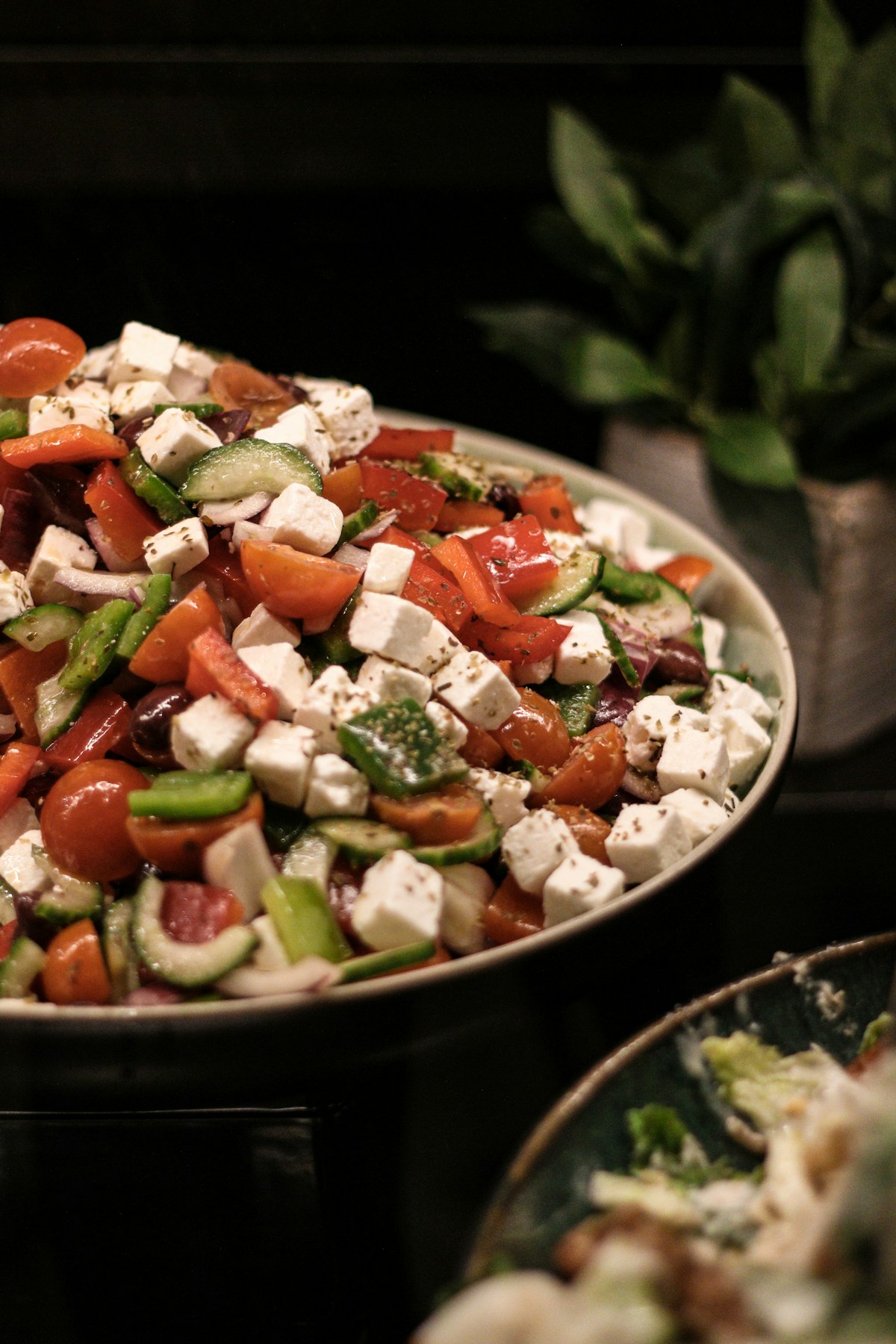
Shopska Salata Without Cheese
The classic Bulgarian salad - tomatoes, cucumber, green pepper, and onion - is naturally vegan without the sirene cheese topping. Ordering it without the cheese (bez sirene) removes the defining element, but the base salad is still a decent accompaniment. Some vegan versions drizzle with olive oil and add olives.
Price: BGN 6–10 (€3–5) without cheese.
Grilled and Roasted Vegetables
Many traditional restaurants offer grilled aubergine, courgette, and peppers as side dishes. These are typically dressed with sunflower oil or olive oil and garlic. Combined with bob chorba and bread, they make a workable vegan meal in a traditional setting.
Vegan Restaurants in Sofia
Sofia has a genuine vegan restaurant scene - not large, but with enough variety to eat well for an extended stay.
Soul Kitchen (bul. Vitosha 14) - One of Sofia’s most established plant-based restaurants. The menu spans salads, bowls, wraps, and cooked dishes with global influences and some Bulgarian touches. Mains approximately BGN 18–28 (€9–14). Good coffee and a calm atmosphere. Lunch and dinner.
Edgy Veggy (ul. Positano 8) - Casual vegan spot popular with young Sofia locals. Burgers, bowls, wraps, and daily specials. Mains approximately BGN 14–22 (€7–11). The portions are large and prices reasonable.
Green Deli - Light lunches, fresh-pressed juices, wraps, and salad bowls. Good for a quick, healthy meal. Mains BGN 12–18 (€6–9). Several Sofia locations.
Magura Restaurant (Boyana neighbourhood) - Not exclusively vegan, but listed by Bulgarian vegan communities for its strong vegetarian and vegan options alongside meat dishes. Traditional setting with a garden. Mains approximately BGN 16–26 (€8–13).
For traditional restaurants: Hadjidraganovite Kushti (ul. Kozloduy 23) does well-prepared bob chorba and vegetable dishes, and staff are accustomed to requests for meat-free versions of dishes. Mains from BGN 18–30 (€9–15).
Vegan Options in Plovdiv
Plovdiv’s Kapana district has several cafes and restaurants with plant-based options.
Dali Art Café & Bar (Kapana) - A gallery-café hybrid serving lighter dishes - salads, wraps, seasonal specials. The menu changes and usually includes a plant-based option. Mains and salads BGN 10–16 (€5–8). Good coffee.
Pavaj (Kapana) - Contemporary Bulgarian cooking with strong seasonal produce. The menu changes regularly and typically includes one or two vegan mains. Mains BGN 18–28 (€9–14). The level of care with vegetables is noticeably higher than most traditional restaurants.
Traditional mehani in Plovdiv (Hebros, Rahat Tepe, Mehana Shtastlivetsa): all have bob chorba, grilled vegetable sides, and shopska - ask about specific dishes and whether stocks contain meat.
Vegan Options in Veliko Tarnovo
Veliko Tarnovo’s medieval old town and student population support a small plant-based scene.
The Ego Restaurant (ul. Stefan Stambolov) - Long-running restaurant with a separate vegetarian menu section and reliable plant-based options. Mains BGN 14–22 (€7–11). The views from the terrace towards Tsarevets Fortress are excellent.
Stambolov Restaurant (ul. Stefan Stambolov) - Similar positioning - traditional Bulgarian restaurant with vegetarian options and scenic terrace. Grilled vegetables and salads are reliable. Mains BGN 12–20 (€6–10).
Bakeries along ul. Nezavisimost: Several bakeries sell zelnik (spinach phyllo) fresh in the morning. One of the most reliable ways to eat a solid vegan breakfast in the city.
Supermarkets and Self-Catering
Bulgaria’s supermarkets (Kaufland, Lidl, Billa) carry an excellent range of produce. Fresh tomatoes, cucumbers, peppers, aubergines, and herbs are cheap and of good quality in summer. Organic markets (bio pazari) operate in Sofia on weekends in the centre and in Lozenets neighbourhood. Jarred lyutenitsa and ajvar make good travel provisions.
Practical Notes
- Language: “Bez meso” means without meat; “bez mleko i mlechni produkti” means without dairy. Knowing these phrases removes most ambiguity in traditional restaurants.
- Orthodox fasting menus: Some traditional restaurants offer a separate fasting (постно) menu during major Orthodox fasts. These menus are entirely plant-based and can be excellent value.
- Cross-contamination: Not commonly managed in traditional kitchens. If strict cross-contamination matters, eat at dedicated vegan restaurants only.
See Also
- Best food in Bulgaria
- Bulgaria travel guide
- Sofia food guide
- Sofia vegan food guide
- Balkans food guide
Plan your trip: Browse food tours and vegetarian-friendly cooking experiences in Bulgaria. Search flights to Sofia and compare prices. Browse hotels in Sofia - the Oborishte and Lozenets neighbourhoods put you closest to Sofia’s dedicated vegan restaurants and weekend organic market. Travel insurance is worth sorting before you go.