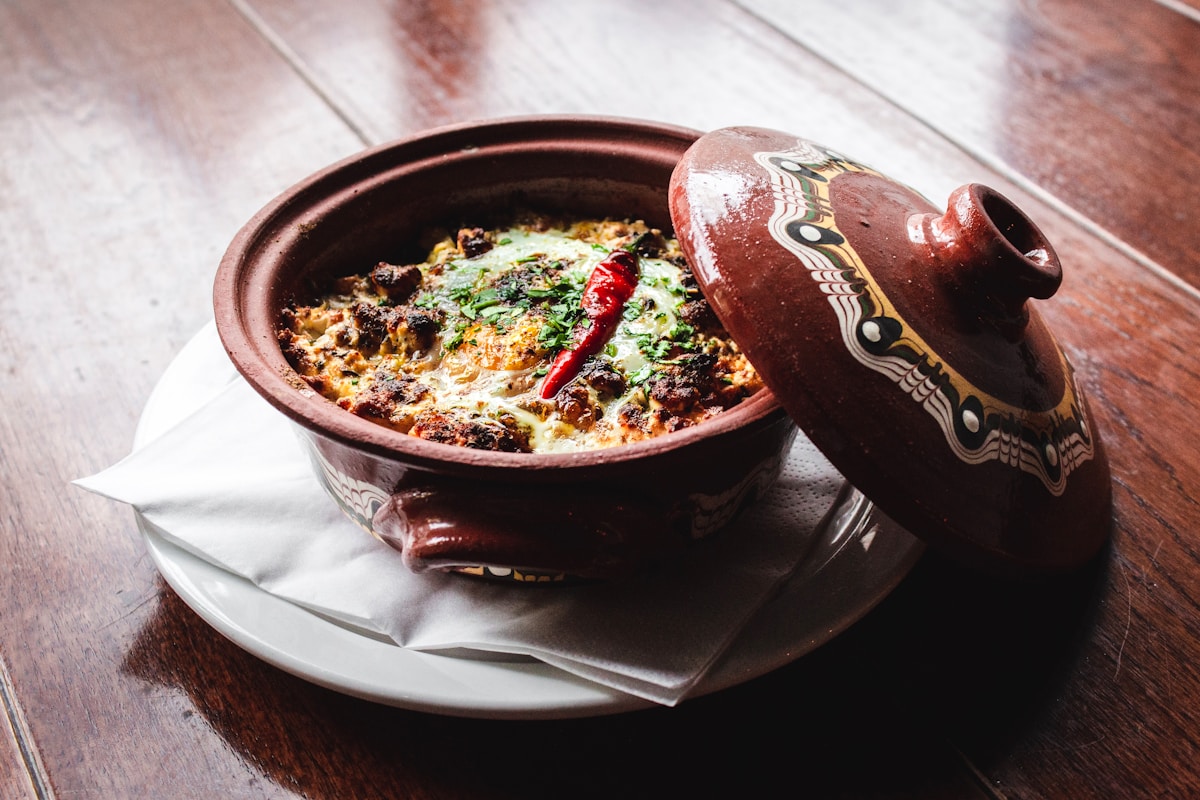
Bulgarian cuisine is shaped by its geography - Thracian plains to the south, Rhodope and Balkan mountain ranges across the middle, and Black Sea coast to the east. The result is a food culture built on slow-cooked meats, fermented dairy, roasted peppers, and hearty bean dishes, with Ottoman and Slavic influences running throughout. Prices below are approximate; 1 EUR ≈ 1.96 BGN.
The Essential Dishes
Banitsa
Banitsa is Bulgaria’s national pastry and arguably the single most important thing to eat here. Thin sheets of phyllo dough are layered with a filling of white sirene cheese, eggs, and butter, then baked until the top is crinkly and golden. It is sold from dedicated banitsa shops and bakeries from early morning - the correct way to eat it is hot, straight from the oven, with a glass of ayran (a cold, salted yogurt drink).
Varieties exist: sirene banitsa (the classic with white cheese), zelnik (with spinach), and tikvenik (sweet, with pumpkin and walnuts). Regional bakeries have their own recipes - the Rhodope version is denser and richer than the Sofia bakery standard.
Price: BGN 1.50–3 (€0.75–1.50) per slice from a bakery. Restaurant portions cost BGN 6–10 (€3–5).
Shopska Salata
The Bulgarian national salad, and the first thing most Bulgarians order at a restaurant. Chopped tomatoes, cucumber, raw or roasted pepper, and onion, finished with a thick layer of grated sirene (white brined cheese). The cheese is the defining element - sirene is sharper and saltier than feta, and the quality varies dramatically between restaurants.
The salad is best in summer when the tomatoes are local and sun-ripened. A winter shopska, made with greenhouse tomatoes, is a noticeably inferior experience.
Price: BGN 7–12 (€3.50–6).
Kavarma
The signature dish of Bulgarian traditional cooking - a slow-cooked stew of pork or chicken with onions, peppers, tomatoes, mushrooms, and spices, served bubbling in a clay pot (gyuveche). It originates from the Rhodope mountain tradition of cooking meat over low heat for hours until the sauce reduces and concentrates.
Every mehana has its own version. The best kavarma is made with pork that has been marinated in local wine before cooking. Expect a thick, dark sauce and meat that falls apart without any effort.
Price: BGN 14–22 (€7–11).
Kebapche
Small, finger-shaped grilled sausages made from a mixture of beef and pork, seasoned with cumin and black pepper. Served with chips or salad, and sometimes with a side of lyutenitsa (roasted pepper and tomato relish). Kebapche is Bulgaria’s answer to the ćevapi found across the broader Balkans - a near-universal fast food.
Price: BGN 10–16 (€5–8) for a portion of five to eight pieces.
Meshana Skara (Mixed Grill)
A platter of grilled meats - typically kebapche, kyufte (flattened meatballs), and shishche (pork or chicken skewers), with chips and a relish. It is the Bulgarian equivalent of a mixed grill and appears on virtually every traditional restaurant menu. A full platter is generous enough for one hungry person.
Price: BGN 18–28 (€9–14) for a full mixed grill platter.
Tarator
A cold soup of yogurt, water, grated cucumber, garlic, dill, and walnuts. Served chilled in summer as a starter or a light meal. Tarator is refreshing in a way that holds up well alongside the heavier meat dishes. Do not confuse it with the Turkish cacık - the Bulgarian version has walnuts and is usually thinner.
Price: BGN 5–8 (€2.50–4).
Bob Chorba
A thick, hearty bean soup made with white or kidney beans, onion, carrot, tomato paste, paprika, and dried mint. Occasionally a smoked pork bone is added for depth. Bob chorba is Bulgarian comfort food - filling, cheap, and available everywhere from high-end restaurants to corner bakeries.
Price: BGN 5–9 (€2.50–4.50).
Where to Eat in Sofia
Traditional Mehani (Taverns)
Hadjidraganovite Kushti (ul. Kozloduy 23) - One of Sofia’s most celebrated traditional restaurants, spread across a restored nineteenth-century house with multiple rooms and courtyards. The menu covers the full range of Bulgarian classics: kavarma, meshana skara, stuffed peppers, banitsa. Mains approximately BGN 18–30 (€9–15). Reservations recommended at weekends.
Made in Home (ul. Angel Kanchev 30A) - A smaller, modern-traditional restaurant with a seasonal menu focused on Bulgarian ingredients prepared with care. The kavarma and tarator are excellent. Mains approximately BGN 22–35 (€11–18). Popular with locals; book ahead for dinner.
Pri Yafata (ul. Solunska 28) - Long-running neighbourhood mehana with a wide menu of Bulgarian classics and a substantial wine list of domestic wines. The mixed grill and stuffed peppers are reliable. Mains approximately BGN 16–26 (€8–13).
Contemporary
Raketa Rakia Bar (ul. Tsar Shishman 2) - Rakia is the main event here, with a curated selection of Bulgarian fruit brandies, but the bar also serves exceptional small plates - banitsa bites, shopska variations, grilled meats. Rakia from BGN 6–12 (€3–6) per measure.
Motto Restaurant - Modern Bulgarian cuisine in the centre of Sofia, applying contemporary technique to traditional ingredients. Mains BGN 28–45 (€14–23). Best for a higher-end meal that still reads unmistakably Bulgarian.
Budget
Central Market Hall (Centralna Hali) - Sofia’s nineteenth-century covered market has vendors selling banitsa, pastries, cured meats, and local cheese. The central ground floor has prepared food stalls where a full breakfast costs BGN 5–8 (€2.50–4).
Where to Eat in Plovdiv
Hebros Restaurant (ul. Konstantin Stoilov 51A, Old Town) - Set in a restored Revival-era courtyard. Upmarket Bulgarian cooking: slow-roasted lamb, kavarma, stuffed vine leaves. Mains BGN 20–35 (€10–18).
Pavaj (Kapana district) - Contemporary take on Bulgarian dishes with a seasonal, changing menu. The quality of produce is higher than most traditional mehani. Mains BGN 18–28 (€9–14). Reservations strongly recommended at weekends.
Rahat Tepe (Kapana district) - Traditional Bulgarian food done reliably well, with terrace seating and good grilled meats. Mains BGN 16–26 (€8–13).
Mehana Shtastlivetsа (Old Town) - Classic Plovdiv mehana with wooden interiors, live folk music on weekend evenings, and the full Bulgarian canon on the menu. Mains BGN 14–22 (€7–11). Very popular with groups.
Drinking Alongside the Food
Rakia is the national spirit - grape-based grozdova or plum-based slivova. It arrives as a 50ml or 100ml shot before the meal. BGN 4–8 (€2–4) per measure.
Bulgarian wine is underrated and excellent value. The Thracian Valley around Plovdiv produces Mavrud, a deep-red grape almost unique to Bulgaria. Bottles of respectable Mavrud start at BGN 12–20 (€6–10) in restaurants.
Ayran - cold salted yogurt drink - is drunk with banitsa and grilled meats. BGN 1–2 (€0.50–1) in shops, slightly more in restaurants.
Take a Guided Food Tour in Bulgaria
Bulgarian cuisine is one of the least-visited in the Balkans by tourists from western Europe, partly because the country’s mehana culture and regional variations - the difference between Sofia, Plovdiv, and a Black Sea coastal kitchen - take time to navigate. A guided food tour of Sofia or Plovdiv covers mehana staples (shopska, banitsa, kavarma, kebapche) alongside the local rakiya and wine culture in 3 hours, costing approximately EUR 35–55 per person. It’s worth doing early in a Bulgaria trip so the rest of the eating makes more sense. Browse food tours in Bulgaria.
Practical Notes
- Lunch menus: Many mehani offer a promo menyu at lunch - soup, main, and bread for BGN 10–15 (€5–7.50). Excellent value.
- Tipping: 10% is standard at sit-down restaurants. Round up at casual places.
- Vegetarians: Bulgarian cuisine has a strong vegetarian tradition from Orthodox fasting practices. Shopska, tarator, bob chorba, stuffed peppers without meat, and lyutenitsa are all naturally meat-free.
See Also
- Bulgaria travel guide
- Sofia food guide
- Plovdiv food guide
- Vegan food in Bulgaria
- Balkans food guide
- Balkans travel costs
Plan your trip: Browse food tours and cooking experiences in Bulgaria. Search flights to Sofia and compare prices early. Browse hotels in Sofia - a central base puts you within walking distance of the mehana-lined streets of the old town and the Vitosha Boulevard restaurant strip. Travel insurance is worth sorting before you go.