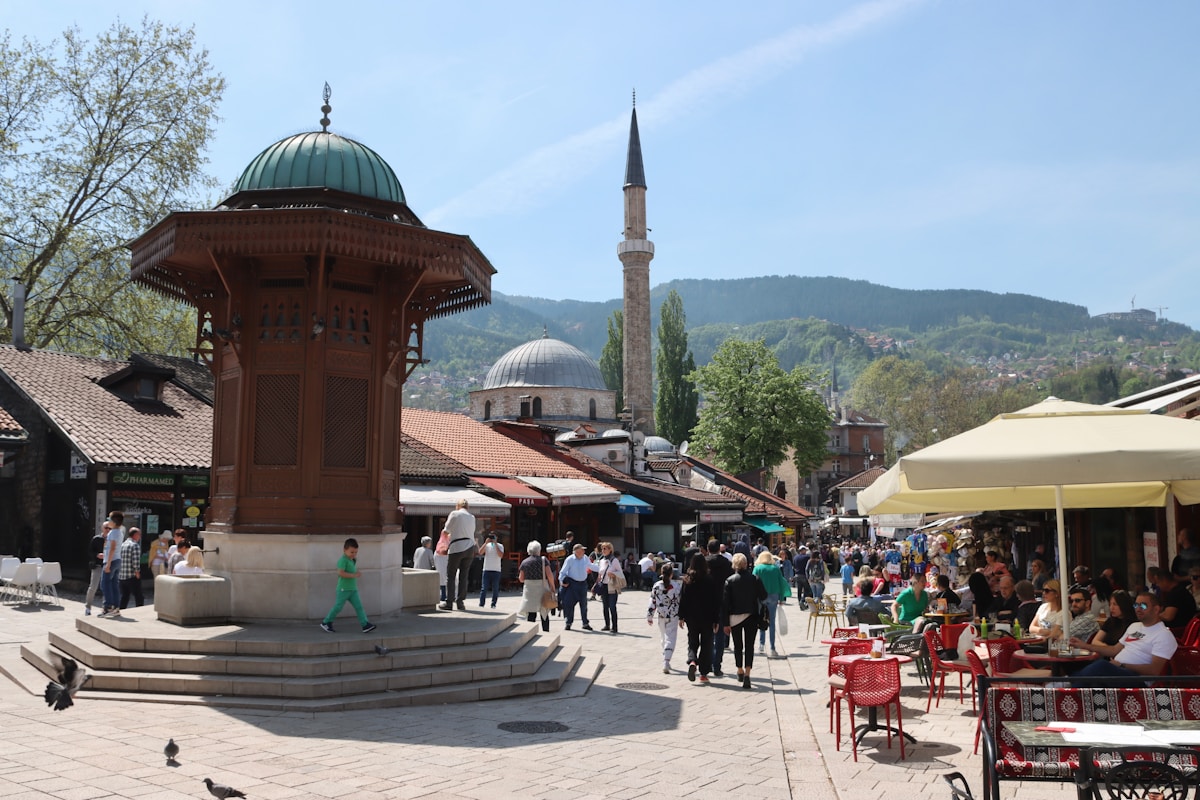
The Balkans has a distinct culinary identity that sits at the intersection of Ottoman, Mediterranean, and Central European influences. Grilled meats dominate, but each country has its own specialities and regional variations.
The Dishes You Need to Know
Ćevapi
Minced beef or lamb formed into small sausages and grilled over charcoal. Served in somun (flatbread) with raw onion, sour cream, and kajmak (clotted cream). The quintessential Balkans street food - the version in Sarajevo’s Baščaršija is the regional benchmark.
Burek
Flaky filo pastry filled with minced meat, cheese (sir), spinach, or potato. Eaten for breakfast, as a snack, or alongside a main meal. Bosnia’s burek is renowned - always eaten with a glass of yoghurt (jogurt).
Pljeskavica
A large, flat grilled meat patty - a Balkan-style burger. Serbia’s Šumadija region is famous for its version. Often served in lepinja flatbread with toppings.
Ajvar
A roasted red pepper and aubergine relish, made throughout Serbia and North Macedonia in autumn. Eaten with bread, grilled meat, or as a condiment. Shop-bought versions are available everywhere; homemade is considerably better.
Shopska Salad
A simple salad of tomato, cucumber, onion, and green pepper, topped with grated white cheese (sirene). The signature dish of Bulgaria and North Macedonia - found across the region.
Lamb (Jagnjetina)
Slow-roasted lamb is the prestige dish across Montenegro, Albania, and Kosovo. Typically cooked under a sač (metal lid covered in embers) or on a spit. The Balkans equivalent of Sunday lunch.
Meze
Small dishes eaten as starters or alongside drinks - olives, cheese, cured meats, dips. The Adriatic coastal tradition (particularly in Croatia and Montenegro) involves extended meze before any main course.
Country Highlights
Bosnia and Herzegovina: Ćevapi, burek, tarhana soup, klepe (dumplings), Bosanski lonac (slow-cooked meat and vegetable pot). Ottoman influence is strongest here.
Serbia: Pljeskavica, punjena paprika (stuffed peppers), podvarak (sauerkraut with roast meat), kajmak, roasted meats. Belgrade has the region’s most developed restaurant scene.
Croatia: Dalmatian seafood (grilled fish, octopus salad, black risotto), Istrian truffles, peka (slow-cooked meat or seafood under a bell), prstaci (date mussels - protected, only found wild).
Montenegro: Lamb, njeguški prshut (dry-cured ham from Njeguši), cheese from Kolašin, seafood on the coast. Mountain food traditions are strong.
Albania: Tavë kosi (baked lamb with yoghurt and rice), fëgesë (offal stew with peppers), qofte (meatballs), sufllaqe (döner-style wraps), byrek. Tirana has excellent restaurants at very low prices.
North Macedonia: Tavče gravče (baked beans in clay pot), ajvar, Ohrid trout, cheese from Berovo, turli tava (meat and vegetable stew).
Drinks
Rakija: Fruit brandy distilled from plums (šljivovica), grapes (lozovača), quince, or apricot. The national drink across virtually every Balkans country. Homemade rakija is offered as a welcome gesture in rural areas.
Bosnian coffee: Served in a džezva (copper pot) with a cube of sugar and a glass of water. A ritual rather than a drink - never rushed.
Wine: Croatia (Dingač and Pošip from Pelješac peninsula), North Macedonia, and Serbia all produce good wines at excellent prices. Montenegrin Vranac is worth trying.
Beer: Nikšićko (Montenegro), Jelen (Serbia), Karlovačko and Ožujsko (Croatia), Tirana Beer (Albania) are the regional standards - all broadly drinkable lagers.
Eating Out: Costs
| Country | Budget meal (local restaurant) | Mid-range dinner |
|---|---|---|
| Bosnia | €4–7 | €10–15 |
| Serbia | €5–8 | €12–18 |
| Albania | €4–7 | €10–15 |
| North Macedonia | €4–7 | €10–14 |
| Montenegro | €7–12 | €15–25 |
| Croatia | €12–18 | €25–40 |
Book a Food Tour in the Balkans
The Balkans reward slow, guided eating - the dishes that define each country are often eaten at grill houses and family tavernas that have no English sign out front, and a local food guide shortens the gap between tourist-facing menus and what people actually cook at home. Cities like Sarajevo, Belgrade, Sofia, and Zagreb all have strong guided food tour programmes covering their respective cuisines, and most Balkan food tours run 2–4 hours at approximately EUR 30–60 per person. Browse food tours in the Balkans.
See also
- Bosnia and Herzegovina travel guide
- Serbia travel guide
- Albania travel guide
- Croatia travel guide
- Montenegro travel guide
- North Macedonia travel guide
- Balkans travel costs
- Planning a Balkans trip
Plan your trip: Browse food tours across the Balkans - from Sarajevo burek walks to Belgrade kafana evenings, guided tours cover the region well. Search flights to the Balkans and compare prices early. Browse hotels across the Balkans - useful for planning which cities to base yourself in as you eat your way through the region. Travel insurance is worth sorting before you go.